
When shopping for a dash cam, one of the most common decisions drivers face is whether to invest in a dual-channel system that records both front and rear views or stick with a more affordable front-only model. While the upfront cost of a rear camera may seem like an unnecessary add-on, its value becomes clear when evaluating how insurance claims are resolved after accidents. In many rear-end collisions, parking incidents, and multi-vehicle pileups, footage from the back of your vehicle can be the decisive evidence that protects you from false liability.
This article examines the practical differences between front-only and front-and-rear dash cams, focusing specifically on their impact during insurance disputes. We’ll explore real-world scenarios, analyze claim outcomes, and provide actionable guidance so you can make an informed decision based on your driving habits and risk exposure.
Why Rear Coverage Matters in Insurance Claims
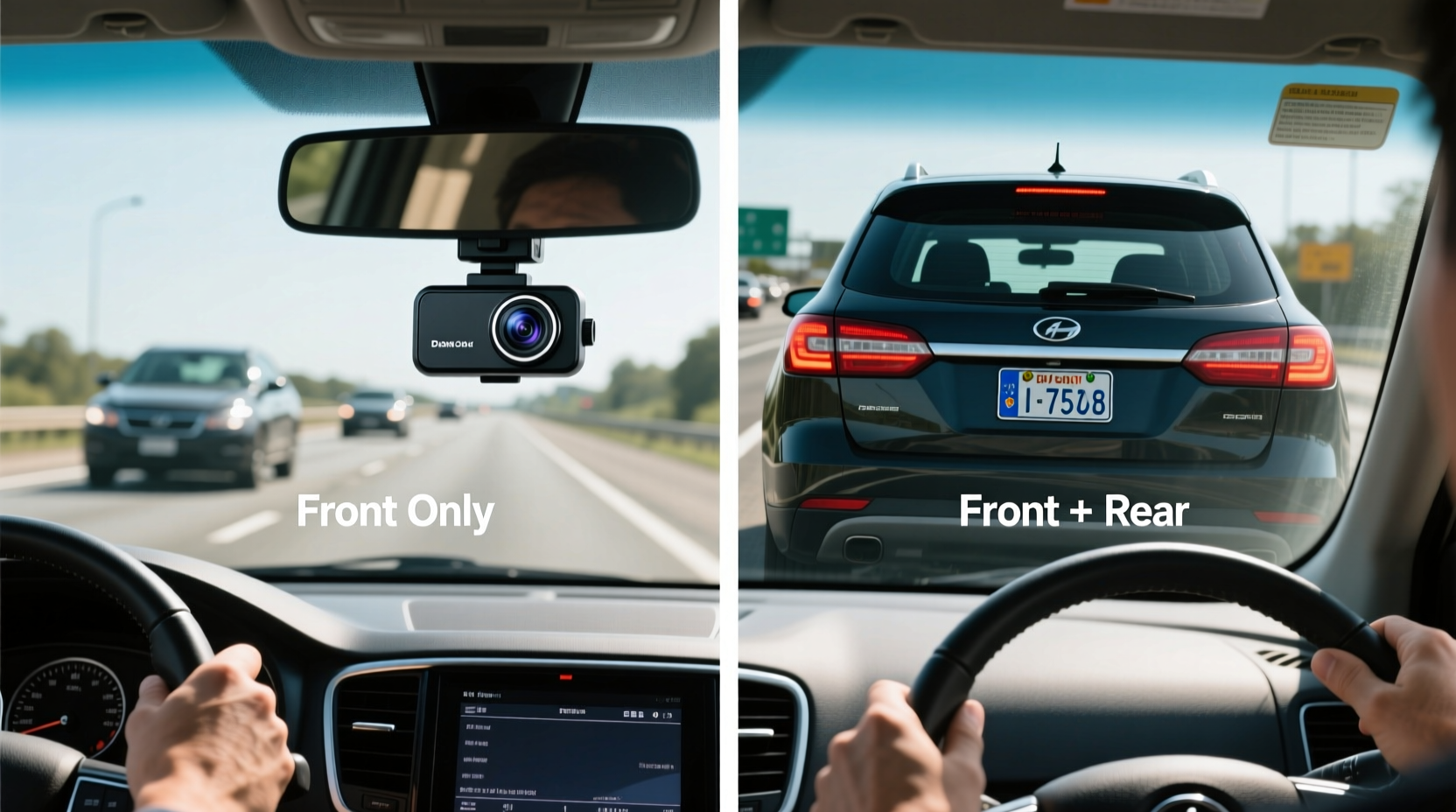
The primary purpose of a dash cam isn’t just to capture dramatic highway moments—it’s to serve as an impartial witness when accidents occur. Insurance companies rely heavily on visual evidence to determine fault, especially in cases where driver statements conflict. A front-facing camera captures what happens ahead of your car, but it offers no insight into events behind you.
Consider this: over 30% of all auto accidents in urban areas involve rear-end collisions, according to data from the National Highway Traffic Safety Administration (NHTSA). In nearly all of these cases, the vehicle in front is assumed at fault by default—unless there's proof otherwise. Without rear footage, proving that another driver hit you while you were stopped or reversing legally becomes significantly harder.
Rear dash cam footage eliminates ambiguity. It shows whether the following vehicle was tailgating, distracted, speeding, or failed to brake in time. This kind of evidence shifts the burden of proof away from your word against theirs and onto objective video data.
“Video evidence from both ends of the vehicle has changed how insurers assess fault, particularly in low-speed city collisions where stories often don’t match.” — Daniel Reeves, Senior Claims Adjuster at Liberty Mutual
Front-Only vs Front-and-Rear: Key Differences
To understand the trade-offs, let’s compare the two main types of dash cam setups across several critical factors:
| Feature | Front-Only Dash Cam | Front & Rear System |
|---|---|---|
| Cost | $60–$120 | $150–$300+ |
| Installation Complexity | Simple plug-and-play | Moderate (requires wiring through trunk or roof liner) |
| Coverage Scope | Limited to forward view | 360° situational awareness (front + rear) |
| Evidence Quality in Rear Collisions | Poor – no direct footage | Strong – clear view of impact dynamics |
| Parking Incident Protection | No (unless using forward-facing motion detection) | Yes (with rear camera monitoring activity behind) |
| Data Storage Needs | Lower (single stream) | Higher (dual recording = double file size) |
| Insurance Claim Support | Partial – only useful if you're at fault or hitting something | Comprehensive – supports defense against false claims |
While front-only systems offer basic protection and are easier to install, they leave significant blind spots. If your goal is maximum claim security, especially in dense traffic environments or high-theft areas, dual-channel systems deliver far greater peace of mind.
Real-World Scenarios Where Rear Footage Made the Difference
A Parking Lot Bumper Tap in Chicago
Mark T., a delivery driver in Chicago, parked his SUV outside a grocery store. Upon returning, he found damage to his rear bumper but no note left behind. He filed a claim assuming it was hit-and-run, but his insurer initially denied coverage due to lack of proof.
Luckily, Mark had installed a front-and-rear dash cam with parking mode. The footage showed a sedan reversing too quickly, striking his vehicle, then driving off without stopping. With timestamped video, the insurance company reopened the case, identified the other driver via license plate, and recovered repair costs under their policy.
Rear-End Collision During Rush Hour in Atlanta
Jamila R. was stopped at a red light when she felt a sudden jolt from behind. The driver who hit her claimed she braked abruptly without warning. Her front camera showed no erratic movement, but it couldn’t capture the moments before impact from behind.
Because her dash cam included a rear lens, the footage clearly showed the other vehicle approaching at speed, failing to decelerate, and colliding with her stationary car. The adjuster reviewed the clip and assigned 100% fault to the rear driver within 48 hours—no dispute, no delay.
False Liability Claim in Los Angeles
In a more troubling case, a driver in LA was falsely accused of backing into another car in a crowded mall lot. The accuser insisted the damage occurred during a slow maneuver, demanding $1,800 in repairs. However, the defendant’s rear dash cam showed he never reversed at all—he simply pulled forward into an empty spot.
The video exonerated him completely. His insurer dismissed the claim and even reported the false accusation for potential fraud review. Without rear coverage, this could have resulted in a wrongful settlement or premium increase.
When Is a Front-Only System Sufficient?
Not every driver needs dual cameras. There are situations where a front-only dash cam provides adequate protection:
- Low-risk driving patterns: If you mostly drive on open highways or rural roads with minimal stop-and-go traffic, the likelihood of being rear-ended is lower.
- Budget constraints: For drivers prioritizing affordability, a high-quality front camera is still vastly better than no camera.
- Vehicles with built-in rear visibility: Some newer cars come with factory backup cameras that record temporarily when reversing. While not continuous, they can supplement limited evidence needs.
- Urban drivers with garage parking: If your car is stored indoors and you avoid congested zones, rear incidents are less frequent.
However, if you frequently drive in cities, park on streets, or share the road with aggressive or distracted drivers, skipping rear coverage increases your vulnerability to unjust claims.
How Dual-Camera Systems Improve Insurance Outcomes
Insurance providers increasingly accept dash cam footage as valid evidence, provided it’s unedited and timestamped. Here’s how rear coverage directly improves claim resolution:
- Reduces reliance on eyewitness accounts: Human memory is unreliable. Video removes subjectivity.
- Speeds up claim processing: Clear footage allows adjusters to assign fault quickly, avoiding lengthy investigations.
- Prevents fraudulent claims: Drivers sometimes stage accidents or exaggerate damage. Rear video can expose inconsistencies.
- Supports “not-at-fault” defenses: Especially important in states with no-fault insurance laws where personal injury claims bypass fault determination.
- Protects your driving record: Being wrongly blamed can lead to points on your license and higher premiums—even if the claim is later overturned.
A study conducted by the Insurance Institute for Highway Safety (IIHS) found that drivers with full-coverage dash cams were 47% less likely to be incorrectly assigned fault in multi-party claims involving rear impacts.
Action Plan: Choosing the Right System for Your Needs
Follow this step-by-step guide to determine whether you should upgrade to a front-and-rear setup:
- Assess your driving environment: Do you spend most of your time in heavy traffic, tight parking lots, or busy intersections? High congestion = higher need for rear coverage.
- Review past incidents: Have you ever been rear-ended or involved in a parking scrape? History suggests future risk.
- Check your insurance policy: Some insurers offer discounts (typically 5–15%) for vehicles equipped with dash cams. Ask if dual-channel systems qualify.
- Test installation feasibility: Can you run the cable from the rear camera to the recorder without drilling or damaging trim? Most kits include routing tools.
- Evaluate storage and power options: Dual cameras generate more data. Ensure your microSD card is 128GB or larger and rated U3 or higher. Consider hardwiring for parking mode support.
Frequently Asked Questions
Can rear dash cam footage be used in court?
Yes, provided the video is authentic, timestamped, and hasn’t been edited. Courts generally accept dash cam recordings as admissible evidence, especially when corroborated by other facts.
Do I need GPS and Wi-Fi for insurance purposes?
GPS adds location and speed data, which strengthens credibility in disputes. Wi-Fi simplifies clip retrieval but isn’t essential. For insurance, clarity and timestamps matter most.
Will having a dash cam lower my insurance rates?
Some insurers offer voluntary telematics programs that reward safe driving, but standalone dash cams rarely reduce premiums unless part of a formal program. However, preventing a single unjust claim can save hundreds over time.
Final Verdict: Is Rear Coverage Worth It for Insurance?
The answer depends on your risk profile, but for most drivers in urban or mixed-use environments, the rear camera is not just useful—it’s essential. Front-only systems protect you when you’re the active party in a collision, but they leave you exposed when someone else hits you from behind.
Think of rear coverage as insurance for your insurance. It doesn’t prevent accidents, but it prevents misjudgments. In an era where false claims and ambiguous liability are rising, having complete visual documentation gives you control over your narrative.
If you’ve ever been stuck explaining your side of a story without proof, you know how frustrating and costly it can be. A few hundred dollars spent on a dual-channel dash cam today could save you thousands in disputed repairs, legal fees, or inflated premiums tomorrow.




 浙公网安备
33010002000092号
浙公网安备
33010002000092号 浙B2-20120091-4
Comments
No comments yet. Why don't you start the discussion?