
When it comes to protecting your vehicle and ensuring fair outcomes in traffic incidents, dash cams have become indispensable tools. But as drivers weigh their options, one question consistently arises: Is a rear camera truly necessary, or can a front-only system suffice—especially when filing insurance claims? The answer isn’t always black and white. While a front-facing dash cam captures critical data about what’s ahead, it leaves blind spots behind. Understanding the real-world implications of each setup can help you decide whether investing in dual-channel recording is worth it for your safety and financial protection.
Why Dash Cams Matter in Insurance Claims
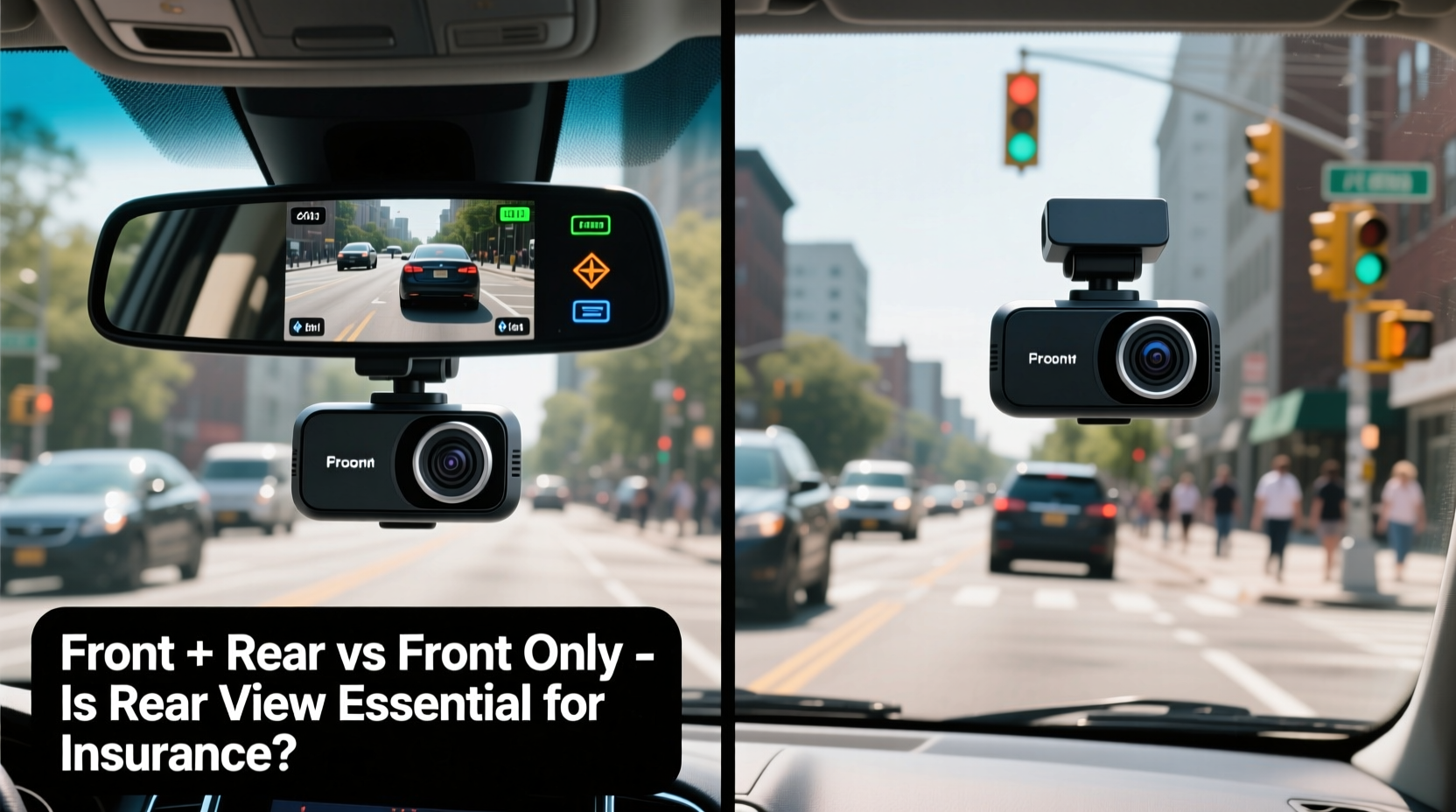
Dash cams serve as objective witnesses on the road. In the event of an accident, they provide timestamped, geotagged video evidence that insurers and law enforcement use to determine fault. This footage can prevent fraudulent claims, expedite settlements, and even reduce premiums in some cases where usage-based insurance programs are offered.
Insurance companies increasingly recognize the value of dash cam footage. According to the Insurance Information Institute, nearly 30% of auto claims involve disputes over liability, many of which could be resolved quickly with clear video evidence. A dash cam eliminates ambiguity by showing exactly how an incident unfolded—speed, positioning, traffic signals, and driver behavior.
However, not all dash cams offer the same level of protection. The key difference lies in coverage: a front-only unit records what happens in front of your car, while a front-and-rear system adds continuous monitoring of the area behind your vehicle.
Front-Only Dash Cams: Strengths and Limitations
Front-facing dash cams are the most common type on the market. They’re typically easier to install, more affordable, and sufficient for capturing head-on collisions, red-light runners, and dangerous driving behaviors ahead of you.
- Cost-effective: Entry-level models start under $50.
- Simple installation: Mounts on windshield with minimal wiring.
- Focused on primary risk zone: Most accidents occur from the front.
Yet, this simplicity comes at a cost. A front-only camera cannot record events directly behind your vehicle. That means if you're stopped at a light and rear-ended, the impact might be visible—but the moments leading up to it (such as the other driver being distracted or speeding) won't be captured unless the collision forces your car forward into another object, triggering a secondary angle.
The Case for Front and Rear Dash Cam Systems
Dual-channel dash cams include both a front and rear-facing camera, often connected via a hardwiring kit. These systems record simultaneously from both directions, offering a comprehensive view of your surroundings.
This becomes crucial in several common scenarios:
- Rear-end collisions: Captures whether the following vehicle was tailgating, distracted, or traveling at excessive speed before impact.
- Parking lot incidents: Records hit-and-runs or dents caused while parked, especially when paired with parking mode.
- Multi-vehicle pileups: Provides full context when multiple cars are involved from different angles.
- False liability claims: Protects against drivers who intentionally reverse into your vehicle to stage an accident.
A study conducted by the National Highway Traffic Safety Administration (NHTSA) found that rear-end collisions account for approximately 29% of all reported crashes in the U.S.—making them one of the most frequent types of accidents. Despite their frequency, determining fault isn’t always straightforward. Without rear footage, proving innocence often relies on witness statements or circumstantial evidence, which insurers may view skeptically.
“Video evidence from both front and rear cameras significantly reduces claim processing time and improves accuracy in fault determination.” — Dr. Alan Torres, Transportation Safety Analyst at FMVSS
Comparing Front vs Front-and-Rear: Key Differences
| Feature | Front-Only Dash Cam | Front & Rear System |
|---|---|---|
| Field of View | Limited to forward-facing traffic | 360-degree coverage (front + back) |
| Installation Complexity | Easy; plug-and-play USB power | Moderate; requires rear camera wiring |
| Average Cost | $50–$120 | $150–$300+ |
| Parking Mode Effectiveness | Limited; only covers front approach | Strong; detects motion from both ends |
| Usefulness in Rear-End Crashes | Partial; shows aftermath but not cause | Complete; captures pre-impact behavior |
| Insurance Claim Support | Good for frontal incidents | Superior for multi-angle disputes |
The table highlights a clear trade-off: increased capability versus higher cost and complexity. For urban drivers, those with expensive vehicles, or anyone frequently towing trailers, the added protection of rear coverage often justifies the investment.
Real-World Example: When the Rear Camera Made All the Difference
Consider the case of Maria K., a rideshare driver in Chicago. One evening, she was stopped at a red light when a sedan slammed into her SUV from behind. Initially, the other driver claimed Maria had reversed suddenly without warning. Her insurer began investigating potential partial fault based on proximity data alone.
Luckily, Maria had installed a front-and-rear dash cam system six months earlier. The rear camera footage clearly showed the approaching vehicle swerving slightly, failing to brake until the last second, and making no attempt to avoid the collision. There was zero backward movement from Maria’s vehicle prior to impact.
Within 48 hours, the insurer reviewed the video, dismissed the other party’s claim, and approved full coverage for Maria’s repairs. “Without that rear camera,” she later said, “I would’ve been stuck paying hundreds in deductibles for something I didn’t do.”
This scenario illustrates how rear footage transforms subjective arguments into objective facts—especially important in he-said-she-said situations where memory and perception differ.
Do You Really Need Rear Coverage for Insurance?
The short answer: It depends on your driving environment, risk exposure, and peace-of-mind threshold.
If you primarily drive in low-traffic rural areas and rarely reverse or park in tight spaces, a high-quality front-only camera may be adequate. However, if you navigate dense city streets, commute during rush hour, or frequently transport passengers or cargo, the likelihood of a rear-end or parking incident increases dramatically.
More importantly, consider the consequences of lacking evidence. Being wrongly assigned fault can lead to:
- Increased insurance premiums
- Loss of no-claims bonuses
- Legal fees or court appearances
- Damage to your driving record
In contrast, having complete visual documentation shifts the burden of proof away from you. Insurers favor policyholders who can provide conclusive evidence, and some even offer discounts for using dash cams—particularly dual-channel systems with advanced features like night vision and GPS tracking.
Step-by-Step Guide: Choosing the Right Dash Cam Setup
Follow these steps to select the best dash cam configuration for your needs:
- Assess Your Driving Patterns: Do you spend most of your time in traffic-heavy zones? Are you often reversing in crowded lots? High-risk environments favor dual cameras.
- Determine Your Budget: Set a realistic range. While front-only units are cheaper, consider long-term savings from avoided claims.
- Check Vehicle Compatibility: Some cars have integrated rear cameras or reverse sensors that can integrate with aftermarket systems.
- Evaluate Power Options: Parking mode requires constant power. Use a hardwiring kit to avoid battery drain.
- Look for Essential Features: Prioritize 1080p resolution, wide dynamic range (WDR), G-sensors, loop recording, and reliable storage (64GB+ microSD).
- Review Installation Requirements: Rear cameras usually need professional installation unless you're technically confident.
- Verify Warranty and Support: Choose brands known for firmware updates and responsive customer service.
FAQ: Common Questions About Dash Cams and Insurance
Will my insurance company accept dash cam footage?
Yes, most major insurers—including State Farm, Allstate, and Geico—accept dash cam videos as supporting evidence. However, policies vary, so confirm submission guidelines with your agent. Footage must be unedited, timestamped, and clearly show the incident.
Can a dash cam lower my insurance premium?
In certain cases, yes. Some insurers offer telematics programs where safe driving habits, verified through dash cam data, qualify you for discounts. While not universal, this trend is growing, especially in usage-based insurance (UBI) models.
Are there legal restrictions on using rear dash cams?
In the U.S., dashboard cameras are generally legal in all 50 states as long as they don’t obstruct the driver’s view. Audio recording laws vary by state—12 states require two-party consent for sound recording. To stay compliant, disable audio or consult local regulations.
Final Checklist Before Buying
- ✅ Decide between front-only or front-and-rear based on driving habits
- ✅ Confirm compatibility with your vehicle model
- ✅ Ensure the rear camera has night vision if driving after dark
- ✅ Opt for loop recording and automatic incident detection
- ✅ Use a high endurance microSD card (rated for surveillance use)
- ✅ Test parking mode functionality before relying on it
- ✅ Store backup copies of critical footage off-device
Conclusion: Make Evidence Work for You
The question isn’t just whether a rear dash cam is useful—it’s whether you can afford to go without one when an accident occurs. While front-only systems offer basic protection, they leave a significant gap in accountability. In today’s litigious and insurance-sensitive driving climate, having complete visual coverage isn’t a luxury—it’s a strategic safeguard.
Think of your dash cam as more than a recorder; it’s a defender of your reputation, your wallet, and your driving record. Whether you choose a single or dual-channel system, the goal remains the same: to ensure that when something goes wrong, the truth is already on file.




 浙公网安备
33010002000092号
浙公网安备
33010002000092号 浙B2-20120091-4
Comments
No comments yet. Why don't you start the discussion?