
When the Bible describes someone as “a man after God’s own heart,” it carries profound spiritual weight. That title was given to David, a shepherd boy who became Israel’s most celebrated king. Unlike Saul, who was chosen for his stature and appearance, David was selected not for what he looked like, but for the condition of his heart. But what exactly made David so uniquely aligned with God’s will? Was it his bravery? His psalms? His victories? The truth is deeper—and more human—than any single achievement.
David’s life was marked by both extraordinary faith and serious moral failure. Yet through it all, his posture before God remained one of humility, repentance, and relentless pursuit of divine presence. Understanding why David earned this distinction offers timeless insight into what truly matters in a spiritual life.
The Biblical Origin of the Phrase
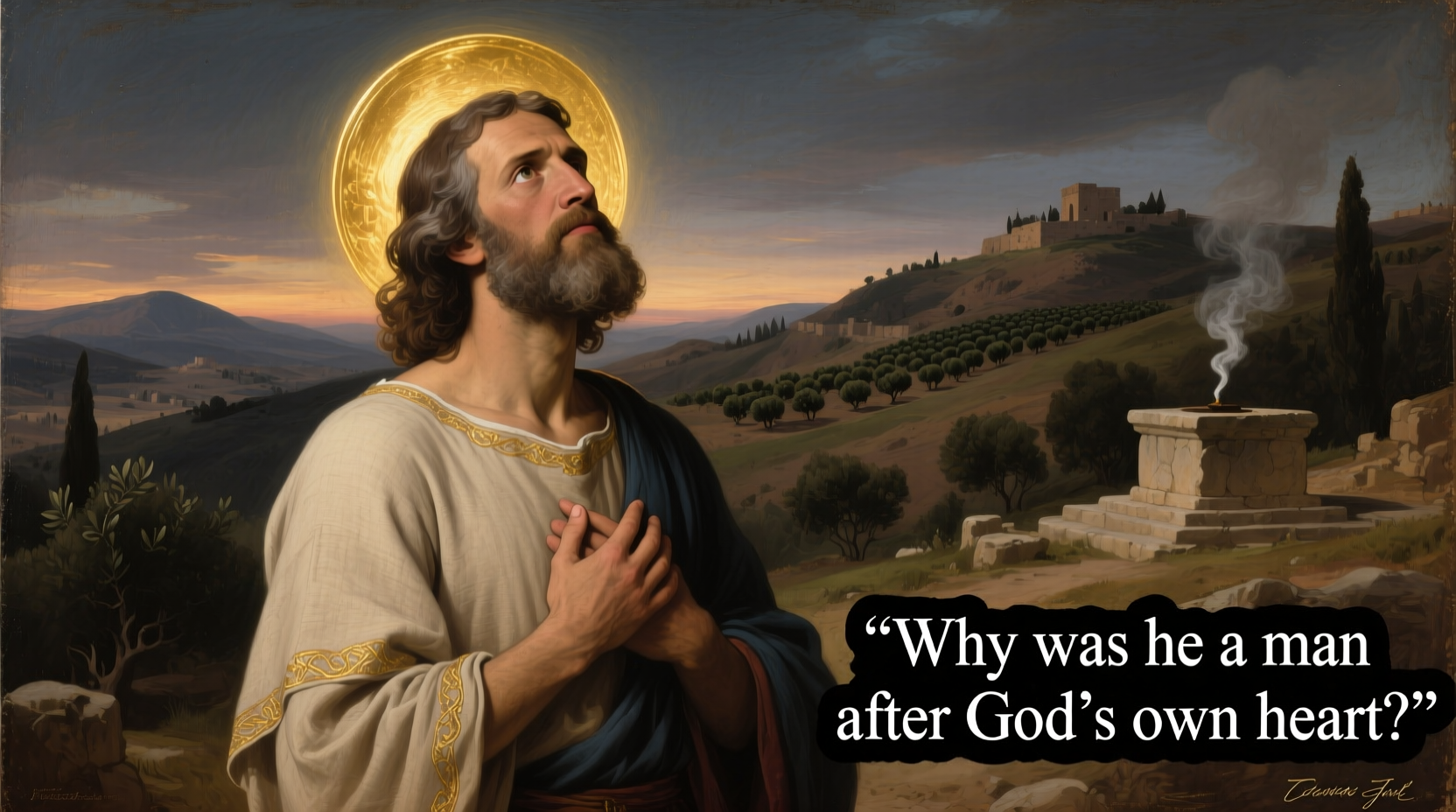
The phrase “a man after God’s own heart” appears in Acts 13:22, where the apostle Paul recounts Israel’s history:
“And when He had removed him [Saul], He raised up for them David as king, of whom also He said: ‘I have found David the son of Jesse, a man after My own heart, who will do all My will.’” — Acts 13:22 (NKJV)
This declaration echoes an earlier statement in 1 Samuel 13:14, where the prophet Samuel tells King Saul that God has rejected him and will choose another ruler “who is better than you.” The key distinction wasn’t skill, strength, or political savvy—it was heart orientation.
God told Samuel, “The Lord does not see as man sees; for man looks at the outward appearance, but the Lord looks at the heart” (1 Samuel 16:7). When Samuel came to Jesse’s house to anoint the next king, he assumed Eliab, the eldest and tallest son, would be chosen. But God passed over all seven older brothers and chose David, the youngest, who was out tending sheep.
Heart Over Performance: What Made David Different
Different from Saul, whose obedience was often partial and prideful, David consistently demonstrated a heart that sought God above reputation, power, or comfort. This didn’t mean he was sinless—far from it—but it meant his default posture was one of dependence and devotion.
Three core characteristics defined David’s heart:
- Authentic worship: David composed many of the Psalms, raw expressions of praise, sorrow, confession, and trust. Psalm 51, written after his sin with Bathsheba, reveals deep contrition: “Create in me a clean heart, O God, and renew a steadfast spirit within me” (Psalm 51:10).
- Reliance on God in crisis: Facing Goliath, David didn’t rely on armor or military training. He trusted in the living God: “You come against me with sword and spear… but I come against you in the name of the Lord Almighty” (1 Samuel 17:45).
- Repentance over self-justification: When confronted by Nathan the prophet about his adultery and murder, David didn’t deflect blame. He said simply, “I have sinned against the Lord” (2 Samuel 12:13).
Dynasty, Failure, and Divine Loyalty
Dave’s legacy wasn’t built on perfection. He committed adultery with Bathsheba, orchestrated the death of her husband Uriah, and failed as a father, leading to rebellion among his sons. Yet even in his worst moments, God did not abandon His promise to David.
In 2 Samuel 7, God makes an everlasting covenant with David: his throne would be established forever. This covenant ultimately points forward to Jesus Christ, the Messiah from David’s lineage. Despite David’s sins, God honored his heart’s orientation and used him to fulfill a redemptive purpose far beyond his lifetime.
This reveals a critical truth: being “after God’s own heart” doesn’t mean constant righteousness, but consistent return to God. As theologian Eugene Peterson observed:
“David wasn’t sinless, but he was honest. He didn’t hide his failures from God. He brought his whole self—desires, doubts, and despair—into the presence of God.” — Eugene Peterson, Spiritual Theologian
A Comparative Look: David vs. Saul
| Aspect | King Saul | King David |
|---|---|---|
| Selection | Chosen for physical appearance (tall, impressive) | Chosen for the condition of his heart |
| Response to Sin | Made excuses (1 Sam 15:20–21) | Confessed and repented (Psalm 51) |
| View of God | Instrumental—used God for success | Relational—sought intimacy with God |
| Leadership Motive | Fear of losing status | Desire to honor God |
| Legacy | Ended in despair and rejection | Remembered as a man after God’s heart |
Practical Lessons from David’s Life Today
Dave’s example isn’t just ancient history—it offers tangible guidance for modern spiritual formation. Living a life “after God’s own heart” means cultivating certain habits and attitudes consistently.
Checklist: Cultivating a Heart After God’s Own
- Begin each day with prayer, not planning
- Read Scripture for transformation, not information
- Respond to conviction quickly—don’t rationalize
- Worship authentically, even when you don’t feel like it
- Seek accountability when struggling
- Trust God’s timing, even when delayed
- Lead with humility, not control
Mini Case Study: Sarah’s Turnaround
Sarah, a church leader in her mid-30s, felt spiritually dry despite her active ministry. She led small groups, taught Sunday school, and volunteered regularly—but inwardly, she resented criticism and feared failure. After reading David’s story, particularly Psalm 139, she began journaling her true emotions before God. One week, she wrote: “I’m tired of pretending I have it together.” That moment of honesty marked a turning point. She started meeting weekly with a spiritual mentor, confessed her pride and fear, and slowly rebuilt her prayer life. Within months, her leadership became less performance-driven and more grace-filled. Like David, her heart shifted from image management to genuine communion with God.
Common Misconceptions About Being “After God’s Heart”
Many assume that being “after God’s own heart” means never failing, always feeling close to God, or achieving great things for Him. But David’s life disproves all three.
- Misconception 1: “He must have been morally perfect.”
Reality: David committed serious sins, yet his repentance restored his fellowship with God.
- Misconception 2: “He always felt God’s presence.”
Reality: Many Psalms reflect deep doubt and abandonment (e.g., Psalm 22:1). Emotions fluctuated, but faith endured.
- Misconception 3: “His success proved his favor.”
Reality: David spent years fleeing for his life. God’s favor isn’t always visible in circumstances.
Frequently Asked Questions
Didn’t David commit terrible sins? How could he still be called righteous?
Yes, David’s sins were severe. But biblical righteousness isn’t based on sinlessness—it’s based on repentance and faith. God forgave David because he approached Him with a broken and contrite heart (Psalm 51:17). His willingness to be corrected set him apart.
Is being “after God’s heart” something we can strive for today?
Absolutely. It begins with surrender, honesty, and a desire to align your will with God’s—not to earn favor, but to reflect His character. It’s less about achievements and more about authenticity in relationship.
Does this mean God overlooks sin in people He loves?
No. God confronted David directly through Nathan the prophet. While forgiveness was granted, consequences remained: the child died, and turmoil plagued his household. Grace covers sin, but it doesn’t erase earthly repercussions.
Conclusion: A Call to Heart-Centered Faith
Dave wasn’t chosen because he was strong, handsome, or politically gifted. He was chosen because his heart beat in rhythm with God’s—seeking Him, returning to Him, trusting Him even in darkness. In a world obsessed with image, performance, and results, David’s legacy reminds us that God values integrity over influence.
You don’t need to be flawless to be used by God. You need to be real. You need to confess quickly, worship deeply, and keep coming back. That’s what it means to have a heart after God’s own.




 浙公网安备
33010002000092号
浙公网安备
33010002000092号 浙B2-20120091-4
Comments
No comments yet. Why don't you start the discussion?