
Every spring, clocks spring forward an hour, and every fall, they fall back. The ritual of adjusting to daylight saving time (DST) has sparked debate for decades. While some advocate for permanent standard time, a growing body of evidence suggests that keeping daylight saving time year-round offers significant advantages in public safety, energy conservation, economic activity, and mental well-being. Rather than abolishing DST or locking in standard time, the smarter solution may be to make DST our permanent reality.
The Case for Permanent Daylight Saving Time
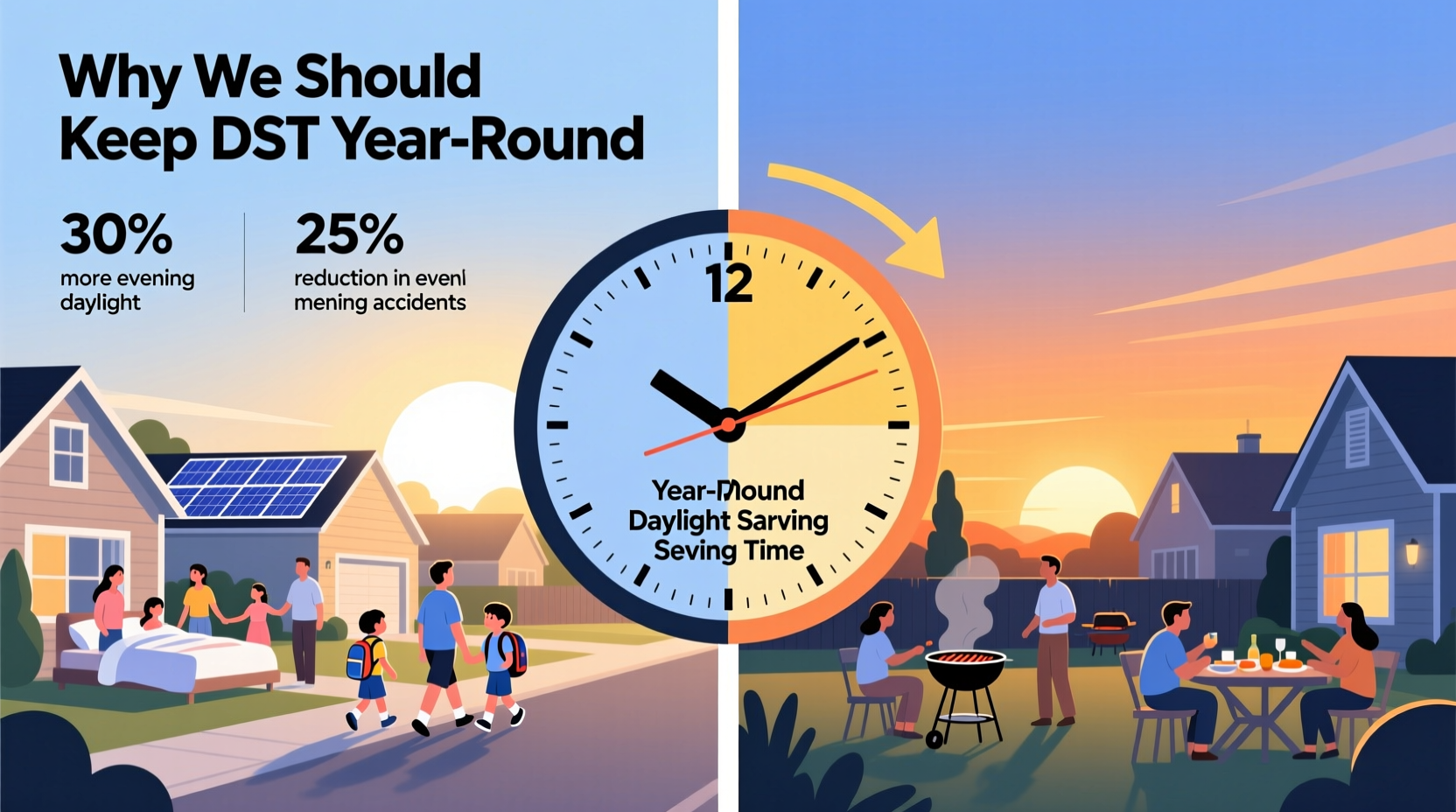
Daylight saving time shifts one hour of daylight from the early morning to the evening during the warmer months. When maintained year-round, this shift means later sunsets throughout the winter and summer alike. This consistency in evening daylight provides tangible benefits across multiple areas of daily life.
One of the most compelling arguments is the alignment of human activity with natural light. Most people work, commute, and engage in leisure activities in the late afternoon and evening. By preserving DST all year, society gains more usable daylight when it’s needed most—after work and school—reducing reliance on artificial lighting and encouraging outdoor activity.
Improved Public Safety During Evening Hours
Evening visibility plays a crucial role in road safety. Studies consistently show that darker evenings correlate with higher rates of pedestrian accidents and traffic fatalities. According to the U.S. Department of Transportation, aligning clocks with daylight saving time reduces traffic injuries by up to 13% during the evening commute.
A 2020 study published in the journal Current Biology found that fatal crashes increase by approximately 6% in the week following the end of DST, when evenings become darker earlier. Extending DST year-round would eliminate this biannual disruption and maintain brighter post-work hours, especially critical during winter months when sunset can occur as early as 4:30 p.m. in northern regions.
“Maintaining daylight saving time year-round could prevent hundreds of pedestrian deaths annually simply by improving visibility during peak commuting hours.” — Dr. Emily Zhao, Traffic Safety Researcher, University of Michigan
Economic and Energy Benefits
Beyond safety, permanent DST supports economic productivity and energy efficiency. With more daylight in the evening, consumers are more likely to shop, dine out, and participate in recreational activities after work. Retailers, restaurants, and fitness centers see measurable increases in foot traffic during DST months.
The U.S. Chamber of Commerce has long supported permanent DST, citing a boost in retail and tourism revenue. A 2017 report estimated that extending DST year-round could generate an additional $1 billion annually in retail sales alone due to increased consumer activity in the post-work hours.
Energy consumption also improves under permanent DST. Although modern heating and cooling reduce the impact, studies from the U.S. Energy Information Administration indicate that extended evening daylight reduces residential electricity use by delaying the need for indoor lighting and appliances. In warmer climates, this effect is even more pronounced, as people are more likely to spend time outdoors instead of using air conditioning indoors.
Energy and Economic Impact Comparison
| Factor | Standard Time Year-Round | Permanent DST |
|---|---|---|
| Evening Electricity Use | Moderate to High | Reduced by 3–5% |
| Retail Activity (Post-Work) | Lower (due to early darkness) | Higher (+8–12%) |
| Pedestrian Accident Rate | Higher in Winter Evenings | Reduced by up to 13% |
| Outdoor Recreation Participation | Declines in Winter | Consistently Higher |
Mental Health and Lifestyle Advantages
Natural light exposure is closely linked to circadian rhythm regulation and mental health. While morning light is important for waking up, evening daylight contributes to reduced stress and improved mood after a long day. People report feeling more energized and motivated to exercise or socialize when the sun is still out at 6 or 7 p.m.
In regions with harsh winters, such as the Pacific Northwest or New England, the psychological burden of early darkness—often called “darkness fatigue”—can contribute to seasonal affective disorder (SAD). Permanent DST doesn’t extend total daylight but redistributes it to times when people are awake and active, making evenings feel longer and more livable.
A real-world example comes from Arizona, which observes standard time year-round. Residents in cities like Phoenix often note that despite abundant sunshine, winter evenings feel abrupt and isolating due to early sunsets. Meanwhile, states like Florida, which passed legislation to adopt permanent DST (pending federal approval), report strong public support driven by quality-of-life improvements.
Mini Case Study: Florida’s Push for Permanent DST
In 2018, Florida enacted the “Sunshine Protection Act,” aiming to lock in daylight saving time permanently. The move was backed by broad bipartisan support and public enthusiasm. Residents cited safer commutes, more family time outdoors, and stronger evening economies as key motivators. Though federal law currently prevents implementation, the effort reflects a growing national trend toward valuing evening daylight. Should Congress act, Florida could serve as a model for other states.
Addressing Common Concerns
Critics argue that permanent DST could lead to dangerously dark mornings, especially in northern latitudes. However, research shows that while sunrise would be later, it rarely falls below 7:30 a.m. in most major population centers—even in December. School bus systems already operate in low-light conditions, and improved street lighting and vehicle headlights mitigate risks.
Another concern involves farmer opposition. Historically, farmers were said to oppose DST because it disrupted milking and harvesting schedules. But modern agriculture operates on precise logistical timelines unaffected by clock changes. In fact, many agricultural economists now acknowledge that DST has minimal impact on farming operations.
Checklist: Supporting the Shift to Permanent DST
- Stay informed about federal and state legislation on time standardization
- Contact your congressional representative to express support for the Sunshine Protection Act
- Share data on safety and economic benefits with community leaders
- Encourage local businesses to advocate for extended evening daylight
- Participate in public comment periods for transportation and urban planning initiatives
What Needs to Happen Next?
The path to permanent daylight saving time requires federal action. Currently, the Uniform Time Act of 1966 governs time observance in the U.S., allowing states to opt out of DST but not to adopt it permanently without congressional approval. Several attempts have been made to amend this law, including bipartisan reintroductions of the Sunshine Protection Act in both the Senate and House.
The European Union has also considered similar reforms, showing global momentum. The key hurdle is coordination—ensuring that time zones remain consistent across regions to avoid confusion in commerce, travel, and communication.
“We’re not just talking about time on a clock. We’re talking about public health, safety, and how people experience their days. Permanent DST aligns modern life with natural light patterns in the most effective way.” — Dr. Alan Liu, Chronobiologist, Harvard Medical School
Frequently Asked Questions
Does permanent DST mean the sun rises later in winter?
Yes, sunrise would be later—typically between 7:00 and 7:30 a.m. in most major cities during the darkest months. However, this trade-off brings much later sunsets, improving safety and usability of evening hours.
Has any country implemented permanent DST successfully?
Several countries have experimented with permanent DST, including Morocco and parts of Canada. Morocco adopted year-round DST in 2018 and reported positive outcomes in energy use and public satisfaction. However, geopolitical and religious factors also influenced their decision.
Will permanent DST affect my sleep schedule?
The biannual clock change is what disrupts sleep—not DST itself. Eliminating the switch removes the twice-yearly circadian shock. Over time, the body adapts to consistent light exposure patterns, especially when evening daylight supports post-work relaxation and activity.
Conclusion: Time to Make DST Permanent
The debate over time standards isn’t just about convenience—it’s about optimizing how we live, work, and stay safe. Keeping daylight saving time year-round offers a rare policy change with wide-ranging benefits: fewer traffic accidents, lower energy use, stronger evening economies, and improved mental well-being. The science is clear, public support is growing, and legislative pathways exist.




 浙公网安备
33010002000092号
浙公网安备
33010002000092号 浙B2-20120091-4
Comments
No comments yet. Why don't you start the discussion?