
Cats don’t speak in human language, but they communicate with precision—through tone, posture, tail flicks, and yes, even silence. When a cat says “no,” it’s rarely just about refusal. It’s a complex signal woven from instinct, environment, and individual personality. Understanding what lies behind that soft hiss, turned head, or flattened ears can transform your relationship with your feline companion. Far from being aloof or indifferent, cats are deeply expressive; they simply speak a dialect many humans haven’t learned to interpret.
The word “no” doesn’t exist in a cat’s vocabulary, yet the sentiment is unmistakable. Whether through a sharp meow, a swat of the paw, or deliberate disengagement, cats assert boundaries with clarity. Recognizing these signals isn’t just about avoiding scratches—it’s about respect. When we understand when a cat is saying no, we honor their autonomy and foster trust rooted in mutual awareness.
The Many Forms of Feline “No”
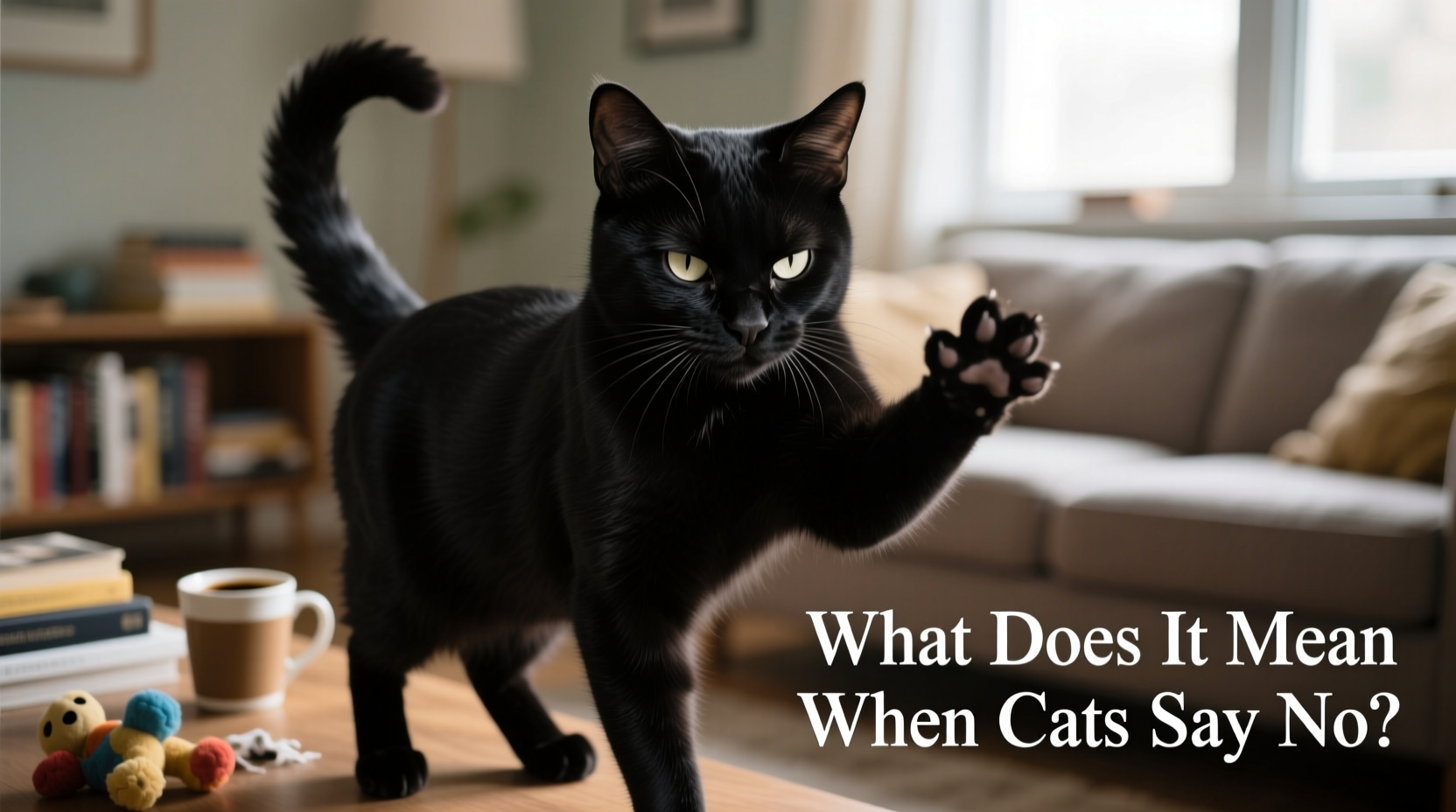
Cat communication operates on multiple levels: vocal, physical, and behavioral. A “no” can be loud or nearly silent, direct or implied. Unlike dogs, who often seek approval, cats prioritize self-preservation and comfort. Their refusals are not defiance—they are declarations of need.
Vocalizations vary widely. A short, low-pitched growl or a quick “mrrt!” (a clipped meow) often signals irritation. Prolonged yowling may indicate distress or territorial objection. Then there’s the silent protest: turning away, slow blinking becoming wide-eyed stillness, or a tail twitching at the tip. These micro-signals are easy to miss but critical to recognize.
Vocal Cues That Signal Disapproval
- Low growl or grumble: A warning that boundaries are being crossed.
- Sharp, staccato meow: Often used when startled or annoyed.
- Hissing or spitting: Immediate defense mechanism indicating fear or threat.
- Chattering silence: When a cat stops vocalizing altogether during petting, it may precede overstimulation.
Body Language: The Silent “No”
A cat’s body is a live broadcast of its internal state. When words aren’t needed, posture speaks volumes. Ears pinned back, pupils dilated, tail lashing—these are not random movements. They form a grammar of discomfort.
One of the most misunderstood behaviors is the “playful” swat that turns into a bite. This often follows prolonged petting that the cat initially tolerated but eventually rejected. The shift happens fast because cats reach their sensory threshold quickly. What looks like sudden aggression is usually a delayed response to accumulated stress.
| Body Signal | Meaning | Action to Take |
|---|---|---|
| Ears flattened sideways (\"airplane ears\") | Discomfort or anxiety | Stop interaction, give space |
| Tail rapidly flicking at base | Irritation or overstimulation | Pause petting, assess environment |
| Lying on side but tensed muscles | Relaxed appearance, internal alertness | Approach gently or wait |
| Slow turn and walk away | Polite refusal | Respect the boundary |
“Cats are masters of subtle communication. When a cat walks away mid-petting, it’s not rejection—it’s honesty. We should learn to listen with our eyes as much as our ears.” — Dr. Sarah Thompson, Feline Behavior Specialist, Cornell Feline Health Center
When No Means Overstimulation
Many owners report their cats suddenly biting after seeming to enjoy petting. This phenomenon, known as petting-induced aggression, stems from sensory overload. Cats have dense nerve endings in their skin, particularly along the spine and tail base. Continuous touching can shift from pleasant to painful.
The progression is often predictable:
- Initial purring or relaxed posture.
- Ear twitch or tail flick begins.
- Head turn toward the hand.
- Bite or swipe.
Mini Case Study: Luna and the Lap Boundary
Luna, a 4-year-old tortoiseshell, loved sitting on her owner’s lap—but only for exactly seven minutes. After that, she’d arch her back and nip lightly. Her owner, confused, thought she was misbehaving. A behaviorist observed that Luna consistently flicked her tail at the five-minute mark and stiffened her legs at six. By minute seven, her tolerance had expired.
The solution wasn’t discipline, but timing. The owner began ending petting sessions *before* the signs escalated. Within weeks, Luna stayed longer voluntarily. She even initiated more contact. The “no” hadn’t been rejection—it had been a request for predictability and control.
Contextual “No”: Environment and Trust
A cat’s willingness to engage depends heavily on environment and past experience. A rescue cat with trauma may say “no” more frequently—not out of stubbornness, but survival. Similarly, multi-cat households involve constant negotiation. One cat blocking access to a bed isn’t being dominant; they’re enforcing a personal boundary.
Forcing interaction erodes trust. Picking up a cat who has hidden, or pulling them from under furniture, teaches them that saying “no” is ineffective. Over time, this can lead to increased anxiety or defensive aggression.
Checklist: Responding Respectfully to a Cat’s “No”
- Pause immediately when you notice signs of discomfort.
- Avoid cornering or restraining the cat.
- Never punish a cat for setting a boundary.
- Use positive reinforcement when they approach on their own.
- Observe patterns—does the “no” happen at certain times or with specific people?
- Create safe zones where the cat can retreat without disturbance.
- Consult a vet if sudden behavioral changes occur—pain can mimic refusal.
FAQ
Why does my cat meow aggressively when I pick her up?
An aggressive meow upon lifting often indicates a lack of consent. Some cats tolerate handling but don’t enjoy it. Others associate being picked up with unpredictable outcomes (e.g., trips to the carrier). Building trust through choice-based interactions can improve tolerance over time.
Is it bad if my cat always says no to cuddles?
No. Just like humans, cats have varying affection styles. Some are social, others solitary. A cat that prefers proximity without touch is still bonding—on their terms. Respecting this fosters deeper security than forced closeness ever could.
Can cats learn to say yes more often?
Yes, but only through trust and consistency. If a cat repeatedly feels heard when saying “no,” they become more willing to say “yes.” It’s not about compliance—it’s about creating an environment where engagement feels safe and rewarding.
Conclusion: Listening Beyond Words
Understanding when a cat says “no” isn’t about controlling behavior—it’s about cultivating empathy. Every flick of the tail, every turned head, is part of a rich, nuanced language developed over millennia. When we stop interpreting these signals as challenges and start seeing them as communication, we open the door to a more authentic connection.
Cats don’t owe us affection. They offer it when they feel safe. And safety begins with listening—even when the message is a quiet, dignified “no.”




 浙公网安备
33010002000092号
浙公网安备
33010002000092号 浙B2-20120091-4
Comments
No comments yet. Why don't you start the discussion?