
German military identity tags, commonly known as \"Erkennungsmarken,\" from World War II are more than relics of war—they are intimate artifacts that connect us to individual soldiers who lived, fought, and often died during one of history’s most devastating conflicts. Unlike modern dog tags, which follow standardized formats, German WWII tags varied in style, content, and meaning depending on branch, rank, and time period. Deciphering them requires both linguistic knowledge and historical context. This guide walks you through the process of reading, interpreting, and understanding what these small metal discs reveal about the men behind the uniform.
Understanding the Purpose and Design of German WWII Dog Tags
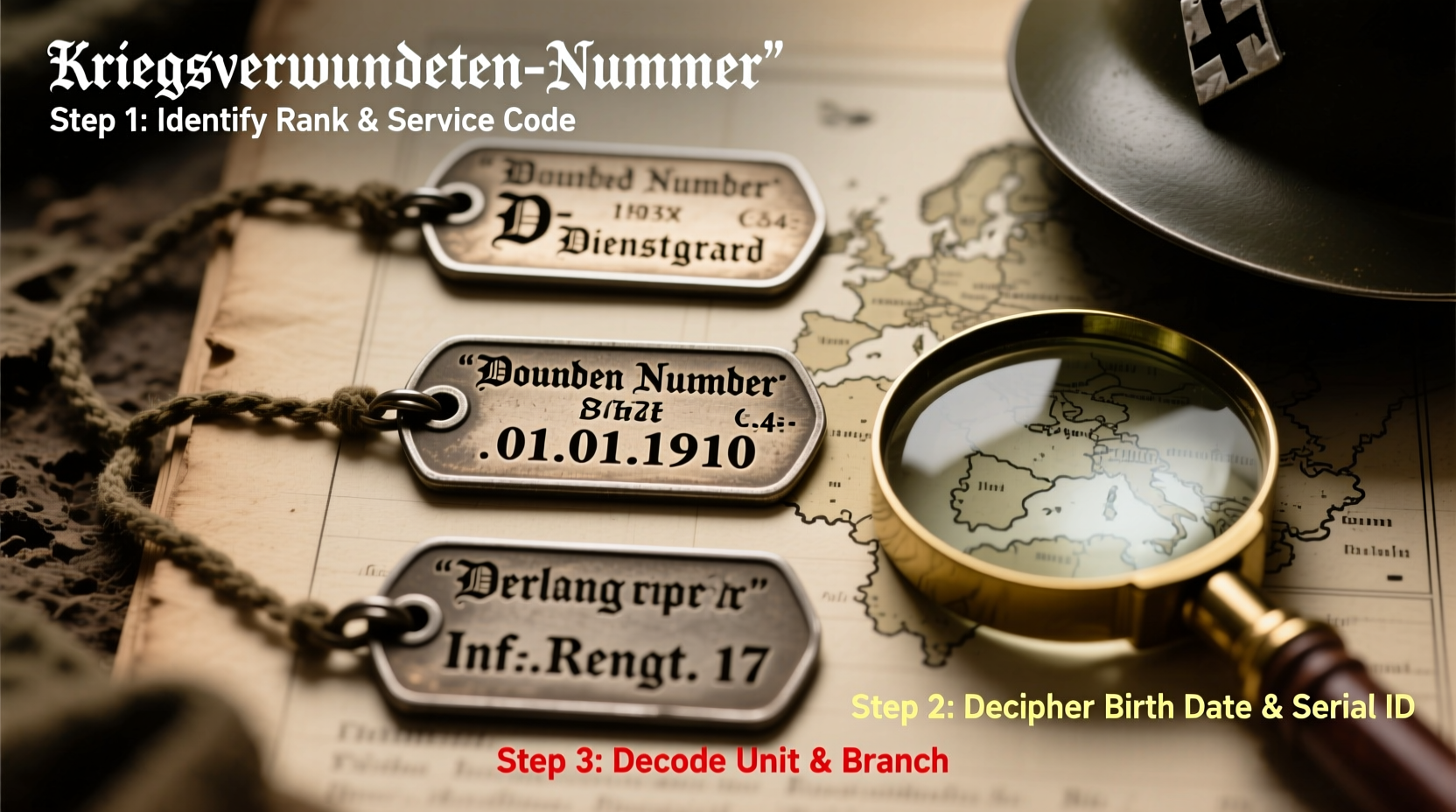
The primary function of German dog tags was battlefield identification. Issued to all branches of the Wehrmacht—Heer (Army), Luftwaffe (Air Force), Kriegsmarine (Navy), and later Waffen-SS—these tags were designed to be durable, legible, and informative for medical and administrative use. Most were made of aluminum or zinc alloy and came in pairs: one remained with the body, the other sent to headquarters for record-keeping.
Designs evolved throughout the war. Early versions (1935–1940) were oval-shaped with stamped lettering, while later models (1940 onward) became rectangular with machine-punched characters for mass production. Despite changes in shape, the core information remained consistent: personal details, blood type, and religious affiliation.
Key Elements Found on a German WWII Dog Tag
Each tag typically contained several critical pieces of information, arranged in a specific order. Understanding the standard format is essential to accurate interpretation. Below is a breakdown of common fields:
| Field | Description | Example |
|---|---|---|
| Name | Last name first, sometimes abbreviated | SCHMIDT, HANS |
| Service Number | Unique identifier assigned by the military | 12345 D |
| Date of Birth | DD.MM.YYYY format; crucial for records matching | 15.03.1918 |
| Blood Type | Marked with “Bl.” followed by type (A, B, AB, O) | Bl. A |
| Religion | Kath. (Catholic), Evan. (Protestant), or none | Evan. |
| Unit/Regiment | May appear on later-war tags; not always present | Inf.Reg. 78 |
Some tags also included inoculation status (e.g., “G” for gas protection training) or special notes like “Reserve” or “Kriegsfreiwilliger” (war volunteer). These additions can provide insight into enlistment status and deployment history.
Step-by-Step Guide to Decoding a German WWII Dog Tag
Deciphering a German dog tag involves systematic analysis. Follow this sequence to extract maximum historical value:
- Inspect the Physical Tag: Note its shape, material, font style, and wear. Rectangular tags generally date from 1940 onward; oval ones are pre-1940.
- Identify the Branch: Look for insignia or abbreviations. “Luftwaffe” may appear explicitly; naval tags sometimes include anchor symbols.
- Transcribe All Text: Carefully write down every character, including punctuation. Misreading a comma or digit can lead to incorrect research paths.
- Translate Key Terms: Use reference lists to decode abbreviations. For example, “g.b.” means “gefallen bei” (killed in action), though this rarely appears on tags themselves.
- Cross-Reference Data: Combine name, birthdate, and service number to search archives such as the Deutsche Dienststelle (WASt), now part of the Bundesarchiv.
- Verify Context: Match findings with known unit movements, battle timelines, and casualty records to build a narrative.
“Every dog tag tells a human story. The numbers and letters are just the entry point to reconstructing a soldier’s journey.” — Dr. Klaus Reinhardt, Military Historian, University of Potsdam
Real Example: Uncovering the Story Behind a Recovered Tag
In 2019, a collector found a German dog tag near Stalingrad bearing the inscription:
SCHULZ, FRIEDRICH
18.07.1916
14562 E
Bl. AB
Evan.
Inf.Reg. 443
Using the service number and birthdate, researchers accessed Bundesarchiv records. They discovered Schulz was conscripted in 1940, served with the 443rd Infantry Regiment—part of the 305th Infantry Division—and was reported missing in January 1943 during the Soviet counteroffensive at Stalingrad. Cross-referencing divisional war diaries confirmed his unit was encircled and largely destroyed. In 2021, after DNA testing of remains recovered from a mass grave, Schulz was positively identified and reburied at the German War Cemetery in Rossoschka.
This case illustrates how a simple tag, when properly decoded, can close decades-old gaps in personal and military history.
Common Pitfalls and How to Avoid Them
- Misinterpreting abbreviations: Assume nothing. “D” in a service number doesn’t stand for “Deserter”—it often denotes regional recruitment district.
- Overlooking duplicates: Common names like Müller or Weber require precise birthdates and numbers to avoid misidentification.
- Ignoring postwar records: Many soldiers listed as “missing” were later confirmed POWs in Soviet camps. WASt files include repatriation data up to the 1950s.
- Relying solely on online forums: While helpful, amateur databases can contain errors. Always verify with official archival sources.
Checklist: What You Need to Fully Decode a German WWII Dog Tag
- Clear transcription of all visible text
- Photograph of both sides under even lighting
- List of common German military abbreviations
- Access to digital archives (Bundesarchiv, WASt database)
- Basic understanding of German grammar and military structure
- Patience and attention to detail
Frequently Asked Questions
Can I find out if the soldier survived?
Yes, in many cases. The Deutsche Dienststelle (now part of the German Federal Archives) maintains personnel records, casualty reports, and POW documentation. Submit a formal inquiry with full tag details to request information.
Are German WWII dog tags valuable?
Monetarily, most common tags sell for $20–$80. However, tags linked to specific units, battles, or verified individuals can reach hundreds of dollars among serious collectors. Their true value lies in historical significance, not market price.
Is it ethical to collect German WWII dog tags?
Opinions vary. Many historians advocate for respectful preservation and research rather than commercial trade. If possible, consider returning tags to families or donating them to museums or memorial projects.
Conclusion: Turning Metal Into Memory
A German WWII dog tag is not merely a piece of metal—it is a silent witness to personal sacrifice, bureaucratic systems, and the vast machinery of war. By learning to read its code, you gain access to a forgotten life, a moment in time, and a thread in the fabric of history. Whether you’re a historian, collector, or descendant seeking answers, the process of decoding these tags transforms anonymous artifacts into human stories.




 浙公网安备
33010002000092号
浙公网安备
33010002000092号 浙B2-20120091-4
Comments
No comments yet. Why don't you start the discussion?