
Every dog owner wants their pet to look stylish while staying safe and well-trained. It’s common to see dogs wearing eye-catching collars with charms, patterns, or personalized tags—yet many of these fashionable accessories aren’t built for control or durability. On the flip side, training collars are designed with function in mind, often sacrificing aesthetics for effectiveness. This raises a practical question: do you actually need both a decorative and a training collar, or can one collar serve all purposes?
The answer isn't always straightforward. Understanding the distinct roles each type plays—and how they complement one another—can help you make smarter choices for your dog’s comfort, safety, and behavior development.
Understanding Decorative Dog Collars
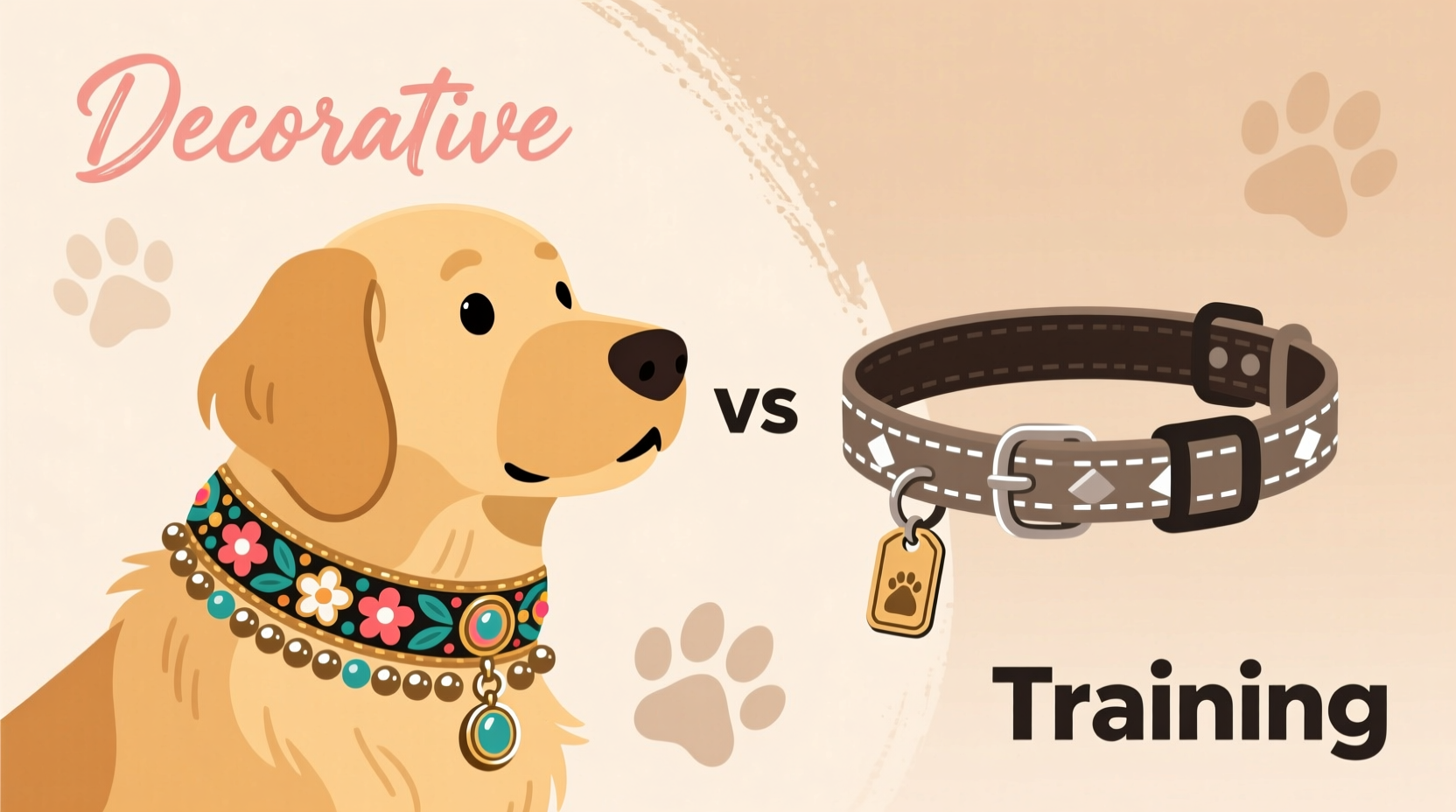
Decorative collars are primarily about expression. They come in a wide range of materials—nylon, leather, velvet, or even embroidered fabrics—and often feature embellishments like rhinestones, bows, or custom nameplates. These collars are ideal for daily wear when your dog is already under control, such as during walks in quiet neighborhoods or while lounging at home.
Beyond appearance, decorative collars serve a few functional purposes:
- Displaying ID tags with contact information
- Providing a point of attachment for leashes (though not always optimal)
- Reflecting your dog’s personality or your own aesthetic preferences
However, decorative collars are typically not engineered for high-stress situations. Thin straps, flimsy buckles, or delicate stitching can fail if a dog pulls hard or gets startled. In some cases, overly tight or rigid designs may even cause skin irritation or tracheal pressure, especially in small or brachycephalic breeds like Pugs or Shih Tzus.
The Role of Training Collars
Training collars are purpose-built tools that assist in teaching obedience and managing behavior. Unlike decorative options, their design prioritizes control, safety, and communication between dog and handler. Common types include:
- Flat collars: Simple, durable nylon or leather collars used with standard leashes; ideal for basic training.
- Head halters: Fit over the snout and behind the neck, giving gentle directional control (e.g., Gentle Leader).
- No-pull harnesses: Often mistaken for collars, these distribute force across the chest to discourage pulling.
- Prong collars: Metal-linked collars that apply even pressure; used under professional guidance for strong pullers.
- Remote training collars: Emit tones, vibrations, or static stimulation; controversial and best used with expert oversight.
While effective, many training collars lack visual appeal. A prong collar may intimidate others, and a head halter might look clinical. More importantly, most should not be worn for extended periods due to potential skin abrasion or discomfort.
“Training tools are just that—tools. They’re meant to shape behavior, not replace thoughtful, consistent handling.” — Dr. Karen Becker, Veterinary Behaviorist
Do You Really Need Both? A Practical Comparison
The decision to use both a decorative and a training collar depends on your dog’s temperament, lifestyle, and training stage. For instance, a calm, well-behaved adult dog may only need a sturdy flat collar for walks and a decorative one for show. But a young, energetic puppy or a strong breed like a Husky or Rottweiler may require specialized training gear during early development.
Relying solely on a decorative collar for training can lead to inefficiency or even danger. If your dog lunges at squirrels or pulls aggressively, a fragile buckle or narrow strap won’t provide adequate control. Conversely, using a training collar full-time may cause unnecessary stress or skin issues, especially if it’s not designed for continuous wear.
| Feature | Decorative Collar | Training Collar |
|---|---|---|
| Purpose | Style, ID display | Behavior management, control |
| Material | Fabric, leather, embroidery | Nylon, metal, reinforced webbing |
| Durability | Moderate to low | High |
| Suitable for Pulling? | No | Yes (depending on type) |
| Wear Time | All-day (if comfortable) | During training/walks only |
| Aesthetic Appeal | High | Low to moderate |
When One Collar Isn’t Enough: A Real Example
Consider Max, a two-year-old Australian Shepherd adopted from a shelter. Energetic and intelligent, Max would lunge at cyclists and bark at other dogs. His owner initially used a floral-print decorative collar because “he looked so cute in it.” But during walks, Max would yank the leash so hard that the buckle cracked after three weeks. Worse, he began showing signs of neck sensitivity.
After consulting a trainer, Max’s owner switched to a front-clip no-pull harness for walks and kept the decorative collar for evenings at home or visits to calm environments. Within a month, Max’s pulling decreased significantly. The decorative collar stayed intact, and Max remained identifiable. The dual-collar approach worked because each served its intended role without compromise.
How to Use Both Safely and Effectively
If you decide to use both types of collars, follow this step-by-step guide to avoid confusion or injury:
- Choose the right training tool: Match the collar to your dog’s behavior. A head halter may work for reactivity; a martingale collar suits escape artists.
- Select a safe decorative collar: Opt for breakaway styles or those with quick-release buckles if left unattended.
- Never layer collars during training: Only one collar should be active at a time to prevent choking or entanglement.
- Rotate usage: Use the training collar for walks and training sessions; switch to the decorative one at home.
- Inspect regularly: Check both collars weekly for fraying, loose hardware, or signs of irritation.
FAQ
Can I put a leash on a decorative collar during training?
It’s not recommended for dogs that pull, lunge, or are still learning leash manners. Decorative collars often lack structural integrity and can break or cause neck injury under strain.
Is it harmful to switch collars frequently?
No, as long as both fit properly and are applied correctly. Regular switching can actually improve comfort by preventing pressure sores from constant wear of the same collar.
Should puppies wear decorative collars?
Puppies can wear lightweight decorative collars briefly, but prioritize a durable flat collar for training. Puppies grow quickly, so ensure any collar is adjustable and checked weekly for fit.
Final Thoughts: Balance Function and Fashion
Your dog doesn’t necessarily need both a decorative and a training collar—but having both gives you flexibility, safety, and peace of mind. Think of them as wardrobe and workwear: one expresses identity, the other enables performance. By understanding their distinct roles, you protect your dog physically and support their behavioral growth.
The goal isn’t to overload your pet with accessories, but to use the right tool at the right time. Whether you're strolling through the park or working on recall commands, matching the collar to the moment ensures both style and substance go hand in paw.




 浙公网安备
33010002000092号
浙公网安备
33010002000092号 浙B2-20120091-4
Comments
No comments yet. Why don't you start the discussion?