
Giftedness is often misunderstood as simply being “smart” or achieving high grades. In reality, it encompasses a broad spectrum of exceptional cognitive, creative, emotional, and artistic abilities that go far beyond academic performance. Recognizing and nurturing these unique gifts requires awareness, intention, and support. Whether you're a parent, educator, or an individual seeking self-understanding, understanding what it means to be gifted can open doors to personal growth, meaningful development, and fulfillment.
What Does It Mean to Be Gifted?
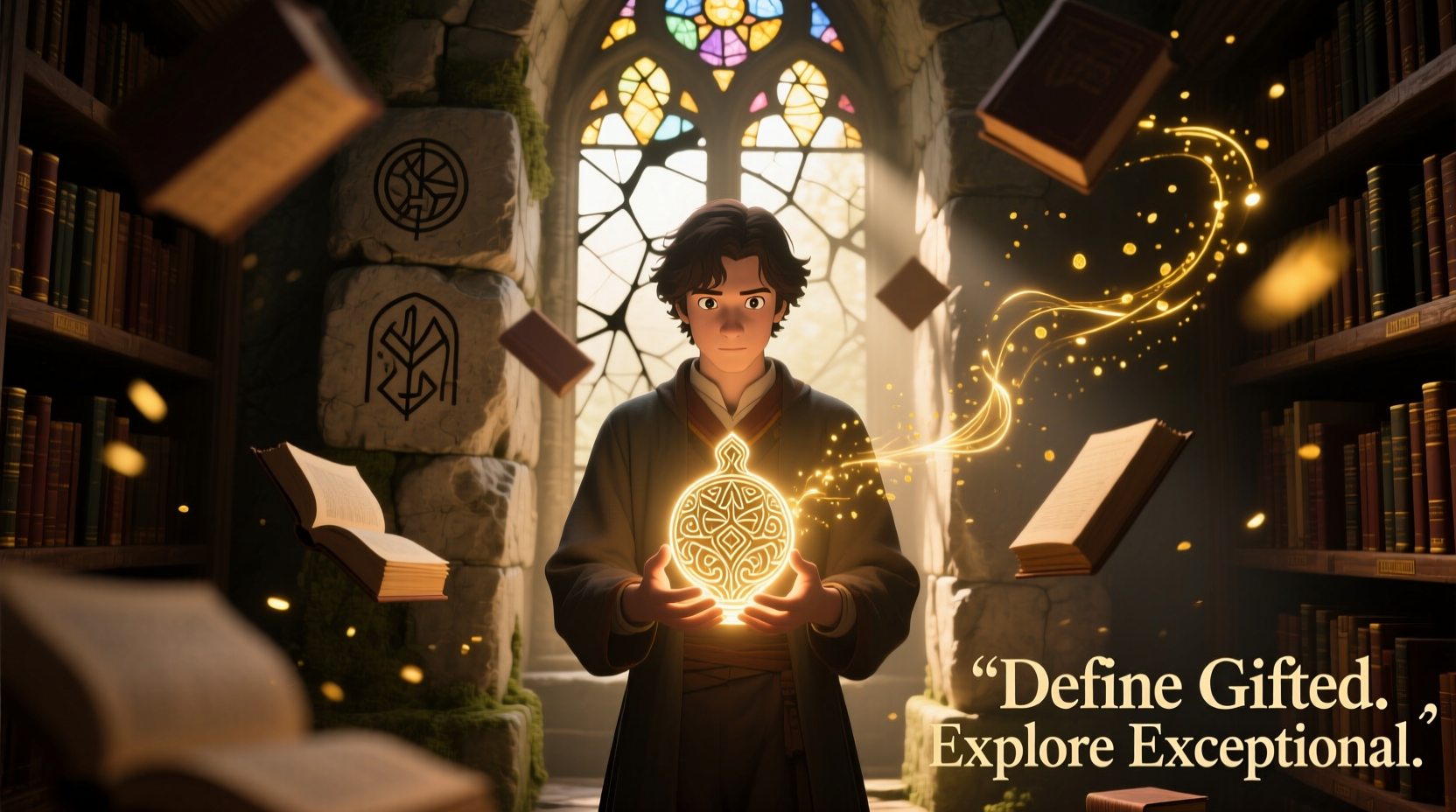
The term \"gifted\" refers to individuals who demonstrate outstanding levels of aptitude or competence in one or more domains—such as intellectual, creative, artistic, leadership, or specific academic fields. According to the National Association for Gifted Children (NAGC), gifted individuals are capable of high performance and require differentiated educational experiences to fully develop their potential.
Giftedness is not solely measured by IQ scores, though they can be one indicator. Modern definitions emphasize asynchronous development—the idea that a gifted person’s cognitive abilities may significantly outpace their emotional or physical maturity. This mismatch can lead to challenges in traditional learning environments if not properly addressed.
“Giftedness is not just about ability; it's about intensity, curiosity, and a deep need to understand.” — Dr. Marylou Kelly Streznewski, author of *Gifted Grownups*
Recognizing Signs of Exceptional Abilities
Identifying giftedness early allows for timely support and enrichment. While signs vary depending on age and domain, common indicators include:
- Advanced vocabulary and complex sentence structure in young children
- Intense focus on topics of interest, sometimes to the exclusion of other activities
- Exceptional memory and rapid mastery of new information
- High sensitivity to emotions, injustice, or sensory stimuli
- Creative problem-solving and original thinking
- Asynchronous development—e.g., reading at a high-school level while still struggling with handwriting
In school settings, gifted students may finish work quickly, ask probing questions, or become disengaged when material lacks challenge. However, some gifted individuals mask their abilities due to social pressure or fear of standing out—a phenomenon known as \"underachievement.\"
Types of Gifts and Talents: Beyond Academics
Giftedness manifests in diverse forms. Renowned psychologist Howard Gardner’s theory of multiple intelligences highlights that intelligence is not a single entity but a collection of distinct modalities. These include:
| Intelligence Type | Characteristics | Potential Strengths |
|---|---|---|
| Logical-Mathematical | Strong reasoning, abstract thinking, pattern recognition | Math, science, coding, strategic games |
| Linguistic | Rich vocabulary, love of reading/writing, storytelling | Writing, debate, language learning |
| Spatial | Visual imagination, strong sense of direction, drawing ability | Art, architecture, engineering |
| Musical | Pitch accuracy, rhythm, emotional response to music | Composing, performing, sound design |
| Bodily-Kinesthetic | Physical coordination, hands-on learning, athletic talent | Sports, dance, craftsmanship |
| Interpersonal | Empathy, leadership, group dynamics | Teaching, counseling, team management |
| Intrapersonal | Self-awareness, introspection, goal setting | Research, entrepreneurship, philosophy |
| Naturalistic | Sensitivity to nature, classification skills, environmental concern | Biology, conservation, farming |
Recognizing that giftedness spans these varied areas helps broaden our understanding. A child who excels in dance or shows profound empathy may be just as gifted as one who solves algebra problems early.
How to Support and Nurture Unique Gifts
Discovering a gift is only the beginning. Sustained development requires intentional support. Here’s a step-by-step approach for parents and educators:
- Observe closely: Pay attention to what captures a child’s attention, what they do independently, and where they show persistence.
- Provide opportunities: Offer access to books, tools, mentors, and experiences related to their interests—art supplies, science kits, music lessons, etc.
- Encourage depth over breadth: Allow deep dives into subjects rather than pushing for wide exposure. Passion thrives on immersion.
- Foster safe expression: Create environments where questioning, mistakes, and unconventional ideas are welcomed.
- Seek appropriate challenges: Enrichment programs, grade skipping, or subject acceleration can prevent boredom and underachievement.
Mini Case Study: Emma, the Young Environmental Advocate
Emma, age 10, showed little interest in standard classroom science but spent hours observing insects in her backyard, documenting them in a handmade journal. Her teacher noticed her detailed sketches and relentless curiosity. Rather than pushing her toward standardized tests, the school connected her with a local naturalist who mentored her in field biology.
By age 12, Emma presented at a regional youth science fair and started a school composting initiative. Her linguistic and naturalistic intelligences were both engaged—she wrote persuasive proposals and led peer discussions. Without early recognition and tailored support, her passion might have been dismissed as mere distraction.
Common Misconceptions About Giftedness
Several myths persist about gifted individuals, often leading to misunderstanding or lack of support:
- Myth: Gifted children will succeed on their own.
Reality: Without challenge and guidance, many become bored, disengaged, or develop anxiety. - Myth: Giftedness equals perfection.
Reality: Many gifted individuals struggle with perfectionism, frustration, or imposter syndrome. - Myth: Only high-income families produce gifted children.
Reality: Talent exists across all socioeconomic, cultural, and linguistic backgrounds—but access to identification and resources does not.
Equity in gifted education remains a critical issue. Underrepresentation of minority and low-income students in gifted programs points to systemic barriers in assessment and referral processes.
Checklist: Supporting a Gifted Individual
- ✅ Observe natural interests and patterns of engagement
- ✅ Provide challenging, open-ended learning materials
- ✅ Encourage questions and independent exploration
- ✅ Connect with mentors or specialized programs
- ✅ Monitor emotional well-being and social integration
- ✅ Advocate for appropriate educational placement if needed
- ✅ Celebrate effort, creativity, and resilience—not just outcomes
Frequently Asked Questions
Can someone be gifted in more than one area?
Absolutely. Many gifted individuals exhibit strengths across multiple domains—such as a musically talented student who also excels in mathematics. These overlapping talents can create powerful synergies, especially when nurtured together.
Is giftedness the same as having a high IQ?
Not exactly. While IQ tests can identify advanced cognitive abilities, they don’t measure creativity, emotional insight, leadership, or practical intelligence. Giftedness is multidimensional and cannot be reduced to a single number.
Can giftedness emerge later in life?
Yes. Some people discover their gifts later due to lack of early opportunity, trauma, or late-blooming development. Adults often recognize their gifted traits during moments of intense flow, deep dissatisfaction with routine work, or sudden mastery in a new field.
Conclusion: Embrace the Journey of Discovery
Defining giftedness is less about labeling and more about recognizing potential in its many forms. Whether it's a child solving puzzles years ahead of peers, an artist seeing beauty in overlooked details, or an adult realizing their lifelong curiosity was a sign of deeper ability—these are all expressions of unique human gifts.
The journey of exploring exceptional abilities begins with awareness and continues with compassion, patience, and action. By creating space for exploration, valuing diverse talents, and supporting growth without pressure, we empower individuals to thrive not just academically, but emotionally and creatively.




 浙公网安备
33010002000092号
浙公网安备
33010002000092号 浙B2-20120091-4
Comments
No comments yet. Why don't you start the discussion?