
As temperatures rise and the air turns crisp in the early days of spring, the art of layering becomes essential—not just for comfort, but for style. Two outerwear staples dominate the transitional season: the denim jacket and the utility jacket. Both are timeless, functional, and widely worn, but when it comes to looking modern, one begins to edge ahead depending on context, cut, and current trends. Understanding the subtle distinctions between them—and how they perform in a contemporary wardrobe—is key to dressing with intention.
The debate isn’t about which is better overall, but which delivers a more current, fashion-forward impression in 2024 and beyond. While the denim jacket carries decades of cultural weight—from rock ‘n’ roll rebellion to preppy Americana—the utility jacket has quietly evolved into a symbol of minimalist functionality and elevated workwear. This article dissects their design DNA, versatility, and stylistic evolution to determine which reigns supreme in the realm of modern spring layering.
Design Origins and Cultural Evolution
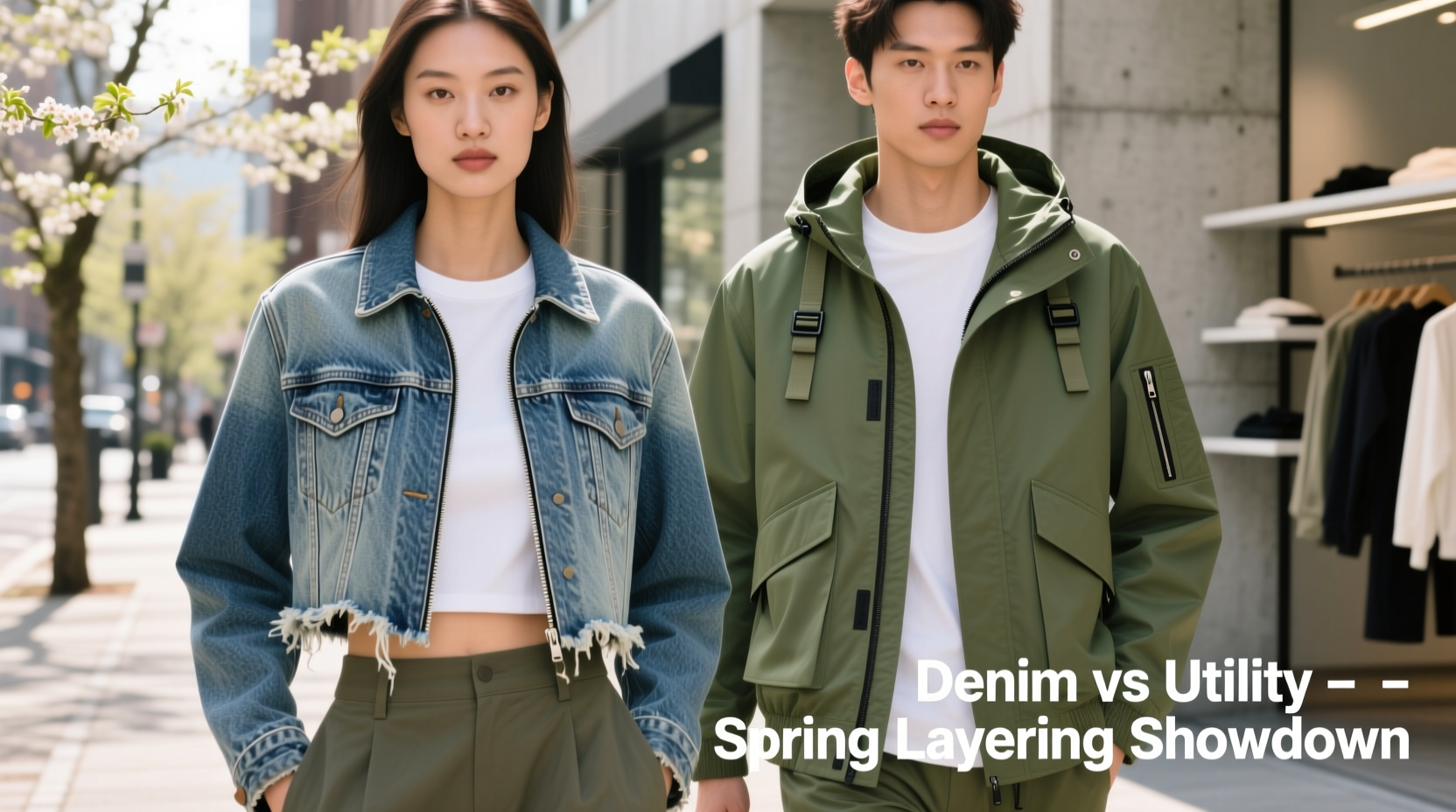
The denim jacket, particularly the classic trucker silhouette popularized by brands like Levi’s in the mid-20th century, was originally designed as durable workwear for laborers. Its rugged cotton construction, button-front closure, and chest pockets made it practical for physical jobs. Over time, it was adopted by youth subcultures—greasers, punks, grunge musicians—each imprinting their own identity onto the garment. By the 1980s and '90s, it had become a mainstream fashion item, embraced across genders and styles.
In contrast, the utility jacket emerged from military and field wear traditions. Inspired by WWII-era field jackets and later adapted by workwear brands like Carhartt and Filson, its defining features include multiple large pockets, durable fabrics (often cotton canvas or ripstop), and a boxier, more utilitarian fit. Unlike the denim jacket’s cultural loudness, the utility jacket speaks in quiet confidence—its appeal rooted in function first, fashion second.
Yet today, both have transcended their origins. The utility jacket, in particular, has been reimagined by minimalist designers and high-street labels alike. Think of sleek, monochrome versions from brands like A.P.C., COS, or Totême—crafted in lightweight technical cotton, with clean lines and minimal branding. These iterations signal a shift toward understated sophistication, aligning perfectly with the “quiet luxury” trend that dominates modern menswear and womenswear.
“Modern style isn't about logos or nostalgia—it's about relevance. The utility jacket, stripped of excess, fits the moment better than any heritage piece trying to relive its past.” — Marcus Reed, Fashion Editor at *Styleline Quarterly*
Material, Fit, and Modern Silhouettes
When evaluating modernity, material and cut matter more than ever. Today’s most influential wardrobes favor pieces that balance comfort, structure, and subtlety. Let’s compare the two jackets through this lens.
Denim Jackets: Traditionally made from 100% cotton denim, often rigid and prone to fading. While vintage washes remain popular, they can appear dated if not styled carefully. Modern updates include slimmer cuts, cropped lengths (especially for women), and blended fabrics for stretch and softness. However, many off-the-rack denim jackets still carry a slightly retro feel—especially those with visible distressing, embroidery, or oversized collars.
Utility Jackets: Typically constructed from cotton canvas, twill, or blended technical fabrics. They’re increasingly offered in earth tones—olive, sand, charcoal, and slate—rather than traditional khaki or black. Contemporary versions feature dropped shoulders, slightly elongated bodies, and hidden closures (like concealed snaps or zip-over buttons), giving them a streamlined profile. The result is a jacket that feels purposeful without shouting for attention.
Styling Versatility in Spring Layering
Spring demands adaptability. Mornings may require warmth; afternoons call for lightness. Layering becomes a balancing act between insulation and breathability, structure and ease.
A denim jacket works well over a simple tee or hoodie, offering a familiar, casual foundation. It pairs effortlessly with jeans for double-denim—or contrasts nicely with chinos and sneakers. But its visual weight can be limiting. Worn over a button-down or turtleneck, it risks appearing bulky, especially if the denim is thick or stiff. Moreover, pairing it with other textured garments (like corduroy or wool) can create a cluttered aesthetic.
The utility jacket, by comparison, excels in layered ensembles. Its looser cut allows room for mid-layers—a fine-gauge merino sweater, a lightweight flannel, or even a thin puffer vest—without sacrificing mobility or silhouette. The fabric is often lighter than raw denim, making it ideal for fluctuating temperatures. When styled intentionally, it bridges smart-casual divides: pair it with tailored trousers and Chelsea boots for a refined look, or wear it open over a linen shirt and shorts for weekend ease.
| Feature | Denim Jacket | Utility Jacket |
|---|---|---|
| Fabric Weight | Medium to heavy | Light to medium |
| Pocket Functionality | Decorative or small | Functional, spacious |
| Layering Capacity | Limited (bulk increases) | High (designed for layers) |
| Color Range | Blue dominant, some black/white | Olive, beige, gray, black, navy |
| Modern Appeal (2024) | Retro-cool, nostalgic | Minimalist, functional-chic |
Real-World Example: The Urban Commuter Look
Consider Maya, a 32-year-old creative director in Portland. Her weekday commute involves biking to her office, attending client meetings, and grabbing coffee post-work. She needs an outer layer that transitions seamlessly from active use to professional settings.
Last spring, she relied on a vintage Levi’s 501 trucker jacket. It looked great with her dark selvedge jeans and white sneakers, but she found it too warm during midday rides and too informal for boardroom presentations. Worse, the fading and fraying edges began to look unintentionally shabby next to her otherwise polished wardrobe.
This year, she switched to a slim-fit olive utility jacket from Arket. Made from recycled cotton-twill, it has a slight water-resistant finish, two chest flap pockets, and a tailored waist. She wears it over a charcoal turtleneck and straight-leg trousers during cooler mornings, then ties it around her waist when indoors. The jacket reads as intentional, modern, and adaptable—exactly what her lifestyle demands.
Her experience reflects a broader shift: professionals and style-conscious individuals are gravitating toward outerwear that supports a dynamic life without compromising aesthetics. The utility jacket, once relegated to gardeners and photographers, now occupies space alongside designer coats in curated closets.
Step-by-Step Guide to Building a Modern Spring Layering System
Whether you lean toward denim or utility, the goal is cohesion. Follow this sequence to ensure your outerwear enhances rather than interrupts your look.
- Start with a base layer: Choose breathable, moisture-wicking fabrics like cotton, TENCEL™, or merino wool. A fitted crewneck or long-sleeve tee sets the foundation.
- Add a mid-layer (optional): Introduce texture with a lightweight cardigan, shawl-collar sweater, or unstructured blazer. Stick to neutral tones for maximum compatibility.
- Select your outer jacket: Prioritize clean lines and minimal hardware. If choosing denim, opt for dark rinse with no distressing. For utility, pick muted colors and avoid excessive zippers or straps.
- Balance proportions: If your jacket is boxy, keep inner layers slim. If wearing a cropped jacket, extend the line with higher-waisted pants or skirts.
- Finish with footwear: Ankle boots, minimalist sneakers, or loafers anchor the outfit. Avoid overly rugged shoes unless the utility jacket is part of an outdoor-focused ensemble.
Checklist: Is Your Jacket Still Modern?
- ✅ No visible rips, patches, or heavy fading (unless intentionally curated)
- ✅ Fits close to the body without pulling at buttons or zippers
- ✅ Complements, rather than clashes with, your pants and shoes
- ✅ Works across multiple occasions (casual, work, social)
- ✅ Made from quality fabric that doesn’t wrinkle or sag easily
- ✅ Lacks overt branding or decorative elements (e.g., embroidered logos)
Expert Insight: Why Utility Wins the Modernity Game
Fashion evolves not by discarding the past, but by reinterpreting it. The utility jacket’s rise isn’t a rejection of denim—it’s a response to changing values. Consumers today prioritize sustainability, versatility, and low-maintenance elegance. Utility jackets, especially those made from organic cotton or recycled materials, align with these principles.
“The utility jacket embodies the ethos of ‘doing more with less.’ It’s not about standing out—it’s about being prepared, composed, and ready. That’s the new definition of cool.” — Lena Cho, Sustainable Style Consultant
Moreover, social media and street style imagery increasingly favor tonal, layered outfits where individual pieces don’t compete for attention. In a TikTok clip or Instagram story, a person in a beige utility jacket over a cream sweater and taupe pants reads as intentional and current. The same person in a stonewashed denim jacket might look like they’re referencing a look from 2014.
Frequently Asked Questions
Can I still wear a denim jacket and look modern?
Absolutely—but with caveats. Choose a dark indigo or black version with a tailored fit. Avoid embellishments. Pair it with modern silhouettes like wide-leg trousers or minimalist dresses. The key is treating it as a neutral, not a statement.
Is the utility jacket only for men?
No. In fact, many of the most compelling utility designs today are gender-neutral or explicitly tailored for women. Brands like Reformation, Sézane, and Ganni offer cropped, cinched-waist, or softly structured versions that blend utility with femininity.
How do I care for a utility jacket?
Most cotton-based utility jackets can be machine washed on cold, inside out. Air dry to prevent shrinkage. For waxed or water-resistant finishes, spot clean and reproof occasionally with a fabric protector spray.
Conclusion: Choosing Forward-Thinking Style
The denim jacket will never disappear. It’s too iconic, too ingrained in global fashion culture. But when the question is about what looks more modern for spring layering in today’s climate—both meteorological and sartorial—the utility jacket holds the edge.
It’s not about abandoning denim altogether. It’s about recognizing that modern style favors restraint, functionality, and quiet confidence. The utility jacket, in its evolved form, delivers exactly that. It layers better, wears longer, and integrates more smoothly into a diverse range of outfits. It signals awareness—not just of trends, but of purpose.
If you’re updating your spring wardrobe, consider adding a well-cut utility jacket in a neutral tone. Keep your denim jacket for moments when nostalgia serves the mood. But for everyday modernity—for the meetings, the walks, the spontaneous plans—reach for the piece that does more with less.




 浙公网安备
33010002000092号
浙公网安备
33010002000092号 浙B2-20120091-4
Comments
No comments yet. Why don't you start the discussion?