
When it comes to building a functional, stylish wardrobe, few pieces are as essential as a well-chosen outerwear layer. Among the most enduring options, the denim jacket and the utility jacket stand out—not just for their durability, but for their ability to adapt across seasons, settings, and styles. But when choosing between the two, which one truly earns its place as the more versatile option?
The answer isn’t always straightforward. While both jackets have deep roots in workwear and military design, they’ve evolved into fashion staples with distinct identities. One thrives on timeless casual appeal; the other champions practicality and rugged adaptability. To determine which outerwear piece offers greater versatility, we need to examine their construction, styling potential, seasonal usability, cultural relevance, and long-term wearability.
Origins and Evolution: From Function to Fashion
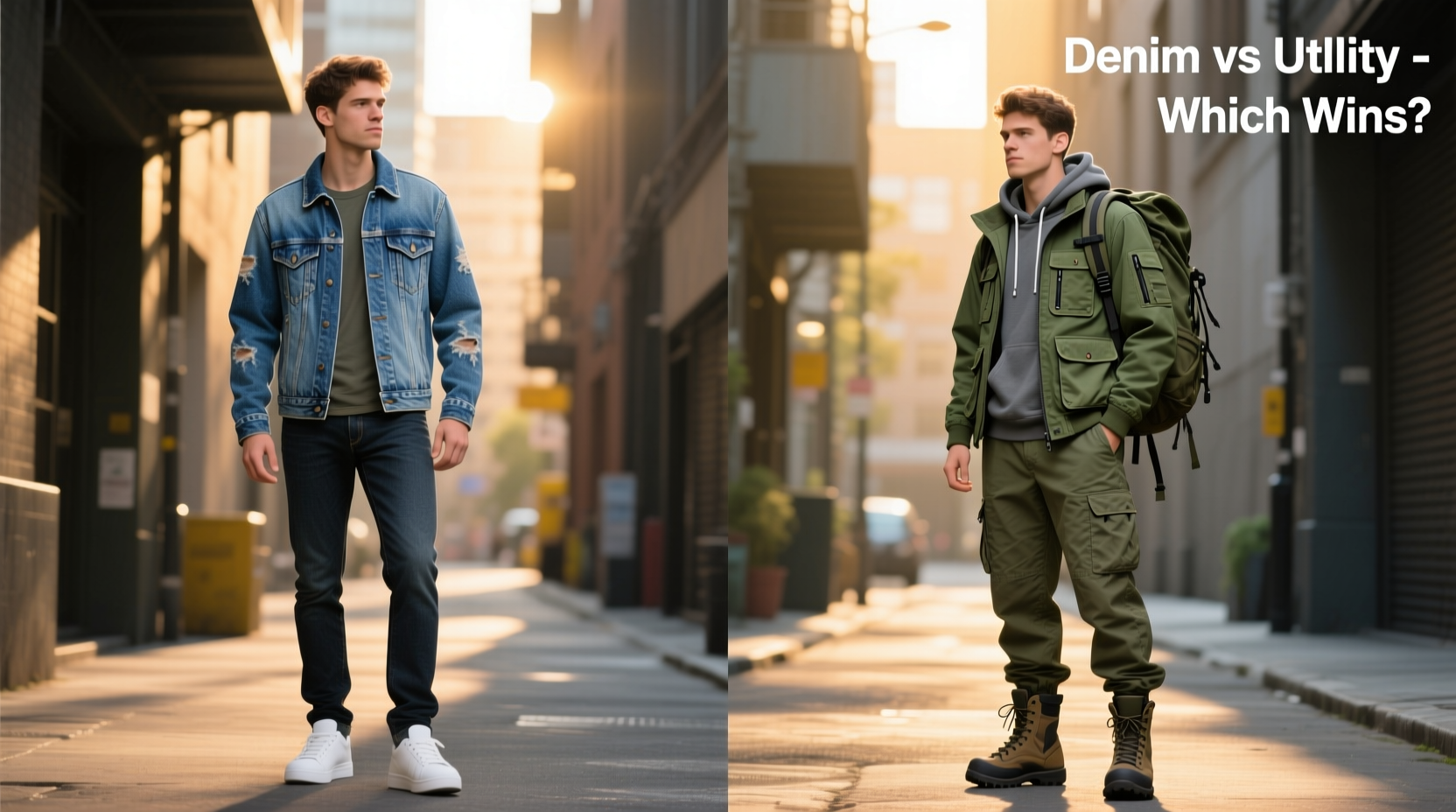
The denim jacket traces its lineage back to the late 19th century, when Levi Strauss & Co. introduced the first button-front denim jacket—initially designed for miners and laborers who needed durable clothing. Made from sturdy cotton denim, it offered resistance to wear and tear while remaining relatively lightweight. Over time, it became a symbol of rebellion, youth culture, and American casual style, embraced by icons from James Dean to modern streetwear influencers.
In contrast, the utility jacket emerged from military necessity. Originally worn by British soldiers during World War II, the classic field jacket or \"battledress\" prioritized function: multiple pockets, water-resistant fabric, and a streamlined fit allowed for mobility and gear storage. Post-war, surplus versions entered civilian life, where outdoor enthusiasts and urban workers alike appreciated their practical design. Today’s utility jackets often feature cotton twill, ripstop nylon, or waxed canvas, with reinforced stitching and adjustable elements like drawstrings and storm flaps.
“Utility wear has always been about solving problems first—warmth, storage, protection. Denim wear, meanwhile, solved the problem of looking effortlessly cool.” — Marcus Reed, Menswear Historian and Curator at the Fashion Archive Project
While both garments began in utilitarian contexts, their paths diverged: denim leaned into cultural symbolism, while utility gear stayed closer to performance-driven design. This foundational difference shapes how each performs in a modern wardrobe.
Styling Flexibility: How Each Jacket Works Across Outfits
Versatility hinges not only on durability but on adaptability. A truly versatile jacket should transition seamlessly from day to night, casual to semi-formal, urban to rural environments. Let’s assess how each jacket handles common styling scenarios.
Denim Jacket: The Casual Staple
The denim jacket excels in informal settings. Its neutral blue tone pairs naturally with white tees, chinos, jeans, and sneakers, making it ideal for weekend outings, brunch dates, or relaxed office environments (in creative industries). It layers easily over hoodies or under coats and works particularly well in double-denim looks when paired with jeans of a contrasting wash.
However, its informality can be limiting. Pairing a classic blue denim jacket with dress trousers or a blazer risks appearing mismatched unless carefully balanced—for example, with dark indigo denim and minimalist footwear. While black or grey denim variants offer slightly more formal flexibility, they still carry a distinctly casual connotation.
Utility Jacket: The Functional Chameleon
The utility jacket, by comparison, adapts more readily to varied contexts. In a city setting, a slim-fit olive green cotton utility jacket over a turtleneck and dark jeans reads as smart-casual. On a hiking trail, the same jacket—with added layers underneath—provides wind resistance and ample pocket space for essentials. Swap in a flannel shirt and boots, and the look shifts toward heritage workwear. Add a beanie and cargo pants, and it fits right into urban streetwear.
Because many utility jackets come in muted, earth-toned colors (olive, khaki, charcoal), they integrate more easily into layered outfits without clashing. Their structured silhouette also lends itself better to pairing with tailored pieces than the looser, more relaxed cut of most denim jackets.
Seasonal Usability and Climate Adaptability
A jacket’s versatility is also measured by how long it stays relevant throughout the year. Both denim and utility jackets perform best in spring and fall, but their behavior in extreme conditions differs significantly.
| Factor | Denim Jacket | Utility Jacket |
|---|---|---|
| Wind Resistance | Moderate (depends on weave) | High (often lined or treated) |
| Rain Protection | Poor (absorbs water) | Good (waxed or coated fabrics) |
| Insulation | Low (unless lined) | Medium to high (can layer easily) |
| Breathability | High (cotton-based) | Moderate (varies by material) |
| Cool Weather Use | Limited (best as mid-layer) | Strong (designed for layering) |
Denim jackets, especially raw or heavyweight ones, can serve as effective mid-layers under heavier coats in winter. However, once wet, denim becomes heavy, cold, and slow to dry—making it a poor choice for rainy climates. Lighter washes may fade or deteriorate faster with repeated exposure to moisture and sun.
Utility jackets, particularly those made from waxed cotton or ripstop nylon, are built to withstand damp and windy conditions. Many include ventilation zippers, removable liners, or underarm gussets that enhance comfort across temperature ranges. This makes them suitable for everything from drizzly autumn commutes to early spring hikes.
Wardrobe Integration: How Many Ways Can You Wear It?
To gauge true versatility, consider how many distinct outfit combinations each jacket enables within a typical capsule wardrobe of 20–30 core items.
- Denim Jacket: Best with casual staples—tees, jeans, sneakers, flannels. Limited synergy with formal wear. Works in double-denim or contrasting denim-and-chino combos. Struggles with leather shoes or dress shirts unless styled intentionally.
- Utility Jacket: Pairs effectively with jeans, chinos, cargo pants, technical trousers, and even wool blends. Compatible with boots, sneakers, and some loafers. Easily bridges workwear, outdoor, and minimalist aesthetics.
A real-world example illustrates this difference:
Mini Case Study: Alex’s Weekend Rotation
Alex, a 32-year-old graphic designer living in Portland, owns both a vintage Levi’s Type III denim jacket and a Filson rugged twill utility jacket. Over a single weekend, he wears each for different activities:
- Saturday Morning: Denim jacket with a band tee, black jeans, and Converse—perfect for coffee runs and record shopping.
- Saturday Afternoon Hike: Switches to the utility jacket over a merino base layer and hiking pants. Uses pockets for phone, keys, and snacks. Stays dry during a sudden downpour.
- Sunday Brunch: Reverts to the denim jacket, but feels underdressed compared to others wearing field-style jackets with clean sneakers and overshirts.
- Monday Commute: Chooses the utility jacket again—it looks polished enough for the office and handles the rain without issue.
Over five days, the utility jacket was worn four times; the denim jacket twice. The utility piece proved more adaptable to changing plans, weather, and social contexts.
Longevity and Wardrobe Longevity
Versatility isn’t just about daily use—it’s also about staying relevant over years. A jacket that goes out of style quickly limits its long-term value.
Denim jackets enjoy strong cultural staying power. They’re considered classics, and vintage models often appreciate in desirability due to fading patterns and patina. However, fashion trends can influence their perceived coolness—oversized, distressed, or colored denim jackets may feel dated within a few seasons.
Utility jackets, particularly in traditional cuts like the M-65 or fishtail parka, have remained largely unchanged for decades. Their design prioritizes function over trend, making them less susceptible to obsolescence. Brands like Alpha Industries, Barbour, and Carhartt WIP produce utility styles that remain consistent year after year, reinforcing their timeless appeal.
Checklist: Choosing the Right Jacket for Your Lifestyle
Use this checklist to determine which jacket aligns best with your needs:
- Do you live in a rainy or variable climate? → Utility jacket wins
- Is your wardrobe mostly casual (jeans, tees, sneakers)? → Denim jacket sufficient
- Do you commute, hike, travel, or work outdoors? → Utility jacket more practical
- Do you value pockets for everyday carry (phone, wallet, tools)? → Utility jacket superior
- Are you aiming for a rugged, minimalist, or heritage aesthetic? → Utility jacket integrates easier
- Do you want a statement piece with cultural resonance? → Denim jacket has stronger identity
- Will you wear it more than 30 days a year? → Utility likely offers better ROI
Frequently Asked Questions
Can a denim jacket be worn in the rain?
Technically yes, but not ideally. Denim absorbs water, becomes heavy, and takes a long time to dry. Prolonged exposure can lead to stiffness, shrinkage, and color bleeding. If caught in the rain, hang it to dry naturally—never use heat. For wet climates, consider a water-resistant utility or chore jacket instead.
Are utility jackets too bulky for city wear?
Not if chosen wisely. Modern utility jackets come in slimmer cuts and lighter fabrics (e.g., cotton poplin or blended twill) that maintain functionality without adding bulk. Look for models with clean lines, minimal hardware, and neutral colors like sand, navy, or charcoal for urban compatibility.
Which jacket holds its value better over time?
Vintage denim jackets—especially rare or well-faded vintage Levi’s or Lee models—can appreciate in collector value. Utility jackets typically don’t command high resale prices unless from heritage brands (e.g., Belstaff, Barbour), but they last longer and require fewer replacements, offering better long-term cost efficiency.
Final Verdict: Which Is More Versatile?
After evaluating construction, styling range, climate resilience, and long-term usability, the utility jacket emerges as the more versatile outerwear piece for most modern wardrobes.
It adapts to more environments, performs reliably in adverse conditions, integrates with a broader range of clothing types, and supports a wider variety of lifestyles—from urban professionals to outdoor adventurers. While the denim jacket remains an iconic, emotionally resonant garment, its versatility is largely confined to casual, dry, and temperate scenarios.
That said, the ideal solution may not be an either/or choice. A complete wardrobe benefits from both: the denim jacket for effortless cool on low-key days, and the utility jacket for everything else. But if you’re limited to one outerwear layer beyond a coat, the utility jacket delivers greater functional range and daily utility.
“The most versatile piece isn’t always the most fashionable—it’s the one you reach for without thinking.” — Lena Torres, Sustainable Style Consultant
Conclusion: Build Smarter, Not Just Trendier
Choosing between a denim jacket and a utility jacket isn’t just about personal taste—it’s about understanding how clothing serves your life. In a world where sustainability and intentional consumption matter, versatility is a form of value. It reduces clutter, extends wear cycles, and simplifies decision fatigue.
If your goal is to build a resilient, adaptable wardrobe, prioritize function-first pieces that don’t sacrifice style. Start by assessing your daily routines, climate, and dressing habits. Then, invest in the jacket that doesn’t just look good—but works hard.




 浙公网安备
33010002000092号
浙公网安备
33010002000092号 浙B2-20120091-4
Comments
No comments yet. Why don't you start the discussion?