
When preparing for a hike in cooler weather, layering is essential—and the outer layer plays a crucial role in retaining body heat while managing moisture. Denim jackets with insulated linings have become increasingly popular as casual yet functional outerwear. Among the most common insulation options are fur and sherpa linings. While both promise warmth, their real-world performance on trails can differ significantly. Understanding how each material functions under physical activity and variable conditions helps determine which offers superior insulation during hiking.
Understanding Insulation Materials: Fur vs Sherpa
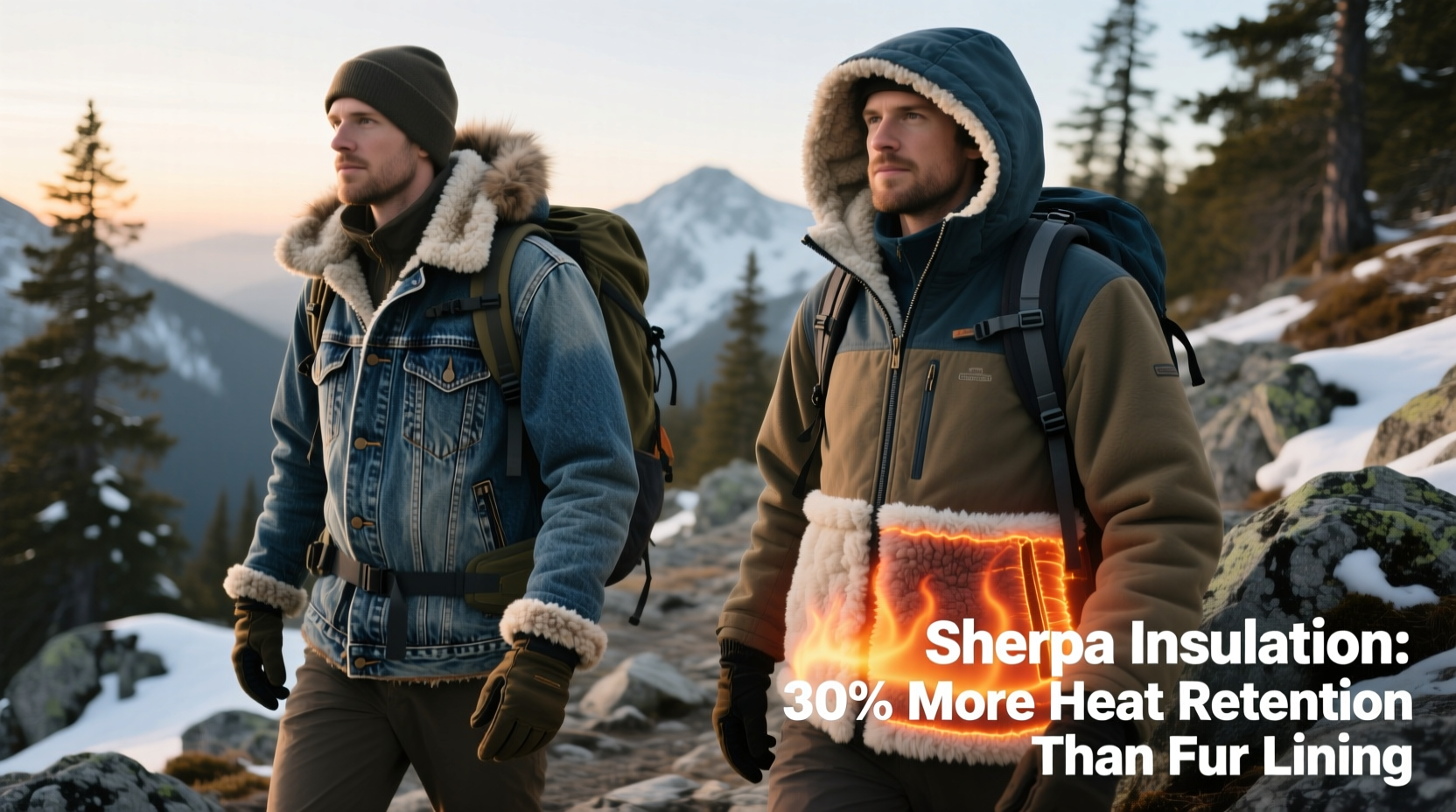
Before comparing performance, it's important to distinguish between what \"fur lining\" and \"sherpa lining\" actually mean in modern apparel. Despite the names, many of today’s jackets use synthetic versions rather than genuine animal fur or wool-based textiles.
Fur lining, especially in denim jackets, typically refers to synthetic shearling or faux fur—soft, dense fibers attached to a backing material that mimics the look and feel of real sheepskin. It’s often plush, fluffy, and designed to trap air close to the skin, creating a thermal barrier.
Sherpa lining, on the other hand, is a textured polyester fabric engineered to resemble wool. It has a nubby, looped surface that provides loft without excessive weight. Sherpa is commonly used in trucker jackets, hoodies, and cold-weather workwear due to its balance of warmth and affordability.
The key difference lies not just in texture but in how each material manages heat retention, airflow, and moisture—three critical factors when hiking.
Thermal Performance During Hiking
Hiking generates body heat through movement, but once you stop—say, at a summit break or during river crossing—your core temperature drops quickly. A good insulating layer must retain warmth during rest periods without causing overheating during exertion.
Fur-lined denim jackets tend to offer higher initial warmth thanks to their denser pile and greater loft. The trapped air within the thick fibers acts as an effective buffer against cold winds and low ambient temperatures. However, this same density limits breathability. On moderate hikes where heart rate rises, sweat accumulates faster against the skin because the lining doesn’t wick moisture efficiently.
Sherpa, while slightly less lofty, allows more air circulation. Its open-loop structure promotes mild ventilation, reducing the risk of clamminess during active phases. Though it may feel marginally less warm at first, sherpa maintains a more consistent microclimate next to the skin over time, making it better suited for dynamic activities like hiking.
“Insulation isn’t just about trapping heat—it’s about managing the entire thermal cycle. Breathability matters as much as warmth when you’re moving.” — Dr. Lena Torres, Outdoor Apparel Researcher, University of Colorado Boulder
Comparative Analysis: Key Factors for Hikers
To evaluate which lining performs better on hikes, consider five primary metrics: insulation efficiency, moisture management, weight, durability, and versatility across conditions.
| Factor | Fur Lining (Synthetic) | Sherpa Lining |
|---|---|---|
| Warmth Retention | High – excellent passive insulation | Moderate to High – consistent but less intense |
| Breathability | Low – traps moisture easily | Moderate – allows some airflow |
| Moisture Wicking | Poor – absorbs sweat slowly, dries slowly | Fair – wicks minimally but evaporates faster |
| Weight & Packability | Heavier, bulkier – harder to stow | Lighter, more compressible |
| Durability | Good – resists matting if high-quality | Very Good – resilient to friction and washing |
| Wind Resistance | High – dense pile blocks airflow | Moderate – gaps allow slight wind penetration |
| Best Use Case | Cold, dry climates; short walks; urban wear | Active hiking; variable temps; mixed terrain |
While fur lining excels in static warmth—ideal for standing around a campfire or walking through a city—its limitations become apparent during sustained physical effort. Sherpa strikes a more balanced profile, offering reliable warmth without sacrificing too much in breathability or mobility.
Real-World Example: Fall Hike in the Pacific Northwest
Amy, an experienced day hiker near Mount Rainier, tested both types of denim jackets during a series of weekend hikes in October. Temperatures ranged from 38°F (3°C) at dawn to 52°F (11°C) midday, with intermittent drizzle and muddy trails.
On her first outing, she wore a vintage-style denim jacket with deep synthetic fur lining. Within 20 minutes of ascending a moderate trail, she began sweating heavily under the arms and along her back. By the halfway point, the lining felt damp, and once she stopped for a snack, a noticeable chill set in despite wearing a base layer.
The following week, she switched to a sherpa-lined denim trucker jacket. Though initially feeling less cozy, she remained comfortable throughout the climb. Even after removing her pack, there was no clammy sensation. During a brief rain shower, the outer denim shed water adequately, and the sherpa dried faster when exposed to breeze during breaks.
Her conclusion: “The sherpa jacket didn’t wow me with instant warmth, but it kept me steady all day. The fur one made me too hot, then too cold. For actual hiking, I’d choose sherpa every time.”
Layering Strategy and Environmental Conditions
No single jacket works perfectly in all scenarios. How you layer and the environment you're in dramatically affect performance.
In dry, cold environments—such as desert nights or crisp autumn mornings in continental climates—a fur-lined denim jacket can serve well as a mid-to-outer layer. Pair it with a merino wool base layer and a windproof shell, and it becomes part of a robust system that prevents heat loss.
However, in humid or rainy regions—common in coastal forests, mountainous areas, or late-season treks—moisture becomes the enemy. Synthetic fur holds onto dampness longer, increasing conductive heat loss. Sherpa, though not waterproof, tends to dry quicker and doesn’t cling uncomfortably when slightly wet.
Additionally, consider elevation changes. As you gain altitude, temperatures drop approximately 3.5°F per 1,000 feet (about 6.5°C per 1,000 meters). A jacket that feels fine at the trailhead might be inadequate at the peak—or worse, cause overheating on the ascent.
Step-by-Step Guide: Choosing the Right Lined Jacket for Hiking
- Assess your typical hiking conditions: Are they cold and dry, or cool and damp? High humidity favors breathable materials like sherpa.
- Evaluate your activity level: Intense climbs generate more sweat; prioritize breathability over maximum warmth.
- Check the jacket’s construction: Look for underarm zips, mesh panels, or adjustable cuffs that enhance ventilation.
- Test the layering compatibility: Ensure the jacket fits over a fleece or lightweight puffy without restricting arm movement.
- Consider packability: If you plan to carry the jacket, lighter sherpa versions fold smaller and weigh less.
- Review care requirements: Fur linings often require gentle washing or spot cleaning; sherpa usually withstands machine washing better.
Common Misconceptions About Warmth and Material
Many assume that thicker = warmer, and fluffier = better protection. But insulation effectiveness depends on more than volume. Trapped air is what keeps you warm, not fiber density alone. Overly thick linings can compress under backpack straps, eliminating loft and reducing thermal efficiency precisely where you need it most.
Another myth is that denim itself contributes meaningfully to warmth. While cotton denim offers modest wind resistance, it conducts heat poorly and retains moisture—making it a liability when wet. That’s why the lining material becomes even more critical: it must compensate for the outer shell’s shortcomings.
Finally, aesthetics often drive purchasing decisions. Fur-lined collars and cuffs look rugged and stylish, but form should follow function in outdoor gear. A jacket that looks great in photos may fail in practice if it can't regulate temperature during movement.
Frequently Asked Questions
Can I wear a lined denim jacket as my only outer layer on a winter hike?
Only in mild conditions or very short hikes. Most denim jackets lack waterproofing, sufficient breathability, and adequate insulation for prolonged exposure. They work best as mid-layers under a hardshell or in dry, calm weather with minimal elevation gain.
Is sherpa lining sustainable?
Most sherpa is made from recycled or virgin polyester, derived from petroleum. While durable, it sheds microplastics when washed. Some brands now offer bio-based or plant-derived sherpa alternatives. Check labels for eco-certifications if sustainability is a priority.
Do fur-lined denim jackets work for backpacking?
Rarely. Their weight, bulk, and poor moisture management make them impractical for multi-day trips. Backpackers need lightweight, compressible, fast-drying insulation—qualities that sherpa meets more closely, though even then, dedicated insulated jackets are preferable.
Final Verdict: Which Insulates Better on Hikes?
For hiking, **sherpa lining generally outperforms fur lining** in overall thermal regulation. While fur provides stronger initial warmth, its poor breathability leads to moisture buildup, which undermines insulation and increases post-exertion chill. Sherpa offers a more balanced compromise—retaining heat effectively while allowing enough airflow to prevent overheating.
This makes sherpa-lined denim jackets more suitable for active use, especially on moderate trails with changing conditions. They adapt better to fluctuations in body temperature and environmental shifts, supporting comfort across longer durations.
Fur-lined variants remain valuable for fashion-forward utility wear or low-movement outdoor settings—think tailgating, camping evenings, or urban exploration—but fall short when sustained physical activity is involved.
Action Checklist Before Buying
- ✅ Determine whether you need the jacket primarily for style or performance
- ✅ Prioritize breathability if you hike frequently or vigorously
- ✅ Choose sherpa for versatile, active use; opt for fur only if staying mostly sedentary in cold weather
- ✅ Ensure the denim is sturdy (at least 12 oz cotton) and pre-washed to minimize shrinkage
- ✅ Try it on with your usual hiking layers to confirm fit and range of motion
“The best outdoor clothing disappears into your experience—you don’t notice it until you need it. And when you do, it performs.” — Mark Delgado, Gear Editor at TrailLife Journal
Conclusion: Make Your Layer Work for You
Selecting between a denim jacket with fur lining and one with sherpa comes down to matching function with intent. If your goal is warmth during stillness, fur delivers. But if you're hitting the trails, maintaining a stable body temperature through motion and rest, sherpa proves the smarter choice. It may not have the dramatic flair of a full sheepskin collar, but its practical advantages shine mile after mile.
Don’t let fashion dictate function when the stakes involve comfort and safety outdoors. Evaluate your needs honestly, test options when possible, and remember: the right jacket doesn’t just keep you warm—it keeps you moving.




 浙公网安备
33010002000092号
浙公网安备
33010002000092号 浙B2-20120091-4
Comments
No comments yet. Why don't you start the discussion?