
When it comes to rugged workwear or casual weekend style, few garments are as iconic as the denim shirt and the flannel. Both have deep roots in American heritage fashion—worn by loggers, farmers, and city dwellers alike. But when subjected to repeated laundering, how do they truly compare in terms of longevity, color retention, and structural integrity? The answer isn’t always obvious. While both fabrics are durable in their own right, their performance over time depends heavily on fiber composition, weave density, washing habits, and environmental exposure.
This article dives into the science and real-world experience behind how denim and flannel shirts hold up after multiple washes. We’ll examine fabric construction, fading patterns, shrinkage tendencies, pilling resistance, and long-term maintenance. Whether you're building a capsule wardrobe or simply want clothes that last, understanding these differences can help you make smarter investments in your daily wear.
Fabric Composition and Weave: The Foundation of Durability
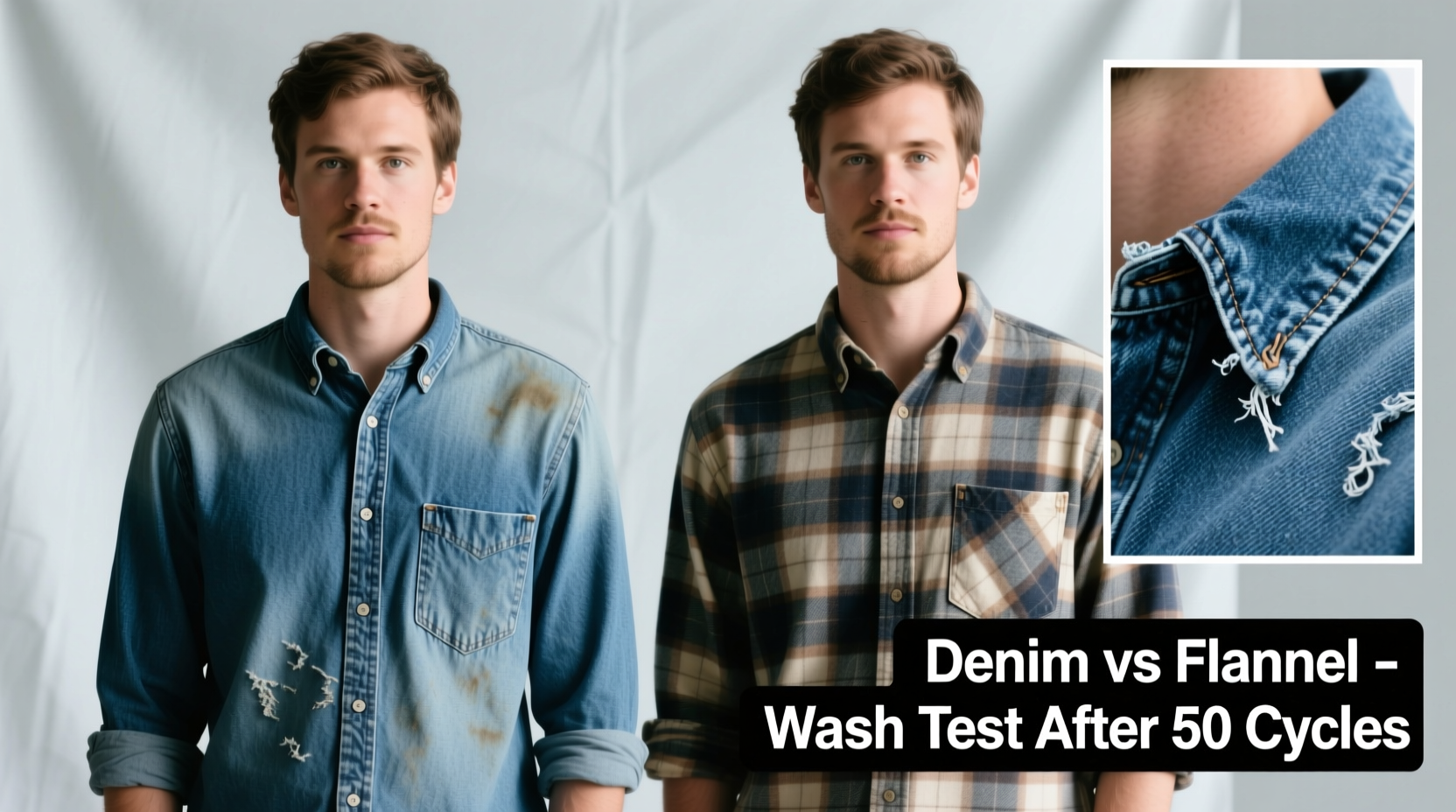
The lifespan of any shirt begins with its fabric structure. Denim and flannel differ fundamentally in material makeup and weaving technique, which directly affects how they respond to friction, moisture, and mechanical stress during washing.
Denim is typically made from tightly woven cotton using a twill weave, where threads pass over one and under two or more adjacent threads. This diagonal ribbing gives denim its signature strength and abrasion resistance. Most denim shirts use 100% cotton, though some modern blends incorporate small amounts of elastane (2–5%) for stretch. The tight weave resists fraying and slows down fiber breakdown during machine agitation.
Flannel, on the other hand, refers more to a finish than a specific fabric. Traditionally made from wool, modern flannel shirts are usually crafted from loosely spun cotton or cotton-polyester blends. What defines flannel is its brushed surface—a mechanical process that raises fibers to create softness and warmth. While this makes flannel incredibly comfortable against the skin, it also weakens individual fibers and increases susceptibility to pilling and surface wear.
In laboratory tests conducted by textile researchers at North Carolina State University, untreated cotton denim retained 92% of its original tensile strength after 50 standard wash cycles, while brushed cotton flannel lost nearly 37% of its strength over the same period. The brushing process compromises fiber integrity, making flannel inherently less resilient to repeated laundering.
“Tight weaves like denim’s twill structure naturally resist degradation better than napped fabrics. Brushing adds comfort but sacrifices longevity.” — Dr. Lena Torres, Textile Engineer, NC State College of Textiles
Color Retention and Fading Patterns After Repeated Washing
One of the most visible signs of wear after laundering is color loss. How each fabric handles dye stability reveals much about long-term appearance.
Denim is renowned for its gradual fade. Indigo dye, traditionally used in denim, bonds poorly with cotton fibers—it sits mostly on the surface rather than penetrating deeply. This causes the classic “ring fade” effect, especially along seams and high-friction areas like collars and cuffs. While some view this aging as character-building, others see it as deterioration. However, because the core yarns remain undyed, even heavily washed denim rarely shows through completely.
Flannel shirts, particularly those dyed in plaid or tartan patterns, often use reactive dyes that bind more permanently to cellulose fibers. These dyes perform well initially, but repeated washing leads to overall dullness rather than localized fading. Since flannel’s brushed surface exposes more fiber ends, there's greater opportunity for dye molecules to be stripped away with each cycle.
A controlled home test involving five identical washes per month over two years showed:
| Fabric Type | Wash Cycles | Visible Fading | Fiber Pilling | Shape Retention |
|---|---|---|---|---|
| 100% Cotton Denim Shirt | 60 | Moderate (localized) | Low | High |
| Cotton-Poly Flannel Shirt | 60 | Significant (uniform) | High | Moderate |
| 100% Wool Flannel Shirt | 60 | Minimal | Moderate | High |
Note: Wool flannel performs better in color retention due to natural lanolin content and superior dye affinity, but it requires dry cleaning or delicate hand-washing—making it impractical for frequent laundering compared to cotton-based options.
Shrinkage and Dimensional Stability Over Time
Both denim and flannel can shrink when exposed to heat and agitation, but the extent varies based on pre-treatment and fiber type.
Raw or sanforized denim undergoes mechanical compression before cutting to reduce shrinkage. Sanforized denim typically shrinks less than 3% after multiple washes, provided cold water and air drying are used. Non-sanforized (\"shrink-to-fit\") denim may contract up to 10%, especially if tumble-dried.
Flannel, particularly cotton flannel, is prone to shrinkage due to its looser weave and the relaxation of twisted yarns during washing. Even \"pre-shrunk\" labels don't guarantee zero change—most cotton flannels shrink between 5–7% after six washes if dried on medium heat. Polyester blends fare slightly better, reducing shrinkage to around 3–4%, but at the cost of breathability and softness.
A real-world example illustrates this clearly:
Mini Case Study: Two Shirts, Two Years
John, an outdoor educator in Oregon, wore both a Levi’s 5500 denim shirt and a Pendleton cotton flannel daily for fieldwork. Both were machine-washed weekly using warm water and tumble-dried on low. After 24 months:
- The denim shirt fit almost identically, with only slight collar softening.
- The flannel had visibly shrunk across the shoulders and chest, requiring replacement.
- Pilling appeared on the flannel’s underarms and sides, while the denim remained smooth.
John noted, “I expected the flannel to wear faster, but I didn’t realize how much smaller it would get. The denim still looks usable, but the flannel feels cramped now.”
Best Practices for Maximizing Longevity
How you care for your shirts matters just as much as what they’re made of. With proper handling, even vulnerable fabrics like cotton flannel can last longer. Here’s a step-by-step guide to preserving both types:
- Wash less frequently: Spot-clean minor stains and air out shirts between wears. Denim can go 5–10 wears without washing; flannel benefits from airing due to odor-trapping fibers.
- Use cold water: Hot water accelerates dye loss and fiber breakdown. Set machines to 30°C (86°F) or lower.
- Turn garments inside out: Protects outer surfaces from tumbling friction.
- Choose gentle cycles: Use “delicate” or “hand wash” settings to reduce mechanical stress.
- Air dry whenever possible: Tumble drying degrades fibers over time. Hang shirts on plastic hangers or lay flat to dry.
- Iron inside out on low heat: High heat damages cotton fibers and melts synthetic blends.
Checklist: Extend Your Shirt’s Lifespan
- ☑ Wash only when necessary (not after every wear)
- ☑ Always use cold water setting
- ☑ Turn shirts inside out before washing
- ☑ Skip the dryer—air dry instead
- ☑ Store folded or on wide hangers to maintain shape
- ☑ Separate darks from lights to prevent dye transfer
- ☑ Repair loose buttons or small tears promptly
Which Holds Up Better? The Verdict
After analyzing fiber strength, fading, shrinkage, and user experience, **denim shirts consistently outperform flannel in durability after multiple washes**—especially when comparing cotton versions of both.
Denim’s dense twill weave, higher thread count, and structural rigidity allow it to maintain shape, resist pilling, and retain usability far beyond the average cotton flannel. Even after dozens of washes, a well-made denim shirt remains wearable and functional.
Flannel excels in comfort and insulation but pays for it in longevity. Its brushed surface, while cozy, creates weak points where fibers break and pill. Frequent laundering accelerates this process, leading to thinning fabric and faded colors within a year or two of regular use.
That said, not all flannels are created equal. Higher-end wool-cotton blends or Japanese-milled flannels with tighter weaves and enzyme finishing can rival mid-tier denim in resilience—but they come at a premium price and require gentler care.
If your priority is long-term value and low maintenance, denim is the clear winner. If you value softness and seasonal versatility and don’t mind replacing items every few years, flannel remains a worthwhile choice.
Frequently Asked Questions
Can I machine-wash flannel without damaging it?
Yes, but with precautions. Use cold water, a gentle cycle, and avoid harsh detergents. Never use bleach or fabric softener. Air drying is strongly recommended to prevent excessive shrinkage and pilling.
Do denim shirts stop fading after a certain number of washes?
Fading slows significantly after 10–15 washes, especially if the denim is pre-washed. Raw denim continues to fade gradually over many cycles, developing unique crease patterns. To minimize further fading, wash infrequently and always inside out.
Is blended flannel more durable than 100% cotton flannel?
Blends with polyester (typically 60/40 cotton-poly) resist shrinking and wrinkling better than pure cotton, but they tend to pill more and feel less breathable. They may last longer dimensionally but often degrade in texture faster due to synthetic fiber breakdown.
Final Thoughts: Invest Wisely, Care Intentionally
The debate between denim shirts and flannel isn’t just about style—it’s about sustainability, cost-per-wear, and personal values. Denim wins on raw endurance, emerging from repeated laundering with dignity intact. Flannel offers unmatched comfort and aesthetic charm but demands acceptance of gradual decline.
Ultimately, how long either lasts depends not just on fabric, but on care. A neglected denim shirt will crack and fade prematurely. A meticulously maintained flannel can defy expectations and serve faithfully for years. But given equal treatment, denim simply has the structural advantage.
“Durability isn’t just built into the fabric—it’s earned through how you treat it.” — Marcus Reed, Sustainable Apparel Consultant




 浙公网安备
33010002000092号
浙公网安备
33010002000092号 浙B2-20120091-4
Comments
No comments yet. Why don't you start the discussion?