
In the ongoing battle against clutter, furniture that doubles as storage has become a go-to solution for modern homes. Two popular options—desktop storage boxes and storage ottomans—offer distinct advantages. But when it comes to actual decluttering results, which one delivers more value? The answer isn’t universal; it depends on your space, lifestyle, and storage needs. Understanding the strengths and limitations of each can help you invest wisely in organization that lasts.
Understanding the Core Differences
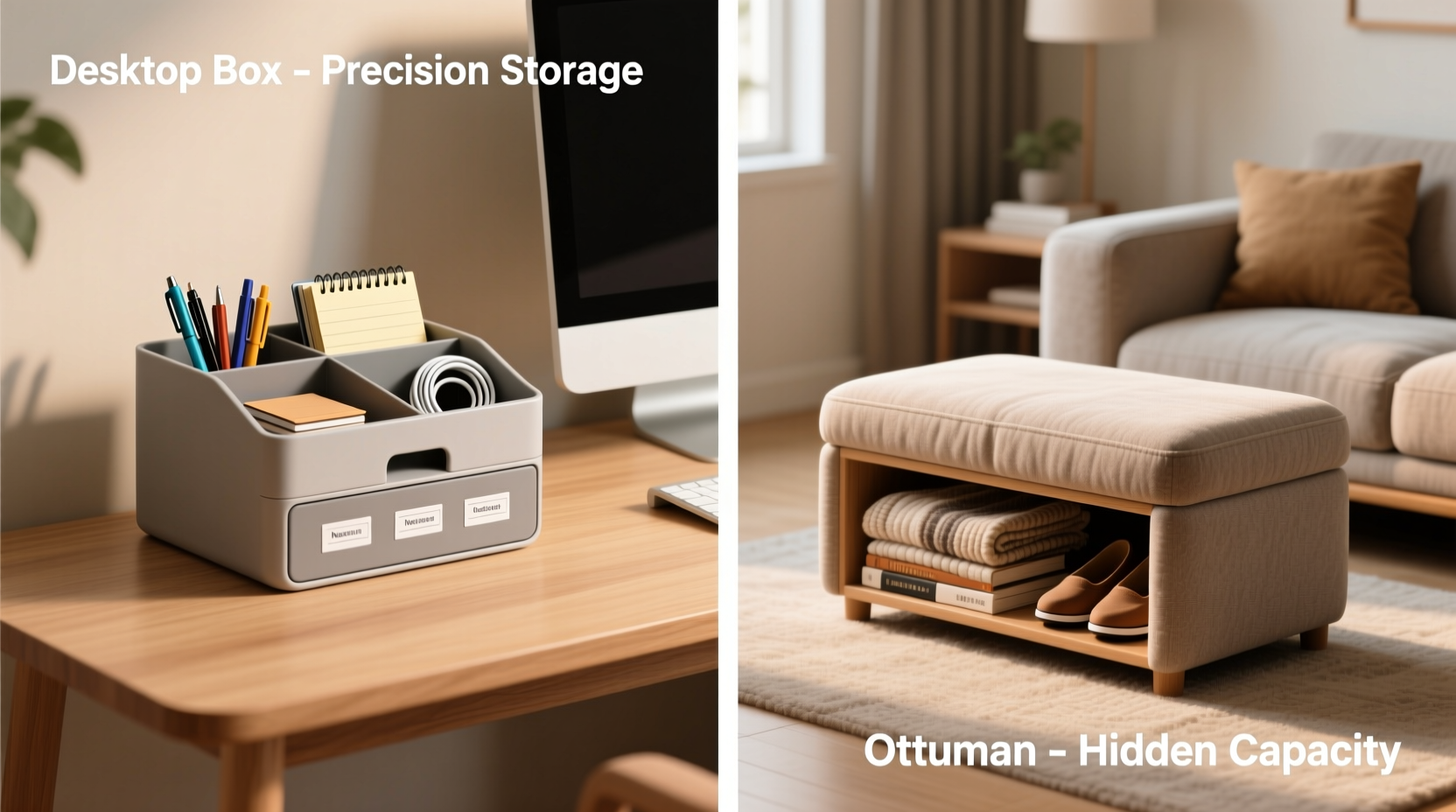
A desktop storage box is typically a compact, modular container designed for organizing smaller items on or under a desk. These are often made from plastic, wood, or fabric and come in various sizes and configurations—stackable trays, drawer inserts, or multi-compartment units. They’re ideal for managing office supplies, cables, notepads, or tech accessories.
In contrast, a storage ottoman is a piece of furniture that functions as both seating and hidden storage. Usually placed in living rooms, bedrooms, or entryways, these larger units open up to reveal a hollow interior capable of holding blankets, pillows, shoes, toys, or seasonal items. Most are upholstered and built with durability and comfort in mind.
The key difference lies in scale and purpose. Desktop storage boxes optimize micro-spaces for productivity-focused organization. Storage ottomans serve broader household needs, combining utility with aesthetic appeal and comfort.
Space Efficiency and Placement Flexibility
When evaluating what’s “worth buying,” consider where you need storage most. In a home office or study nook, every inch counts. A desktop storage box maximizes unused surface area without requiring additional floor space. It keeps essentials within arm’s reach while reducing visual chaos. Stackable models allow vertical expansion, making them ideal for small apartments or shared workspaces.
Storage ottomans, however, require dedicated floor space. While they offer significantly more volume—often 3–5 cubic feet of internal capacity—they aren’t practical in tight quarters unless they replace another item (e.g., a coffee table or bench). Their strength lies in dual functionality: they eliminate the need for separate seating and storage solutions.
Comparison Table: Key Features at a Glance
| Feature | Desktop Storage Box | Storage Ottoman |
|---|---|---|
| Primary Use | Office organization | Living/bedroom storage + seating |
| Capacity | Low to moderate (under 1 cu ft) | High (3–5+ cu ft) |
| Mobility | Highly portable | Moderate (bulky but movable) |
| Cost Range | $10–$40 | $80–$250 |
| Aesthetic Impact | Minimalist, functional | Decorative, statement piece |
| Assembly Required | Rarely | Sometimes (for some models) |
| Lifespan | 3–7 years (plastic degrades) | 5–10+ years (if well-maintained) |
Real-Life Scenario: One Home, Two Solutions
Consider Sarah, a remote worker living in a 600-square-foot apartment. Her workspace is a corner of the living room, adjacent to a small sofa. She initially bought a desktop organizer to manage her pens, chargers, and notebooks. It helped, but she still had blankets and extra pillows lying around, contributing to a cluttered feel.
She then invested in a storage ottoman, placing it in front of the sofa. Not only did it provide a place to store linens and board games, but it also doubled as extra seating during movie nights. When guests visited, she used it as a footrest or even a makeshift coffee table.
The desktop box solved a specific problem. The ottoman transformed how she used her space. Together, they addressed different layers of clutter—one targeted, the other holistic.
“Effective decluttering isn’t about filling every gap with storage. It’s about matching the solution to the type of clutter.” — Lena Patel, Interior Organizer & Author of *Clutter-Free Living*
When to Choose a Desktop Storage Box
If your primary challenge is disorganization at your workstation, a desktop storage box is likely the smarter investment. It excels in environments where precision and accessibility matter more than volume. Writers, students, and digital creators benefit from having tools neatly categorized within immediate reach.
These boxes are especially useful if you rent and can’t modify furniture or install shelves. Many are stackable, customizable, and discreet—some even resemble decorative boxes rather than utilitarian organizers.
However, they’re not meant for bulky or infrequently used items. Overloading them leads to instability or spills. And because they sit on surfaces, they can contribute to visual clutter if not styled intentionally.
When a Storage Ottoman Makes More Sense
A storage ottoman shines in communal areas where space is multifunctional. If your living room doubles as a guest room, or your bedroom lacks closet space, an ottoman offers high-capacity storage without sacrificing comfort or design.
They’re particularly effective for households with children or pets, where toys, leashes, or blankets need quick tucking away. The soft upholstery blends into most decor styles, and lifting the lid provides easy access to contents.
One caveat: ensure the ottoman has a safety hinge or stay-lift mechanism, especially in homes with kids. A heavy lid slamming shut can cause injury. Also, avoid placing heavy objects on top unless the model is explicitly rated for it.
Step-by-Step: Choosing the Right Option for Your Needs
- Assess Your Clutter Type: Is it paper, cables, and stationery (desk-related), or blankets, shoes, and toys (household)?
- Map Available Space: Do you have floor space for an ottoman, or only a desktop surface?
- Evaluate Frequency of Access: Will you use the stored items daily (favor desktop) or seasonally (favor ottoman)?
- Consider Aesthetics: Does your space need a functional tool or a stylish centerpiece?
- Set a Budget: Ottomans cost more upfront but offer long-term versatility. Boxes are affordable and replaceable.
- Test Mobility Needs: Do you move spaces often? Lightweight boxes win. Stable ottomans suit permanent setups.
Frequently Asked Questions
Can I use a storage ottoman in a home office?
Yes, if space allows. It works well for storing files, extra cushions, or office supplies out of sight. Just ensure it doesn’t disrupt workflow or ergonomics.
Are desktop storage boxes durable over time?
It depends on material. Acrylic and wood last longer than thin plastic. Look for reinforced edges and smooth finishes to prevent cracking.
Do storage ottomans smell if not ventilated?
Prolonged storage of fabrics or damp items can lead to mildew odors. Always air out textiles before storing and consider adding silica gel packs or cedar blocks.
Final Verdict: Which Is Actually Worth Buying?
For pure decluttering impact per square foot, the desktop storage box wins in workspaces. It’s inexpensive, targeted, and instantly improves focus by removing distractions. However, the storage ottoman offers greater long-term value in shared living areas, combining seating, aesthetics, and high-volume storage in one elegant unit.
The truth is, they’re not mutually exclusive. Most well-organized homes benefit from both. Start with the area causing the most stress. If your desk is chaotic, begin with a desktop organizer. If your living room feels cramped, prioritize the ottoman. Address the root of the clutter, not just the symptom.
Action Plan Checklist
- Identify your top clutter zone (desk, living room, bedroom).
- Measure available space for potential storage solutions.
- Determine whether you need frequent access or long-term storage.
- Decide on a budget ($20 for boxes, $100+ for ottomans).
- Select a style that matches your room’s decor.
- Purchase and organize—then reassess in two weeks for effectiveness.
Conclusion
Decluttering isn’t about owning more containers—it’s about using space intelligently. Whether you choose a desktop storage box or a storage ottoman, the real value lies in consistency and intentionality. Both products can transform your environment when matched to the right context. Don’t default to trends; choose function first, form second. Once you do, you’ll find that the best storage solution isn’t the fanciest one—it’s the one you actually use.




 浙公网安备
33010002000092号
浙公网安备
33010002000092号 浙B2-20120091-4
Comments
No comments yet. Why don't you start the discussion?