
For years, DeWalt’s XR line has been the gold standard in professional power tools—delivering high torque, long battery life, and rugged reliability. But with the launch of the DeWalt Atomic series, a new contender has entered the jobsite. Compact, lightweight, and marketed as “pro-grade,” Atomic promises big performance in a small package. But does it truly challenge the XR dynasty, or is this just another marketing push aimed at DIYers? For contractors, electricians, and framers who depend on their tools daily, the answer matters.
The truth lies not in specs alone, but in how these tools perform under pressure—on ladders, in tight spaces, through eight-hour shifts. This isn’t about flashy features; it’s about which system earns its place in your truck.
Size, Weight, and Ergonomics: The Real-World Edge
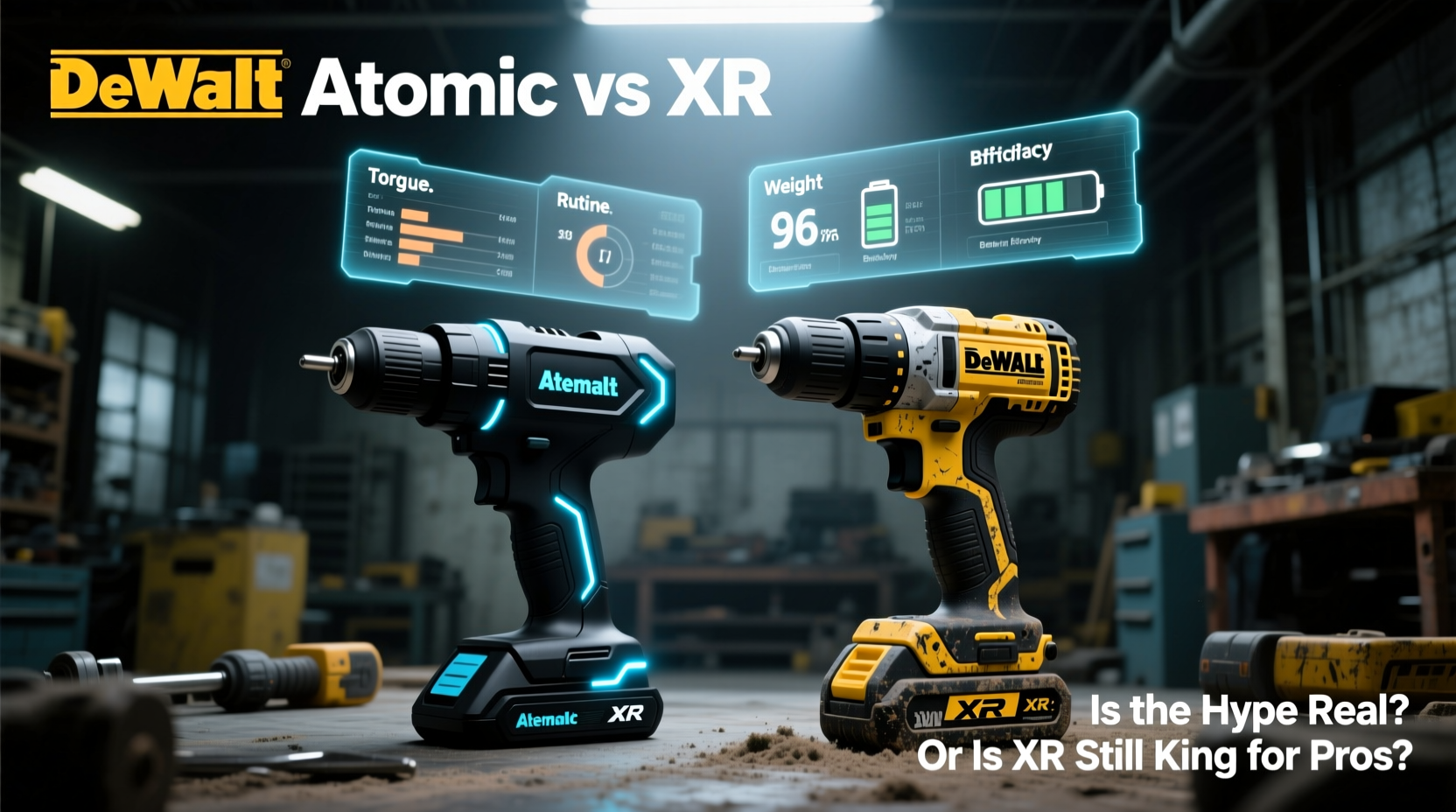
The most immediate difference between Atomic and XR tools is size. Atomic models are significantly smaller and lighter—often 20–30% shorter and up to a pound lighter than their XR counterparts. Take the Atomic 20V MAX impact driver (DCF809) versus the XR 20V MAX (DCF887). The Atomic measures just 5.6 inches in length and weighs 2.4 lbs with battery. The XR stretches to 6.8 inches and tips the scales at 3.4 lbs.
This reduction isn’t cosmetic. In confined spaces—inside wall cavities, under sinks, or above drop ceilings—that extra inch can mean the difference between finishing fast and fighting the tool. For overhead work, reduced weight cuts fatigue dramatically over time.
However, smaller doesn’t always mean better. Some users report that the compact grip of Atomic tools can feel cramped during extended use, especially for those with larger hands. The XR’s longer handle offers more surface area, improving control during heavy-duty driving or drilling.
Power and Performance: Can Small Really Deliver?
DeWalt claims the Atomic line delivers “XR-like performance” despite its size. On paper, many models come close. The DCF809 Atomic impact driver produces 1,400 in-lbs of torque and 3,200 impacts per minute—comparable to mid-tier XR models. But real-world testing reveals nuances.
In controlled tests, the Atomic handles standard lag bolts and deck screws with ease. But when faced with corroded fasteners, dense hardwoods, or continuous high-load applications, the XR pulls ahead. Its larger motor and thermal management system allow for sustained output without overheating.
“On a full-day framing job, I’ll take the XR every time. The Atomic’s great for trim, but it bogs down when you’re driving 3-inch screws all morning.” — Marcus Reed, Master Carpenter with 18 years in residential construction
Battery efficiency also plays a role. While both systems use 20V lithium-ion platforms, XR tools typically draw more current, which means faster work—but at the cost of battery life. Atomic tools, being less power-hungry, often deliver longer runtime on the same 5.0Ah pack, simply because they aren’t working as hard under moderate loads.
Tool-by-Tool Comparison: Where Each Excels
| Tool Type | Atomic Model | XR Model | Best For | Limitations |
|---|---|---|---|---|
| Impact Driver | DCF809 | DCF887 | Tight spaces, finish work | Less torque for heavy framing |
| Drill/Driver | DCD709 | DCD996 | Precision drilling, light-duty | Slower speeds, lower capacity |
| Circular Saw | DCS391 | DCS393 | Portability, quick cuts | Less blade depth, vibration |
| Reciprocating Saw | DCS381 | DCS386 | Demo in tight areas | Shorter stroke, slower cut |
| Miter Saw | N/A | DWS780 | Heavy cutting, accuracy | Atomic lacks large stationary tools |
The pattern is clear: Atomic dominates in portability and access. XR maintains superiority in power, durability, and range. Notably, DeWalt hasn’t released Atomic versions of larger tools like miter saws, table saws, or heavy-duty grinders—suggesting the line is intentionally targeted at compact applications.
Real Jobsite Scenario: Roofing Retrofit Project
Consider a recent roofing retrofit in Austin, Texas. A three-person crew was tasked with replacing decking on a steep-pitched roof. Limited space on the ridge meant tools had to be carried by hand, and overhead movement was constant.
The lead roofer opted for the Atomic impact driver for removing old screws—it fit easily into his hip pouch and allowed one-handed operation while holding a board. But once it came time to secure new OSB sheets across 2,000 sq ft, he switched to the XR model. The Atomic’s battery drained faster under continuous use, and the driver struggled slightly on misaligned holes, requiring repositioning.
“The Atomic saved my shoulders on tear-off,” he said later. “But for the install, I needed the XR’s stamina. It just keeps going.”
This mirrors broader trends: Atomic excels in intermittent, precision, or mobility-focused tasks. XR remains the go-to for marathon jobs demanding relentless output.
Battery and Ecosystem Compatibility: One System, Two Roles
One major advantage both lines share is full compatibility with DeWalt’s 20V MAX battery ecosystem. Any 20V XR or Atomic tool works with any 20V DeWalt battery—whether it’s a 1.5Ah slim pack or a 9.0Ah brick. This interoperability is critical for pros who’ve invested heavily in batteries.
Many professionals now adopt a hybrid strategy: using Atomic tools for service calls, interior work, and tight installations, while reserving XR tools for demolition, framing, and outdoor builds. This dual-system approach maximizes versatility without doubling battery costs.
Is the Hype Real? A Balanced Verdict
Yes, the Atomic hype is real—but with caveats. It’s not that Atomic outperforms XR. It’s that it redefines what “performance” means for certain applications. When space, weight, and precision matter more than brute force, Atomic isn’t just competitive—it’s superior.
Yet, calling Atomic a replacement for XR misunderstands both lines. They serve different roles. XR remains king for high-demand, full-day professional use. Its motors are built for longevity, its cooling systems prevent burnout, and its torque settings handle industrial-grade fasteners without hesitation.
Atomic, meanwhile, fills a gap DeWalt previously ignored: the need for pro-level tools that don’t sacrifice accessibility. It’s ideal for electricians threading wires behind walls, plumbers under vanities, or finish carpenters installing crown molding. These aren’t weekend warriors—they’re tradespeople who need reliable, compact tools that won’t wear them out.
FAQ
Can I use XR batteries on Atomic tools?
Yes. All DeWalt 20V MAX batteries are fully compatible with Atomic tools. You can use any 20V DeWalt battery—from 1.5Ah to 9.0Ah—without issue.
Are Atomic tools as durable as XR?
They’re built to DeWalt’s pro standards, but due to their smaller size, they may not endure the same level of abuse as XR tools in high-torque scenarios. Independent drop tests show similar resilience, but long-term heat stress can affect smaller motors more quickly.
Should I switch from XR to Atomic?
Not entirely. Instead of switching, consider expanding. Keep XR for heavy tasks and add Atomic for specialized, compact work. Most pros benefit from having both.
Final Checklist: Choosing the Right Tool for Your Work
- Assess your primary job type: Do you do mostly finish work, electrical, or plumbing? Atomic may be ideal.
- Evaluate workspace constraints: Frequent tight or overhead work? Prioritize compact size.
- Check power requirements: Driving long fasteners into hardwood or metal? XR offers more headroom.
- Review existing battery inventory: If you already own 20V DeWalt batteries, adding Atomic is cost-effective.
- Test before investing: Rent or borrow both models to compare feel and performance on actual jobs.
Conclusion: Know Your Job, Choose Your Weapon
The debate isn’t Atomic vs XR—it’s about matching the right tool to the right task. The XR line remains the undisputed champion for high-output, all-day professional use. Its combination of power, durability, and ecosystem depth is unmatched. But the Atomic line isn’t just hype; it’s a strategic evolution, delivering professional capability in a form factor that finally respects the realities of modern tradesmanship.
Smart pros don’t choose sides. They build kits that adapt. Whether you're bolting down subfloor or installing a recessed light, having the right tool—compact or powerful—means getting the job done faster, safer, and with less strain.




 浙公网安备
33010002000092号
浙公网安备
33010002000092号 浙B2-20120091-4
Comments
No comments yet. Why don't you start the discussion?