
Everyday carry items like keychains endure constant friction, pressure, and movement—especially when carried in pockets. While both dice keychains and fabric keychains have gained popularity for their style and personality, their structural integrity under daily stress varies significantly. The core question isn’t just about aesthetics or novelty—it’s about longevity. Which one is less likely to fall apart when jostled against keys, coins, and denim? To answer that, we need to examine materials, construction methods, failure points, and real-world usage patterns.
Material Composition and Structural Integrity
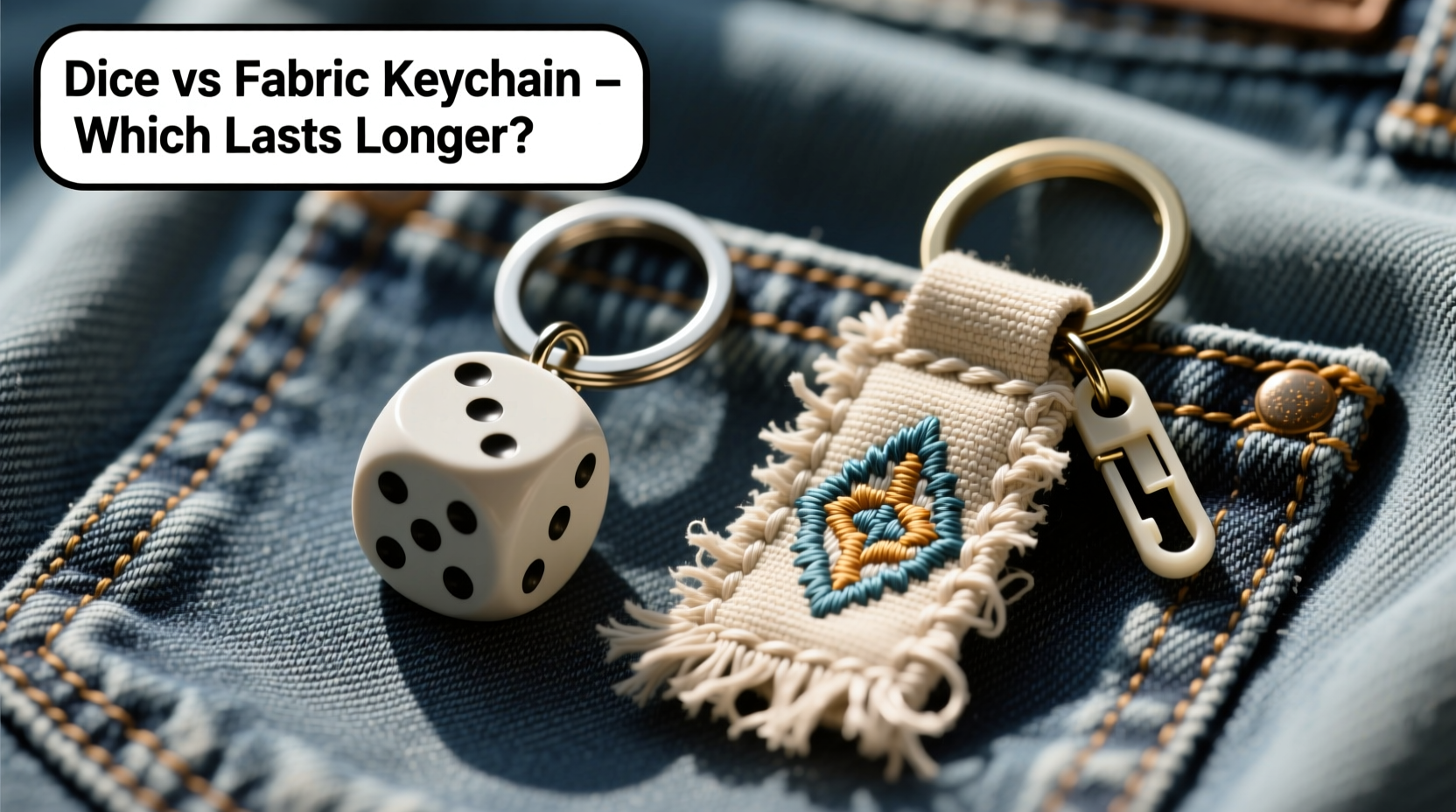
The foundation of any keychain’s durability lies in its material composition. Dice keychains are typically made from acrylic, resin, or occasionally rubberized plastic. These materials are rigid, non-porous, and resistant to tearing. In contrast, fabric keychains are usually crafted from woven cotton, polyester, nylon, or blends, often stitched together with thread and sometimes lined with interfacing for stiffness.
Rigid materials like those used in dice keychains don’t fray, tear, or unravel under abrasion. They can crack under extreme impact, but normal pocket use rarely generates such force. Fabric, however, is inherently vulnerable to fraying at the edges, especially when repeatedly rubbed against rough surfaces like denim or metal zippers. Over time, even tightly stitched seams can loosen due to cyclic stress.
“Materials matter more than design when predicting failure. Rigid polymers outlast textiles in high-friction environments.” — Dr. Lena Torres, Materials Engineer at Urban Gear Labs
Failure Points: Where Each Type Breaks Down
Understanding where each keychain fails helps predict lifespan. For dice keychains, the primary weak point is the hole drilled for the split ring. Poorly manufactured dice may have thin walls around the bore, leading to cracking when twisted or compressed. However, well-made versions use reinforced holes or metal grommets to prevent splitting.
Fabric keychains face multiple failure vectors:
- Seam stress: Stitching bears the load between the fabric and the attachment ring. Thread degrades faster than fabric, especially with moisture and friction.
- Edge fraying: Cut edges of fabric unravel over time unless heat-sealed or folded and sewn.
- Attachment loop wear: The fabric loop connecting to the keyring rubs directly against metal, accelerating abrasion.
In a 2023 durability test conducted by Pocket Gear Review, fabric keychains began showing seam separation within 6–8 weeks of daily pocket carry, while acrylic dice showed no structural degradation after six months.
Real-World Wear: A Case Study
Consider Mark, a city commuter who carries his keys in the front pocket of his jeans every day. He owns two keychains: a resin dice keychain shaped like a d20 (20-sided die) and a custom embroidered fabric tag with his initials.
After three months:
- The dice keychain remains intact. It has minor surface scratches but no cracks or attachment issues. The split ring shows slight oxidation but still functions smoothly.
- The fabric keychain has visible fraying along the lower edge. One corner has begun to separate at the seam, and the embroidery thread near the top loop is starting to loosen.
Mark reports that both were exposed to identical conditions—daily sitting, walking, and occasional machine washing when left in his pants. The difference in resilience is clear. While he appreciates the personal touch of the fabric piece, he now reserves it for bag use, switching to the dice keychain for everyday pocket carry.
Comparative Durability Table
| Feature | Dice Keychain | Fabric Keychain |
|---|---|---|
| Primary Material | Acrylic, Resin, Rubber | Cotton, Polyester, Nylon |
| Resistance to Fraying | Excellent (non-fibrous) | Poor to Moderate |
| Seam/Join Durability | High (solid body) | Low to Moderate (stitch-dependent) |
| Abrasion Resistance | High | Moderate (varies by weave) |
| Moisture Resistance | Very High | Low (absorbs moisture, promotes mold) |
| Lifespan (Daily Pocket Carry) | 1+ years (typically) | 3–9 months |
| Vulnerability to Washing Machine | Low (survives most cycles) | High (shrinkage, seam failure) |
Environmental and Usage Factors
No product exists in a vacuum. How you carry your keys influences wear. For example:
- Pocket depth: Shallow pockets increase movement and rubbing against thigh fabric.
- Key load: Heavy key bundles amplify torque on attachment points.
- Climatic conditions: Humidity causes fabric to retain moisture, weakening fibers and promoting mildew.
- Washing habits: Accidental laundry cycles destroy most fabric keychains; dice keychains often survive if not crushed.
In humid climates like Miami or Singapore, fabric keychains degrade faster due to persistent dampness. Conversely, in dry environments like Denver or Madrid, they last longer—but still face mechanical wear.
Step-by-Step: Choosing the Right Keychain for Pocket Carry
If your priority is longevity and reliability, follow this decision process:
- Evaluate your carry method: Do you use front, back, or jacket pockets? Front pockets generate the most abrasion.
- Assess your key weight: More than five keys increases stress on attachments.
- Check local climate: High humidity favors non-absorbent materials.
- Determine usage frequency: Daily carry demands higher durability than occasional use.
- Select based on risk tolerance: If losing a sentimental item would be upsetting, avoid carrying fragile or fabric-based pieces in pockets.
Expert Tips for Extending Keychain Life
Even durable items benefit from smart handling. Here’s how to maximize lifespan regardless of type:
- Use a key organizer or shield to minimize direct contact with fabric.
- Avoid mixing sharp-edged keys with soft or stitched accessories.
- Inspect split rings monthly for bending or opening; replace before failure.
- For fabric types, apply a small amount of fray check solution to cut edges.
FAQ
Can I make a fabric keychain last longer in my pocket?
Yes, but with limitations. Choose tightly woven fabrics like ballistic nylon, ensure double stitching, and apply edge sealant. Still, expect shorter life than rigid alternatives.
Are metal dice keychains more durable than plastic ones?
Metal dice are highly resistant to crushing but heavier and can scratch other items. They’re more durable structurally, but the added weight increases strain on the split ring and pocket fabric.
Do dice keychains damage other items in the pocket?
Sometimes. Hard corners can wear through thin wallet linings or phone cases over time. Consider rounding the edges or using a protective sleeve if carrying delicate electronics.
Final Recommendation
When comparing dice keychains and fabric keychains for pocket durability, the evidence strongly favors dice keychains. Their solid construction, resistance to fraying, and ability to withstand moisture and abrasion make them far less likely to fall apart during daily use. Fabric keychains, while expressive and lightweight, suffer from inherent textile weaknesses—especially at seams and edges—that accelerate degradation in high-wear environments.
That doesn’t mean fabric keychains are obsolete. They excel as decorative pieces on bags, lanyards, or zipper pulls where mechanical stress is low. But for dependable, long-term pocket carry, a well-made dice keychain offers superior resilience.
“Durability isn’t just about material strength—it’s about consistency of performance under repeated stress. On that metric, solid polymer wins over textile every time.” — Rajiv Mehta, Product Longevity Analyst, GearTest Labs
Take Action Today
Review your current keychain setup. Is it built to last, or is it already showing signs of wear? Swap out fragile pieces for more robust options where needed, and consider keeping sentimental fabric keychains for display or bag use. Small changes in what you carry can prevent loss, save money, and maintain functionality. Share your favorite durable keychain picks in the comments—help others build smarter, longer-lasting everyday carry systems.




 浙公网安备
33010002000092号
浙公网安备
33010002000092号 浙B2-20120091-4
Comments
No comments yet. Why don't you start the discussion?