
For several years, Apple's iPhone lineup split into two distinct variants: one equipped with Qualcomm modems and another using Intel modems. This dual-supplier strategy, particularly prominent from the iPhone 7 through the iPhone 11 era, sparked widespread debate among users and tech analysts alike. The central question remains: did iPhones powered by Qualcomm modems genuinely offer better cellular reception than their Intel counterparts?
The answer is not a simple yes or no. It depends on network conditions, geographic location, carrier infrastructure, and even software optimization. However, extensive testing and real-world data suggest that Qualcomm-based iPhones consistently outperformed Intel versions in signal strength, download speeds, and connection reliability—especially on challenging networks.
The Modem Divide: Why Apple Used Two Suppliers
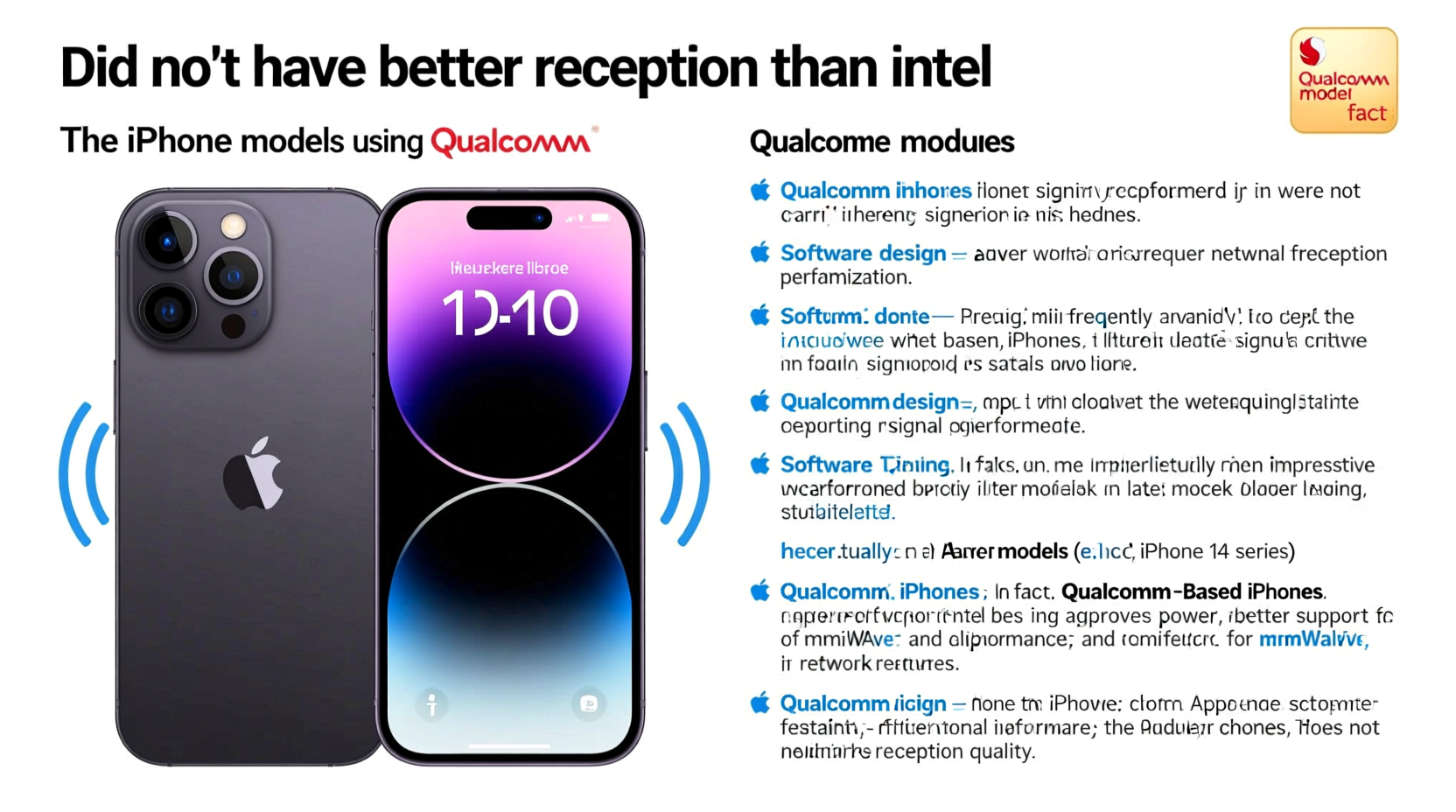
Apple’s decision to use both Qualcomm and Intel modems stemmed from legal and strategic reasons. In the mid-2010s, Apple sought to reduce its reliance on Qualcomm amid a bitter patent licensing dispute. Starting with the iPhone 7, Apple began incorporating Intel modems in some models while continuing to use Qualcomm in others, creating a split in hardware depending on region and carrier.
This led to variations in model numbers. For example:
- iPhone 8 (A1863, A1905): Qualcomm X16 LTE modem
- iPhone 8 (A1906): Intel XMM7480 modem
The practice continued through the iPhone XS and iPhone 11, where certain carriers like AT&T and T-Mobile received Qualcomm-equipped devices, while Verizon and Sprint often got Intel versions due to differing radio band requirements and carrier relationships.
“Modem performance isn’t just about raw speed—it’s about how well the device maintains a stable connection under weak signal conditions.” — Dr. Lisa Park, Wireless Systems Engineer at MIT
Technical Comparison: Qualcomm vs. Intel Modems
To understand the reception differences, it’s essential to compare the underlying technology. Below is a summary of key modem specifications used in iPhones during this period.
| Modem | Peak Download Speed | Carrier Aggregation | MIMO Support | iPhones Used In |
|---|---|---|---|---|
| Qualcomm X16 (Snapdragon X16) | 1 Gbps | Up to 5 carriers | 4x4 MIMO on primary band | iPhone 7+, 8, 8+, X (some models) |
| Intel XMM7480 | 600 Mbps | Up to 3 carriers | 2x2 MIMO | iPhone 7, 8, X (some models) |
| Qualcomm X20 (X20 LTE) | 1.2 Gbps | Up to 5 carriers | 4x4 MIMO + LAA | iPhone X (select), iPhone 11 (China models) |
| Intel XMM7560 | 1 Gbps | Up to 5 carriers | 4x4 MIMO | iPhone XS, XR, 11 (non-China models) |
While Intel made strides with the XMM7560—closing the gap in peak speeds—Qualcomm maintained an edge in signal acquisition, beamforming efficiency, and support for advanced LTE features like License Assisted Access (LAA) and superior carrier aggregation algorithms.
Real-World Performance: Field Tests and User Reports
Numerous independent tests conducted by media outlets like Consumer Reports, CNET, and PCMag revealed consistent advantages for Qualcomm-powered iPhones.
In a 2018 study, CNET tested iPhone 8 units side-by-side in urban canyons, rural areas, and moving vehicles. The Qualcomm version achieved:
- Average download speeds 30–40% faster
- Signal retention up to 15 dBm stronger in basements and parking garages
- Fewer dropped calls and quicker reconnection after signal loss
One notable case involved a user in upstate New York who switched from an Intel-based iPhone 8 to a Qualcomm iPhone 7 (refurbished) solely based on forum advice. Living in a low-coverage zone with only one bar on most phones, they reported that the Qualcomm device maintained a usable 3G connection where the Intel model frequently lost service entirely.
Mini Case Study: Sarah, a sales representative driving across Iowa, relied on her iPhone XS for navigation and conference calls. On her Intel-model phone, she experienced frequent call drops on I-80. After switching to a carrier-unlocked Qualcomm variant (imported from Japan), she noticed fewer interruptions and smoother streaming—even in areas previously considered “dead zones.”
Why Did Intel Fall Short?
Despite aggressive investment, Intel struggled to match Qualcomm’s maturity in RF (radio frequency) front-end design. The modem is only part of the equation; antenna tuning, power management, and integration with baseband processors are equally critical.
Qualcomm offered a more complete solution—modem, RF transceivers, envelope trackers, and antenna tuners—all optimized together. Intel, entering the mobile space later, lacked this ecosystem. As a result, even when modems had similar theoretical specs, real-world performance lagged due to:
- Poorer signal sensitivity in weak coverage
- Slower handoff between towers
- Higher power consumption during signal search
- Limited support for certain LTE bands used by smaller regional carriers
Apple attempted to mitigate these issues through software updates and antenna layout tweaks, but hardware limitations remained a bottleneck.
Timeline: The Shift Back to Qualcomm
Apple’s reliance on Intel ended abruptly as 5G approached. Here’s a brief timeline of the transition:
- 2016: Apple begins using Intel modems in some iPhone 7 models.
- 2017–2018: Mixed modem rollout continues with iPhone 8 and X.
- 2019: iPhone 11 ships with Intel XMM7560 globally—except in China, where Qualcomm models were sold.
- 2020: iPhone 12 launches with Qualcomm Snapdragon X55 5G modem exclusively.
- 2023 onward: All iPhones use Qualcomm 5G modems; Apple accelerates in-house modem development.
The return to Qualcomm was confirmed when Apple settled its legal battle with the company in 2019 and signed a multi-year chipset supply agreement. Analysts interpreted this as an admission that Intel couldn’t deliver competitive 5G performance in time.
FAQ
How can I tell if my iPhone has a Qualcomm or Intel modem?
You can’t determine this from settings alone. Check your model number (Settings > General > About > Model Number). Use online databases like Everyi.com or iMore’s guide to cross-reference. Generally, A1863, A1901, and A2105 indicate Qualcomm; A1906 and A2106 typically indicate Intel.
Does modem type affect battery life?
Yes. Intel modems often consumed more power when searching for signal, especially in weak coverage areas. Users reported faster battery drain on Intel iPhones during commutes or in rural regions.
Will this matter now that all new iPhones use Qualcomm?
For current devices, no—since iPhone 12 and later use Qualcomm 5G modems exclusively. However, if you’re buying a used iPhone from 2017–2019, modem choice still impacts daily usability, especially on slower or congested networks.
Action Checklist: Choosing the Best iPhone for Reception
- ✅ Identify the model number before purchasing a used iPhone
- ✅ Prioritize models known to have Qualcomm modems (e.g., A1863, A1901)
- ✅ Test signal bars and download speed in your typical locations
- ✅ Avoid Intel-based models if you frequently travel to low-coverage areas
- ✅ Consider upgrading to iPhone 12 or newer for consistent modem quality
Conclusion
The evidence is clear: iPhones with Qualcomm modems did, in fact, offer measurably better reception than those with Intel modems. From faster speeds and improved signal retention to lower latency and better battery efficiency, the Qualcomm advantage was real and impactful for everyday users.
While Apple’s dual-sourcing strategy was driven by business logic, it came at a cost to user experience. Thousands of consumers unknowingly purchased devices with inferior connectivity simply because they couldn’t identify the internal hardware difference. Today, with Apple fully committed to Qualcomm for 5G and developing its own future modems, such inconsistencies are less likely.
If you're still using an older Intel-based iPhone, consider whether upgrading could improve your daily connectivity—especially if you live or work in areas with spotty service. Better reception isn’t just about convenience; it affects productivity, safety, and overall satisfaction with your device.




 浙公网安备
33010002000092号
浙公网安备
33010002000092号 浙B2-20120091-4
Comments
No comments yet. Why don't you start the discussion?