
In 2011, a legal battle erupted between two of the world’s most influential technology companies: Apple and Samsung. The conflict wasn’t over market share or supply chains—it was about design, innovation, and intellectual property. Apple accused Samsung of copying the iPhone’s look and feel across multiple Galaxy smartphone models. The case became one of the most high-profile patent lawsuits in modern history, drawing global attention and raising critical questions about creativity, competition, and the boundaries of imitation in tech.
The core issue was not merely whether Samsung’s phones resembled Apple’s—many smartphones do—but whether they crossed the line into unlawful copying of protected design elements. What followed was years of courtroom drama, multimillion-dollar verdicts, appeals, and a broader debate on how patents should protect aesthetic and functional innovations.
The Origins of the Lawsuit
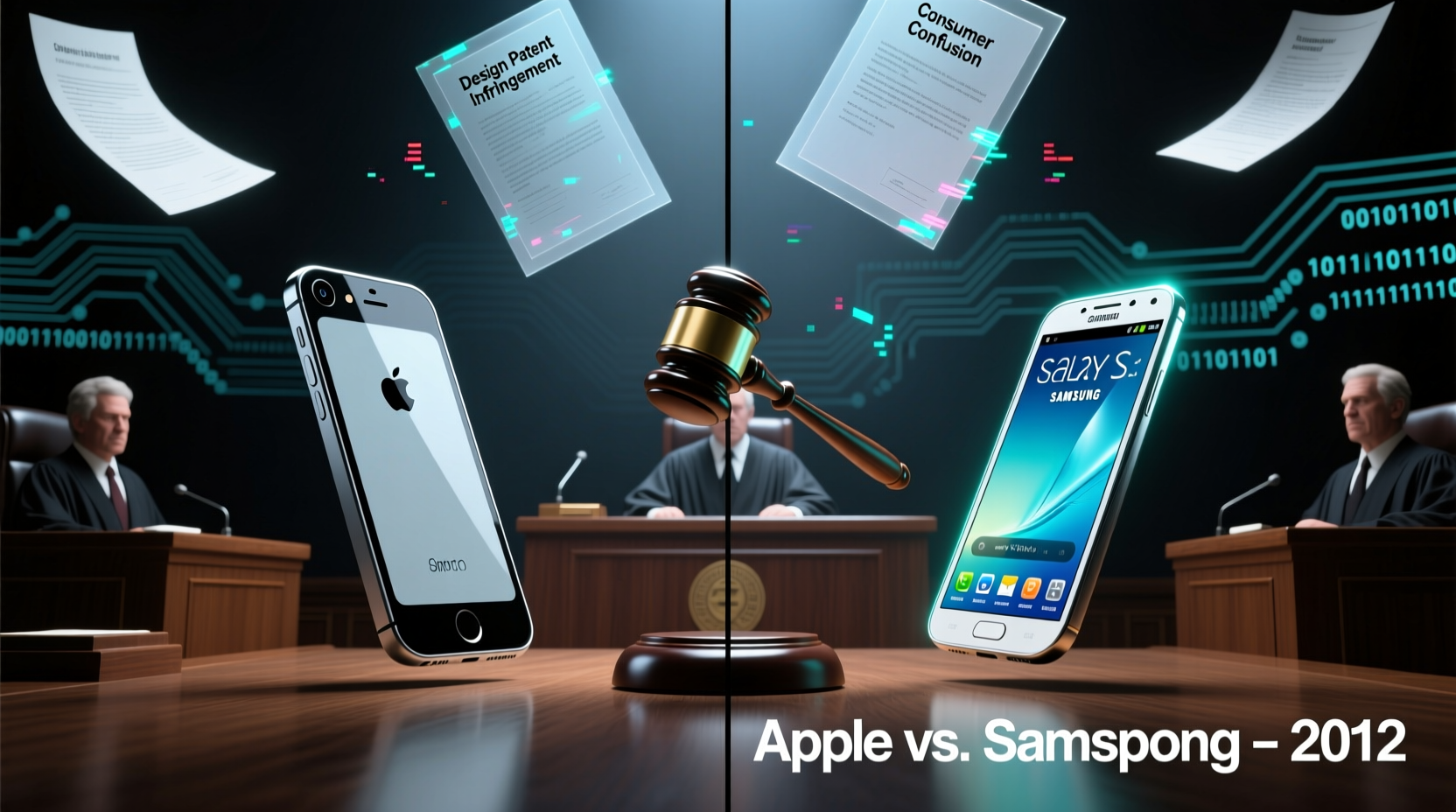
Apple filed its initial lawsuit against Samsung in April 2011 in the U.S. District Court for the Northern District of California. The complaint alleged that Samsung had “slavishly” copied the iPhone’s design and user interface features across several Galaxy devices, including the Galaxy S, S II, and Nexus S. Apple claimed infringement on three design patents and several utility patents related to:
- The iPhone’s rectangular shape with rounded corners
- The grid of colorful app icons on a black background
- The \"bounce-back\" effect when scrolling past the edge of a page
- The method of tapping to zoom in on images
Apple argued that Samsung didn’t just draw inspiration—they replicated key visual and interactive elements that consumers associated with the iPhone. Internal Samsung emails revealed during the trial suggested that executives were under pressure to create a product that could compete directly with the iPhone, even if it meant adopting similar design cues.
“Samsung’s commitment to innovation is unwavering, but we recognize the importance of respecting intellectual property.” — Samsung Spokesperson, 2012
The Trial and Landmark Verdict
The trial began in July 2012 and lasted seven days. Jurors reviewed hundreds of documents, internal communications, and side-by-side comparisons of Apple and Samsung devices. The jury ultimately sided with Apple, awarding $1.05 billion in damages—a figure later adjusted through appeals but still among the largest in patent litigation history.
The court found Samsung guilty of infringing on Apple’s design patents, particularly those covering the iPhone’s ornamental design. One juror later remarked that the similarities between the devices were “too close to be coincidental.”
Key Design Elements in Dispute
| Apple Patent | Description | Samsung Device Feature |
|---|---|---|
| D618,677 | Rectangular phone with rounded corners and narrow bezel | Galaxy S series front design |
| D593,087 | Grid of colorful square icons on a dark background | Galaxy home screen layout |
| D671,759 | Front face dominated by a screen with minimal physical buttons | Galaxy S4 and earlier models |
The Aftermath and Legal Appeals
Samsung immediately appealed the verdict, arguing that the damages were excessive and that design patents shouldn’t dictate broad market exclusivity. Over the next decade, the case wound through multiple appeals, reaching the U.S. Supreme Court in 2016.
In a pivotal decision, the Supreme Court ruled unanimously that damages for design patent infringement don’t necessarily have to be based on the total profit from the entire product. This reversed a lower court interpretation that allowed Apple to claim Samsung’s total profits from infringing devices. The ruling clarified that damages should reflect the value attributable to the specific component that infringed the patent—not the whole phone.
After retrials and recalculations, the final damages awarded to Apple were reduced to around $540 million by 2018. While significantly less than the original amount, it still represented a major financial and reputational consequence for Samsung.
Timeline of Key Events
- April 2011: Apple sues Samsung for patent infringement.
- August 2012: Jury awards Apple $1.05 billion.
- 2013–2015: Ongoing appeals reduce and reevaluate damages.
- October 2016: U.S. Supreme Court hears oral arguments on damages calculation.
- December 2016: Supreme Court rules in favor of Samsung on damages methodology.
- May 2018: Final judgment sets damages at $540 million.
- 2020: Both companies quietly move past the dispute as focus shifts to 5G and foldable devices.
Did Samsung Really Copy Apple?
This remains a debated question. Technically, Samsung did not replicate Apple’s software code or hardware components. However, the visual and experiential similarities were undeniable. The Galaxy S phones featured nearly identical layouts, icon styles, and user interface behaviors to the iPhone.
Critics argue that Samsung capitalized on Apple’s groundbreaking design language to accelerate its entry into the high-end smartphone market. Supporters counter that Samsung made significant hardware innovations—such as larger screens, expandable storage, and early adoption of AMOLED displays—that distinguished its products.
What’s clear is that the lawsuit reshaped how companies approach product design. It emphasized that even small aesthetic choices—like corner radius or icon arrangement—can be legally protected. As John Villasenor, a UCLA law professor and tech policy expert, noted:
“The Apple v. Samsung case underscored that in consumer electronics, design isn’t just about looks—it’s a competitive advantage protected by law.” — John Villasenor, UCLA Law
Lessons for Tech Companies and Innovators
The case offers valuable takeaways for startups, designers, and established firms navigating innovation in crowded markets.
Checklist: Avoiding Design Patent Infringement
- Conduct comprehensive prior art searches before finalizing product designs.
- Document all design decisions to demonstrate independent creation.
- Use third-party legal counsel to perform freedom-to-operate analyses.
- Differentiate your product through unique UI/UX elements, not just specs.
- Encourage innovation over imitation—even under tight deadlines.
Mini Case Study: The Rise of Differentiation Post-Lawsuit
Following the lawsuit, Samsung made a strategic pivot. Instead of mimicking Apple’s minimalist design, it embraced bolder choices. The Galaxy Note series introduced stylus functionality and larger screens, carving out a niche for productivity-focused users. Later, Samsung led the charge in foldable phone technology with the Galaxy Fold and Flip series—designs so distinct they faced no legal challenges from Apple.
This shift demonstrated that true innovation doesn’t come from copying competitors, but from identifying unmet user needs and solving them in novel ways. By 2020, Samsung had developed a design identity separate from Apple’s, proving that legal setbacks can catalyze long-term creative growth.
Frequently Asked Questions
Did Samsung admit to copying Apple?
No, Samsung never formally admitted to copying Apple. While internal emails showed concern about competing with the iPhone, the company maintained that its designs were independently developed and legally distinct.
Can a shape or color be patented?
Yes. Design patents protect the ornamental appearance of a functional item. Apple’s patents covered the specific shape, layout, and graphical interface of the iPhone—not the idea of a smartphone, but its unique visual expression.
How did the lawsuit affect consumers?
In the short term, little changed for consumers. However, the case raised awareness about design ownership and may have discouraged overly derivative products. It also highlighted the importance of differentiation in a saturated market.
Conclusion
The Apple vs. Samsung patent war was more than a corporate feud—it was a defining moment in the digital age. It challenged the tech industry to confront difficult questions about inspiration versus imitation, and it affirmed that design is not superficial, but a form of intellectual property worthy of protection.
While Samsung’s early Galaxy phones bore a striking resemblance to the iPhone, the outcome of the lawsuit pushed both companies—and the broader tech ecosystem—toward greater innovation. Today, both brands continue to lead in mobile technology, not by copying each other, but by pursuing different visions of the future.




 浙公网安备
33010002000092号
浙公网安备
33010002000092号 浙B2-20120091-4
Comments
No comments yet. Why don't you start the discussion?