
When you reach for a jar of ground cinnamon at the grocery store, you're likely using Cassia cinnamon—often labeled simply as “cinnamon.” But there’s another type: Ceylon cinnamon, known as \"true cinnamon,\" which is less common but prized in both traditional medicine and fine cuisine. While they look similar and share a warm, sweet-spicy profile, Ceylon and Cassia cinnamon differ significantly in origin, flavor, chemical composition, and health implications. Understanding these distinctions empowers home cooks and health-conscious consumers to make informed choices—whether crafting a delicate pastry, seasoning a savory curry, or managing long-term wellness.
Definition & Overview
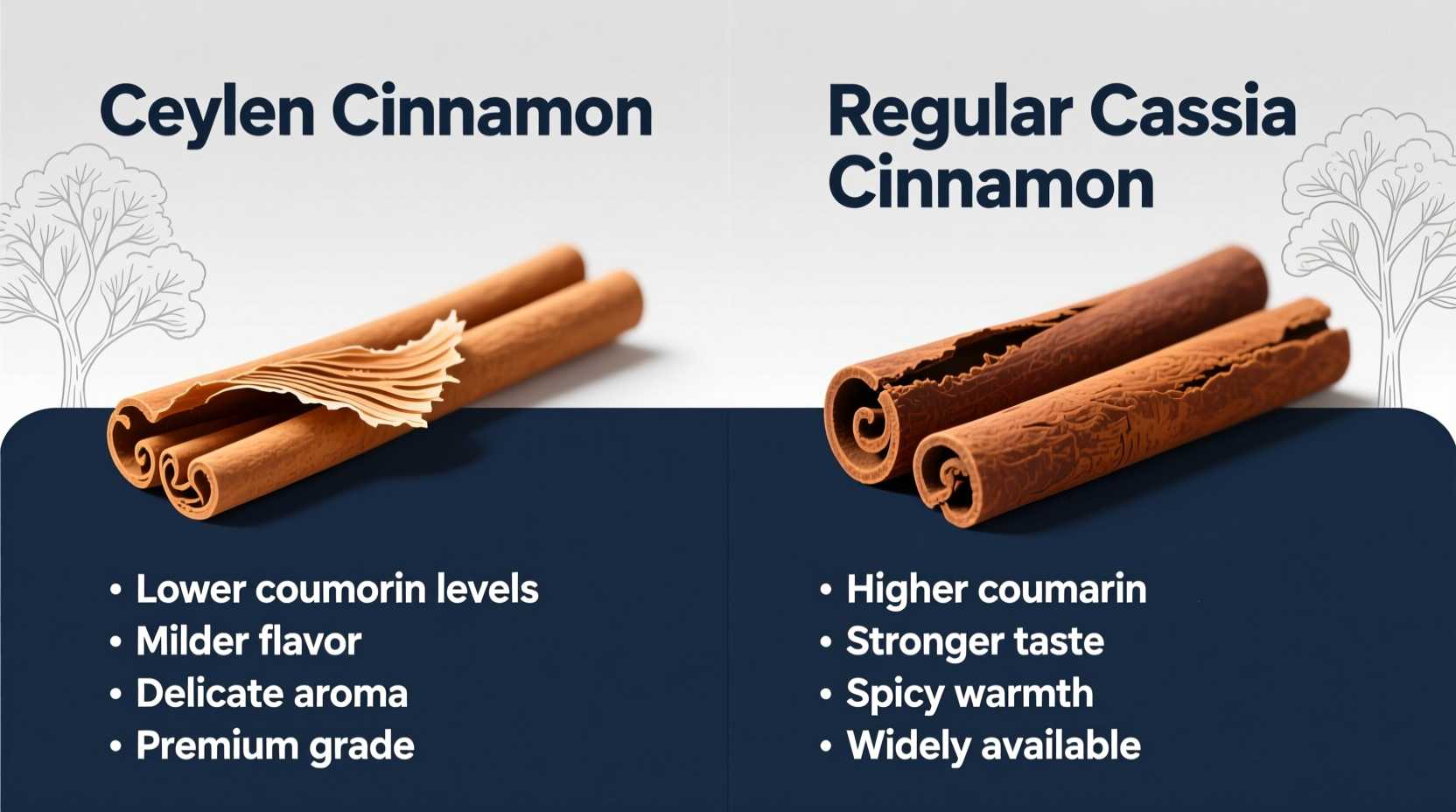
Cinnamon is a spice derived from the inner bark of trees in the Cinnamomum genus. Despite its widespread use, not all cinnamon is created equal. The two primary types found globally are Ceylon cinnamon (Cinnamomum verum, meaning \"true cinnamon\") and regular cinnamon, more accurately called Cassia cinnamon (Cinnamomum cassia), which dominates supermarket shelves in North America and parts of Europe.
Ceylon cinnamon originates from Sri Lanka (formerly Ceylon), southern India, and Madagascar. It has been traded for millennia and was once so valuable it was considered worthy of monarchs. Its production is labor-intensive: thin layers of bark are carefully rolled into fragile, multi-layered quills that resemble cigars. This method gives Ceylon its signature soft texture and complex aroma.
Cassia cinnamon, by contrast, is primarily grown in China, Indonesia, and Vietnam. It forms thicker, harder bark rolls with a single dominant layer. These dense sticks are easier to harvest and process, making Cassia cheaper and more commercially viable. Most \"ground cinnamon\" sold in standard spice jars is Cassia, though labeling rarely clarifies this distinction.
Both spices deliver warmth and sweetness, but their underlying chemistry leads to different culinary behaviors and health outcomes—especially with regular consumption.
Key Characteristics
| Characteristic | Ceylon Cinnamon | Cassia Cinnamon (Regular) |
|---|---|---|
| Scientific Name | Cinnamomum verum | Cinnamomum cassia |
| Origin | Sri Lanka, South India, Madagascar | China, Indonesia, Vietnam |
| Bark Appearance | Thin, layered, papery quills; light tan color | Thick, rigid, single-layer rolls; dark reddish-brown |
| Flavor Profile | Delicate, sweet, citrusy, floral notes | Bold, pungent, sharper, slightly bitter |
| Aroma | Subtle, honey-like, nuanced | Intense, medicinal, robust |
| Coumarin Content | Very low (0.004–0.03%) | High (1–5%) |
| Shelf Life | 1–2 years (loses potency faster due to volatile oils) | 2–3 years (more stable due to density) |
| Price Point | Higher ($10–$20 per ounce) | Lower ($2–$6 per ounce) |
The most critical difference lies in **coumarin**, a naturally occurring compound abundant in Cassia but nearly absent in Ceylon. Coumarin has blood-thinning properties and, in high doses, can cause liver damage. The European Food Safety Authority (EFSA) recommends a tolerable daily intake of 0.1 mg of coumarin per kilogram of body weight. Just one teaspoon (2.5g) of Cassia cinnamon may contain up to 7mg of coumarin—exceeding safe limits for many adults with regular use.
Practical Usage: How to Use Each Type in Cooking
Choosing between Ceylon and Cassia depends on your recipe, desired flavor balance, and frequency of use. They are not always interchangeable without altering the dish’s character.
Using Ceylon Cinnamon
Ceylon’s refined, nuanced flavor shines in dishes where subtlety matters:
- Baking delicate pastries: Ideal for French toast, custards, crème brûlée, and sponge cakes where an aggressive spice note would overwhelm.
- Dairy-based desserts: Pairs beautifully with rice pudding, chai lattes, and baked apples with cream, enhancing sweetness without bitterness.
- Infusions and syrups: Steep whole quills in simple syrup or milk for beverages—its gentle release of essential oils prevents over-extraction.
- Savory applications: Used in Moroccan tagines, Persian rice dishes (like *sholezard*), and Middle Eastern lamb stews for aromatic complexity without heat.
TIP: Crush Ceylon quills gently before use—they’re fragile. For even distribution, grind small batches in a coffee grinder dedicated to spices. Store unused portions in an airtight container away from light.
Using Cassia Cinnamon
Cassia’s boldness makes it suitable for recipes requiring assertive spice presence:
- Snickerdoodles, pumpkin pie, and gingerbread: Its sharp bite cuts through sugar and fat, balancing rich flavors.
- Spice blends: A core component in Chinese five-spice powder, garam masala, and bakeshop-style apple pie mix.
- Slow-cooked dishes: Holds up well in mulled wine, beef curries, and braised meats where prolonged heat mellows its intensity.
- Commercial food production: Preferred for shelf-stable products due to stronger aroma retention over time.
In large-scale baking operations, Cassia is favored because its potency remains consistent across batches and storage conditions. However, for home bakers making daily use of cinnamon in oatmeal, smoothies, or toast, switching to Ceylon reduces cumulative coumarin exposure.
Variants & Types
Within the broader categories of Ceylon and Cassia, several regional variants exist—each with slight differences in processing and flavor:
Ceylon Variants
- Ala (or “Chippings”): Broken pieces of quill, often used in distillation or industrial extraction.
- Featherings: Fine, hair-like fragments from the innermost bark; highly aromatic, used in premium teas and perfumery.
- Hand-Sticks: Whole, hand-rolled quills graded by length and diameter (e.g., “Mexican” or “Continental” grade).
Cassia Variants
- Chinese Cassia (Korintje): Strongest flavor, thick bark, commonly found in U.S. supermarkets.
- Indonesian Cassia: Slightly sweeter and less harsh than Chinese; popular in processed foods.
- Saigon Cinnamon (Vietnamese): High in essential oils and coumarin; extremely pungent, sometimes labeled as premium despite health concerns.
Another related species, Cinnamomum burmannii (Padang cassia), is often blended into commercial ground cinnamon for cost efficiency. It has the highest coumarin levels among common cinnamons.
Comparison with Similar Ingredients
Cinnamon is frequently confused with other bark spices or mislabeled in retail settings. Here's how Ceylon and Cassia compare to similar items:
| Ingredient | How It Differs from Ceylon/Cassia |
|---|---|
| Cassia vs. Ceylon | Cassia is darker, harder, and higher in coumarin; Ceylon is lighter, layered, and safer for daily use. |
| Cinnamon vs. Tonka Bean | Tonka beans contain coumarin too—but at much higher concentrations. Banned in U.S. food products due to toxicity risk. Smells like vanilla-cinnamon but legally restricted. |
| Cinnamon vs. Allspice | Allspice (pimento) mimics cinnamon-clove-nutmeg blend but comes from berries. Often substituted in Caribbean jerk seasoning. |
| Cinnamon vs. Nutmeg | Nutmeg is seed-based, warmer and earthier. Never a direct substitute, though paired frequently in baking. |
“In professional kitchens, we specify 'true cinnamon' when creating dessert menus for guests with dietary sensitivities. The last thing we want is someone unknowingly consuming liver-toxic levels of coumarin from daily spiced lattes.” — Chef Elena Ruiz, Pastry Director, Farmhouse Collective
Practical Tips & FAQs
Q: Can I substitute Ceylon for Cassia in recipes?
A: Yes, but adjust quantity. Use 1¼ times the amount of Ceylon to match Cassia’s intensity. In delicate dishes, start with less and taste as you go.
Q: How do I know if my cinnamon is Ceylon or Cassia?
A: Check the label. If it says “Cinnamomum verum,” “true cinnamon,” or “Ceylon,” it’s the real deal. Absent that, assume it’s Cassia. You can also examine the sticks: Ceylon forms soft, hollow tubes made of multiple thin layers; Cassia is solid, dense, and hard to break.
Q: Is Ceylon cinnamon worth the extra cost?
A: For everyday use—especially in children’s foods, breakfast routines, or wellness-focused diets—yes. The lower coumarin content makes it safer for long-term consumption. For occasional baking or holiday recipes, Cassia remains acceptable in moderation.
Q: Does either type affect blood sugar?
A: Both have shown potential to modestly improve insulin sensitivity in short-term studies. However, Cassia’s high coumarin undermines long-term safety. For diabetic patients using cinnamon supplements, healthcare providers increasingly recommend Ceylon-only products.
Q: How should I store cinnamon to preserve freshness?
A: Keep both types in airtight glass containers, away from heat and sunlight. Ground cinnamon loses potency within 6–12 months; whole sticks last longer. Ceylon degrades faster due to volatile oil content, so buy in small quantities.
Q: Are there reliable Ceylon cinnamon brands?
A: Look for:
• Simply Organic True Cinnamon
• Frontier Co-op Ceylon Cinnamon
• Burlap and Barrel Wild Ceylon Cinnamon
• Thrive Market Organic Ceylon
Avoid generic “cinnamon” without botanical identification.
STORAGE CHECKLIST:
☐ Store in dark glass jar with tight lid
☐ Keep in cool, dry cabinet (not above stove)
☐ Label with purchase date
☐ Grind only what you need weekly
☐ Replace ground cinnamon every 12 months
Expert Insight: A Case Study in Spice Sourcing
In 2021, a California-based organic bakery began receiving customer complaints about digestive discomfort after consuming their signature cinnamon-raisin scones. After ruling out allergens, the owner tested her ingredients and discovered coumarin levels exceeding EFSA guidelines—despite using only “organic ground cinnamon.” Lab analysis revealed the supplier had substituted Indonesian Cassia for Ceylon without notification.
The bakery switched to verified Ceylon cinnamon and reformulated with a 10% reduction in total spice volume. Customer symptoms resolved, and blind taste tests showed no preference difference. The incident highlighted the importance of ingredient transparency—even for seemingly simple spices.
Summary & Key Takeaways
The difference between Ceylon and regular (Cassia) cinnamon extends far beyond packaging. These are distinct botanicals with divergent flavor profiles, health impacts, and culinary roles. Recognizing them empowers smarter, safer cooking.
- Ceylon cinnamon is “true cinnamon”—delicate, layered, low in coumarin, ideal for daily use and refined dishes.
- Cassia cinnamon is bolder, cheaper, and widely available—but contains high levels of coumarin, posing risks with frequent consumption.
- Always read labels: Opt for Cinnamomum verum when possible, especially for children, pregnant individuals, or those with liver conditions.
- Use Cassia sparingly: Acceptable in holiday baking or robust spice blends, but avoid daily intake in large amounts.
- Store properly: Protect both types from heat and moisture, but prioritize freshness with Ceylon due to its volatile oils.
Next time you sprinkle cinnamon on your morning oats or stir it into a stew, pause and consider: Are you reaching for flavor—or risking long-term health? Making the switch to Ceylon isn’t just a gourmet choice—it’s a step toward mindful, sustainable spice use in modern kitchens.




 浙公网安备
33010002000092号
浙公网安备
33010002000092号 浙B2-20120091-4
Comments
No comments yet. Why don't you start the discussion?