
Many home cooks assume all parsley is the same—a green garnish tossed onto plates for color. But in professional kitchens and traditional Mediterranean cooking, the distinction between Italian parsley and regular (curly) parsley is both significant and functional. Choosing the wrong type can subtly alter the flavor, texture, and authenticity of a dish. Understanding these two varieties goes beyond appearance: it affects how herbs integrate into sauces, stews, salads, and marinades. This guide clarifies their botanical differences, taste profiles, culinary roles, and best uses so you can make informed decisions at the market and in your cooking.
Definition & Overview
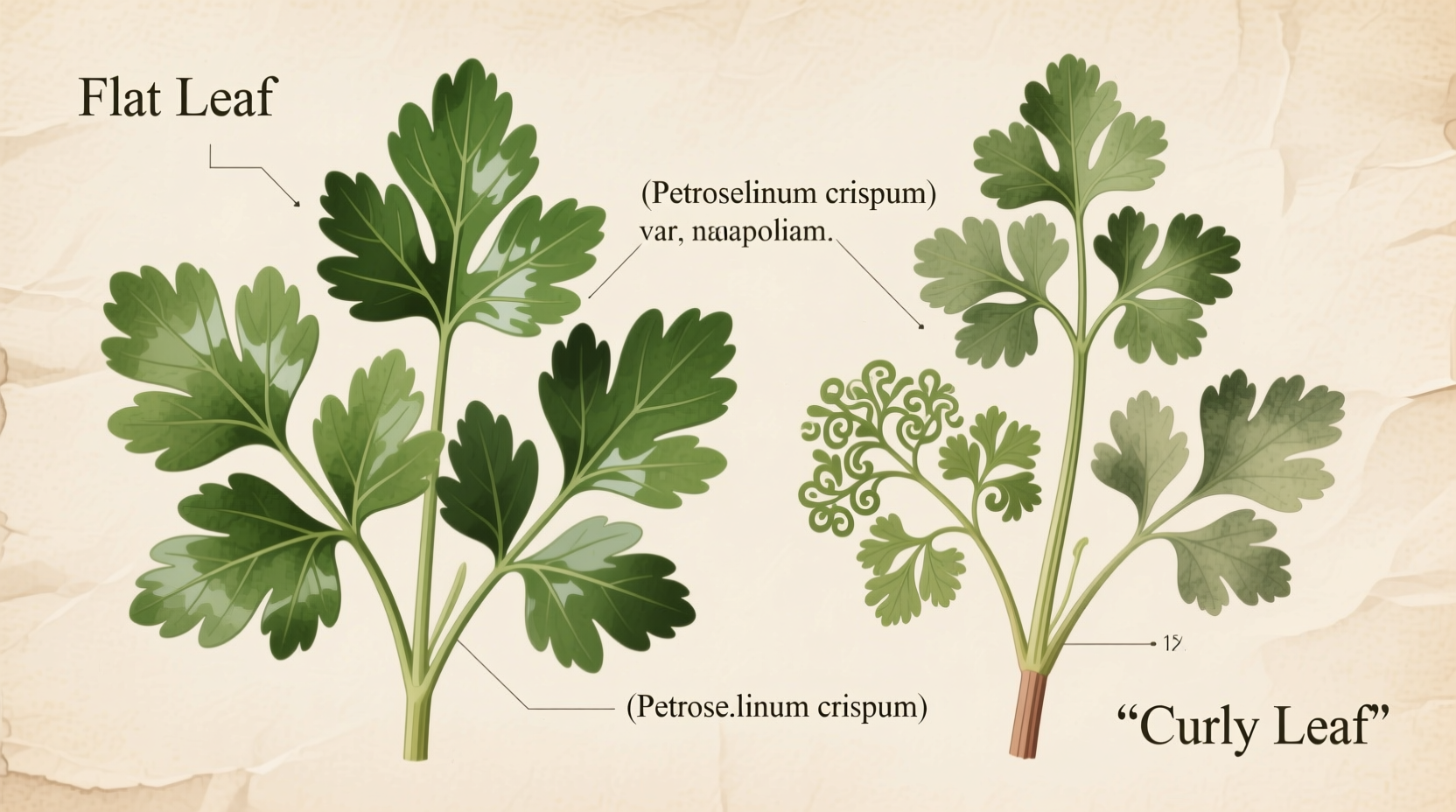
Parsley (Petroselinum crispum) is a biennial herb in the Apiaceae family, native to the central and eastern Mediterranean region. It has been cultivated for over 2,000 years, originally as a medicinal plant before becoming a cornerstone of European and Middle Eastern cuisine. Today, two primary cultivars dominate global use: Italian parsley, also known as flat-leaf or continental parsley, and regular parsley, commonly called curly parsley.
Despite sharing a species classification, these two types differ markedly in leaf structure, essential oil composition, and culinary function. Italian parsley features broad, flat leaves with a smooth edge and a more pronounced herbal aroma. Curly parsley, by contrast, has tightly ruffled foliage that resembles tiny lettuce curls and is often favored for its visual appeal rather than depth of flavor.
The confusion arises because many grocery stores label both simply as “parsley,” leaving consumers unaware of which variety they’re purchasing. Yet in dishes where parsley plays a starring role—such as tabbouleh, gremolata, or chimichurri—the choice profoundly impacts the final result.
Key Characteristics
To fully appreciate the divergence between Italian and curly parsley, consider their defining traits across several dimensions:
| Characteristic | Italian Parsley (Flat-Leaf) | Curly Parsley (Regular) |
|---|---|---|
| Leaves | Flat, broad, lance-shaped with serrated edges | Tightly curled, frilly, compact rosettes |
| Color | Deep forest green | Bright emerald green |
| Flavor Profile | Robust, earthy, slightly peppery with grassy sweetness | Mild, faintly bitter, less aromatic |
| Aroma | Intensely herbal; releases volatile oils when chopped | Subtle; minimal fragrance unless bruised |
| Texture | Firm, tender, easy to chop finely | Crisp but resilient; holds shape after cutting |
| Culinary Function | Flavor contributor in cooked and raw applications | Primarily decorative; limited integration into dishes |
| Shelf Life (Refrigerated) | 7–10 days if stored properly | Up to 14 days due to denser leaf structure |
| Heat Tolerance | Holds up moderately well in long-cooked dishes | Loses flavor quickly under heat; best added late |
These characteristics reveal why Italian parsley is preferred by chefs: its robustness allows it to stand up to cooking processes and contribute meaningful flavor. Curly parsley, while longer-lasting and visually striking, contributes little beyond color when used in quantity.
Practical Usage: How to Use Each Type
Italian Parsley: The Flavor Workhorse
Because of its bold, clean taste, Italian parsley functions as an active ingredient in recipes—not just a last-minute sprinkle. It integrates seamlessly into mixtures where herbs are meant to be tasted, not just seen.
In Raw Preparations:
Chopped Italian parsley forms the backbone of fresh herb salads like Lebanese tabbouleh, where it comprises up to 75% of the dish. Its sturdy leaves hold lemon juice and olive oil without wilting immediately, releasing bright, chlorophyll-rich notes with each bite.
It’s also essential in South American chimichurri, Middle Eastern za’atar-based dressings, and French persillade. In these contexts, the parsley must deliver both volume and vitality. Substituting curly parsley results in a flatter, less dynamic sauce.
In Cooked Dishes:
Italian parsley withstands simmering better than its curly counterpart. It’s commonly included in mirepoix-style bases (alongside carrots and celery), bouquet garni bundles, and braising liquids. When added early, it imparts a subtle background note; when stirred in at the end, it provides freshness.
For example, in a classic osso buco, a gremolata of minced garlic, lemon zest, and Italian parsley is applied post-cooking to cut through the richness of the marrow and sauce. The sharpness of the flat-leaf variety cuts cleanly through fat, whereas curly parsley would merely sit on top without contributing much flavor.
Pro Tip: Always chop Italian parsley just before use to preserve its volatile oils. Use a chef’s knife on a cutting board—avoid food processors, which can bruise the leaves and create a muddy texture.
Curly Parsley: The Decorative Finisher
Curly parsley excels in presentation. Its dense, springy leaves resist wilting and maintain their vibrant hue even after hours on a buffet table. For this reason, it remains a staple in institutional catering, banquet plating, and commercial food photography.
However, using curly parsley as a primary herb in flavor-forward dishes leads to disappointment. Its mild bitterness and lack of aromatic complexity mean that large quantities can dull rather than enhance a dish. That said, it can play a supporting role in mixed herb blends where other ingredients—like cilantro, dill, or chives—carry the flavor load.
One practical application is in potato salads or coleslaw, where a small amount adds textural contrast without overwhelming the palate. It also works well in cold herb butters when combined with stronger herbs like tarragon or thyme.
Variants & Types
While Italian and curly parsley represent the dominant commercial forms, there are lesser-known variants worth noting:
- Parsley Root (Hamburg Parsley): A root vegetable variety grown for its edible taproot, resembling a pale parsnip. Used in Central and Eastern European soups, it has a nutty, celery-like flavor. The leaves are typically flat-leaf but not always labeled as such.
- Japanese Mitsuba: Often mistaken for parsley, this herb (Cryptotaenia japonica) has a similar appearance but belongs to a different genus. It offers a delicate celery-parsley hybrid flavor and is used in dashi-based dishes and tofu preparations.
- Golden Curly Parsley: A variegated ornamental type with yellow-green leaves. Less common in cooking due to lower yield and weaker flavor, it's mostly used in garden landscaping.
Within standard culinary parsley, availability may vary by region:
- Fresh Bunches: Sold in produce sections, usually bunched with rubber bands. Look for crisp stems and no yellowing.
- Pre-Chopped (Clamshells): Convenient but prone to moisture buildup and rapid spoilage. Best used within 2–3 days.
- Dried Parsley: Nutritionally inferior and largely devoid of authentic flavor. Avoid unless no fresh option exists.
- Freeze-Dried or Frozen: Retains more flavor than dried versions. Suitable for soups and stews but not raw applications.
Comparison with Similar Ingredients
Parsley is frequently confused with other green herbs, especially cilantro (coriander leaf). While they share a superficial resemblance, their chemical makeup and sensory impact differ significantly.
| Feature | Italian Parsley | Cilantro | Curly Parsley |
|---|---|---|---|
| Flavor | Earthy, green, mildly peppery | Polarizing: citrusy to some, soapy to others (genetic sensitivity) | Mild, slightly bitter, neutral |
| Best Used In | Mediterranean, French, Middle Eastern cuisines | Mexican, Thai, Indian, Vietnamese dishes | Garnishing, plating, visual contrast |
| Substitution Feasibility | Possible for curly parsley in cooking | Not interchangeable due to distinct profile | Poor substitute for Italian parsley in flavor-centric dishes |
| Stem Edibility | Tender; usable when finely chopped | Fibrous; best removed before use | Too tough; discard before serving |
Another point of confusion involves **celery leaf**, which looks similar to flat-leaf parsley but has a more pronounced saline crunch. It can complement parsley in stocks but should not replace it entirely.
“In my kitchen, we never use curly parsley in anything that goes into the pot. It’s strictly for the plate. If you want flavor, you reach for flat-leaf every time.” — Chef Elena Moretti, Executive Chef at Osteria Verdi, Rome
Practical Tips & FAQs
Can I substitute curly parsley for Italian parsley?
You can, but only in emergencies and with adjustments. Use about 25% more curly parsley to compensate for its milder taste, and add a pinch of lemon zest or a few drops of vinegar to mimic the brightness of flat-leaf. However, avoid substitution in herb-dominant dishes like tabbouleh or persillade.
Is one type healthier than the other?
Nutritionally, both contain comparable levels of vitamin K, vitamin C, folate, and antioxidants. Italian parsley tends to have slightly higher concentrations of flavonoids and essential oils due to its greater biomass and density. However, the difference is negligible in typical serving sizes.
How should I store fresh parsley?
Treat parsley like flowers: trim the stems, place in a glass with an inch of water, cover loosely with a plastic bag, and refrigerate. Change the water every two days. Italian parsley benefits from this method most, as it dehydrates faster than curly. Alternatively, wrap dry bunches in slightly damp paper towels inside a sealed container.
Why do restaurants use so much curly parsley as garnish?
Tradition, cost, and durability. Curly parsley is cheaper to grow en masse, lasts longer in walk-in coolers, and survives transport without damage. In high-volume kitchens, efficiency often trumps flavor nuance in plating choices—even if purists disapprove.
Can I grow both types at home?
Absolutely. Both thrive in well-drained soil with full sun. Italian parsley germinates slower (up to 4 weeks) but produces larger harvests. Curly parsley grows faster and is more resistant to aphids. Many home gardeners plant both: flat-leaf for cooking, curly for snipping onto finished plates.
What dishes absolutely require Italian parsley?
- Tabbouleh (Lebanese parsley and bulgur salad)
- Gremolata (Italian condiment for veal or fish)
- Chimichurri (Argentinian grilled meat sauce)
- Persillade (French garlic-parsley mixture)
- Harissa (North African chili paste, where parsley balances heat)
Storage Hack: Freeze whole sprigs of Italian parsley in olive oil cubes. These can be dropped directly into soups, stews, or sautés for instant herbal depth without chopping.
Summary & Key Takeaways
The difference between Italian parsley and regular (curly) parsley extends far beyond looks. While both belong to the same species, they serve distinct purposes in the kitchen:
- Italian (flat-leaf) parsley is the go-to for flavor. Its robust, aromatic profile makes it indispensable in raw herb salads, sauces, marinades, and cooked dishes where herbs are meant to be tasted.
- Curly parsley is primarily decorative. Its resilience and visual appeal make it ideal for plating, garnishing, and cold dishes where subtlety is preferred.
- They are not interchangeable in recipes that depend on herbal intensity. Substituting one for the other alters taste, texture, and authenticity.
- Always check labels or ask vendors—many markets mislabel or mix the two. When in doubt, smell the bunch: Italian parsley has a stronger, greener scent.
- Store both types properly to extend shelf life, but prioritize using Italian parsley first due to its faster degradation.
Understanding this distinction elevates everyday cooking. It reflects a deeper respect for ingredients—not as interchangeable commodities, but as unique contributors to flavor, culture, and technique. Next time you reach for parsley, pause and ask: am I decorating the plate, or building flavor? Your answer will determine which variety earns a spot in your dish.
Final Thought: Great cooking begins with attention to detail. Swapping Italian for curly parsley might seem minor, but in the world of fine flavor, the smallest choices carry the greatest weight.




 浙公网安备
33010002000092号
浙公网安备
33010002000092号 浙B2-20120091-4
Comments
No comments yet. Why don't you start the discussion?