
Many home cooks treat onions and scallions as interchangeable, but doing so can dramatically alter the flavor, texture, and balance of a dish. While both belong to the Allium genus and share a pungent, savory backbone, their structure, intensity, and culinary roles are fundamentally different. Understanding these distinctions ensures precision in seasoning, enhances layering of flavors, and prevents overpowering meals with raw bite or residual sharpness. Whether building a soup base, garnishing a stir-fry, or crafting a salad dressing, knowing when to reach for a yellow onion versus a scallion is essential kitchen wisdom.
Definition & Overview
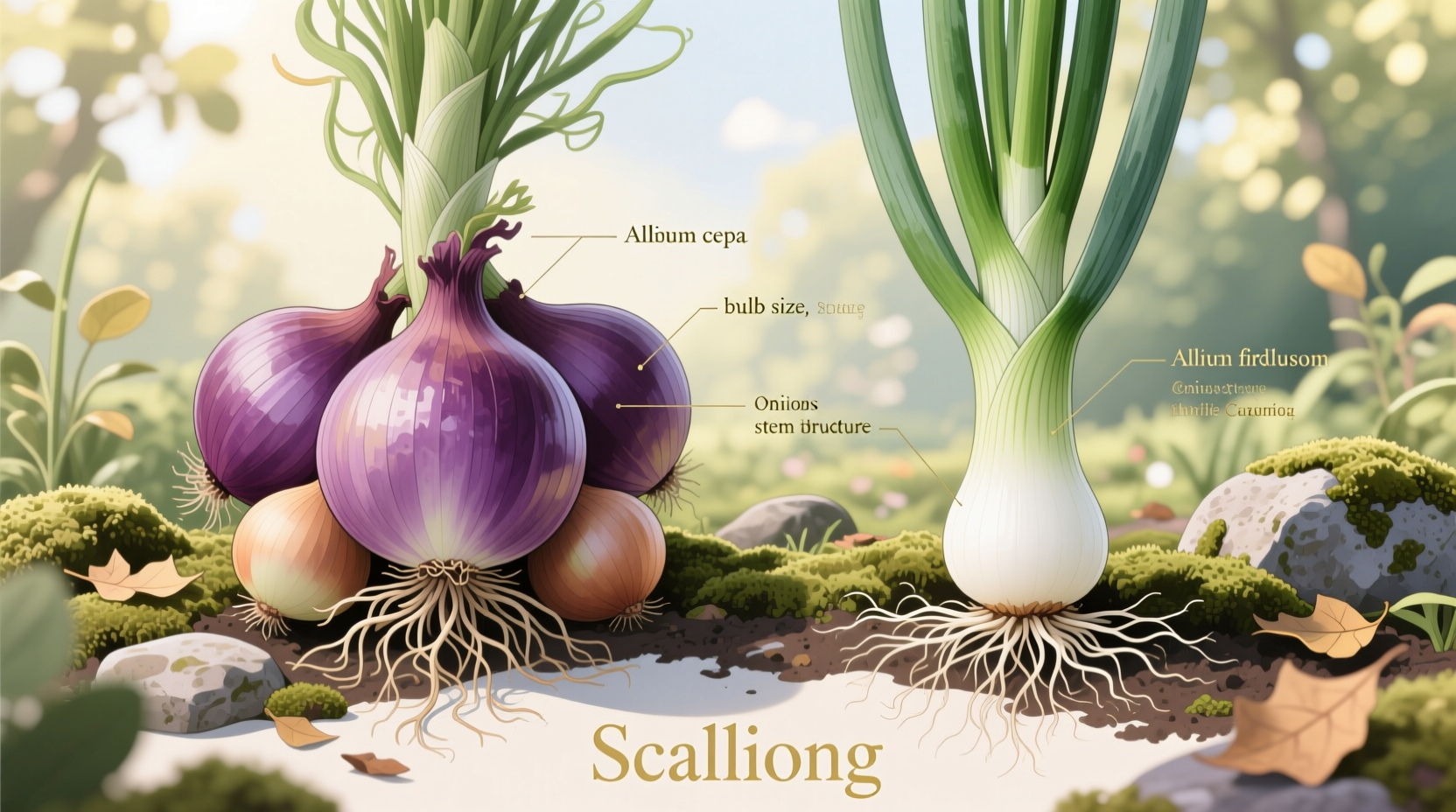
Onions, typically referring to the common bulb onion (Allium cepa), are round, layered underground bulbs cultivated worldwide for their depth of flavor and versatility. When raw, they deliver a sharp, sulfurous bite; when cooked, they caramelize into sweet, complex bases that form the foundation of countless global cuisines—from French mirepoix to Indian sofrito.
Scallions, also known as green onions or spring onions, are young, immature onions harvested before the bulb fully develops. Botanically, they may be a variety of Allium fistulosum (Welsh onion) or early-harvested Allium cepa. They feature a slender white base that tapers into vibrant green hollow tubes. Unlike mature onions, scallions are used both raw and lightly cooked, prized more for their fresh, grassy aroma than deep sweetness.
The confusion between the two often arises from overlapping names—“spring onion” in some regions refers to young bulb onions with small bulbs, while in others it means true scallions. However, in standard American culinary usage, “scallion” implies minimal bulb development and continuous harvest of both stem and root end.
Key Characteristics
| Characteristic | Bulb Onion | Scallion |
|---|---|---|
| Flavor Profile | Sharp, pungent when raw; sweet, rich when caramelized | Mild, fresh, slightly peppery; green parts more herbal |
| Aroma | Strong sulfuric scent when cut | Grassy, light, aromatic without harsh fumes |
| Texture | Firm, crisp layers; becomes soft and jammy when cooked | Crisp white base; tender, slightly chewy green stalks |
| Color/Form | Rounded bulb with papery skin (yellow, red, white) | Slender white base with long green hollow tubes |
| Culinary Function | Aromatic base, structural component in cooking | Garnish, fresh accent, mild aromatic |
| Shelf Life | 3–4 weeks in cool, dry storage | 5–7 days refrigerated, best used fresh |
| Heat Tolerance | High—designed for prolonged sautéing, roasting, grilling | Low to moderate—best added late or eaten raw |
Practical Usage: How to Use Each Ingredient
Bulb Onions in Cooking
Bulb onions serve as the cornerstone of flavor development in savory dishes. Their high sugar and sulfur content react under heat to create foundational tastes:
- Sautéing: Yellow onions are ideal for slow cooking in oil or butter until translucent (about 8–10 minutes). This draws out moisture and begins the Maillard reaction, forming amino acid-sugar complexes responsible for umami depth.
- Caramelizing: Cook sliced onions over low heat for 30–45 minutes, stirring occasionally. The natural fructose breaks down into compounds like diacetyl, producing a nutty, buttery sweetness perfect for French onion soup, burger toppings, or tart fillings.
- Roasting: Whole or halved onions roasted at 400°F (200°C) become tender and concentrated. They blend seamlessly into purées, grain bowls, or charcuterie boards.
- Raw Applications: Thinly sliced red onions add color and tang to salads, salsas, and pickles. Soaking in cold water for 10 minutes reduces their bite while preserving crunch.
Scallions in Cooking
Scallions shine where freshness and visual appeal matter. Their dual-texture profile allows segmented use:
- White Base: Can be gently sautéed at the start of stir-fries or soups for subtle allium presence without overwhelming bitterness.
- Green Tops: Almost always used raw or added in the final moments of cooking. They provide brightness to pho, ramen, tacos, and noodle dishes.
- Garnishing: Finely chopped scallions elevate finished dishes—think dumplings, baked potatoes, or avocado toast—adding pop of color and mild pepperiness.
- Blending: Pureed into sauces like chimichurri, tzatziki, or scallion oil (a Chinese staple), they contribute aromatic lift without chunky texture.
Pro Tip: Maximize scallion utility by separating whites and greens during prep. Add whites earlier in cooking for flavor base; reserve greens for finishing. Store unused portions in damp paper towel inside a sealed container for up to five days.
Variants & Types
Types of Bulb Onions
- Yellow Onions: Most versatile; high in sulfur and sugar, ideal for cooking. Account for 80% of onion consumption in North America.
- Red Onions: Contain anthocyanins (natural pigments), offering mild heat and striking color. Best raw in salads, grilled, or quick-pickled.
- White Onions: Crisper and juicier than yellow, with a cleaner bite. Common in Mexican cuisine for salsas and ceviche.
- Sweet Onions (e.g., Vidalia, Walla Walla): Grown in low-sulfur soil, resulting in higher water and sugar content. Excellent raw or grilled; do not caramelize as deeply due to less reactive sugars.
Types of Scallions / Green Onions
- True Scallions (Allium fistulosum): No bulb formation, consistent thin diameter. Most common in Asian markets.
- Spring Onions (Allium cepa var. aggregatum): Small, rounded bulbs with green tops. Slightly stronger flavor, can be roasted or grilled.
- Shallots: Often confused with scallions but are a separate Allium species. Elongated, clustered bulbs with delicate garlic-onion hybrid taste. Used finely minced in vinaigrettes or sauces.
Field Note: In French bistros, chefs often begin sauces with minced shallots in butter (\"à la minute\"), reserving scallions for garnish. This reflects a hierarchy of allium intensity and application.
Comparison with Similar Ingredients
The allium family includes numerous look-alikes, but key differences determine substitution viability.
| Ingredient | Difference from Onions | Difference from Scallions |
|---|---|---|
| Shallots | Milder, sweeter, more nuanced; less aggressive sulfur. Ideal for reductions and emulsified dressings. | More bulbous and intense than scallions; never used as garnish. Require peeling like onions. |
| Leeks | Larger, layered stalks; require thorough cleaning. Sweeter and subtler when cooked. | Thicker and heartier than scallions; used as main ingredient (e.g., vichyssoise), not garnish. |
| Chives | No bulb; entirely grass-like. Delicate onion flavor, exclusively used raw. | Finer and more fragile than scallion greens; snipped with scissors. Lacks white base entirely. |
| Garlic | More pungent, clove-based, dominant in small quantities. Forms flavor backbone differently. | Never used like scallions for color or texture. Always cooked or finely minced. |
“An onion builds the house. A scallion hangs the curtains.” — Chef Naomi Park, Korean Fusion Bistro
Practical Tips & FAQs
Can I substitute scallions for onions?
Only in limited cases. Replace 1 small onion with 6–8 scallions if cooking thoroughly, but expect reduced sweetness and body. For raw applications (e.g., pico de gallo), scallions offer a fresher, less assertive alternative.
Can I substitute onions for scallions?
Not directly. Raw onion lacks the visual appeal and delicate balance of scallions. If necessary, use very thinly sliced red onion soaked in ice water for 10 minutes to mimic texture and reduce bite.
How should I store each?
Bulb onions last longest in a cool, dark, well-ventilated space—never refrigerate unless peeled. Scallions degrade quickly; wrap in damp cloth or place upright in a glass with an inch of water, covered loosely with a bag in the fridge.
Are scallions just baby onions?
Not exactly. True scallions (Allium fistulosum) never develop bulbs. Some “spring onions” are young bulb onions pulled early, but they still differ from full-sized counterparts in texture and use.
Which is healthier?
Both are low-calorie and rich in vitamin C, fiber, and antioxidants. Scallions contain more vitamin K and A due to green leafy portions. Onions have higher quercetin levels (anti-inflammatory flavonoid), especially in outer layers.
When should I avoid substituting?
- Ceviche: Use red onion or scallion—never yellow onion raw.
- French Onion Soup: Must use yellow or sweet onions for proper caramelization.
- Pho Garnish: Only scallions (or chives) work—bulb onions would be texturally jarring.
- Pickling: Red onions preferred for color and crispness; scallions pickle well too but yield a different result.
Expert Checklist: Choosing & Using Alliums
- Inspect firmness: Onions should feel heavy and tight; avoid soft spots or sprouting.
- Check green integrity: Scallion tops should be bright, not wilted or yellowed.
- Peel minimally: Remove only outer skin on onions; inner layers hold most nutrients.
- Prep ahead: Cut onions release enzymes that degrade over time—best used immediately.
- Layer flavors: Start with cooked onion base, finish with raw scallion for dimension.
Summary & Key Takeaways
The difference between onions and scallions lies not just in appearance but in function, flavor evolution, and culinary timing. Mature bulb onions are structural—they build depth through heat and time, serving as the engine of savory cooking. Scallions are expressive—they highlight freshness, add contrast, and refine the final plate.
Understanding this distinction transforms how you approach recipes. A stew benefits from slow-cooked yellow onions, while a seared scallop needs the crisp finish of minced scallion greens. Substitutions are possible but must respect intensity, texture, and role.
To master allium usage:
- Use bulb onions as foundational aromatics in cooked dishes.
- Reserve scallions for garnish, raw applications, or brief cooking.
- Store each appropriately to maintain quality.
- Recognize that \"green onion\" may mean different things depending on origin—inspect before buying.
- Combine both in layered dishes (e.g., fried rice) for complexity: onion for base, scallion for top note.
Next Time You’re at the Market: Pick up one yellow onion and a bunch of scallions. Taste each raw, then sauté a portion of both. Notice how their identities diverge with heat—that’s the essence of intelligent cooking.




 浙公网安备
33010002000092号
浙公网安备
33010002000092号 浙B2-20120091-4
Comments
No comments yet. Why don't you start the discussion?