
Mustard seeds are among the most widely used spices in global cuisines, particularly in Indian, Middle Eastern, Mediterranean, and Southeast Asian cooking. While they may appear similar at first glance, not all mustard seeds are created equal. The two most commonly confused varieties—brown and black mustard seeds—are often used interchangeably in recipes, but they differ significantly in flavor intensity, pungency, size, and culinary application. Understanding these distinctions is essential for achieving authentic taste and texture in dishes ranging from pickles and curries to spice blends and tempering oils. Choosing the wrong type can subtly—or dramatically—alter the outcome of a dish. For home cooks seeking precision and depth in their cooking, knowing when to use brown versus black mustard seeds is a foundational skill.
Definition & Overview
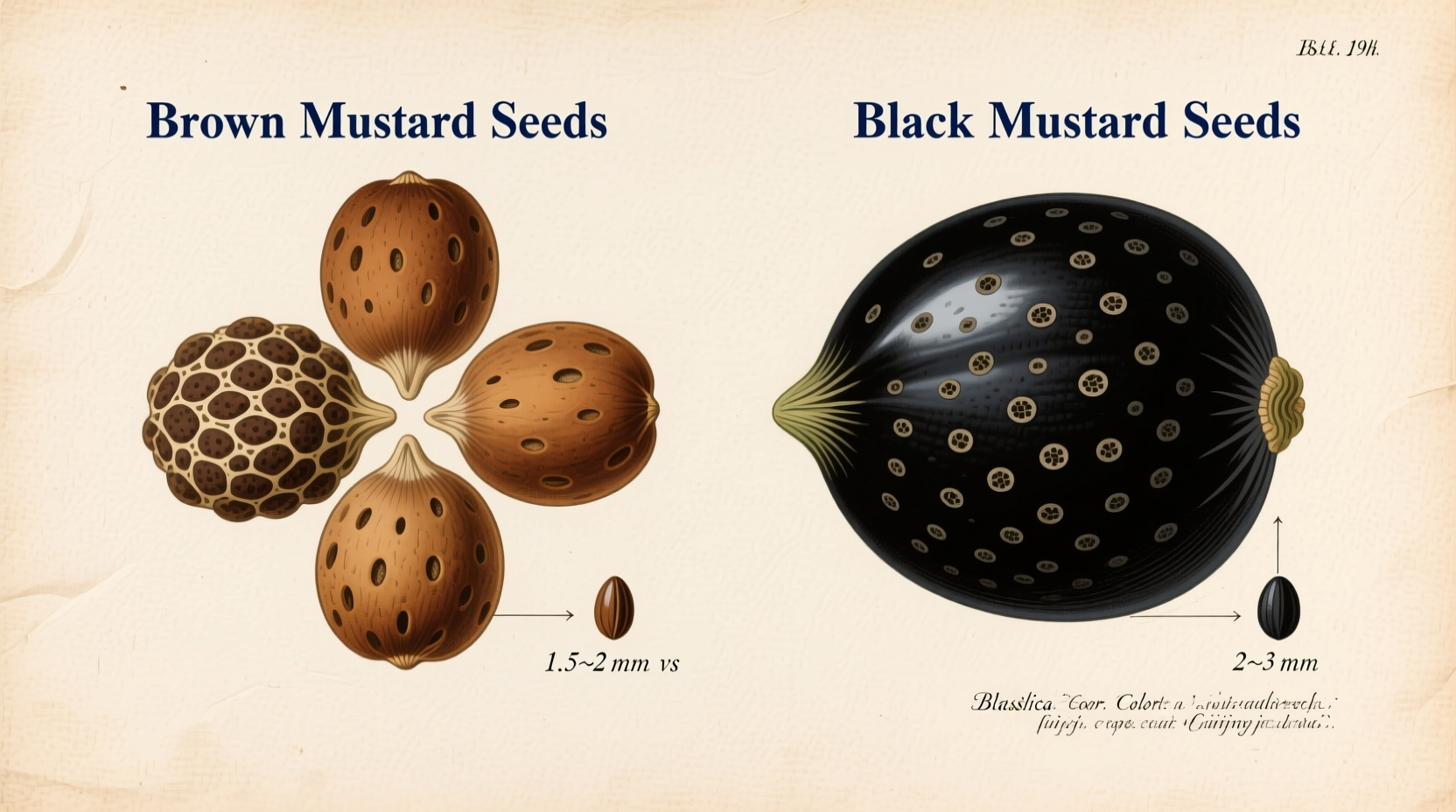
Mustard seeds come from various species of the Brassica and Sinapis plant genera. Among the three primary types—yellow (or white), brown, and black—the latter two are most prevalent in savory, spiced cooking. Both brown (Brassica juncea) and black mustard seeds (Brassica nigra) are small, round, and dark-hued, but their botanical origins and chemical compositions set them apart.
Brown mustard seeds, also known as Indian or Chinese mustard seeds, are derived from the Brassica juncea plant. They are cultivated extensively across India, China, and Canada and are a staple in Indian regional cuisines, especially in Bengali, Punjabi, and South Indian dishes. These seeds range in color from deep tan to reddish-brown and are slightly larger than black mustard seeds.
Black mustard seeds, by contrast, come from the Brassica nigra plant, native to the Mediterranean region and parts of Asia. Historically dominant in ancient Roman and Persian cooking, they are now prized in Indian, Ethiopian, and Moroccan kitchens for their bold, fiery kick. True black mustard seeds are smaller, rounder, and jet-black in appearance.
The defining compound in both types is **sinigrin**, a glucosinolate that breaks down into allyl isothiocyanate when exposed to moisture or heat—this is what produces the sharp, nasal-clearing heat characteristic of mustard. However, black seeds contain higher concentrations, making them more pungent when activated.
Key Characteristics
| Characteristic | Brown Mustard Seeds | Black Mustard Seeds |
|---|---|---|
| Scientific Name | Brassica juncea | Brassica nigra |
| Size & Shape | Slightly larger, oval to round | Smaller, uniformly round |
| Color | Tan, reddish-brown, or olive-brown | Glossy jet-black |
| Flavor Profile | Earthy, mildly nutty, moderately spicy | Sharp, intensely pungent, smoky when heated |
| Heat Level (Raw) | Moderate | High |
| Heat When Cooked | Develops warm, toasted notes; less volatile | Releases intense aroma; more volatile and fragrant |
| Culinary Function | Tempering (tadka), spice blends, pickling | Pickling, marinades, traditional curries, oil infusion |
| Shelf Life | 2–3 years in airtight container | 1.5–2 years; degrades faster due to oil content |
Practical Usage: How to Use Each Type in Cooking
The way mustard seeds are used in cooking—especially whether they are dry-roasted, fried in oil, or ground—affects how their flavor is released. Brown and black seeds respond differently to heat, which influences their best applications.
Brown Mustard Seeds: Versatile and Balanced
Brown mustard seeds are the go-to choice for everyday Indian cooking. Their moderate heat and reliable performance make them ideal for tempering (known as *tadka* or *chaunk*), where they are sizzled in hot oil or ghee along with cumin, asafoetida, or curry leaves to build the flavor base of dals, vegetables, and chutneys.
To use brown mustard seeds effectively:
- Heat 1–2 teaspoons of oil in a pan over medium heat.
- Add ½ to 1 teaspoon of brown mustard seeds.
- Wait until they begin to pop (about 30–45 seconds).
- Once they crackle and darken slightly, add aromatics like onions, garlic, or spices.
This method extracts their earthy warmth without overwhelming the dish. They are commonly used in:
- Dals: Especially in Bengali *shorshe ilish* (mustard-marinated fish) or Punjabi-style *rajma*.
- Pickles: Combined with fenugreek, turmeric, and chili for tangy mango or lime achar.
- Spice Blends: A component in *panch phoron* (Bengali five-spice mix) and some curry powders.
Pro Tip: If you're new to using mustard seeds, start with brown—they’re more forgiving and less likely to burn. Their balanced heat integrates well into complex spice profiles without dominating.
Black Mustard Seeds: Bold and Aromatic
Black mustard seeds deliver a more aggressive punch. When heated in oil, they release a powerful, almost smoky fragrance and a sharper bite. This makes them ideal for dishes where mustard flavor should stand out—such as in South Indian coconut chutneys, Ethiopian *wats*, or North African marinades.
In Tamil Nadu and Kerala, black mustard seeds are preferred for tempering in coconut oil, especially in dishes like thaiyal (coconut-based condiments) and sambars. Their rapid popping and intense aroma require careful attention to avoid burning.
For optimal use:
- Use lower heat than with brown seeds to prevent scorching.
- Add a splash of water after frying to control splattering and help release flavors.
- Pair with cooling ingredients like yogurt, coconut milk, or lentils to balance heat.
They shine in:
- Vegetable Stir-Fries (Poriyal): Where their pungency enhances bitter greens like drumstick leaves or moringa.
- Preserves: Traditional European whole-grain mustards often use black seeds for their robust character.
- Marinades: Combined with vinegar, garlic, and herbs to tenderize meats and infuse depth.
Chef’s Insight: In professional kitchens, black mustard seeds are sometimes soaked briefly in warm water before grinding to activate their enzymes and develop a fuller, more rounded heat—similar to how Dijon mustard is made.
Variants & Types
Beyond brown and black, mustard seeds come in several forms that affect their usability and shelf life:
Whole vs. Ground
- Whole Seeds: Retain freshness longer and are ideal for tempering or pickling. Flavor develops only when cracked or heated.
- Ground Mustard: Also called dry mustard powder, it's made by milling brown or yellow seeds. It has a longer activation time but delivers consistent heat in dressings and rubs.
Other Mustard Seed Types
- Yellow/White Mustard Seeds (Brassica hirta): Mildest in flavor, pale yellow, used primarily in American yellow mustard and beer cheeses.
- Green Mustard Seeds: Unripe brown or black seeds, less common, used in specialty French mustards.
- Wild Mustard Seeds: Foraged varieties with variable heat; used in artisanal products.
Regional Variations
In India, regional preferences shape usage:
- West Bengal: Prefers brown seeds in fish curries and *panch phoron*.
- South India: Favors black seeds in coconut oil tempering.
- Gujarat: Uses both, depending on the recipe—black for pickles, brown for daily tadka.
Comparison with Similar Ingredients
Mustard seeds are often mistaken for one another or substituted incorrectly. Here’s how they compare to related items:
| Ingredient | Difference from Brown Mustard Seeds | Difference from Black Mustard Seeds |
|---|---|---|
| Yellow Mustard Seeds | Much milder, larger, and less aromatic; better for emulsified sauces. | Far less pungent; lacks the smoky depth of black seeds. |
| Mustard Powder | Usually made from yellow or brown seeds; dissolves easily but loses nuance. | Less intense than freshly crushed black seeds; pre-activated enzymes. |
| Rapeseed / Canola Seeds | Not spicy; used for oil, not flavoring. Often confused visually. | No pungency; entirely different culinary purpose. |
| Nigella Seeds (Kalonji) | Not related; crescent-shaped, onion-like flavor; used in breads and pickles. | Frequently mixed up in spice blends but botanically distinct. |
\"The difference between brown and black mustard seeds is like the difference between a solid alto note and a piercing soprano. One supports the harmony; the other commands attention.\" — Chef Anjali Pathak, Culinary Instructor, Institute of Indian Cuisine
Practical Tips & FAQs
Can I substitute brown mustard seeds for black (and vice versa)?
Yes—but with caveats. Brown seeds can replace black in most recipes, but the dish will be less pungent. To compensate, increase the quantity by 25% or add a pinch of ground mustard. Substituting black for brown requires caution: reduce the amount by half to avoid overpowering the dish.
Which is hotter: brown or black mustard seeds?
Black mustard seeds are hotter. When chewed raw or crushed with cold liquid, they release significantly more allyl isothiocyanate—the compound responsible for heat. However, prolonged cooking reduces this difference.
How should I store mustard seeds?
Store both types in airtight glass jars, away from light and heat. Whole seeds last up to 3 years (brown) or 2 years (black). Ground versions lose potency within 6–12 months. For long-term storage, keep in the refrigerator or freezer to preserve volatile oils.
Why do my mustard seeds burn so quickly?
Black mustard seeds, in particular, have a low smoke point and high oil content. Use medium-low heat and monitor closely. Adding a few cumin seeds to the oil can help regulate temperature and prevent scorching.
Are brown and black mustard seeds safe to eat raw?
Yes, but they are extremely pungent when raw. In traditional preparations like Ethiopian mitmita spice blend, black seeds are lightly roasted first. Raw consumption in large quantities may irritate the digestive tract.
What dishes absolutely require black mustard seeds?
Authentic South Indian avial, certain styles of koottu, and specific pickle recipes (like Kerala mango achar) rely on the unique aroma of black seeds. Replacing them alters authenticity.
Do organic mustard seeds taste different?
Not inherently, but organically grown seeds may retain more essential oils due to soil quality and lack of synthetic treatments. Some chefs report a cleaner, brighter finish in organic black mustard seeds when tempered.
Storage Checklist:
✅ Use dark glass jars with tight lids
✅ Label with purchase date
✅ Store in a cool, dry pantry (not above the stove)
✅ Check for rancidity every 6 months (sniff for stale, paint-like odor)
✅ Freeze for extended shelf life (up to 3 years)
Summary & Key Takeaways
Brown and black mustard seeds, while closely related, serve distinct roles in the kitchen. Recognizing their differences empowers cooks to make informed choices that elevate flavor and authenticity.
- Brown mustard seeds are larger, moderately spicy, and versatile—ideal for daily tempering, dals, and spice blends.
- Black mustard seeds are smaller, darker, and significantly more pungent, best suited for dishes where mustard flavor takes center stage.
- Their heat comes from sinigrin, which converts to allyl isothiocyanate upon exposure to moisture or heat—black seeds contain more of this compound.
- Substitutions are possible but require adjustments in quantity and technique to maintain balance.
- Proper storage in airtight containers ensures longevity and preserves volatile oils critical to flavor development.
Understanding these nuances transforms casual cooking into intentional craft. Whether crafting a delicate dal or a fiery pickle, choosing the right mustard seed is not just a detail—it’s a decision that defines the soul of the dish.
Try This at Home: Make two versions of a simple spinach stir-fry—one with brown mustard seeds, one with black. Temper each in coconut oil with mustard seeds, curry leaves, and garlic. Taste side by side to experience the contrast in aroma and heat. You’ll never reach for the wrong jar again.




 浙公网安备
33010002000092号
浙公网安备
33010002000092号 浙B2-20120091-4
Comments
No comments yet. Why don't you start the discussion?