
Walk into any international grocery store or browse a global recipe online, and you’re likely to encounter confusion over the terms cilantro, coriander, and parsley. Are they the same herb? Interchangeable? Why do some recipes call for coriander leaves while others specify cilantro? The answer lies not just in botany but in language, geography, and culinary tradition. For home cooks navigating diverse cuisines—from Thai curries to Middle Eastern tabbouleh—understanding these distinctions is essential to achieving authentic flavor. Misuse can mean the difference between a vibrant salsa and a soapy-tasting disaster. This guide clarifies the botanical realities, flavor profiles, culinary applications, and regional naming conventions that separate these often-confused herbs.
Definition & Overview
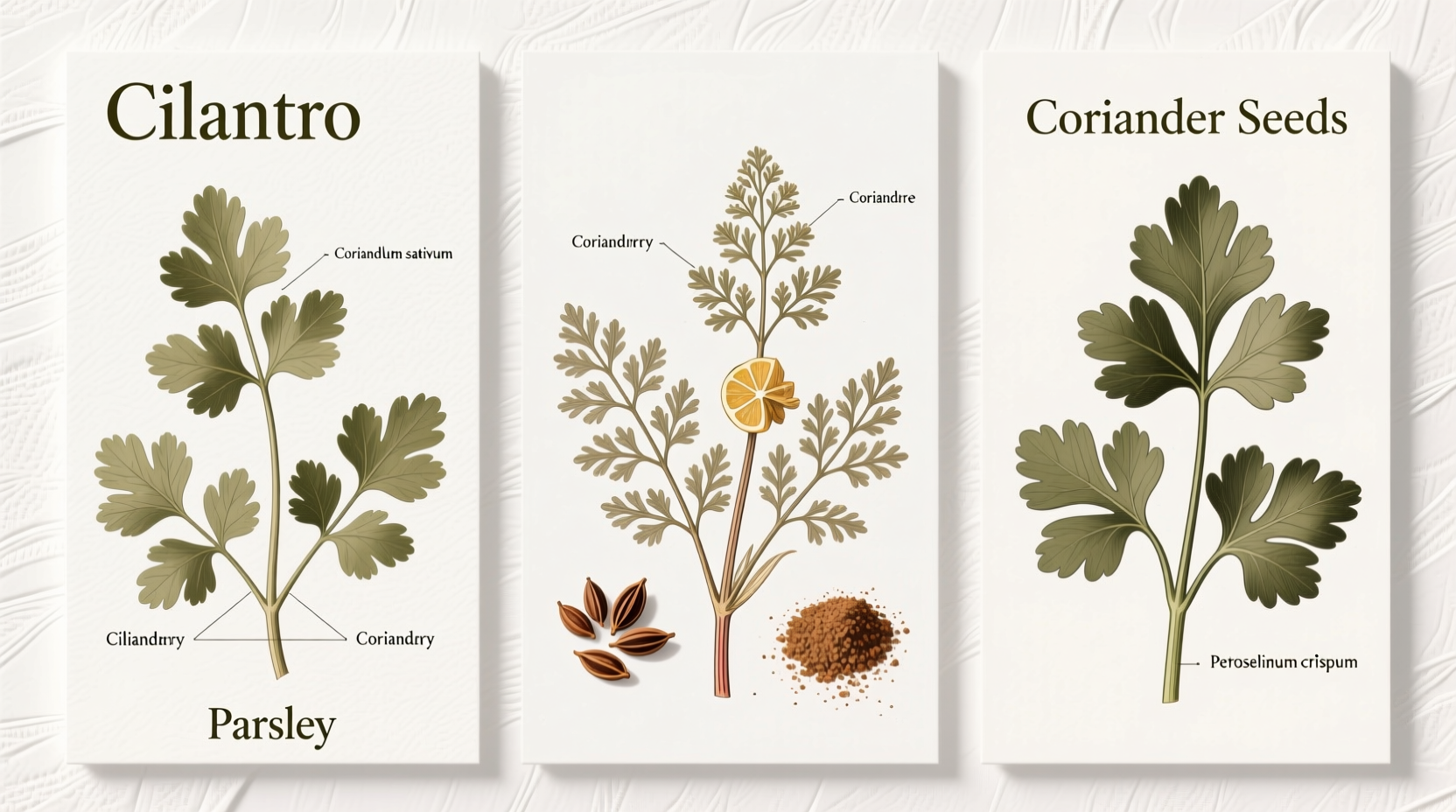
The confusion begins with terminology. Cilantro and coriander actually come from the same plant: Coriandrum sativum, an annual herb in the Apiaceae family, which also includes carrots, celery, and parsley. However, different parts of the plant are used at different stages of growth and are known by different names depending on region. In contrast, parsley (Petroselinum crispum) is a distinct species entirely, though it bears a superficial resemblance to cilantro.
In the United States and much of North America, “cilantro” refers to the fresh leaves and stems of the coriander plant, prized for their pungent, citrusy aroma. “Coriander,” in this context, refers exclusively to the dried seeds of the same plant, used as a warm, nutty spice. In the UK, Australia, India, and most Commonwealth countries, however, the leafy green part is called “coriander,” and the seed is referred to as “coriander seed.”
Parsley, meanwhile, is native to the central Mediterranean and comes in two main varieties: curly-leaf and flat-leaf (also called Italian parsley). It is widely used as a garnish and ingredient across European, Middle Eastern, and American cuisines. While it may look similar to cilantro at first glance—especially the flat-leaf variety—the flavor profile is markedly different.
Key Characteristics
To distinguish these herbs effectively, consider their sensory and physical attributes:
| Attribute | Cilantro (Leaves) | Coriander (Seeds) | Parsley (Flat-Leaf) |
|---|---|---|---|
| Botanical Name | Coriandrum sativum (leaves) | Coriandrum sativum (seeds) | Petroselinum crispum |
| Flavor Profile | Bright, citrusy, herbal; polarizing—some detect soap-like notes due to aldehyde compounds | Warm, nutty, slightly sweet and lemony; earthier and milder than cumin | Grassy, mildly bitter, clean; more neutral than cilantro |
| Aroma | Sharp, pungent, reminiscent of lime zest and green stems | Earthy, aromatic when crushed; floral-citrus undertones | Fresh, green, mild; less aggressive than cilantro |
| Color & Texture | Deep green, lacy, tender leaves; soft stems | Round, tan-to-brown seeds; hard texture | Medium green, flat serrated leaves; firmer stem |
| Culinary Role | Fresh herb: added at end of cooking or raw in salsas, chutneys, garnishes | Whole or ground spice: used in curries, pickling, sausages, baked goods | Garnish, component in gremolata, persillade, tabbouleh; withstands light cooking |
| Shelf Life (Fresh) | 3–7 days refrigerated; wilts quickly | N/A (dried seed lasts 6–12 months in airtight container) | 7–10 days refrigerated; more durable than cilantro |
Practical Usage: How to Use Each Herb
Cilantro (Fresh Coriander Leaves)
Cilantro is a cornerstone of Latin American, Southeast Asian, Indian, and Middle Eastern cuisines. Its volatile oils degrade rapidly with heat, so it is typically added raw or at the very end of cooking to preserve its bright character.
- Add chopped cilantro to salsas, guacamole, or pico de gallo for freshness.
- Stir into Thai coconut curries or Vietnamese pho just before serving.
- Blend into chutneys, such as Indian mint-cilantro chutney, using yogurt or lime juice to balance intensity.
- Use whole sprigs as a garnish for tacos, ceviche, or dal.
Because of genetic variation, approximately 14% of people possess a gene (OR6A2) that makes cilantro taste like soap. For these individuals, substituting parsley or using alternatives like culantro (a stronger, more heat-stable Caribbean herb) may be preferable.
Coriander Seeds
Coriander seeds are one of the oldest known spices, referenced in Egyptian tombs and biblical texts. They are typically toasted whole before grinding to unlock their full aromatic potential.
- Toast whole seeds in a dry skillet over medium heat until fragrant (1–2 minutes), then grind for curries, spice rubs, or masalas.
- Use whole seeds in pickling brines (e.g., for onions or cucumbers) or in slow-cooked dishes like stews and soups.
- Include in baking spice blends, such as those used in German rye bread or Dutch speculaas.
- Combine with cumin, turmeric, and chili powder to make homemade garam masala.
Pro Tip: Store whole coriander seeds in an airtight container away from light. Ground coriander loses potency within 3–6 months, so grind only what you need.
Parsley
Parsley is far more versatile in cooking than its reputation as a plate garnish suggests. Flat-leaf parsley, in particular, has a robust flavor suitable for both raw and cooked applications.
- Chop finely and mix with garlic and lemon zest to make gremolata, served over osso buco.
- Use as the primary herb in Lebanese tabbouleh, where it comprises up to 80% of the dish.
- Add to stocks, soups, and sauces as part of a bouquet garni (often tied with thyme and bay leaf).
- Blend into chimichurri, where it plays a role similar to cilantro in salsa verde but with a milder finish.
Curly parsley is often used for presentation due to its ruffled appearance, but it has a slightly more bitter, less nuanced flavor than flat-leaf.
Variants & Types
Cilantro/Coriander Plant Variants
While Coriandrum sativum is the only species commonly referred to as coriander or cilantro, there are cultivar differences:
- Slow-bolt cilantro: Bred to resist flowering (bolting) in warm weather, extending harvest time.
- Santo or Calypso varieties: Compact, leafy types ideal for container gardening.
- Culantro (Eryngium foetidum): Not a true coriander, but often mistaken for it. Also called \"recao\" or \"shadow beni,\" it has longer,锯齿状 leaves and a stronger, more persistent flavor. Common in Caribbean, Puerto Rican, and Vietnamese cooking.
Parsley Types
Two primary cultivated forms exist:
- Flat-leaf parsley (Italian parsley): More aromatic and easier to chop, preferred by chefs for cooking.
- Curly parsley (Petroselinum crispum var. crispum): Milder in flavor, often used for garnishing due to visual appeal.
A third type, turnip-rooted parsley, is grown for its edible root and is uncommon outside Central Europe.
Comparison with Similar Ingredients
The visual similarity between flat-leaf parsley and cilantro leads to frequent substitution errors—with noticeable consequences. Here’s how to tell them apart and why it matters:
| Feature | Cilantro | Flat-Leaf Parsley |
|---|---|---|
| Leaf Shape | Rounded, scalloped edges; more delicate appearance | Serrated, pointed tips; broader and sturdier |
| Stem Color | Light green, sometimes reddish near base | Consistently green, thicker and more fibrous |
| Scent (when crushed) | Strong citrus-lime aroma; sharp, almost perfumed | Mildly grassy; faintly bitter, less intense |
| Taste (raw) | Bold, tangy, with possible soapy aftertaste for some | Neutral, clean, slightly peppery |
| Best Substitution | None exact; culantro, basil, or mint in specific contexts | Can substitute for cilantro in low-impact dishes if necessary |
“Confusing parsley with cilantro is like using spinach instead of arugula—you lose the intended punch. Cilantro isn’t just ‘green’—it’s a flavor agent. Parsley is structure and freshness.” — Chef Ana Ruiz, Culinary Instructor at San Francisco Cooking School
Practical Tips & FAQs
Can I substitute parsley for cilantro?
Only in emergencies and with caveats. Parsley lacks the citrusy zing of cilantro, so dishes like salsa, Thai curry, or chana masala will lack authenticity. If substituting, add a squeeze of lime and a pinch of lemon zest to mimic brightness. For tabbouleh, never substitute cilantro for parsley—traditional versions rely on parsley’s volume and mildness.
Why does cilantro taste like soap to me?
This is genetic. A segment of DNA near the OR6A2 gene increases sensitivity to aldehyde chemicals found in cilantro, which are also present in some soaps. Cooking slightly mellows the flavor, but many simply avoid it. Alternatives include culantro, Mexican mint marigold (epazote), or a blend of parsley and lime zest.
How do I store fresh cilantro to extend its life?
Treat it like cut flowers:
- Trim the stems.
- Place in a glass with an inch of water.
- Cover loosely with a plastic bag.
- Refrigerate and change water every two days.
Is ground coriander the same as cilantro powder?
No. “Cilantro powder” is rare and usually a mislabeling. Dried cilantro leaves lose most of their flavor and turn musty. What’s sold as “cilantro powder” is often just ground coriander seed. Always check the label: true cilantro powder is made from dehydrated leaves but is weak in flavor and best avoided.
When should I use whole vs. ground coriander seed?
Use whole seeds when you want controlled bursts of flavor, such as in pickling, biryanis, or sausages. Ground coriander integrates evenly into spice blends, rubs, and batters. Toasting whole seeds before grinding enhances depth and removes raw notes.
Which herb is more nutritious?
All three offer vitamins A, C, and K, but differ in phytonutrient profiles:
- Cilantro: Rich in antioxidants; studied for potential heavy metal chelation properties.
- Coriander seeds: High in dietary fiber and contain compounds with anti-inflammatory effects.
- Parsley: Exceptionally high in vitamin K (one-quarter cup provides over 200% DV); contains apigenin, a flavonoid under research for cellular health.
Storage Checklist:
- Store fresh cilantro in water, covered, in the fridge.
- Keep coriander seeds whole until use; grind as needed.
- Wrap parsley in a damp paper towel inside a sealed container.
- Freeze excess herbs in oil for future sautéing.
Summary & Key Takeaways
The distinction between cilantro, coriander, and parsley hinges on both botany and cultural context. Cilantro and coriander are two parts of the same plant—leaves versus seeds—while parsley is a completely different herb despite visual similarities. Recognizing these differences ensures accurate seasoning and prevents culinary missteps.
- Cilantro = fresh leaves of Coriandrum sativum; citrusy, bold, used raw or at the end of cooking.
- Coriander = the seeds of the same plant; warm, nutty, used as a spice in ground or whole form.
- Parsley = a separate species; grassy and mild, ideal for garnishes, salads, and cooked dishes.
- Regional naming varies: “coriander” means the leaf in the UK, but the seed in the US.
- Never interchange cilantro and parsley without adjusting expectations—flavor outcomes will differ significantly.
Understanding these herbs empowers better shopping, smarter substitutions, and more confident cooking across global cuisines. Whether you're building a spice blend, plating a salad, or finishing a stew, choosing the right green makes all the difference.
Challenge: Next time you cook, try making two versions of a simple dish—one with cilantro, one with parsley—and taste the contrast. Notice how each herb shapes the final profile. This exercise builds intuition that no substitution chart can replace.




 浙公网安备
33010002000092号
浙公网安备
33010002000092号 浙B2-20120091-4
Comments
No comments yet. Why don't you start the discussion?