
For home cooks navigating the vibrant world of Southern American cuisine, few seasoning choices spark more confusion than Creole versus Cajun spice blends. Though often used interchangeably—and sometimes sold under misleading labels—these two iconic seasonings originate from distinct culinary traditions, carry unique flavor philosophies, and serve different roles in the kitchen. Understanding their differences isn't just about authenticity; it's about mastering depth, balance, and regional nuance in dishes ranging from gumbo to jambalaya. This guide breaks down their origins, core ingredients, taste profiles, applications, and substitutions with precision, empowering you to season with confidence and cultural respect.
Definition & Overview
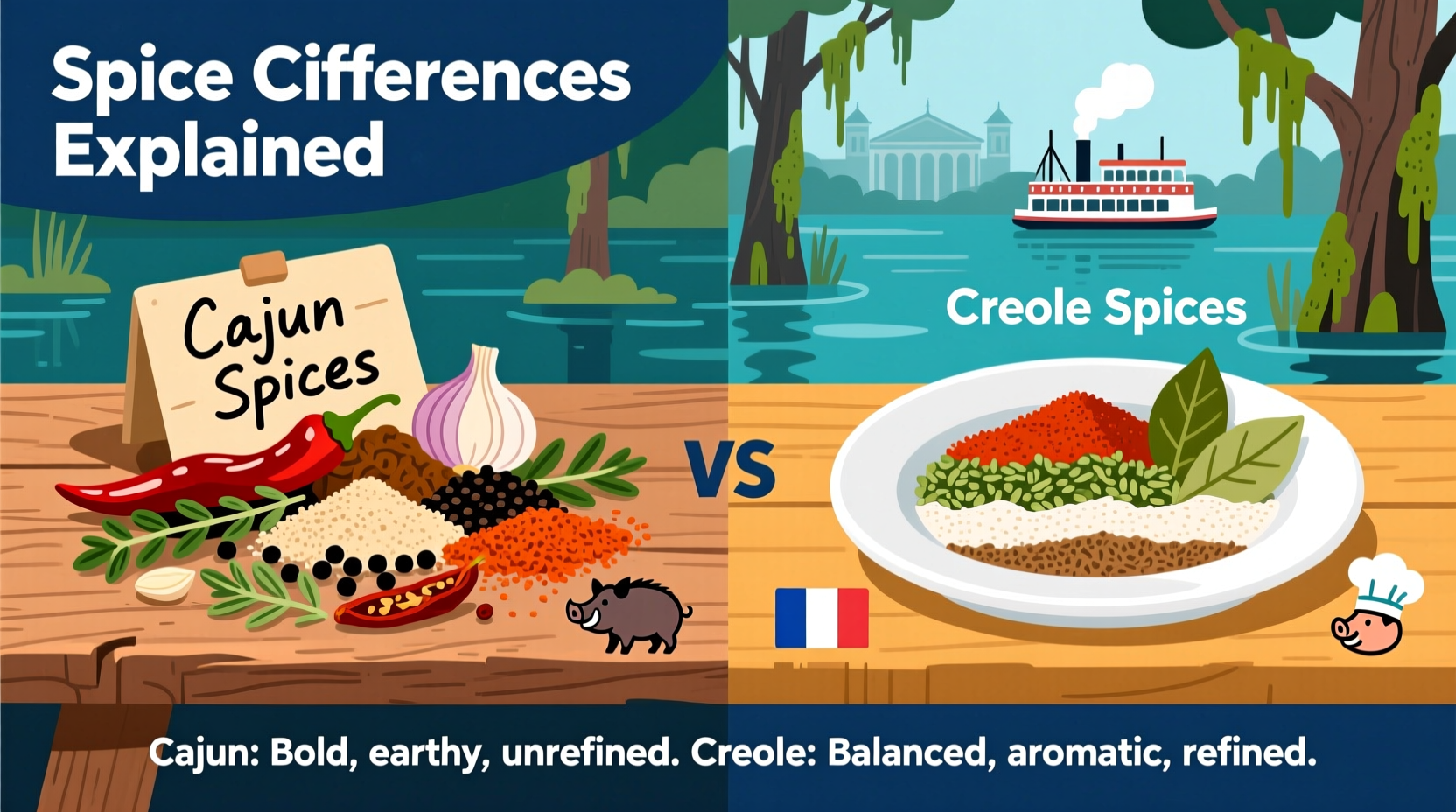
Cajun spice is a bold, rustic blend rooted in the rural Acadiana region of Louisiana. It emerged from the French-speaking Acadians—exiled from Canada in the 18th century—who adapted their European cooking techniques to available local ingredients. Cajun cuisine is resourceful, hearty, and deeply tied to land-based proteins like pork, chicken, and game. The corresponding spice blend reflects this: it emphasizes heat, smokiness, and earthy warmth, relying heavily on cayenne pepper, black pepper, garlic, and paprika.
Creole spice, by contrast, originates from New Orleans and reflects a more cosmopolitan heritage. Creole culture blends French, Spanish, African, Caribbean, and Italian influences, evident in its layered, aromatic cuisine that frequently features tomatoes, seafood, and refined sauces. Creole seasoning mirrors this complexity, incorporating herbs like oregano, thyme, and parsley alongside milder heat sources. While still savory and robust, it leans toward herbal brightness rather than fiery intensity.
The confusion between the two stems partly from overlapping ingredients—both contain garlic powder, onion powder, and paprika—but their proportions, supporting elements, and intended effects diverge significantly. Recognizing these distinctions allows cooks to match the right blend to the right dish, preserving both flavor integrity and cultural context.
Key Characteristics
| Characteristic | Cajun Spice | Creole Spice |
|---|---|---|
| Primary Flavor Profile | Hot, smoky, peppery, earthy | Herbal, aromatic, moderately spicy, balanced |
| Heat Level | Medium to high (dominated by cayenne) | Low to medium (balanced heat) |
| Core Ingredients | Cayenne, black pepper, garlic, onion, paprika | Garlic, onion, paprika, oregano, thyme, basil |
| Aromatic Notes | Smoky, pungent, sharp | Floral, herbal, slightly sweet |
| Color | Deep red-orange | Bright reddish-brown |
| Culinary Function | Seasoning for browning, grilling, boiling, stewing | Flavor base for sauces, soups, sautés with tomato |
| Shelf Life | 1–2 years (heat diminishes over time) | 1–2 years (herbs lose potency gradually) |
Practical Usage: How to Use Each Blend
Cajun spice excels in dishes where aggressive seasoning and high heat are central. It’s traditionally rubbed onto meats before grilling or blackening, stirred into boudin sausage, or added early in the cooking process to infuse stews and gumbos with deep warmth. Because of its heavy cayenne content, it benefits from fat—oil, butter, or rendered meat drippings—to mellow its sharpness and distribute flavor evenly.
To use Cajun spice effectively:
- Rub liberally on chicken thighs or catfish fillets before pan-searing at high heat.
- Add 1–2 teaspoons per pound of meat when making étouffée or dirty rice.
- Include in crawfish boils along with lemon, garlic, and bay leaves for a fiery kick.
- Use sparingly in vegetarian dishes unless balancing with cream, coconut milk, or potatoes.
Creole seasoning shines in dishes built on a \"holy trinity\" base (onions, celery, bell peppers) and enriched with tomatoes or wine. It’s foundational in shrimp Creole, red beans and rice, and Creole-style jambalaya. Its herbal components bloom when sautéed slowly in oil, releasing complex aromas that support rather than dominate.
For optimal use of Creole spice:
- Sauté with onions, celery, and bell pepper at the start of any Creole sauce or stew.
- Add 1 tablespoon per quart of liquid in tomato-based soups or sauces.
- Use as a dry rub for grilled shrimp or fish, especially when finishing with lemon and parsley.
- Incorporate into deviled eggs, potato salad, or roasted vegetables for a Southern twist.
Pro Tip: Always toast dry spice blends briefly in hot oil before adding liquids. This \"blooms\" the spices, unlocking essential oils and preventing raw, dusty flavors. For Cajun blends, do this quickly over medium-high heat; for Creole, simmer gently to preserve delicate herbs.
Variants & Types
Both Cajun and Creole seasonings come in multiple forms, tailored to specific uses and heat preferences.
Cajun Spice Variants
- Traditional Cajun: High cayenne, no salt added. Used in professional kitchens for full control over sodium.
- Table-Ready Cajun: Includes salt and sometimes MSG. Convenient for home use but adjust additional salt accordingly.
- Mild Cajun: Reduced cayenne, increased paprika. Ideal for families or those sensitive to heat.
- Blackened Seasoning: A subset of Cajun blends, formulated for high-heat searing. Contains more paprika and herbs de Provence to create a flavorful crust.
Creole Spice Variants
- Classic Creole: Balanced blend with equal emphasis on herbs and aromatics. Most common in New Orleans restaurants.
- Seafood Creole: Lighter on heat, enhanced with lemon zest or fennel seed. Designed for delicate shellfish.
- Tomato-Infused Creole: Includes dried tomato flakes or powder. Used in ready-mix gumbo or sauce bases.
- White Creole: Omits paprika for a lighter color, used in cream-based sauces where red tint is undesirable.
When purchasing pre-made blends, read labels carefully. Many commercial \"Cajun\" seasonings are actually milder Creole-style mixes, and vice versa. Brands like Tony Chachere’s (more Creole-influenced) and Slap Ya Mama (closer to traditional Cajun) reflect regional variations within Louisiana itself.
Comparison with Similar Ingredients
Several spice blends are mistaken for or marketed as Cajun or Creole. Here’s how they differ:
| Blend | How It Differs from Cajun/Creole | Best Used For |
|---|---|---|
| Old Bay | Mid-Atlantic blend with celery salt, mustard, and mace; less heat, more sweet spice. Not authentically Southern Louisiana. | Crab boils, fish fries, Mid-Atlantic seafood |
| Chili Powder | Southwestern U.S. blend with cumin, oregano, and ancho chili; includes ground chiles but lacks Cajun smokiness. | Tacos, chili con carne, Tex-Mex dishes |
| Chinese Five-Spice | Fundamentally different: star anise, cloves, cinnamon. No overlap in flavor profile. | Asian braises, roast duck, marinades |
| Herbes de Provence | French Mediterranean blend (lavender, rosemary); similar herbs to Creole but without alliums or heat. | Roasted lamb, vegetable tians, French stews |
Even among Southern blends, distinctions matter. For example, “Zydeco” seasoning is a modern marketing term without traditional roots, while “Louisiana Hot Sauce” refers to vinegar-based condiments like Tabasco, not dry rubs.
Practical Tips & FAQs
Can I substitute one for the other?
Yes, but with caveats. Replacing Cajun with Creole will result in a milder, more herbal dish—suitable if you're serving heat-sensitive eaters. Swapping Creole for Cajun may leave a gap in heat and depth; compensate by adding extra cayenne and smoked paprika. As a rule: add 1/2 teaspoon cayenne per tablespoon when substituting Creole for Cajun.
How much should I use?
Start with 1 teaspoon per pound of protein or per cup of liquid. Taste after cooking for 10 minutes, then adjust. Remember: dried spices intensify over time, especially in slow-cooked dishes.
Is there a salt-free version?
Yes. Many brands offer unsalted versions, or you can make your own (see below). This is ideal for managing sodium intake while preserving flavor.
How long do they last?
Dry spice blends retain peak potency for 12–18 months. After that, they don’t spoil but lose aroma and heat. Store in airtight containers away from light and heat. Do not refrigerate, as moisture degrades quality.
Can I make my own?
Absolutely. Homemade blends ensure freshness and customization.
Homemade Cajun Spice Blend (Makes 1/2 cup)
- 3 tbsp paprika
- 2 tbsp garlic powder
- 2 tbsp onion powder
- 1 tbsp cayenne pepper (adjust to taste)
- 1 tbsp freshly ground black pepper
- 1 tbsp dried oregano
- 1 tsp white pepper (optional, for sharp heat)
Mix thoroughly. Store in a glass jar. Add salt separately when cooking.
Homemade Creole Spice Blend (Makes 1/2 cup)
- 3 tbsp paprika
- 1 tbsp garlic powder
- 1 tbsp onion powder
- 1 tbsp dried oregano
- 1 tbsp dried thyme
- 1 tbsp dried basil
- 1 tsp cayenne (for mild heat)
- 1 tsp black pepper
- 1 tsp white pepper (optional)
Combine and store in a cool, dark place. Add salt only when using in recipes.
“The difference between Cajun and Creole seasoning is the difference between the swamp and the city. One is forged in fire and isolation, the other shaped by conversation and trade.” — Chef Nina Jackson, James Beard-nominated Louisiana culinary historian
Summary & Key Takeaways
Cajun and Creole spices are not interchangeable by design. Their differences reflect deeper cultural narratives: Cajun seasoning embodies the rugged, self-reliant spirit of rural South Louisiana, delivering bold heat and smoky depth. Creole seasoning represents the cosmopolitan soul of New Orleans, favoring herbal complexity and balanced seasoning, especially in tomato-based dishes.
Key takeaways:
- Cajun = Heat-forward: Dominated by cayenne, black pepper, and paprika. Best for meats, grilling, and high-impact dishes.
- Creole = Herb-forward: Features oregano, thyme, and basil. Ideal for sauces, seafood, and dishes with a tomato base.
- Substitutions require adjustment: Replace Cajun with Creole only if reducing heat is desired; boost cayenne when going the other way.
- Make your own: Custom blends ensure freshness, control over salt, and authenticity.
- Store properly: Keep in airtight jars away from heat and sunlight to preserve potency.
Try This Tonight: Make two versions of red beans and rice—one with Cajun seasoning, one with Creole. Note how the first delivers a punchy, warming finish, while the second offers a more rounded, garden-fresh depth. Tasting them side by side is the fastest way to internalize their differences.




 浙公网安备
33010002000092号
浙公网安备
33010002000092号 浙B2-20120091-4
Comments
No comments yet. Why don't you start the discussion?