
Green and black cardamom are often mistaken for interchangeable spices, but they are fundamentally different in origin, flavor, and culinary application. Confusing one for the other can dramatically alter a dish—sometimes with unintended smokiness or missing brightness. For home cooks and seasoned chefs alike, understanding these two aromatic powerhouses is essential for authentic Indian, Middle Eastern, Scandinavian, and Southeast Asian cooking. While both belong to the Zingiberaceae (ginger) family and share a botanical lineage, their processing, aroma profiles, and roles in recipes diverge sharply. This guide breaks down everything you need to know—from scent and taste to usage and storage—to use green and black cardamom correctly and confidently.
Definition & Overview
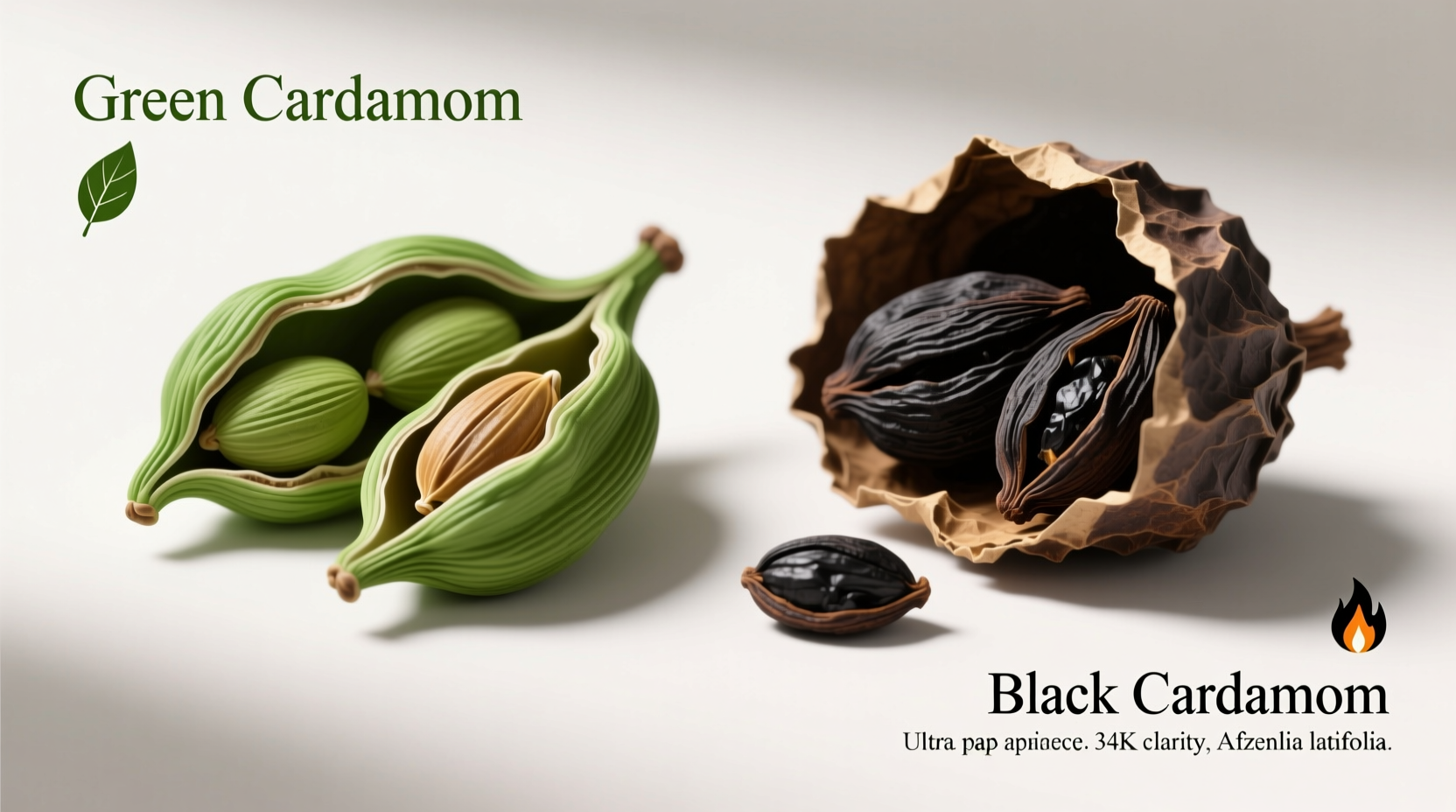
Green cardamom (Elettaria cardamomum) is the more widely recognized of the two, prized for its sweet, floral, and citrusy aroma. Native to the Western Ghats of southern India, it's also cultivated in Sri Lanka, Guatemala, and Tanzania. The pods are small, light green, and triangular when viewed from the end. Inside are tiny black seeds embedded in a fibrous matrix. Green cardamom is typically harvested before full maturity and dried quickly, preserving its bright, perfumed character.
Black cardamom (Amomum subulatum or Amomum costatum) comes from larger, darker pods grown primarily in the eastern Himalayas—Nepal, Bhutan, and parts of northern India and China. Unlike green cardamom, black cardamom undergoes open-flame drying over wood fires, which imparts a distinct smoky, camphorous aroma. Its flavor is bold, earthy, and slightly medicinal, with notes of menthol and pine. Due to this intense profile, it is used sparingly and almost exclusively in savory dishes.
Despite sharing the name “cardamom,” these spices are as different as cinnamon and cassia—related but not interchangeable. Recognizing their individual identities elevates your spice game and prevents recipe mishaps.
Key Characteristics
| Characteristic | Green Cardamom | Black Cardamom |
|---|---|---|
| Botanical Name | Elettaria cardamomum | Amomum subulatum, Amomum costatum |
| Pod Size | Small (1–2 cm), slender | Large (2–3 cm), wrinkled, oval |
| Color | Pale green to yellow-green | Dark brown to black |
| Aroma | Floral, citrusy, eucalyptus-like, sweet | Smoky, camphoraceous, woody, earthy |
| Taste | Sweet, warm, slightly minty, lemony | Bitter, smoky, cooling, with a lingering menthol finish |
| Heat Level | Mild warmth (not spicy) | Moderate pungency, not chili-hot |
| Culinary Function | Balancing sweetness, enhancing fragrance in desserts, curries, beverages | Adding depth and smokiness to meat dishes, lentils, rice, stews |
| Shelf Life | 1–2 years (whole pods); 6 months (ground) | 2+ years (whole pods); ground loses potency faster |
| Common Forms | Whole pods, decorticated seeds, ground powder | Almost always used whole; rarely ground |
Practical Usage: How to Use Each Spice
Green Cardamom in Cooking
Green cardamom shines in both sweet and savory applications where a delicate, uplifting aroma is desired. It’s a cornerstone of Indian chai, Middle Eastern coffee (like Arabic qahwa), Scandinavian pastries, and Persian rice dishes.
- In beverages: Crush 2–3 pods and simmer in milk or water for masala chai. For spiced coffee, add one crushed pod while brewing.
- In desserts: Infuse cream or milk with whole pods when making rice pudding, custards, or poached fruits. Remove pods before serving.
- In savory dishes: Use in biryanis, kormas, and yogurt-based marinades (e.g., for tandoori chicken). The floral note cuts through richness.
- Ground vs. whole: Always grind just before use for maximum fragrance. Pre-ground loses complexity within weeks.
Pro Tip: To extract maximum flavor, lightly crush green cardamom pods with the flat side of a knife before using. This cracks the husk and releases the volatile oils without scattering the seeds.
Black Cardamom in Cooking
Black cardamom is a robust spice designed for long-cooked savory dishes. Its smokiness mimics the effect of cooking over an open flame—ideal for replicating traditional tandoor or hearth-cooked flavors.
- In meat dishes: Add one whole pod to lamb curries, beef stews, or pork braises. Remove before serving—its texture is tough and unpleasant to chew.
- In rice and lentils: Include in garam masala blends or directly into pot during cooking of dishes like rajma or pulao.
- In spice blends: Found in certain regional garam masala mixes from North India, especially those intended for meat.
- Not for sweets: Its camphor-like bitterness clashes with sugar. Avoid in desserts, baked goods, or sweet drinks.
Caution: Never use black cardamom in place of green unless the recipe specifically calls for it. One misused pod can overpower delicate flavors with smoke and menthol.
Variants & Types
Forms of Green Cardamom
- True Green (Malabar): Grown in Kerala, India. Milder and more floral. Considered premium for desserts and beverages.
- White Cardamom: Not a natural variant—this is green cardamom bleached to remove color. Used in light-colored dishes to avoid specks. Loses some aroma in processing.
- Allahabadi Green: From Uttar Pradesh, slightly larger and more intensely flavored than Malabar.
- Guatemalan Green: Most commercially available outside India. Stronger, slightly more eucalyptus-forward due to climate differences.
Types of Black Cardamom
- Nepali (Larger, Darker): Considered superior, with deep smokiness and balanced menthol. Often labeled \"big cardamom.\"
- Sikkimese or Darjeeling: Slightly less smoky, more herbal. Used in regional Himalayan cuisine.
- Chinese Smoked Cardamom: Sometimes confused with true black cardamom; may come from different Amomum species. Check labels carefully.
Comparison with Similar Ingredients
Cardamom is frequently confused with other aromatic spices. Understanding distinctions ensures accurate substitution and flavor balance.
| Spice Compared | Similarities | Differences |
|---|---|---|
| Cinnamon vs. Cardamom | Both warm, sweet spices used in desserts and curries. | Cinnamon is woody and bark-derived; cardamom is seed-based with floral-citrus notes. Not interchangeable. |
| Clove vs. Cardamom | Intense aroma, used in small amounts, common in garam masala. | Clove is sharp, numbing, and medicinal; cardamom is brighter and more nuanced. Clove lacks citrus tones. |
| Star Anise vs. Black Cardamom | Both have licorice and camphor notes; used in savory stews. | Star anise is sweeter and more direct; black cardamom adds smokiness. Can substitute cautiously in pho or biryani. |
| Green vs. Black Cardamom | Same family, both used in Indian cuisine, both in garam masala. | Green is floral and sweet; black is smoky and earthy. Only green works in desserts or beverages. |
Practical Tips & FAQs
Can I substitute green cardamom for black—or vice versa?
No. Their flavor profiles are too different. Substituting one for the other will result in either a missing smoky depth (if replacing black with green) or an overpowering medicinal harshness (if replacing green with black). If you lack black cardamom, a tiny pinch of smoked paprika or chipotle powder may mimic smokiness—but only in savory dishes.
How much cardamom should I use?
Start small. For most curries or rice dishes, use 2–3 green cardamom pods per 4 servings. For black cardamom, one large pod is sufficient for the same quantity. Overuse leads to bitterness or excessive smokiness.
Should I remove the pods before eating?
Yes. Whole pods are not meant to be eaten. They are used as infusers, like bay leaves. Chewable seeds inside green pods can be consumed if released, but the fibrous husk remains indigestible. Black cardamom pods are especially tough and must be removed.
Is ground cardamom acceptable?
Ground green cardamom is acceptable if freshly ground. Store-bought powder often contains fillers or has lost potency. For best results, buy whole pods and grind as needed. Black cardamom is rarely sold ground because its volatile oils degrade quickly after grinding.
How should I store cardamom?
Keep both types in airtight glass jars, away from heat, light, and moisture. Whole pods retain flavor far longer than ground. Green cardamom degrades faster due to its delicate oils—use within 18 months. Black cardamom can last up to 3 years if stored properly.
Can I grow my own cardamom?
Possibly, but challenging. Green cardamom requires tropical humidity, partial shade, and consistent warmth (USDA zones 10–12). It grows as an understory plant in rainforest conditions. Black cardamom needs cooler mountain climates and is even less adaptable to home gardening.
What dishes absolutely require green cardamom?
Traditional recipes where its perfume defines the dish: Kashmiri yakhni, Swedish kardemummabullar (cardamom buns), Omani halwa, Iranian sholezard (saffron rice pudding), and Indian irrumai (steamed milk cake).
Which dishes rely on black cardamom for authenticity?
Kashmiri rogan josh, Bengali mutton kosha, Nepali gundruk ko jhol, and certain versions of butter chicken that aim for a deeper, smoky base. Also used in Chinese five-spice variations for red-cooked meats.
\"In Indian kitchens, the difference between green and black cardamom isn’t just flavor—it’s philosophy. One lifts the spirit, the other grounds it. Misusing them is like singing soprano in a bass line.\" — Chef Anjali Rao, Culinary Director, Spice Heritage Institute
Summary & Key Takeaways
Green and black cardamom are distinct spices with unique roles in global cuisine. Recognizing their differences prevents culinary errors and unlocks authentic flavor.
- Green cardamom is floral, sweet, and citrusy—ideal for desserts, beverages, and aromatic curries.
- Black cardamom is smoky, camphorous, and earthy—best reserved for hearty meat dishes, stews, and lentils.
- Never substitute one for the other unless the recipe allows or specifies.
- Use whole pods for infusion and remove before serving; grind green cardamom fresh for optimal aroma.
- Store both in dark, cool places in sealed containers to preserve potency.
- Regional variants exist—know your source to match flavor expectations.
Mastering these two spices means mastering nuance. Whether you're crafting a delicate saffron rice or a slow-braised goat curry, choosing the right cardamom transforms good cooking into something transcendent. Keep both in your pantry—but reach for them with intention.
Next time you make biryani or chai, pause: Is this a green moment or a black one? Your palate will thank you.




 浙公网安备
33010002000092号
浙公网安备
33010002000092号 浙B2-20120091-4
Comments
No comments yet. Why don't you start the discussion?