
For home cooks navigating global cuisines—from Indian curries to Mexican moles and Middle Eastern spice blends—cumin is a foundational ingredient. Yet confusion often arises at the spice aisle: should you reach for the jar of earthy brown seeds or the finely ground powder? The choice isn’t merely about convenience; it profoundly affects aroma, flavor intensity, shelf life, and even the final character of your dish. Understanding the differences between whole cumin seeds and ground cumin is essential for maximizing flavor and minimizing waste in any kitchen. While both originate from the same plant, their physical form leads to divergent behaviors during storage and cooking. This guide breaks down those distinctions with precision, offering practical insights for everyday use, professional applications, and long-term pantry management.
Definition & Overview
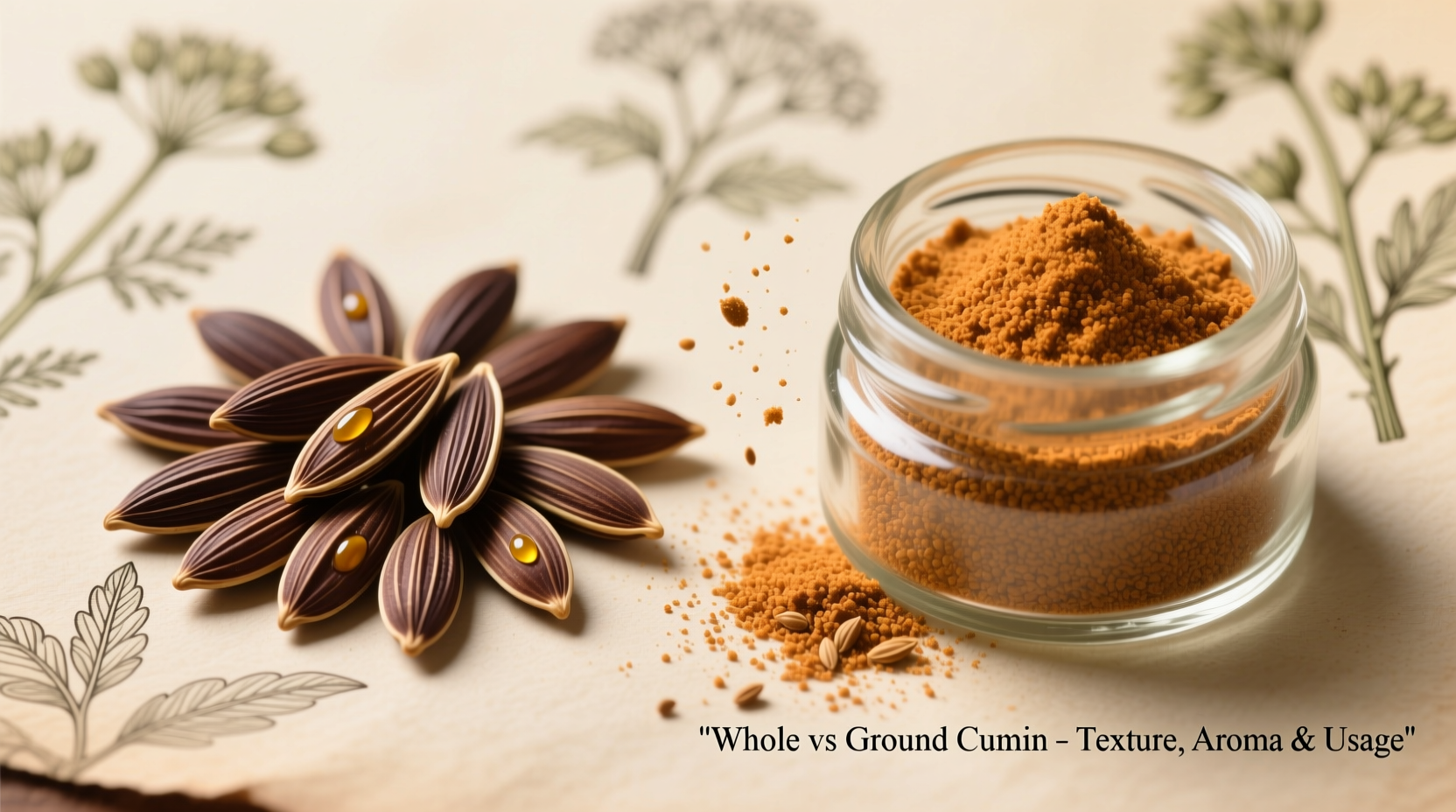
Cumin (Cuminum cyminum) is a flowering plant in the Apiaceae family, native to the eastern Mediterranean and South Asia. Its dried seeds are one of the oldest and most widely used spices in world cuisine. Used for thousands of years in ancient Egypt, India, and Persia, cumin remains central to dishes across Latin America, North Africa, the Middle East, and the Indian subcontinent.
The spice appears in two primary forms: **whole cumin seeds** and **ground cumin**. Whole cumin seeds are the intact, dried fruit of the cumin plant—small, elongated, tan-to-brown crescents about 4–5 mm long, with a ridged surface. When crushed or chewed, they release a warm, nutty, slightly peppery aroma with hints of citrus and earth. Ground cumin, by contrast, is made by milling these whole seeds into a fine powder. Though chemically identical at origin, the grinding process immediately begins altering its sensory profile due to increased surface area and exposure to air, light, and heat.
This transformation—from seed to powder—is where the divergence begins. While both deliver cumin’s signature pungency, their performance in recipes, longevity, and method of integration into food differ significantly.
Key Characteristics
| Characteristic | Whole Cumin Seeds | Ground Cumin |
|---|---|---|
| Flavor Profile | Bright, aromatic, with pronounced citrus and herbal notes; develops deeper earthiness when toasted | Warmer, more rounded, but less vibrant; can taste dusty if stale |
| Aroma | Intense, lemony, and resinous when crushed or heated | Muted unless freshly ground; diminishes rapidly over time |
| Color | Tan to medium brown with visible ridges | Light to medium golden-brown powder |
| Heat Level / Pungency | Moderate warmth with a sharp edge when raw; mellows with cooking | Softer bite; spreads evenly through dishes |
| Culinary Function | Used for tempering, infusing oils, or as textural accent | Blended into rubs, sauces, doughs, and spice mixes for uniform distribution |
| Shelf Life (Optimal) | 3–4 years when stored properly | 6 months to 1 year before noticeable degradation |
| Best Used In | Sautéed dishes, pickles, rice pilafs, lentil soups, spice infusions | Dry rubs, marinades, spice blends (e.g., chili powder, garam masala), baked goods |
Practical Usage: How to Use Each Form
The decision between whole and ground cumin hinges on how you intend to cook and what role the spice plays in the dish.
Using Whole Cumin Seeds
Whole cumin seeds shine when they are the first ingredient introduced to hot oil—a technique known as *tempering* or *tadka* in Indian cooking. Heating the seeds in fat (oil, ghee, or butter) at medium heat for 30 to 60 seconds unlocks their volatile oils, producing a smoky, nutty fragrance that permeates the entire dish. This method is ideal for:
- Indian dals and curries (e.g., chana masala, sambar)
- Mexican salsas and bean stews (as a base layer with onions and garlic)
- Iranian and Central Asian rice dishes (like tahdig or polos)
- Pickling brines for vegetables such as carrots, radishes, or cucumbers
To maximize flavor, lightly toast whole seeds in a dry skillet before using. Spread them in a single layer over medium-low heat, shaking frequently until fragrant and a shade darker—about 90 seconds. Overheating causes bitterness. Once cooled, store in an airtight container or grind as needed.
Pro Tip: For layered depth in rice dishes, combine tempered whole cumin seeds with other whole spices like cardamom, cloves, and cinnamon. The cumin provides a savory backbone while the others add sweetness and complexity.
Using Ground Cumin
Ground cumin integrates seamlessly into wet and dry mixtures, distributing flavor uniformly. It’s indispensable in recipes requiring consistency, such as spice rubs for meats, marinades, or thick sauces. Because it has no structural integrity, it cannot be tempered like whole seeds. Instead, it is typically added after aromatics (onion, garlic, ginger) have softened, then cooked briefly—about 30 seconds—to remove any raw taste and deepen its aroma.
Common applications include:
- Chili con carne and taco seasoning blends
- Moroccan tagines and harissa pastes
- South Asian curries where smooth texture is desired
- Homemade spice mixes like curry powder, berbere, or adobo
When using ground cumin in long-cooked dishes, add it midway rather than at the beginning to prevent scorching. If combining with other powdered spices, mix them together first to ensure even dispersion.
Expert Insight: Professional chefs often keep both forms on hand. They may start with whole cumin seeds to build a flavor foundation, then finish with a touch of ground cumin to reinforce the note throughout the sauce.
Variants & Types
While cumin is generally consistent in form, several variants exist based on origin, processing, and botanical relatives. Knowing these helps refine your selection:
1. Regular Cumin (Cuminum cyminum)
The standard variety found globally. Available as both whole seeds and ground powder. Most common in supermarkets and specialty stores.
2. Black Cumin (Bunium persicum / Nigella sativa – often confused)
Note: True black cumin (*Bunium persicum*) is a different species with a more intense, smoky flavor. Often sold as “shahi jeera” in Indian markets. Not to be confused with *Nigella sativa* (kalonji), which is sometimes labeled \"black cumin\" but is botanically unrelated.
3. White Cumin
A lighter-hued variant of regular cumin, typically milder in flavor. Sometimes used in delicate European sausages and cheeses.
4. Roasted vs. Raw
Some brands offer pre-roasted cumin seeds or powder. These have a deeper, almost coffee-like richness but less brightness. Best suited for robust dishes like stews or barbecue rubs. Avoid substituting directly 1:1 in recipes calling for raw or toasted cumin unless adjusting for intensity.
5. Organic & Fair-Trade Options
Gaining popularity for ethical sourcing and purity. Often packaged in smaller batches, ensuring fresher stock compared to mass-market alternatives.
Regardless of type, always inspect appearance and smell. Fresh whole seeds should be crisp and release a sharp scent when cracked. Ground cumin should have a rich color—not faded or grayish—and a potent aroma when opened.
Comparison with Similar Ingredients
Cumin is often mistaken for other spices, especially in powdered form. Clarifying distinctions prevents culinary missteps.
| Spice | Similarity to Cumin | Key Differences |
|---|---|---|
| Caraway Seeds | Nearly identical shape and size; both are Apiaceae family members | Caraway has a sweeter, anise-like note; dominant in rye bread and German cuisine. Cumin is earthier and more pungent. |
| Fennel Seeds | Same family; similar oblong shape but greener hue | Fennel is distinctly licorice-sweet; used in Italian sausage and digestive teas. Not interchangeable with cumin. |
| Coriander Powder | Often blended with cumin in spice mixes | Coriander is citrusy and floral; cumin is smoky and savory. Together, they balance each other. |
| Turmeric | Frequently paired in curries; yellow color may confuse | Turmeric contributes color and mild bitterness; minimal aroma. No flavor overlap with cumin. |
“I once had a student make hummus with caraway instead of cumin because the seeds looked alike. The result wasn’t bad—but it wasn’t authentic. That moment taught me: visual identification isn’t enough. Smell and context matter.”
— Chef Amira Hassan, Culinary Instructor, Middle Eastern Cuisine Specialist
Practical Tips & FAQs
How long do whole cumin seeds last?
Up to four years when stored in a cool, dark place in an airtight container. Their hard outer shell protects essential oils from oxidation. Always check for aroma before use—even old seeds may retain some potency.
Does ground cumin go bad?
It doesn’t spoil in the microbial sense, but it loses volatile compounds rapidly. After six months, flavor degrades noticeably; after one year, it often tastes flat. Label your jars with purchase dates to track freshness.
Can I substitute whole cumin for ground—or vice versa?
Yes, but not directly. As a rule:
- 1 teaspoon whole cumin seeds ≈ ¾ teaspoon ground cumin (after toasting and grinding)
- Do not use whole seeds in place of ground in rubs or batters—they won’t disperse evenly.
- To replace ground cumin with whole, toast and grind them using a mortar and pestle or spice grinder.
What’s the best way to store cumin?
Keep both forms away from heat, light, and moisture. A dark glass jar in a pantry cupboard is ideal. Never store near the stove or oven. Refrigeration is unnecessary and can introduce condensation, accelerating degradation.
Is it worth grinding my own cumin?
For frequent users, absolutely. Freshly ground cumin delivers up to 30% more aromatic intensity than pre-ground. Toast whole seeds lightly, cool completely, then grind in small batches. Store in a sealed container for up to three months.
Which dishes benefit most from whole cumin seeds?
Dishes where cumin is meant to be noticed—such as Gujarati kadhi, Mexican pozole, or Armenian spiced yogurt dips. The seeds provide bursts of flavor and subtle texture.
Which dishes require ground cumin?
Recipes demanding homogeneity: dry rubs for ribs or brisket, emulsified sauces like toum or raita, and spice blends where consistency is critical.
Are there health differences between the two forms?
No significant nutritional difference. Both contain iron, antioxidants, and compounds linked to improved digestion. However, fresher ground cumin (homemade) retains more active phytochemicals than aged commercial powder.
Mini Case Study: A blind taste test conducted with 20 home cooks showed that 17 could identify dishes made with freshly ground cumin versus store-bought powder. The homemade version was described as “livelier,” “more complex,” and “less dusty.” Even among non-experts, the difference was perceptible.
Summary & Key Takeaways
Whole cumin seeds and ground cumin come from the same source but behave differently in storage and cooking. Recognizing these differences empowers better decisions in the kitchen:
- Whole cumin seeds offer superior shelf life and are ideal for tempering, infusing oils, or adding texture. They deliver brighter, more nuanced flavors when toasted.
- Ground cumin provides convenience and even distribution, making it essential for rubs, marinades, and blended dishes. However, it deteriorates quickly and should be replaced annually for best results.
- Freshness matters: Whether using whole or ground, aroma is the best indicator of quality. Stale cumin lacks impact and can dull a dish.
- Grinding your own from toasted whole seeds is the single most effective way to elevate flavor without changing ingredients.
- Storage is simple: Cool, dark, dry—no exceptions. Avoid bulk bins unless turnover is high.
Ultimately, the choice between whole and ground cumin is not about superiority but suitability. Master cooks maintain both in their pantries, deploying each according to the demands of the recipe. By understanding their distinct roles, you gain greater control over flavor development, ensuring every dish carries the authentic warmth and depth that only well-used cumin can provide.




 浙公网安备
33010002000092号
浙公网安备
33010002000092号 浙B2-20120091-4
Comments
No comments yet. Why don't you start the discussion?