
In an age where smartphones buzz with notifications every few minutes and social media scrolls stretch into hours, many people report feeling overwhelmed, mentally drained, and anxious. The idea of stepping away from screens—especially for an entire week—has gained traction as a potential remedy. Known as the \"digital detox,\" this practice involves intentionally disconnecting from digital devices like phones, laptops, and tablets. But does it actually help reduce anxiety? Or is it just another wellness trend without scientific backing?
The answer isn't simple. While some individuals report profound mental clarity and emotional relief after a digital detox, others find the experience isolating or impractical. To understand the real impact, we need to examine psychological research, behavioral patterns, and personal experiences—all while considering how deeply embedded technology has become in modern life.
The Link Between Digital Overuse and Anxiety
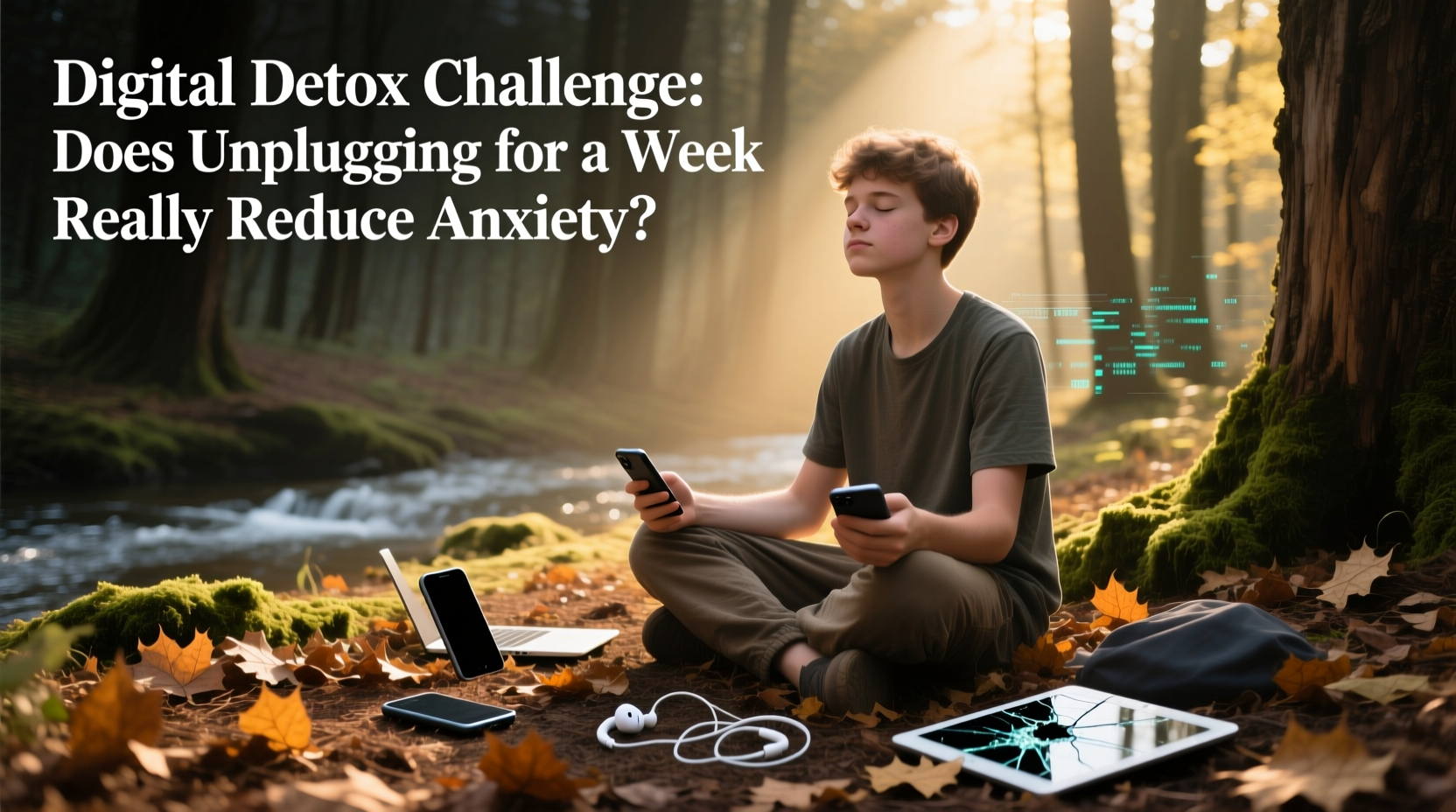
Before assessing the benefits of a digital detox, it's essential to understand why constant connectivity might contribute to anxiety. Studies consistently show that excessive screen time, particularly on social media platforms, correlates with increased symptoms of anxiety, depression, and poor sleep quality.
A 2022 meta-analysis published in *Computers in Human Behavior* reviewed over 60 studies and found a significant association between heavy social media use and elevated anxiety levels, especially among younger adults. The mechanisms behind this include:
- Social comparison: Constant exposure to curated, idealized versions of others’ lives can trigger feelings of inadequacy.
- Fear of missing out (FOMO): Notifications create urgency, making users feel they must stay constantly updated.
- Information overload: The brain struggles to process endless streams of news, messages, and updates, leading to cognitive fatigue.
- Disrupted circadian rhythms: Blue light from screens interferes with melatonin production, impairing sleep—a known contributor to anxiety.
These factors don’t mean technology is inherently harmful. Rather, it’s the pattern of use—often compulsive and unregulated—that creates psychological strain. This context makes the idea of a structured break not only appealing but potentially therapeutic.
What Happens During a One-Week Digital Detox?
A typical digital detox challenge spans seven days and encourages participants to eliminate or drastically reduce non-essential screen use. This doesn’t necessarily mean cutting off all technology—most people retain access to essential tools like work computers or GPS—but rather setting boundaries around recreational and reactive digital consumption.
Here’s a realistic timeline of what often unfolds during the week:
- Day 1–2: Withdrawal and restlessness. Many report irritability, boredom, and a persistent urge to check their phone. This mirrors early stages of behavioral withdrawal seen in other habit-breaking processes.
- Day 3–4: Adjustment and awareness. As the initial discomfort fades, individuals begin noticing their environment more, engaging in face-to-face conversations, and rediscovering offline hobbies.
- Day 5–7: Mental clarity and reduced reactivity. With fewer distractions, attention span improves. Some report lower heart rates, better sleep, and decreased rumination—key markers of reduced anxiety.
A 2021 study conducted at the University of Pennsylvania assigned participants to limit social media use to 30 minutes per day for three weeks. Results showed significant reductions in loneliness and depression compared to a control group. While not a full detox, the findings suggest that even modest digital restraint can yield measurable mental health benefits.
Mini Case Study: Sarah’s Seven-Day Break
Sarah, a 34-year-old marketing consultant, spent nearly eight hours daily on her phone—mostly responding to emails, scrolling LinkedIn, and watching short videos before bed. She described herself as “always on edge,” with frequent nighttime anxiety and difficulty concentrating.
She decided to try a digital detox for one week, allowing only essential communication via text and disabling all social media and entertainment apps. Initially, she felt anxious and “out of the loop.” By day four, however, she noticed changes: she read two books, took long walks without headphones, and had deeper conversations with her partner.
At the end of the week, Sarah reported a 40% reduction in self-rated anxiety (measured using the GAD-7 scale). She also slept better and felt less compelled to reach for her phone first thing in the morning. While she reintroduced some digital habits afterward, she maintained strict boundaries around bedtime usage and designated phone-free hours each day.
“Disconnecting digitally forces the mind to reconnect with itself. That internal silence is where healing begins.” — Dr. Lena Torres, Clinical Psychologist and Mindfulness Researcher
Does It Really Reduce Anxiety? Evaluating the Evidence
The effectiveness of a digital detox in reducing anxiety depends on several factors: individual habits, baseline stress levels, the structure of the detox, and post-detox behaviors.
Research supports the idea that reducing digital stimulation can improve mental well-being, but results vary. A 2023 randomized controlled trial in *JMIR Mental Health* followed 120 adults who underwent a five-day complete digital detox. Participants showed:
- Average 28% decrease in perceived stress levels.
- Improved sleep efficiency (measured via wearable trackers).
- Higher scores on mindfulness and present-moment awareness scales.
However, about 15% of participants reported increased anxiety during the detox, citing fears of professional repercussions or social isolation. This highlights an important nuance: while digital disconnection can be beneficial, it may not be suitable—or sustainable—for everyone.
Moreover, the long-term impact depends on what happens after the detox ends. Those who return to previous usage patterns often see anxiety levels rebound within two weeks. Lasting change requires integrating mindful digital habits, not just temporary abstinence.
Checklist: How to Prepare for a Successful Digital Detox
To maximize the chances of reducing anxiety through a digital detox, follow these practical steps:
- Notify key contacts about your limited availability.
- Set up automated email replies explaining your absence.
- Download offline entertainment (books, podcasts, music) in advance.
- Plan alternative activities: walking, journaling, cooking, or creative projects.
- Remove temptation by logging out of social media or using app blockers.
- Keep a daily journal to track mood, energy, and anxiety levels.
- Designate a “re-entry” day to gradually reintroduce digital tools mindfully.
Do’s and Don’ts of a Digital Detox for Anxiety Relief
| Do’s | Don’ts |
|---|---|
| Do set clear intentions (e.g., reduce anxiety, improve focus). | Don’t attempt a detox during high-stress work periods unless absolutely necessary. |
| Do replace screen time with meaningful offline activities. | Don’t isolate yourself completely—maintain social connection through in-person or voice calls. |
| Do monitor your emotional state daily to assess progress. | Don’t expect instant results—mental shifts take time. |
| Do reflect on which digital habits felt most draining. | Don’t demonize technology—focus on balance, not elimination. |
| Do plan how to maintain boundaries after the detox ends. | Don’t jump back into unrestricted usage immediately. |
FAQ: Common Questions About Digital Detox and Anxiety
Can a digital detox cure anxiety?
No single intervention “cures” anxiety, which is a complex condition influenced by biological, psychological, and environmental factors. However, a digital detox can serve as a valuable tool in managing symptoms, especially when digital overstimulation is a contributing factor. It should complement, not replace, professional treatment when needed.
What if I need my phone for work?
Many people worry that disconnecting will harm their productivity or job performance. In such cases, a partial detox is more realistic. Try limiting personal use, turning off non-essential notifications, and designating tech-free zones (like the bedroom or dining table). Even small reductions in recreational screen time can lower anxiety over time.
How often should I do a digital detox?
There’s no universal rule. Some benefit from quarterly week-long breaks, while others prefer monthly weekend resets. The key is consistency in mindful usage. Regular mini-detoxes—such as a screen-free Sunday—can prevent digital burnout and sustain mental clarity.
Conclusion: Reclaiming Your Attention, One Week at a Time
So, does unplugging for a week really reduce anxiety? For many, the answer is yes—but with qualifications. The relief often comes not from the absence of technology itself, but from the presence of something else: space. Space to breathe, to think, to feel grounded without external noise.
A digital detox isn’t about rejecting modern life. It’s about recalibrating your relationship with technology so that it serves you, rather than controls you. When approached with intention, a one-week break can reveal how much mental clutter we carry simply from being perpetually connected.
The real challenge isn’t surviving seven days without Instagram or email. It’s carrying forward the lessons learned—slower pacing, deeper presence, intentional engagement—and embedding them into daily life. That’s where lasting anxiety reduction begins.




 浙公网安备
33010002000092号
浙公网安备
33010002000092号 浙B2-20120091-4
Comments
No comments yet. Why don't you start the discussion?