
For nearly a decade, I’ve worked in digital marketing—a field that demands constant connectivity. Notifications buzz every few minutes, Slack pings like a metronome, and email inboxes never sleep. Over time, I noticed a creeping decline in my ability to concentrate. Reading a book became a struggle. Writing without distraction? Nearly impossible. My mind felt cluttered, reactive, and perpetually fatigued.
I began to suspect that my digital habits weren’t just inconvenient—they were eroding my cognitive capacity. So I decided to test it: a full 7-day digital detox. No social media, no news sites, no entertainment streaming, and minimal device use outside essential communication. What followed was not just a reset, but a revelation. My focus sharpened, my creativity returned, and I rediscovered the quiet rhythm of uninterrupted thought.
The State of Digital Overload
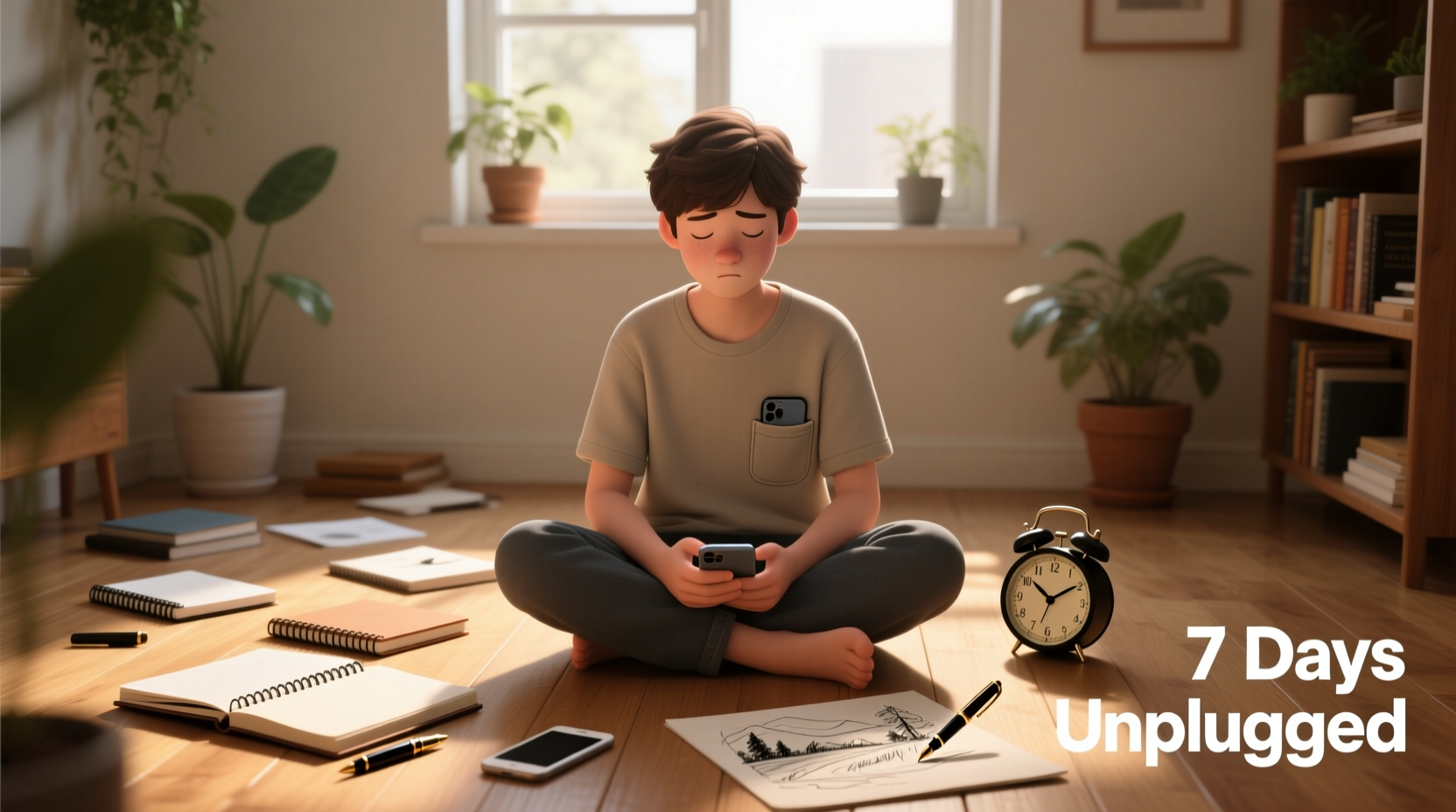
We live in an attention economy where every app, platform, and service is engineered to keep us engaged. The average person checks their phone over 100 times a day, according to research from Asurion. Notifications fragment our attention into micro-sessions, making deep work increasingly rare. Cal Newport, author of *Deep Work*, argues that “the ability to perform deep work is becoming increasingly rare at exactly the same time it is becoming increasingly valuable.”
This paradox defines modern productivity. We’re more connected than ever, yet less capable of sustained thinking. Our brains are conditioned to respond to stimuli rather than generate original ideas. The cost isn't just inefficiency—it's diminished mental resilience, higher anxiety, and a sense of being constantly behind.
“Continuous partial attention is neither sustainable nor healthy. It rewires our brain’s reward system to crave novelty over depth.” — Dr. Gloria Mark, Professor of Informatics, UC Irvine
Designing the 7-Day Detox: Rules and Boundaries
I didn’t approach this experiment casually. To ensure meaningful results, I established clear parameters:
- No social media: Deleted Instagram, Twitter, and Facebook apps from my phone.
- No news consumption: Avoided all news websites and podcasts (including newsletters).
- No entertainment streaming: No YouTube, Netflix, or TikTok—even for “educational” content.
- Limited screen time: Used laptop only for essential work emails (checked twice daily).
- No smartwatch notifications: Turned off all alerts except calls.
- Replaced screen time with analog activities: Reading physical books, journaling, walking without headphones.
The first 48 hours were brutal. I experienced what experts call “digital withdrawal”—restlessness, irritability, and a compulsive urge to check my phone. I caught myself reaching for it while waiting for coffee, during meals, even upon waking. Each time, I paused and redirected: a breath, a notebook jot, or simply sitting with the discomfort.
Day-by-Day Transformation: A Timeline of Mental Clarity
What unfolded over the week surprised me—not just in degree, but in kind. Here’s how each day progressed:
- Day 1–2: Withdrawal and Restlessness
I felt anxious and distracted. My mind raced, searching for stimulation. I filled silences with pacing or unnecessary chores. Productivity dropped as I struggled to start tasks without the crutch of quick digital breaks. - Day 3: The First Glimmer of Focus
Mid-morning, I sat down to write a report. For the first time in months, I entered a flow state—writing continuously for 90 minutes without interruption. The quality of my output improved dramatically. I realized how much mental energy I’d been wasting on context-switching. - Day 4: Rediscovering Boredom
I took a long walk without headphones. At first, the silence felt awkward. But by mile two, my mind began to wander productively. Ideas surfaced—creative solutions to ongoing projects, reflections on personal goals. I remembered why boredom is essential for insight. - Day 5: Improved Sleep and Mood
I started falling asleep faster and waking up without grogginess. Eliminating blue light exposure after 8 PM and removing late-night scrolling had immediate benefits. My mood stabilized; I felt less reactive and more present. - Day 6: Deeper Human Connections
I had dinner with a friend and noticed I wasn’t mentally drafting emails or checking for notifications. I listened more intently, asked better questions, and laughed more freely. The conversation felt richer, unhurried. - Day 7: Sustained Attention Achieved
I read a 40-page chapter of a philosophy book in one sitting—an activity I hadn’t managed in years. My ability to follow complex arguments returned. I ended the week feeling mentally spacious, calm, and strangely proud.
Key Benefits Observed After One Week Offline
The most significant change was in my cognitive function. But the benefits extended beyond focus:
| Area | Before Detox | After 7 Days |
|---|---|---|
| Attention Span | 15–20 minutes before distraction | 60+ minutes of continuous focus |
| Sleep Quality | Frequent nighttime awakenings | Deeper, uninterrupted sleep |
| Mood Stability | High reactivity, low frustration tolerance | Greater emotional regulation |
| Creativity | Reliant on external inspiration (feeds, trends) | Original ideas emerged during quiet time |
| Social Engagement | Conversations interrupted by device checks | Active listening and presence |
A Real Example: From Scattered to Strategic
Consider Sarah, a freelance designer in Portland. Like me, she found herself overwhelmed despite being “productive.” She was delivering client work on time but felt creatively drained. After reading about digital detoxes, she tried a modified 5-day version.
She disabled non-essential notifications, set her phone to grayscale, and committed to no screens before 9 AM or after 8 PM. By day three, she reported finishing a logo design in half the usual time, with greater satisfaction in the result. “I stopped designing for likes,” she said, “and started designing for meaning.”
Her case illustrates a broader truth: when we remove the noise, we regain access to our deeper capabilities. Creativity, focus, and intentionality aren’t lost—they’re buried under layers of digital clutter.
Practical Checklist: How to Run Your Own 7-Day Digital Detox
If you’re considering a similar challenge, here’s a step-by-step checklist to prepare and succeed:
- 🗓️ Choose a 7-day window with manageable work demands.
- 📧 Inform key contacts: “I’ll be limiting digital communication from [date] to [date].”
- 📱 Delete or disable distracting apps (social media, games, news).
- 🔔 Turn off non-essential notifications on all devices.
- 📵 Designate tech-free zones (e.g., bedroom, dining table).
- 📖 Stock analog alternatives: books, journals, puzzles, board games.
- 🌅 Establish new routines: morning writing, evening walks, screen curfew at 8 PM.
- 🧘 Plan daily reflection: Journal for 10 minutes each night on focus, mood, and distractions.
- 🚫 Resist the urge to “check in” even once—consistency is critical.
- 📊 Evaluate results on Day 8: What improved? What was hardest? What will you keep?
Common Challenges and How to Overcome Them
A digital detox isn’t easy. Most people face predictable hurdles:
- Fear of missing out (FOMO): Remind yourself that most digital content is ephemeral and rarely urgent. Ask: “Will this matter in a month?”
- Boredom: Embrace it. Boredom is a gateway to introspection and innovation. Carry a notebook to capture emerging thoughts.
- Work pressure: Use auto-replies and schedule limited check-ins. Most professional communications can wait 24 hours.
- Habitual checking: Replace the habit loop. When you reach for your phone, do five push-ups, sip water, or write one sentence in a journal instead.
“The best ideas don’t come from refreshing feeds. They come from stillness, solitude, and sustained attention.” — Austin Kleon, author of *Steal Like an Artist*
FAQ: Common Questions About Digital Detoxing
Can I still use my phone for emergencies or essential tasks?
Yes. The goal isn’t total disconnection but intentional use. Keep your phone for calls, maps, or timekeeping—but avoid apps that trigger endless scrolling. Use airplane mode when possible.
What if my job requires constant online presence?
Adapt the detox. Try a “low-stimulus” version: mute non-urgent notifications, limit email checks to three times a day, and eliminate recreational screen use. Even partial unplugging yields benefits.
Will I fall behind on important updates?
Unlikely. Most so-called “urgent” information is noise. After my detox, I caught up on essential news in under 30 minutes. The rest was repetition or outrage designed to provoke reaction, not understanding.
Conclusion: Reclaiming Your Mind in a Hyperconnected World
At the end of the seven days, I didn’t rush back to my old habits. Instead, I reintroduced technology deliberately—curating which apps I restored, setting strict usage limits, and scheduling daily offline blocks. The clarity I gained wasn’t temporary; it became a benchmark for how I want to live and work.
The digital world offers incredible tools, but it also demands constant vigilance. Without boundaries, it consumes our attention, dulls our thinking, and fragments our lives. This experiment proved that unplugging isn’t escapism—it’s recalibration. It’s how we reclaim agency over our minds.




 浙公网安备
33010002000092号
浙公网安备
33010002000092号 浙B2-20120091-4
Comments
No comments yet. Why don't you start the discussion?