
In an age where smartphones capture thousands of photos a year, the question isn't just how to preserve memories—but whether we're truly experiencing them. The debate between digital photo frames and printed photographs has grown beyond aesthetics or convenience. It's about attention, emotional connection, and daily engagement. Are digital frames merely decorative tech gadgets, or do they offer a meaningful alternative to traditional photo albums and wall displays? And more importantly—do people actually look at them?
This article explores the behavioral, psychological, and practical dimensions of both formats. We’ll compare user engagement, longevity, emotional resonance, and real-life use cases to determine which method keeps memories alive in our everyday lives.
The Emotional Weight of Physical Photos
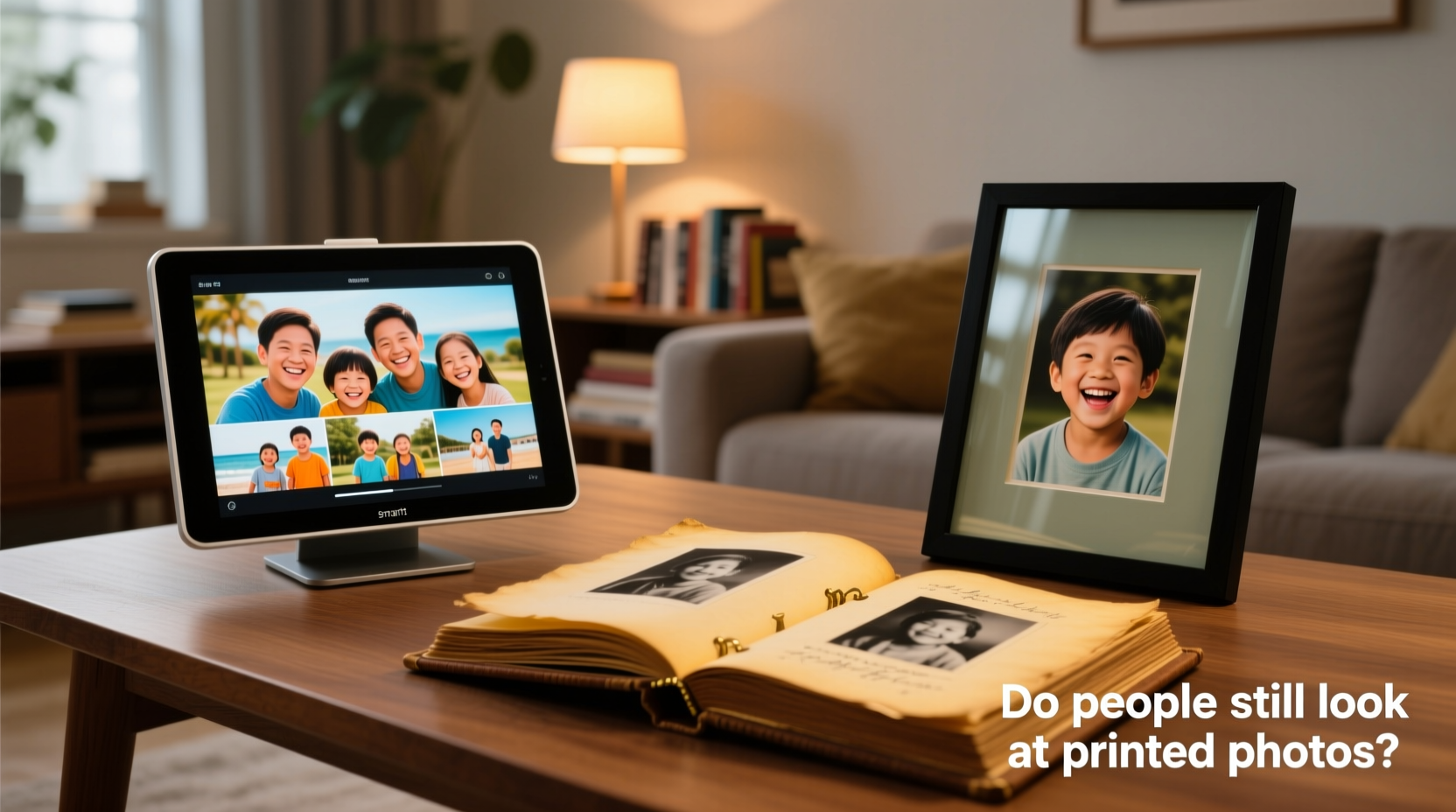
Printed photographs have long held a sacred place in homes. They sit on mantles, fill shoeboxes under beds, and are passed down through generations. Their physicality creates a sense of permanence. Holding a printed photo engages multiple senses—touch, sight, even smell—and triggers deeper emotional recall than a fleeting image on a screen.
Psychologists note that tactile interaction with objects strengthens memory encoding. A 2019 study from the University of California, Santa Cruz found that participants who handled printed photos reported higher emotional arousal and longer recollection times than those viewing the same images digitally. The act of flipping through a photo album encourages slower, intentional reflection—a stark contrast to the rapid scroll of digital media.
“Physical photos demand presence. You can’t accidentally glance at a printed picture—you have to choose to engage with it.” — Dr. Laura Simmons, Cognitive Psychologist
Moreover, printed photos often become part of home decor. A framed wedding portrait, children’s school pictures, or vacation snapshots on a gallery wall serve as passive yet constant reminders of identity and belonging. Unlike digital screens that risk being ignored after novelty wears off, printed photos integrate into the environment without demanding attention.
Digital Frames: Convenience vs. Engagement
Digital photo frames promise the best of both worlds: endless photo rotation without clutter. Modern models support Wi-Fi, cloud syncing, remote updates, and even voice control. Brands like Aura, Pix-Star, and Nixplay dominate the market with sleek designs and smartphone integration.
But functionality doesn’t guarantee attention. While digital frames can display hundreds of images over time, their very automation may contribute to visual fatigue. When photos change every 10–30 seconds, viewers rarely pause to absorb each one. The result is what researchers call “digital wallpaper”—a background element rather than a focal point.
A 2022 consumer behavior survey by HomeTech Insights revealed that while 68% of digital frame owners set up their devices with enthusiasm, only 27% regularly noticed the photos after three months. Many cited habituation—the brain filtering out repetitive stimuli—as the primary reason for declining attention.
Still, digital frames excel in specific scenarios:
- Families spread across time zones can update frames remotely.
- Elderly users benefit from automatic slideshow features that require no tech skill.
- They reduce paper waste and storage needs associated with printing.
Yet the core issue remains: does ease of access translate to meaningful viewing?
Do People Actually Look at Digital Frames? A Real Example
Consider the case of the Reynolds family in Portland, Oregon. In 2021, they gifted a 10-inch Wi-Fi-enabled digital frame to Mark’s mother, Evelyn, who lived alone. Initially thrilled, Evelyn called weekly to comment on new photos—her grandchildren’s birthdays, holiday gatherings, spring blooms in the backyard.
By month six, her calls became less frequent. When asked if she still enjoyed the frame, she replied, “Oh yes, it’s lovely,” but admitted she often didn’t notice it unless someone pointed out a new upload. “It runs all day,” she said. “After a while, I just see movement, not pictures.”
The family adjusted their strategy. Instead of continuous slideshows, they switched to displaying one photo for a full week. They also began sending text alerts when a new image was posted: “Mom, we changed the frame!” This small nudge restored engagement. Evelyn reported feeling more connected, describing how she’d now sit with coffee each morning to “really look” at the current photo before it changed.
This example illustrates a key insight: digital frames require intentional design to remain visible in daily life. Passive exposure isn’t enough. Without cues or pauses, even cherished memories fade into the background.
Comparison: Digital Frame vs Printing Photos
| Feature | Digital Photo Frame | Printed Photos |
|---|---|---|
| Setup & Maintenance | Initial setup required; needs power, Wi-Fi, app management | Minimal; once framed, no maintenance needed |
| Lifespan | 3–7 years (device-dependent) | Decades (with UV protection and proper storage) |
| Emotional Impact | Moderate; depends on frequency of updates and viewer attention | High; tactile and permanent nature enhances sentiment |
| Flexibility | High; easy to rotate, share, and update remotely | Low; changing prints requires physical effort |
| Viewing Frequency | Often passive; risk of habituation over time | Intermittent but intentional; often revisited during quiet moments |
| Cost Over Time | Higher upfront ($100–$250); no recurring costs | Lower upfront; ongoing cost per print and frame |
| Environmental Impact | Electronic waste; energy consumption | Paper and ink use; recyclable materials available |
Best Practices: How to Make Either Option Work
Whether you choose digital or print, success lies in intentionality. Memories don’t sustain themselves—they need curation, placement, and periodic renewal.
For Digital Frames
- Limit rotation speed: Set slideshows to change every 1–2 minutes instead of every 10 seconds. This gives viewers time to process each image.
- Create themed albums: Rotate seasonal content (e.g., “Summer 2023,” “Family Holidays”) to maintain freshness.
- Use notifications: Alert loved ones when new photos are added. A simple message like “We updated Grandma’s frame!” brings focus back to the device.
- Position strategically: Avoid placing frames in overly bright or dark rooms. Mount at eye level in living areas, not tucked behind furniture.
For Printed Photos
- Curate ruthlessly: Display only your most meaningful images. Too many prints create visual noise.
- Update periodically: Swap out photos seasonally to reflect current memories and milestones.
- Invest in quality: Use archival paper and UV-protective glass to prevent fading.
- Create a photo wall: Group smaller frames in a cohesive layout to form a storytelling centerpiece.
Hybrid Approach: The Best of Both Worlds
Many households now adopt a hybrid model—using digital frames for dynamic, frequently updated content while reserving printed photos for milestone events. For example:
- A digital frame in the hallway cycles through weekly family moments.
- A printed 8x10 of a child’s first steps hangs above the desk.
- An annual tradition involves selecting 12 favorite photos to print and bind into a mini-album.
This balance leverages the scalability of digital technology while preserving the gravitas of physical artifacts. It also mitigates the weaknesses of each format: digital avoids becoming invisible, and prints avoid overwhelming space.
Experts increasingly recommend this dual approach. As media historian Clara Peng notes:
“The future of memory preservation isn’t choosing between analog and digital—it’s designing rituals that make both matter.” — Clara Peng, Media Archivist & Author of *Remembering in the Digital Age*
FAQ
Are digital photo frames worth it for elderly users?
Yes, especially for seniors who aren’t tech-savvy. Once set up, most frames run autonomously. Remote updates allow family members to keep content fresh without requiring the user to interact with apps or settings. However, pairing the frame with occasional printed photos can enhance engagement and provide tangible backups.
How many photos should I display at once?
There’s no fixed number, but cognitive research suggests humans retain visual information best in groups of 3–5. In a living room, 3–7 framed prints create impact without clutter. For digital frames, limit active albums to 50–100 curated images rather than uploading thousands, which leads to repetition and disengagement.
Can digital frames replace photo albums?
Not entirely. Albums invite linear storytelling and shared viewing—two people sitting together turning pages. Digital frames offer breadth, but albums offer depth. Consider using digital frames as a “highlight reel” and printed albums as the “full feature.”
Action Checklist: Keep Your Memories Visible
- Choose a primary method (digital, print, or hybrid) based on your lifestyle.
- Select 1–2 key locations in your home for photo display.
- Set a monthly reminder to update content—rotate digital slideshows or swap printed frames.
- Send a notification when adding new photos to a digital frame.
- Print at least one photo per month as a keepsake.
- Host an annual “memory night” to review and curate the past year’s images.
Conclusion: It’s Not About the Medium—It’s About the Moment
The real question isn’t whether digital frames or printed photos are better. It’s whether we’re creating spaces in our lives to pause and remember. Technology evolves, but human emotion doesn’t. We still crave connection, continuity, and meaning.
Digital frames can be powerful tools—if used mindfully. But they won’t replace the weight of a printed photograph in your hand, the crease from years in a wallet, or the surprise of finding an old snapshot in a book. Likewise, prints alone can’t match the reach of a digital frame updating in real-time across continents.
The answer lies in deliberate practice. Whether you press “upload” or “print,” what matters is the intention behind it. Do you want to be seen? To remember? To be remembered?




 浙公网安备
33010002000092号
浙公网安备
33010002000092号 浙B2-20120091-4
Comments
No comments yet. Why don't you start the discussion?