
Mindfulness is the practice of being fully present—aware of where we are, what we’re doing, and not overly reactive or overwhelmed by what’s going on around us. One of the most accessible tools to cultivate mindfulness is journaling. Whether you're processing emotions, tracking habits, or simply reflecting on your day, writing creates space between stimulus and response. But as technology evolves, a new question emerges: does the medium matter? Is a digital journal as effective for mindfulness as its traditional paper counterpart?
The answer isn’t binary. Both formats offer unique advantages and drawbacks when it comes to supporting mindful awareness. The choice between digital and paper often hinges on personal habits, environment, cognitive style, and intention behind the practice. To make an informed decision, it’s essential to examine how each method influences attention, emotional depth, sensory engagement, and long-term consistency.
The Role of Journaling in Mindfulness Practice
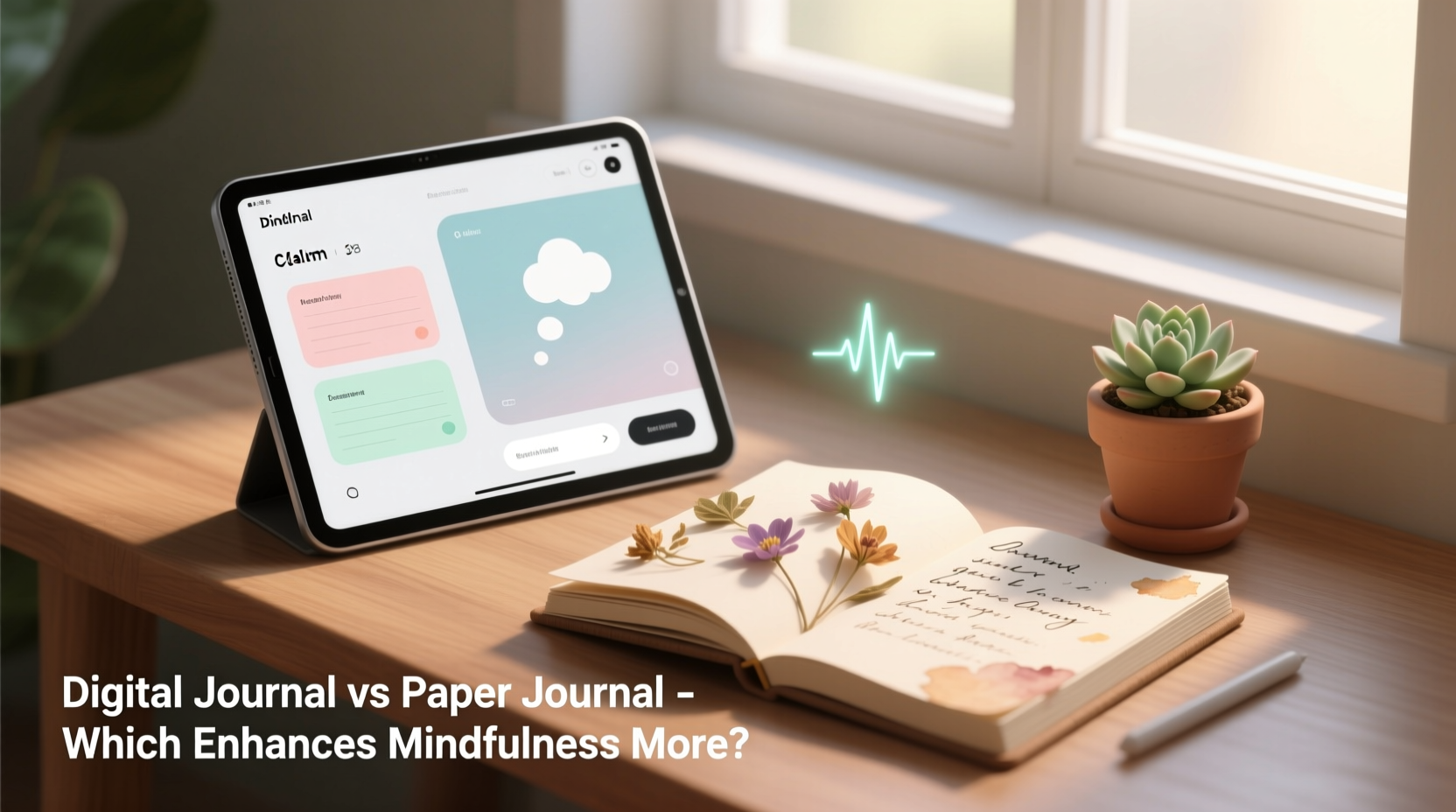
Journals serve as mirrors to our inner world. Writing allows us to slow down, observe thoughts without judgment, and create distance from mental clutter. In mindfulness-based therapies like Mindfulness-Based Stress Reduction (MBSR) and cognitive behavioral therapy (CBT), journaling is frequently used to anchor attention, identify patterns, and foster self-compassion.
When done mindfully, journaling becomes a meditative act. The rhythm of writing, the sensation of pen on paper, or even the deliberate tapping of keys can become part of a grounding ritual. But subtle differences in format can shift the quality of that experience—sometimes significantly.
“Writing by hand engages the brain differently—it activates regions linked to language, memory, and emotional regulation in ways typing doesn’t.” — Dr. Sarah Thompson, Cognitive Psychologist at UCLA
Sensory Engagement: How Touch Influences Awareness
One of the most profound distinctions between paper and digital journals lies in sensory feedback. A paper journal engages multiple senses: the texture of the page, the weight of the pen, the sound of ink flowing, even the smell of fresh paper. These physical cues ground the writer in the present moment, reinforcing embodied awareness—a core component of mindfulness.
Digital devices, on the other hand, tend to be visually dominant. Typing occurs at a remove from tactile sensation. While some keyboards offer haptic feedback, they lack the nuanced resistance and variability of handwriting. This detachment can reduce the somatic connection that enhances mindful presence.
Research published in *Psychological Science* suggests that students who take handwritten notes show greater conceptual understanding than those who type. Though this study focused on learning, the principle extends to introspection: deeper cognitive processing occurs when the body is actively involved in the act of creation.
Cognitive Load and Distraction: The Digital Dilemma
Digital journals offer undeniable convenience: cloud sync, searchability, voice-to-text, and multimedia integration. Apps like Day One, Notion, or Evernote allow users to tag entries, add photos, and access years of reflections instantly. Yet these same features introduce cognitive load and distraction risks.
A smartphone or laptop is rarely a single-purpose tool. Even if you open a journaling app with pure intent, notifications, background apps, and the temptation to switch tabs linger nearby. Studies show that merely having a phone in the room—even if turned off—can reduce available cognitive capacity.
In contrast, a paper journal is inherently low-tech. It demands nothing beyond focus and time. There are no updates, no login screens, no loading icons. This simplicity fosters a clearer mental space, making it easier to stay immersed in the present.
Consider this scenario:
Mini Case Study: Alex’s Shift from Digital to Paper
Alex, a 34-year-old software developer, had been using a digital journal for two years to track mood and stress levels. Despite logging entries daily, he noticed he wasn’t feeling more centered. He often wrote while watching TV or listening to podcasts, sometimes pausing to reply to messages mid-entry. After reading about the effects of multitasking on mindfulness, he switched to a small Moleskine notebook.
Within weeks, Alex reported a shift. “I actually have to sit down now,” he said. “No distractions. I light a candle, play soft music, and write slowly. I remember things I didn’t even realize affected me. My entries are shorter, but they feel more honest.”
This anecdote illustrates a common pattern: digital efficiency can erode contemplative depth. When journaling becomes just another task in a productivity suite, its meditative potential diminishes.
Comparative Analysis: Digital vs Paper Journals for Mindfulness
| Feature | Paper Journal | Digital Journal |
|---|---|---|
| Sensory Engagement | High – tactile, visual, auditory feedback | Low – primarily visual |
| Distraction Risk | Minimal – no notifications or apps | High – device multitasking possible |
| Search & Organization | Limited – manual indexing required | Excellent – tags, full-text search |
| Portability | Good – lightweight notebooks easy to carry | Excellent – accessible across devices |
| Cognitive Depth | Higher – slower pace encourages reflection | Variable – speed may encourage surface-level input |
| Long-Term Accessibility | Risk of loss/damage; requires storage | Cloud backup ensures durability |
| Environmental Impact | Uses paper and ink resources | Energy consumption, e-waste concerns |
This comparison reveals a trade-off: paper excels in fostering presence and reducing distractions, while digital platforms win in accessibility and organization. For mindfulness, where presence outweighs efficiency, paper often holds an edge.
Intention Matters More Than Medium
Ultimately, the effectiveness of any journal depends on the user’s intention. A person can use a digital journal mindfully—by disabling notifications, setting aside dedicated time, and treating the session like a meditation practice. Conversely, someone might rush through a paper journal before bed, barely engaging with their thoughts.
The key is ritual. Mindfulness thrives on consistency and sacredness of process. Whether you choose paper or digital, establishing a routine amplifies benefits. Lighting a candle, sitting in the same chair, breathing before you begin—these small acts signal to the brain that it’s time to reflect.
Step-by-Step Guide to Building a Mindful Journaling Practice
- Choose your medium deliberately. Consider whether you value sensory richness (paper) or convenience and searchability (digital).
- Designate a fixed time and place. Morning with coffee, evening before bed—consistency builds habit.
- Minimize interruptions. Turn off notifications, put your phone away, close unrelated browser tabs.
- Begin with breath. Take three slow inhales and exhales to center yourself before writing.
- Start with a prompt. Examples: “What am I feeling right now?” or “What brought me joy today?”
- Write without editing. Let thoughts flow freely. Avoid judging content or grammar.
- End with gratitude. Note one thing you appreciate, no matter how small.
- Review weekly. Look for emotional patterns, triggers, or growth moments.
Hybrid Approaches: Best of Both Worlds?
Some individuals find balance through hybrid methods. For instance, they may write initial reflections by hand to maximize mindfulness, then transcribe select entries digitally for archival and search purposes. Others use stylus-enabled tablets (like iPad with Apple Pencil) to simulate handwriting while retaining digital benefits.
This approach combines tactile engagement with long-term preservation. However, it requires discipline to avoid turning transcription into a mechanical chore rather than a reflective act. The goal isn’t perfection—it’s sustained awareness.
Checklist: Choosing the Right Journal for Mindfulness
- ☐ Do I want to minimize screen time during reflection?
- ☐ Am I likely to get distracted if using a device?
- ☐ Do I value ease of searching past entries?
- ☐ Will I travel frequently and need cloud access?
- ☐ Does the feel of writing matter to my focus?
- ☐ Can I commit to backing up digital files regularly?
- ☐ Am I willing to protect a physical notebook from damage?
Answering these questions honestly helps align your tool with your goals. There’s no universal “best” option—only what best serves your mindfulness journey.
Frequently Asked Questions
Can typing ever be mindful?
Yes, but it requires intentional design. Typing can support mindfulness if done in a distraction-free environment, with full attention on the words being written. Using minimalist apps (like IA Writer or FocusWriter) that hide menus and emphasize text can help maintain focus.
Is handwriting better for emotional expression?
Studies suggest yes. Handwriting activates the reticular activating system (RAS), which helps filter relevant information and increase personal relevance. Because handwriting is slower, it allows more time for emotional processing, leading to deeper self-insight.
What if I lose my paper journal?
This is a valid concern. To mitigate risk, store your journal in a safe place and consider scanning or photographing key pages annually. Alternatively, keep sensitive reflections in a secure digital vault with encryption. The impermanence of paper can also be seen as freeing—some people find comfort in knowing not everything must be preserved forever.
Conclusion: Cultivating Presence Through Intentional Practice
The debate between digital and paper journals isn’t about superiority—it’s about alignment. For cultivating mindfulness, the paper journal generally offers a richer sensory and cognitive environment, reducing distractions and deepening introspection. Its limitations in search and backup are outweighed by its ability to foster presence.
That said, a digital journal used with discipline can still support meaningful reflection. The real differentiator isn’t the tool itself, but the mindset behind its use. Mindfulness grows not from the pen or the pixel, but from the willingness to show up, listen inwardly, and respond with kindness.
No journal will transform your life overnight. But over time, the quiet act of showing up—of translating fleeting thoughts into tangible form—builds resilience, clarity, and emotional intelligence. Whether you choose lined paper or a password-protected app, what matters most is consistency, honesty, and presence.




 浙公网安备
33010002000092号
浙公网安备
33010002000092号 浙B2-20120091-4
Comments
No comments yet. Why don't you start the discussion?