
Moving from one destination to another while maintaining a full-time remote career sounds like the dream. For many digital nomads, it’s a reality—freedom to explore, set your own hours, and design a life unbound by geography. But beneath the Instagram-perfect sunsets and café-laptop shots lies a quieter challenge: sustaining energy, focus, and mental well-being over time. Without structure, boundaries, and intentional self-care, the very flexibility that attracts people to this lifestyle can become a recipe for chronic stress and burnout.
Burnout among remote workers is real—and often underestimated. The lack of separation between work and leisure, inconsistent routines, and constant adaptation to new environments take a cumulative toll. The key isn’t just packing the right gear or finding fast Wi-Fi; it’s about cultivating sustainable systems that support long-term productivity and emotional resilience. This guide outlines practical essentials—from mindset shifts to daily rituals—that help digital nomads thrive, not just survive, on the road.
1. Design a Portable Work Environment That Supports Focus
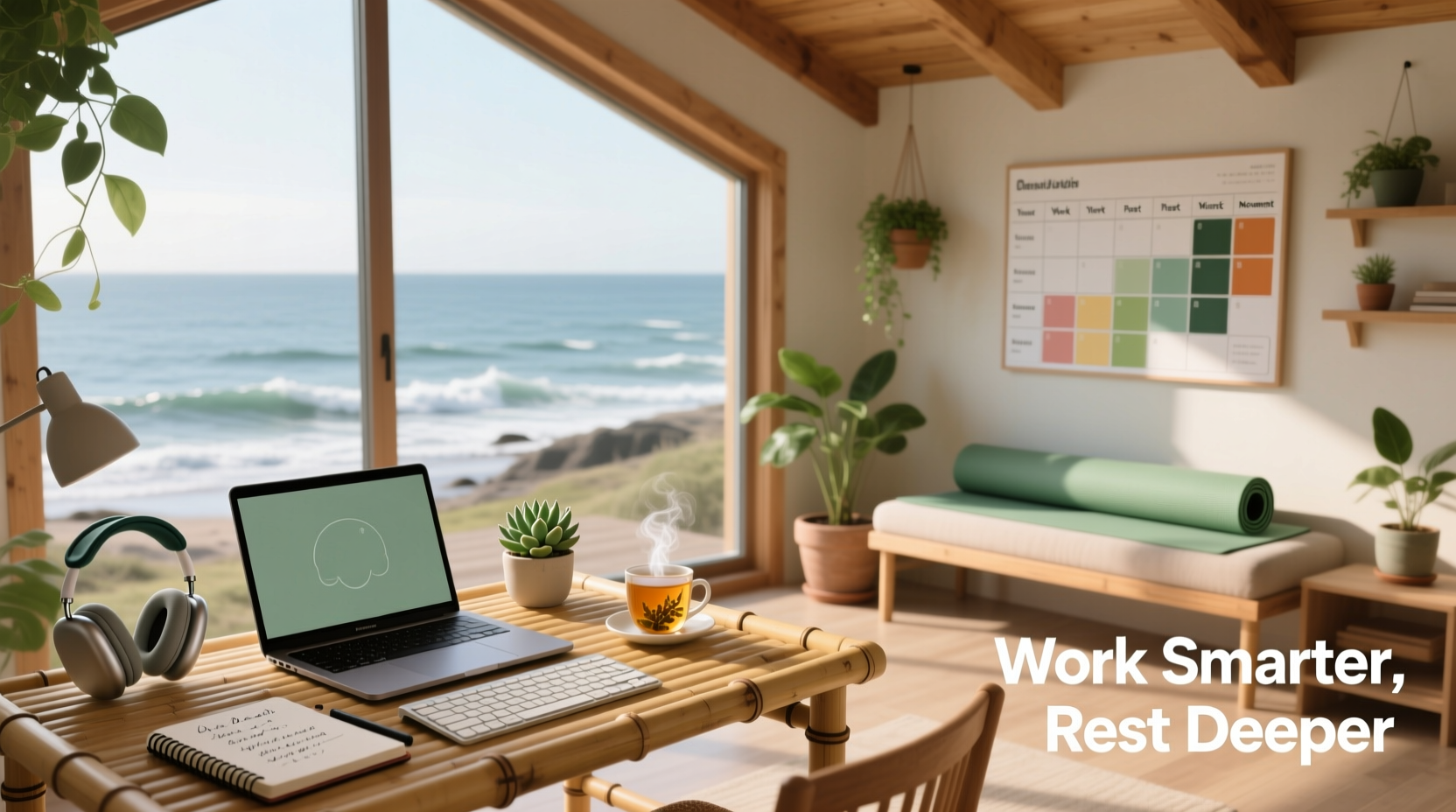
Your workspace doesn’t have to be permanent to be effective. What matters is consistency in setup and ergonomics. A poorly designed mobile office leads to physical strain, distraction, and reduced concentration—all contributors to fatigue and inefficiency.
Start with the basics: a lightweight laptop (ideally under 3.5 lbs), a compact external monitor for dual-screen setups, and noise-canceling headphones. These three items alone can dramatically improve both comfort and output. Pair them with a foldable laptop stand and a travel-friendly mechanical keyboard to maintain proper posture across co-working spaces, hostels, and Airbnbs.
Equally important is minimizing digital clutter. Use cloud-based tools like Notion or ClickUp to centralize tasks, notes, and project timelines. Sync everything across devices so you can pick up exactly where you left off—even after crossing time zones.
2. Establish Rhythms, Not Just Schedules
Scheduling every minute might sound productive, but rigidity breaks down when travel plans shift unexpectedly. Instead of strict hourly calendars, build daily rhythms based on energy levels and local context.
For example, use your peak cognitive hours—usually morning for most people—for deep work: coding, writing, strategic planning. Reserve afternoons for lighter tasks: emails, calls, administrative work. Evening is best reserved for reflection, light reading, or cultural immersion—not screen-heavy labor.
“Energy management is more important than time management. You can’t pour from an empty cup, especially when you’re constantly adapting.” — Dr. Lena Torres, Remote Work Psychologist
Anchor your rhythm with non-negotiable rituals: waking at roughly the same time each day, starting work with a five-minute breathing exercise, ending with a shutdown routine. These signals train your brain to transition smoothly between modes.
A Daily Rhythm Template for Nomads
- 7:00–7:30 AM: Wake, hydrate, light movement (stretching or short walk)
- 7:30–8:00 AM: Mindfulness or journaling
- 8:00–10:30 AM: Deep work block (no distractions)
- 10:30–11:00 AM: Break + snack
- 11:00 AM–12:30 PM: Collaborative tasks (calls, team updates)
- 12:30–1:30 PM: Lunch + disconnection (no screens)
- 1:30–3:30 PM: Shallow work (emails, admin, planning)
- 3:30–4:00 PM: Movement break (walk, yoga, gym)
- 4:00–5:30 PM: Wrap-up, review, next-day prep
- After 6:00 PM: No work. Prioritize connection or rest.
This template is flexible. Adjust start times based on time zone changes, but keep the sequence consistent. Over time, your body learns when to expect focus, creativity, and recovery.
3. Build Emotional Resilience Through Intentional Habits
Loneliness, isolation, and decision fatigue are silent burnout accelerators for digital nomads. Constant novelty wears down psychological reserves, especially without a stable community.
Combat this by proactively creating micro-communities. Join local meetups via Meetup.com or Facebook groups. Attend co-working space events even if you don’t work there regularly. These brief interactions build belonging and reduce the “floating” feeling common among long-term travelers.
Also, schedule regular check-ins with friends or family back home—but limit passive social media scrolling. Curated connection is nourishing; endless doom-scrolling is depleting.
Mindfulness practices also play a critical role. Even five minutes of breathwork or guided meditation using apps like Headspace or Insight Timer can reset your nervous system after a chaotic travel day or stressful client call.
Digital Nomad Mental Wellness Checklist
- ☐ Schedule one meaningful social interaction per week
- ☐ Practice mindfulness or grounding exercises 3x/week
- ☐ Track mood and energy levels weekly (use a simple journal)
- ☐ Take one full day off every 7–10 days (no work, no emails)
- ☐ Identify early signs of burnout (irritability, insomnia, apathy)
4. Prevent Burnout with Strategic Location Choices
Not all destinations are equally conducive to sustainable remote work. Some cities offer excellent infrastructure but overwhelming stimulation. Others are peaceful but lack reliable internet or healthcare access.
The smart nomad evaluates locations not just for aesthetics, but for balance: cost of living, climate, internet speed, time zone alignment with clients, and access to wellness resources like gyms, therapy, or nature.
| Destination Factor | Do | Don’t |
|---|---|---|
| Internet Reliability | Choose places with fiber-optic coverage or co-working hubs | Assume public Wi-Fi is sufficient for video calls |
| Cost of Living | Pick locations where your income stretches without sacrifice | Live beyond your means chasing luxury experiences |
| Time Zone | Select spots overlapping 3–4 hours with your primary market | Isolate yourself in extreme time differences causing late-night meetings |
| Social Environment | Visit during low season first to test livability | Rely solely on influencer reviews or short visits |
| Health & Safety | Confirm access to clinics, pharmacies, and emergency services | Ignore visa regulations or local health risks |
Chiang Mai, Bali, Lisbon, and Medellín remain popular for good reason—they combine affordability, strong expat communities, and solid infrastructure. But rising costs and overcrowding in these hubs mean alternatives like Da Nang (Vietnam), Tbilisi (Georgia), or Valparaíso (Chile) are gaining traction as balanced options.
Mini Case Study: From Burnout to Balance in 90 Days
Sophie, a freelance UX designer from Canada, spent six months traveling through Southeast Asia. Initially energized, she began experiencing sleep issues, irritability, and declining work quality by month four. She was working late to accommodate U.S. clients, skipping meals, and isolating herself in budget hostels.
After a panic attack during a client call, she paused her trip and restructured. She moved to a quiet neighborhood in Penang, Malaysia, rented a private studio with a dedicated desk, joined a small co-working space, and shifted her client hours to protect her mornings. She started seeing a therapist online and committed to daily walks along the beach.
Within three months, her sleep improved, her creativity returned, and she renegotiated two contracts for better rates. “I realized I wasn’t failing at being a nomad,” she said. “I was succeeding at ignoring my limits.”
5. Master the Art of Digital Detox and Recovery
Continuous connectivity is the enemy of sustainability. When your laptop is always within reach, the boundary between work and life blurs. True rest becomes rare, and mental fatigue accumulates silently.
Build deliberate disconnection into your routine. This doesn’t mean abandoning work for weeks—it means scheduling micro-detoxes: 24 hours completely offline every month, or a “no-screen Sunday” once per quarter.
Use these breaks to reconnect with analog pleasures: reading physical books, hiking, sketching, cooking, or volunteering locally. These activities restore cognitive bandwidth and reignite curiosity—both essential for creative professionals.
“We underestimate how much mental energy constant notifications consume. A single day without alerts can feel like a vacation for the mind.” — Kai Nguyen, Digital Minimalism Coach
Also, plan longer resets: a retreat, a homestay in a rural area, or a visit home. These pauses allow deeper processing, goal reassessment, and emotional recalibration.
Step-by-Step Guide: Reboot After a High-Pressure Project
- Day 1: Complete all deliverables. Send final updates. Shut down work apps.
- Day 2: Digital detox. No email, no Slack, no work-related content. Spend time outdoors.
- Day 3: Reflect. Journal about what went well, what drained you, and what needs to change.
- Day 4: Light activity—explore a new part of town, try a local class (cooking, dance, language).
- Day 5: Gradual re-entry. Check messages briefly, triage urgent items, then close again.
- Day 6: Plan the next cycle with adjusted boundaries—e.g., no meetings before 10 AM.
- Day 7: Resume work with renewed clarity and intention.
This structured recovery prevents residual stress from bleeding into the next project phase.
Frequently Asked Questions
How do I know if I’m heading toward burnout?
Early signs include chronic fatigue despite adequate sleep, increased cynicism about work, difficulty concentrating, irritability, and physical symptoms like headaches or stomach issues. If you find yourself dreading work or feeling emotionally numb, it’s time to pause and assess.
Can I avoid burnout without quitting the nomad lifestyle?
Absolutely. Burnout isn’t caused by travel—it’s caused by unsustainable work patterns and lack of recovery. By building structure, setting boundaries, and prioritizing self-care, you can enjoy location freedom indefinitely. The key is treating your well-being as non-negotiable, not optional.
What’s the most overlooked essential for remote workers on the move?
Access to mental health support. Many nomads assume therapy isn’t possible while traveling. In reality, telehealth platforms like BetterHelp or regional providers with virtual services make ongoing counseling accessible from almost anywhere. Don’t wait until you’re in crisis to seek help.
Conclusion: Thrive, Don’t Just Survive
The digital nomad lifestyle offers unparalleled freedom, but it demands a higher degree of self-awareness and discipline than traditional work environments. Without intention, the constant motion can erode your health, relationships, and joy. With the right essentials—portable tools, sustainable routines, emotional safeguards, and recovery rituals—you can maintain high performance without sacrificing well-being.
Success isn’t measured by how many countries you visit or how many projects you complete. It’s measured by how consistently you show up as your best self—energized, focused, and present. Start small: implement one new habit this week, protect one boundary, or schedule one real conversation. Momentum builds from action, not perfection.




 浙公网安备
33010002000092号
浙公网安备
33010002000092号 浙B2-20120091-4
Comments
No comments yet. Why don't you start the discussion?