
The rise of digital infrastructure and flexible work models has given birth to two distinct remote lifestyles: the digital nomad constantly on the move, and the remote worker rooted in a stable home environment. Both promise freedom from the 9-to-5 office grind, but only one may offer true long-term sustainability. While the allure of tropical co-working spaces and passport stamps is undeniable, sustainability isn't just about excitement—it's about consistency, well-being, financial stability, and personal fulfillment over years, not months.
This article examines the realities behind both lifestyles, comparing their impact on health, finances, relationships, productivity, and emotional resilience. By analyzing real-world data, expert insights, and lived experiences, we aim to answer a crucial question: Which path truly supports a fulfilling life beyond the initial thrill?
The Digital Nomad Lifestyle: Freedom with Hidden Costs
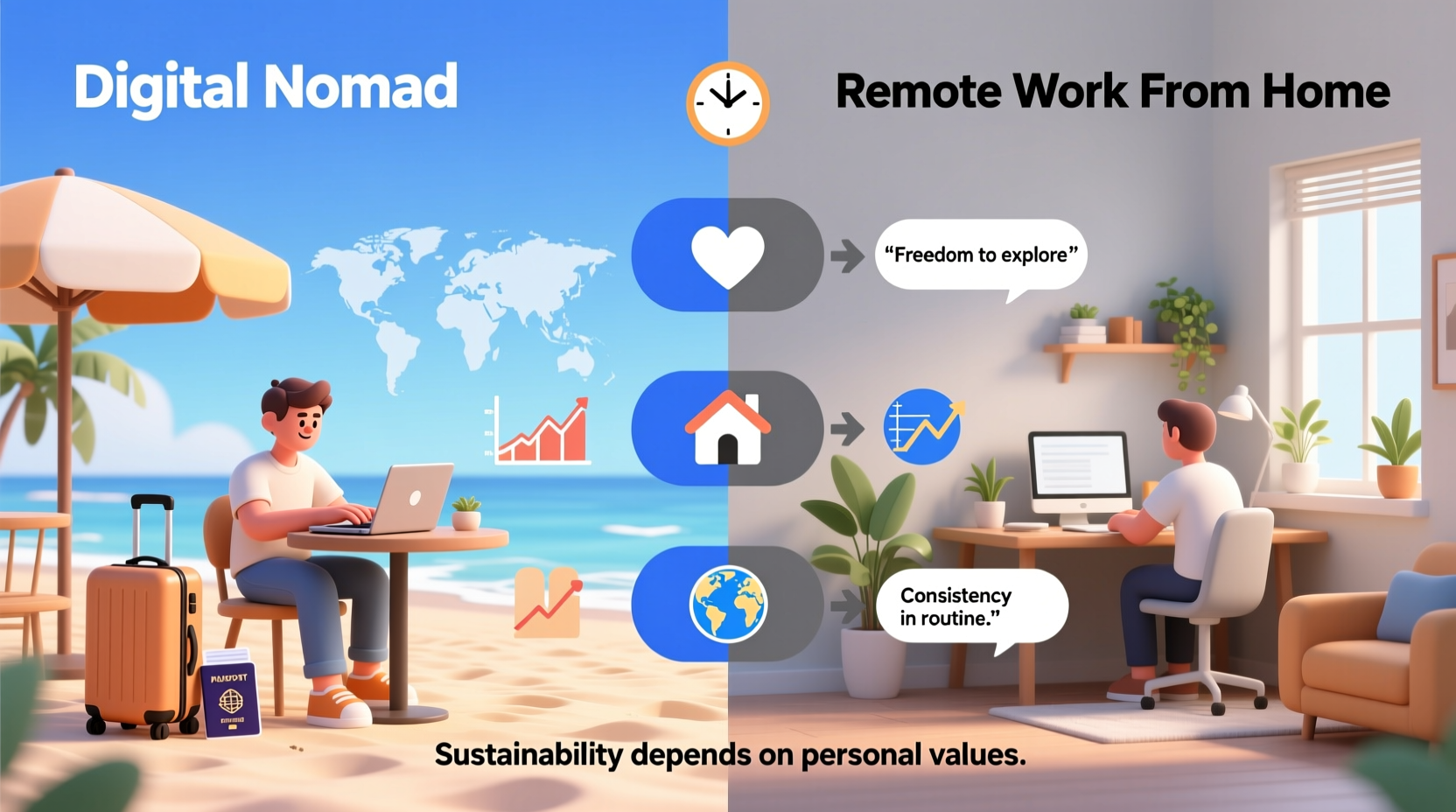
Digital nomadism involves working remotely while traveling across countries or continents, often for extended periods. Popularized by blogs, Instagram feeds, and viral TED Talks, it’s marketed as the ultimate blend of adventure and autonomy. Many are drawn to the idea of waking up to ocean views in Bali, coding from a café in Lisbon, or attending networking events in Medellín.
However, beneath the glossy surface lies a complex reality. Constant movement disrupts routines, strains relationships, and introduces logistical challenges that accumulate over time. Time zone differences can make collaboration exhausting. Unreliable Wi-Fi in budget accommodations leads to missed deadlines. Visa restrictions limit stays, forcing frequent relocations. Health insurance becomes complicated, and access to consistent medical care diminishes.
More subtly, the lack of continuity affects mental health. Psychologists refer to this as “rootlessness.” Without a stable community or familiar surroundings, even extroverted travelers report feelings of isolation after several months on the road. The novelty wears off, and what once felt liberating begins to feel transient and unstable.
Remote Work from Home: Stability Over Novelty
Remote work from home (WFH) offers flexibility without geographic displacement. Workers maintain a fixed residence while logging in from a dedicated workspace. This model gained mainstream acceptance during the pandemic and has since evolved into a permanent option for millions.
The key advantage is consistency. A reliable internet connection, ergonomic setup, and quiet environment support sustained productivity. Workers build deeper local connections—friends, fitness groups, neighbors—which contribute to emotional resilience. They also benefit from predictable expenses, easier tax filing, and access to healthcare systems without international complications.
Contrary to stereotypes, remote workers aren’t isolated. Many join hybrid coworking arrangements, attend local meetups, or participate in virtual communities. The difference is choice: they engage socially when desired, rather than being forced into constant social adaptation like nomads.
Long-term studies back this up. A 2023 Stanford study tracking remote workers over five years found that those working from home reported higher job satisfaction, lower burnout rates, and greater retention compared to mobile remote workers who changed locations frequently.
Comparative Sustainability: Key Factors Analyzed
Sustainability isn’t just about surviving—it’s about thriving across multiple dimensions. Below is a detailed comparison of digital nomadism and remote work from home across six critical areas.
| Factor | Digital Nomad | Remote Worker (Home) |
|---|---|---|
| Mental Health | High initial excitement; risk of loneliness and instability increases over time | Consistent environment supports emotional regulation and routine |
| Financial Predictability | Fluctuating costs due to currency exchange, visas, short-term rentals | Fixed housing, utilities, and taxes allow better long-term planning |
| Productivity | Varies widely based on location quality and distractions | Higher average due to controlled workspace and fewer disruptions |
| Social Connections | Broad but shallow networks; high turnover in friendships | Deeper, longer-lasting relationships with family and local community |
| Healthcare Access | Dependent on travel insurance and local standards; gaps possible | Stable access to providers, records, and preventive care |
| Environmental Impact | Higher carbon footprint from frequent flights and inefficient lodging | Lower emissions; potential for green energy use at home |
“Sustainability in remote work isn’t about how far you can go—it’s about how well you can stay.” — Dr. Lena Torres, Organizational Psychologist, Remote Work Research Lab
Real-World Example: Two Paths, Five Years Later
Consider two professionals with identical jobs as freelance web developers.
Alex chose the digital nomad route in 2019. After leaving San Francisco, Alex spent six months each in Chiang Mai, Lisbon, Mexico City, and Tbilisi. The first year was exhilarating—new food, new friends, endless inspiration. But by year three, visa renewals became stressful. A bout of food poisoning in Vietnam led to weeks without income. Relationships faded due to time zone mismatches. Eventually, Alex settled in Barcelona—not as a tourist, but seeking stability, affordable healthcare, and a sense of belonging.
Jamie, meanwhile, transitioned to full-time remote work from a small house in Asheville, North Carolina. Jamie invested in soundproofing a spare room, joined a local tech meetup, and adopted a rescue dog. There were no exotic sunsets on demand, but there was peace. Over five years, Jamie saved more, maintained strong friendships, and avoided burnout. When offered a leadership role requiring mentorship, Jamie accepted—something harder to manage while hopping between hostels.
Both succeeded professionally. But only Jamie maintained equilibrium without compromise. Alex didn’t fail—the journey had value—but ultimately returned to a version of remote work that resembled stability more than adventure.
When Digital Nomadism Works Long-Term
Nomadism isn’t inherently unsustainable—it depends on design. Some individuals adapt successfully by adopting a \"slow travel\" model: staying 3–6 months per location, building temporary roots, and prioritizing wellness over movement.
- They secure residency permits where possible (e.g., Portugal’s D7 visa, Thailand’s Smart Visa).
- They maintain a home base or storage unit in their home country for continuity.
- They schedule regular visits to family and integrate telehealth services.
- They focus on destinations with reliable infrastructure and expat-friendly ecosystems.
These strategies reduce volatility. Still, they require discipline, resources, and careful planning—traits that align more with traditional remote workers than spontaneous wanderers.
Action Plan: Choosing Your Sustainable Path
Whether you’re starting out or reevaluating your current setup, follow this step-by-step guide to determine the right long-term model for you.
- Assess your core values: Rank priorities like adventure, security, family proximity, career growth, and health.
- Test both models: Try working remotely from home for six months, then take a 2–3 month nomadic trip. Track energy levels, focus, and mood.
- Analyze costs: Compare annual expenses including rent, internet, travel, insurance, and taxes in both scenarios.
- Evaluate professional needs: Does your role require deep focus, frequent meetings, or client trust built over time?
- Plan for emergencies: How would you handle illness, job loss, or family crisis abroad versus at home?
- Create a hybrid option: Consider working from home most of the year with two 4-week travel blocks annually—best of both worlds.
Checklist: Is Your Remote Lifestyle Built to Last?
- ✅ Do you have a reliable, high-speed internet connection?
- ✅ Can you access quality healthcare without disruption?
- ✅ Are your living expenses predictable and within your income range?
- ✅ Do you maintain meaningful relationships outside of work?
- ✅ Is your workspace ergonomically sound and free from distractions?
- ✅ Have you planned for retirement, taxes, and emergency savings?
- ✅ Do you feel mentally rested, not just physically active?
Frequently Asked Questions
Can digital nomads retire sustainably?
Possibly, but it requires exceptional financial planning. Most countries don’t offer retirement visas easily, and pensions or Social Security payments may be difficult to receive abroad. Nomads often return to their home country or settle in low-cost, stable nations like Malaysia or Panama to retire.
Is remote work from home lonely?
It can be, if not managed intentionally. However, studies show that remote workers who proactively build routines—including gym visits, coworking days, and scheduled social calls—report lower loneliness than office commuters. The key is structure, not location.
Do companies prefer one model over the other?
Most employers prioritize reliability. While some startups market “nomad-friendly” roles, they often expect overlap in business hours and consistent performance. Long-term remote employees—whether at home or abroad—are judged on output, not geography. Stability tends to inspire more trust.
Conclusion: Building a Life That Endures
The digital nomad dream captures the imagination, but sustainability demands more than inspiration—it requires foundation. For most people, remote work from home offers a more balanced, resilient, and enduring path. It supports deeper relationships, better health outcomes, and stronger financial footing—all essential for long-term well-being.
That doesn’t mean travel must be abandoned. The most sustainable future may lie in integration: a stable base with intentional exploration woven in. Work from home year-round, then take extended breaks abroad. Or adopt a “geo-flexible” approach—living in one place but with the freedom to relocate deliberately every few years.
Rather than choosing between extremes, consider designing a lifestyle that evolves with your needs. Freedom isn’t just movement—it’s the ability to choose where, how, and with whom you thrive.




 浙公网安备
33010002000092号
浙公网安备
33010002000092号 浙B2-20120091-4
Comments
No comments yet. Why don't you start the discussion?