
Choosing how to share family memories with older relatives is more than a technical decision—it’s an emotional one. As families grow apart geographically, the desire to stay connected through photos intensifies. But when it comes to presentation, two options dominate: digital photo frames and traditional printed photo albums. Each has strengths, but which one truly resonates more with older generations?
The answer isn’t always straightforward. While digital frames offer convenience and automation, printed albums provide tactile nostalgia and enduring simplicity. Understanding what your older relatives value—ease of use, emotional connection, or lasting legacy—can guide you toward the right choice.
Understanding the Emotional Value of Photos for Older Generations
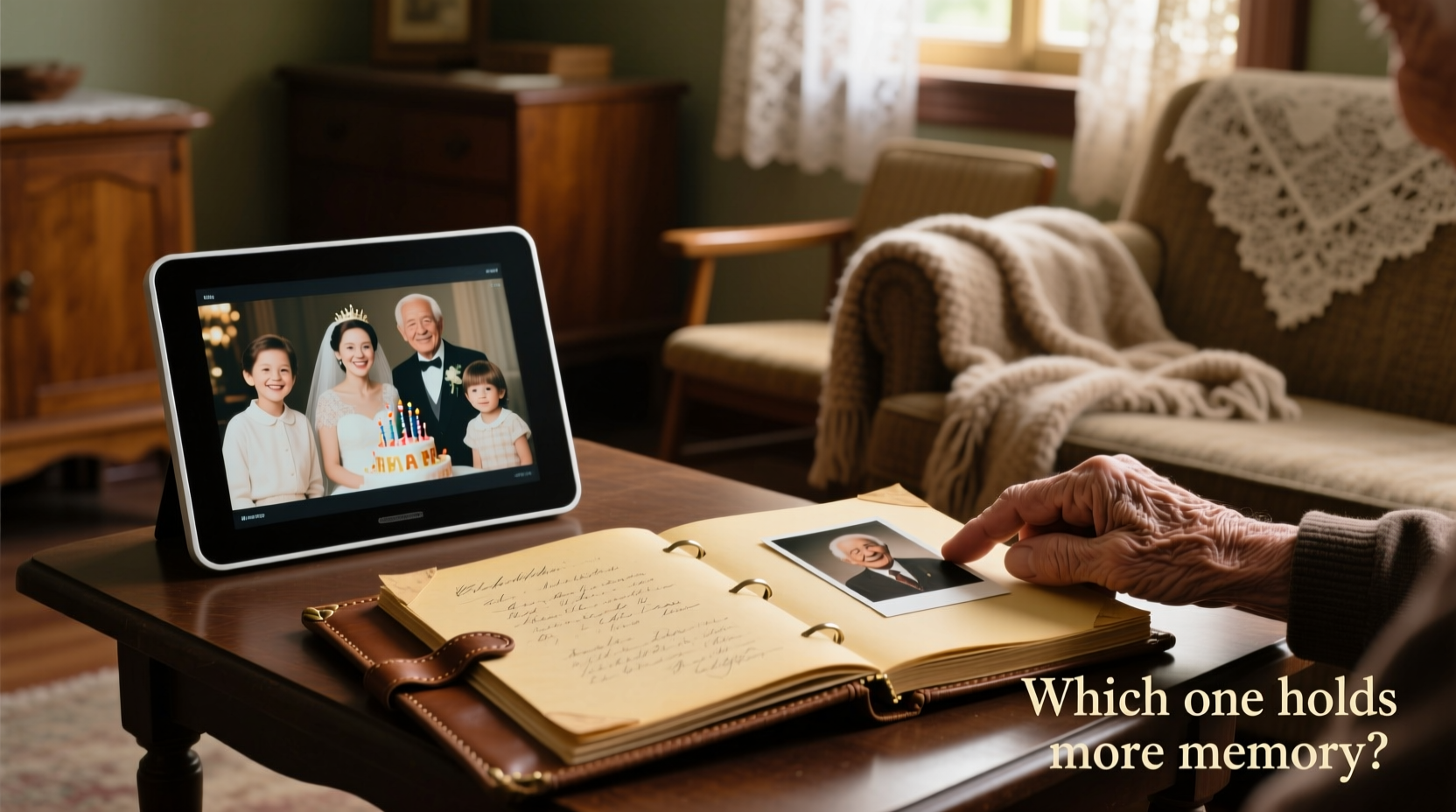
For many older adults, photographs are not just images—they are time capsules. A single snapshot can evoke decades of memories, reconnect them with lost loved ones, and affirm their place in a family narrative. This deep emotional connection shapes how they engage with visual media.
Printed albums have historically been the primary vessel for these memories. Flipping through pages allows for deliberate reflection, storytelling, and shared moments during family visits. The physical act of turning a page, feeling the texture of paper, and seeing handwritten captions adds layers of intimacy that digital formats often lack.
However, this doesn’t mean digital options are inherently inferior. Many seniors today are more tech-savvy than assumed. With proper setup, a digital photo frame can become a passive source of joy—displaying rotating memories without requiring interaction beyond a glance.
“Photos help older adults maintain cognitive engagement and reinforce identity. Whether digital or printed, the key is consistent access and personal relevance.” — Dr. Helen Torres, Gerontologist & Memory Specialist
Comparing Usability: Simplicity vs. Automation
One of the most critical factors in determining appreciation is usability. Older relatives may struggle with complex interfaces, small text, or frequent charging. Here’s how the two formats compare in real-world use:
| Feature | Digital Photo Frame | Printed Album |
|---|---|---|
| Setup Complexity | Moderate (Wi-Fi, app setup, initial upload) | None (ready to use immediately) |
| Ongoing Use | Hands-free after setup; automatic rotation | Requires manual handling to view |
| Battery/Power Needs | Needs constant power outlet access | No power required |
| Accessibility for Vision Impairments | Adjustable brightness and zoom (on some models) | Larger prints possible; no glare if matte finish |
| Portability | Fixed location unless battery-powered model | Easy to move, hold, or pass around |
| Update Frequency | Remote updates possible (Wi-Fi enabled) | New photos require reprinting and binding |
Digital frames excel in automation. Once configured, they can display hundreds of photos without user input. Some models even allow remote updates via smartphone apps—ideal for families who want to send new baby photos or vacation snapshots instantly.
Printed albums, by contrast, require no instructions. Open, flip, enjoy. There’s no fear of malfunction, dead batteries, or forgotten passwords. For relatives with limited tech confidence, this simplicity is a major advantage.
A Real-Life Example: Two Families, Two Choices
Consider two scenarios from actual family experiences:
Scenario 1 – The Digital Success Story:
The Nguyen family gifted an 80-inch smart digital frame to their grandmother, Margaret, who lives alone. She initially resisted, fearing she’d “break it.” Her grandson spent an afternoon setting it up, connecting it to Wi-Fi, and uploading 200 curated photos from family events over the past decade. He also linked it to a shared cloud folder so new photos were added automatically.
Within weeks, Margaret began referring to the frame as “her daily visit from the family.” She especially loved seeing her great-grandchildren grow in real time. When asked which she preferred—a new album or the frame—she said, “This one shows me things I didn’t even know happened.”
Scenario 2 – The Printed Album That Became a Heirloom:
The Carter family compiled a handmade scrapbook for their mother, Evelyn, after her husband passed away. It included wedding photos, children’s milestones, and handwritten notes from each grandchild. They presented it during a reunion, and Evelyn spent hours that evening quietly flipping through it, occasionally pausing to wipe her eyes.
In the months that followed, the album lived on her coffee table. Visitors were invited to browse it, and Evelyn used it to tell stories she hadn’t shared in years. When her daughter offered to upgrade to a digital version, Evelyn declined. “This one has soul,” she said. “You can feel the love in the pages.”
Both approaches worked—but for different reasons. Technology bridged distance for Margaret, while craftsmanship and physicality deepened connection for Evelyn.
Long-Term Durability and Legacy Considerations
Another dimension to consider is longevity. How well will the medium preserve memories over time?
Printed albums, especially those using archival-quality paper and acid-free materials, can last decades—even centuries—with proper storage. They don’t rely on proprietary software or hardware standards that may become obsolete. A photo album from the 1950s is still viewable today; the same cannot be said for a digital device from 2005.
Digital frames, however, depend on technology lifecycles. Screens degrade, internal memory fails, and firmware becomes unsupported. Even if the device works, accessing old photo files stored in outdated formats can be problematic. Cloud-based services may shut down, rendering remote updates impossible.
That said, digital frames offer scalability. One frame can display thousands of photos over time, reducing clutter and allowing dynamic curation. You can create themed playlists—“Summer Vacations,” “Holidays Through the Years,” or “Grandkids’ First Steps”—and rotate them seasonally.
- Printed albums are ideal for preserving a curated, timeless collection.
- Digital frames work best for evolving, frequently updated memories.
- For maximum impact, consider combining both: a core album for legacy moments, and a digital frame for ongoing updates.
Step-by-Step Guide: Choosing the Right Option for Your Relative
Follow this five-step process to make an informed decision:
- Assess Their Tech Comfort Level
Observe whether they use smartphones, tablets, or email regularly. If they struggle with basic devices, a printed album is likely safer. - Evaluate Physical Environment
Is there a stable power outlet near a favorite chair or table? Will the frame be exposed to sunlight or humidity? Albums need dry, flat surfaces; frames need electricity and moderate lighting. - Identify Memory Priorities
Are they nostalgic about the past, or eager to see current family life? Past-focused individuals may prefer albums; present-focused ones may enjoy real-time digital updates. - Test Engagement Preferences
Do they like handling objects, telling stories, and showing photos to guests? Or do they prefer passive viewing? Active participants often favor albums; passive viewers may enjoy frames. - Plan for Maintenance
Who will update the content? If you live far away and want to send new photos remotely, a digital frame makes sense. If updates will be rare, a printed album avoids obsolescence.
Checklist: Before You Decide
Use this checklist to ensure you’ve covered all bases:
- ☐ Does the relative already use any digital devices comfortably?
- ☐ Is there reliable Wi-Fi access at their home?
- ☐ Do they have a favorite spot where a frame or album would be visible daily?
- ☐ Are you prepared to manage updates (uploading photos, troubleshooting)?
- ☐ Would a hybrid approach (album + frame) better meet emotional and practical needs?
- ☐ Have you considered printing backup copies of digital photos just in case?
Frequently Asked Questions
Can older adults learn to use digital photo frames?
Yes, many can—especially with patient setup and simple models. Look for frames with auto-start slideshows, minimal controls, and remote management via apps. Avoid touchscreens if dexterity is an issue.
Which lasts longer—digital frames or printed albums?
Printed albums generally last longer if stored properly. Digital frames typically have a lifespan of 5–7 years before screen degradation or technical failure. However, digital content can be migrated to new devices if preserved correctly.
Is it worth buying an expensive digital frame?
Only if features align with actual needs. High-end models offer better resolution, cloud integration, and audio, but simpler models with SD card support may suffice. Prioritize ease of use over advanced functionality.
Final Thoughts: It’s About Connection, Not Technology
In the end, the question isn’t really about digital versus print—it’s about connection. Older relatives appreciate what makes them feel seen, remembered, and part of the family story. Whether that comes through the glow of a high-resolution screen or the turn of a worn page depends on the individual.
Some will cherish the quiet hum of a digital frame that brings distant grandchildren into their living room every day. Others will treasure the weight of an album in their hands, each page a chapter of a life well-lived.
The most thoughtful approach may be to offer both. Start with a printed album of cherished memories as a heartfelt gift. Later, introduce a digital frame as a complement—not a replacement—curated with recent moments that keep the connection alive between visits.
“The best photo format is the one that gets looked at.” — Robert Kim, Family Historian & Archivist




 浙公网安备
33010002000092号
浙公网安备
33010002000092号 浙B2-20120091-4
Comments
No comments yet. Why don't you start the discussion?