
Waking up on time isn’t just about willpower—it’s also about the tools you use. For decades, the humble alarm clock has been a staple of morning routines. But as technology evolves, so do our choices. Today, consumers face a decision between traditional analog alarm clocks and modern digital models. While both serve the same basic function—sounding an alert at a set time—their design, functionality, and impact on sleep quality differ significantly. Understanding these differences can help determine which type supports easier, more natural waking.
The debate isn't merely aesthetic. How an alarm clock looks, sounds, and interacts with your environment can influence your circadian rhythm, stress response upon waking, and even long-term sleep hygiene. This article dives deep into the functional, psychological, and physiological aspects of digital and analog alarm clocks, offering practical insights backed by sleep research and real-world experience.
Sleep Science and Morning Alertness
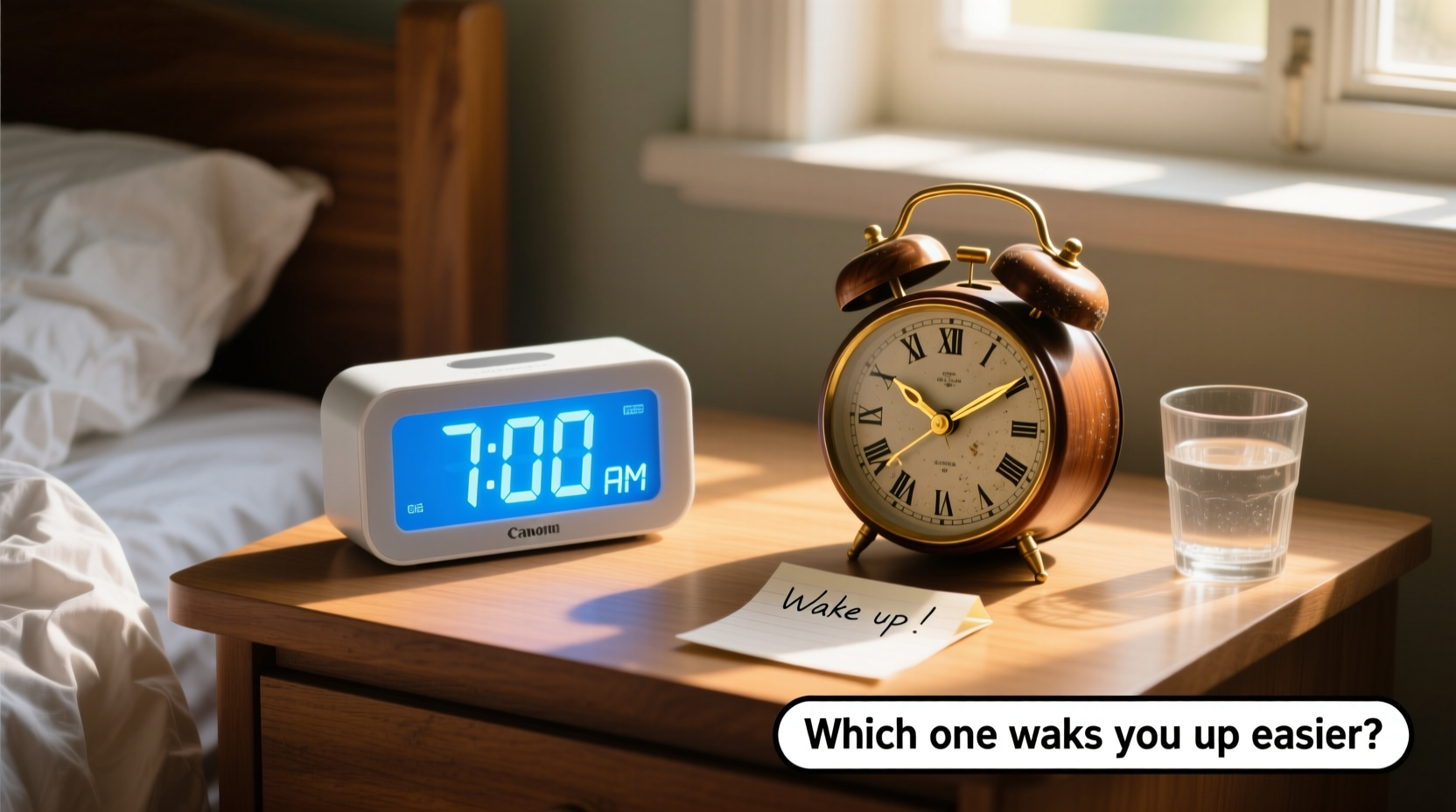
Your body's ability to wake up easily depends largely on sleep architecture and circadian biology. The ideal wake-up moment occurs during lighter stages of sleep—typically toward the end of a 90-minute sleep cycle. Abrupt awakenings from deep sleep often result in grogginess, known as sleep inertia, which can last up to two hours.
Alarm clocks play a critical role in interrupting this process. However, not all alarms are created equal. The way sound is delivered, how light is used (if at all), and even the visibility of time during nighttime glances affect how smoothly you transition from sleep to wakefulness.
According to Dr. Rebecca Yang, a clinical sleep specialist at the National Center for Sleep Health, “The sensory input immediately after waking—especially auditory and visual cues—can either ease or exacerbate the body’s stress response.” She adds, “A harsh beep in a brightly lit room may spike cortisol levels unnecessarily, making mornings feel more jarring than they need to be.”
“The sensory input immediately after waking—especially auditory and visual cues—can either ease or exacerbate the body’s stress response.” — Dr. Rebecca Yang, Clinical Sleep Specialist
Digital Alarm Clocks: Features and Functional Advantages
Digital alarm clocks dominate the market today due to their versatility and advanced features. These devices typically use LED or LCD displays to show time, date, temperature, and sometimes even weather forecasts. Most offer multiple alarm settings, snooze functions, USB charging ports, and connectivity options like Bluetooth speakers or smartphone integration.
One major advantage of digital clocks is their customizable alarm sounds. Many models include nature sounds (birds, ocean waves), FM radio wake-ups, or gradually increasing volume alerts that simulate sunrise. Some high-end versions feature built-in sunrise simulation—emitting soft, warm light that intensifies over 15–30 minutes before the alarm goes off. This mimics natural dawn and has been shown in studies to reduce sleep inertia and improve mood upon waking.
Digital clocks also allow precise scheduling. You can set different alarms for weekdays versus weekends, integrate smart home systems, or sync with calendars. For people with irregular schedules or shift workers, this flexibility enhances consistency in waking patterns.
However, drawbacks exist. Bright LED displays can contribute to melatonin suppression if viewed during nighttime bathroom trips. Additionally, reliance on complex menus and buttons may cause frustration when groggy, especially for older adults or those unfamiliar with tech interfaces.
Analog Alarm Clocks: Simplicity and Psychological Comfort
Analog alarm clocks, with their rotating hands and quiet tick-tock mechanisms, represent a minimalist alternative. Though less common today, they remain popular among individuals seeking a low-tech, distraction-free bedroom environment. Their dials often glow softly via non-LED illumination (such as phosphorescent paint or low-wattage bulbs), reducing disruptive light pollution.
The simplicity of analog clocks offers subtle psychological benefits. Without numbers flashing brightly or notifications appearing, the mind receives fewer stimulating signals during nighttime awakenings. This supports a calmer mental state, potentially improving sleep continuity.
Additionally, many users report that the gentle ticking creates a rhythmic background noise akin to white noise, which some find soothing. While not all analog clocks have this feature (silent quartz movements are common), mechanical models provide a consistent auditory cue that may enhance sleep depth for certain individuals.
On the downside, analog clocks usually lack advanced features. Most only support one or two alarms with limited sound options—typically a buzzer or bell ringer. There’s no gradual volume increase, no radio wake-up, and certainly no sunrise simulation. Adjusting the time or alarm requires manual turning of knobs, which can be imprecise compared to digital input.
Still, for those prioritizing a restful sleep sanctuary free from electronic clutter, analog remains a compelling choice.
Comparative Analysis: Digital vs Analog Wake-Up Performance
| Feature | Digital Alarm Clock | Analog Alarm Clock |
|---|---|---|
| Display Brightness | Often bright; may disrupt melatonin | Typically dimmer; less disruptive |
| Alarm Customization | Multiple tones, volume ramping, radio | Limited to buzzer or bell; fixed volume |
| Snooze Function | Standard feature | Rare or absent |
| Sunrise Simulation | Available on select models | Not available |
| Time Adjustment Ease | Precise digital controls | Manual dialing; less accurate |
| Impact on Sleep Hygiene | Mixed: helpful features but potential light disruption | Generally positive due to low stimulation |
| Best For | Shift workers, heavy sleepers, tech users | Light sleepers, minimalists, children |
This comparison reveals that neither option is universally superior. The best choice depends on individual needs, sleep habits, and environmental factors.
Real-World Example: A Teacher’s Transition from Digital to Analog
Sarah M., a middle school teacher from Portland, struggled with morning fatigue despite sleeping eight hours nightly. Her bedroom featured a digital clock with a bright blue LED display and a jarring beep alarm. She routinely woke up anxious, checking the time multiple times during the night, which disrupted her REM cycles.
After consulting a sleep coach, she replaced her digital clock with a vintage-style analog model featuring a soft amber-glow face and a gentle bell chime. She also committed to keeping her phone outside the bedroom. Within three weeks, Sarah reported improved sleep continuity and reduced morning grogginess. “I don’t feel rushed the second I open my eyes,” she said. “The room feels quieter, darker, and more peaceful.”
Her case illustrates how reducing sensory overload—even through something as small as changing a clock—can meaningfully improve wake-up ease.
Choosing the Right Alarm: A Step-by-Step Guide
Selecting the best alarm clock involves more than preference—it should align with your biological rhythms and lifestyle. Follow this sequence to make an informed decision:
- Assess Your Sleep Environment: Is your bedroom dark and quiet? Do lights or sounds easily disturb you? If yes, prioritize low-light, low-noise options—favoring analog or dimmable digital models.
- Evaluate Your Wake-Up Challenges: Are you a deep sleeper who ignores alarms? Or do you wake up too early and struggle to fall back asleep? Deep sleepers benefit from louder, escalating alarms (digital). Light sleepers may prefer gentler wake-ups (analog or sunrise simulators).
- Test Display Visibility: Can you read the time at a glance without sitting up? If poor eyesight is an issue, larger digital displays may be necessary—but ensure brightness is adjustable.
- Consider Additional Needs: Do you rely on radio news, temperature readings, or phone charging? Digital clocks often integrate these features. If not, simplicity may win.
- Try Before Committing: Borrow or purchase refundable models to test over several nights. Pay attention to how you feel upon waking and whether nighttime awakenings increase.
Frequently Asked Questions
Can an alarm clock really affect how tired I feel in the morning?
Yes. The type of sound, timing, and light exposure upon waking influence your autonomic nervous system. Harsh alarms trigger a fight-or-flight response, spiking heart rate and adrenaline. Gradual, natural-sounding alarms reduce this shock, leading to smoother transitions and less fatigue.
Are sunrise alarm clocks worth it?
For many people, yes. Studies published in journals like Neuroendocrinology Letters show that simulated dawn reduces melatonin production gradually, aligning with natural hormonal shifts. Users report feeling more alert and less depressed, especially during winter months. Most sunrise alarms are digital, though some hybrid models combine analog aesthetics with light therapy features.
Is it better to have no clock in the bedroom at all?
In some cases, absolutely. Chronic time-checking during the night correlates with increased anxiety and insomnia. If you find yourself frequently glancing at the clock, consider removing it entirely and relying on a smartphone placed face-down—or using a projection clock that only shows time when activated.
Action Plan: Optimize Your Wake-Up Routine
- Replace overly bright digital clocks with dimmable or red-hued displays (red light minimally affects melatonin).
- Choose alarm sounds that rise in volume or mimic natural environments (rainforest, birdsong).
- If using analog, ensure the alarm is loud enough to reliably wake you—test it while simulating deep sleep conditions.
- Avoid clocks with social media integrations, Wi-Fi pop-ups, or unnecessary notifications.
- Pair your alarm strategy with consistent sleep timing, even on weekends.
Final Thoughts: It’s Not Just About Time—It’s About Transition
The question isn’t simply whether digital or analog alarm clocks help you wake up easier—it’s about creating a seamless bridge between sleep and wakefulness. Technology offers powerful tools, but simplicity often delivers quieter, more sustainable results.
Digital clocks excel in customization and accessibility, particularly for those with demanding schedules or hearing impairments. Analog clocks shine in promoting calm, uncluttered sleep spaces conducive to relaxation. The most effective solution may even involve combining both: using a digital sunrise simulator for wake-up and an analog secondary clock to avoid nighttime time-monitoring.
Sleep is a ritual, and every element in your bedroom contributes to its quality. By thoughtfully selecting your alarm clock—not just for function, but for its sensory impact—you take a meaningful step toward easier mornings and healthier days.




 浙公网安备
33010002000092号
浙公网安备
33010002000092号 浙B2-20120091-4
Comments
No comments yet. Why don't you start the discussion?