
Many home cooks assume dill seed and dill weed are interchangeable—after all, they come from the same plant. But using one in place of the other without understanding their distinct properties can dramatically alter the outcome of a dish. Whether you're pickling vegetables, seasoning roasted potatoes, or crafting a creamy dill sauce, knowing when to reach for the seeds versus the leaves is essential. These two forms of dill not only differ in flavor intensity and aroma but also in texture, culinary function, and shelf life. Understanding these differences empowers cooks to make informed choices that elevate their dishes with precision and authenticity.
Definition & Overview
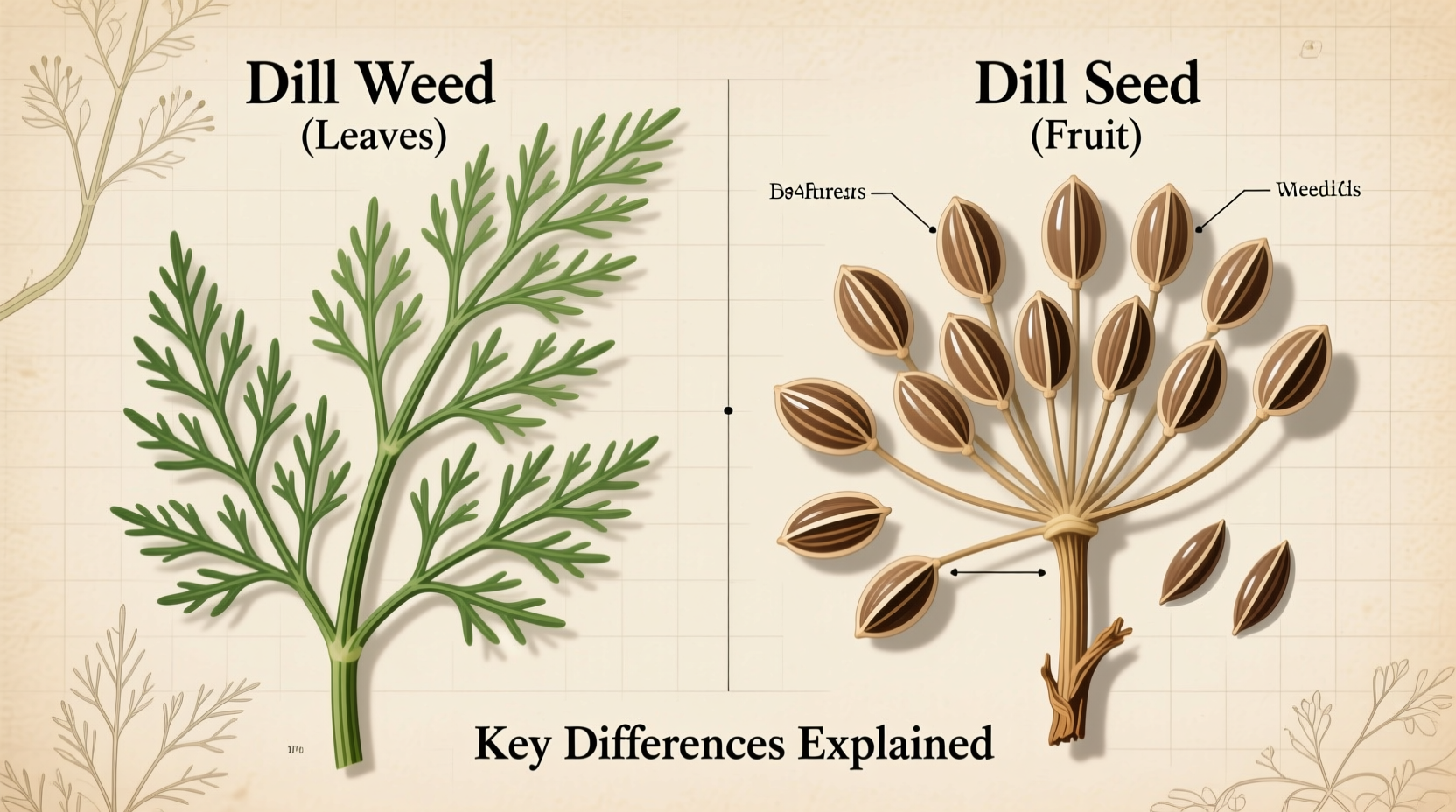
Dill (Anethum graveolens) is an annual herb in the Apiaceae family, closely related to parsley, fennel, and cilantro. While often associated with Scandinavian, Eastern European, and Middle Eastern cuisines, dill has been used globally for centuries both as a culinary ingredient and for its medicinal properties. The plant produces two primary harvestable components: the feathery green foliage known as dill weed, and the mature, oval-shaped brown seeds known as dill seed.
Dill weed refers to the fresh or dried leaves and tender stems of the dill plant. It has a bright, grassy, slightly sweet flavor with subtle anise-like notes. In contrast, dill seed comes from the flower heads after they've gone to seed. The seeds are harvested, dried, and used whole or ground. They possess a more pungent, earthy, and slightly bitter profile with pronounced caraway- and citrus undertones due to higher concentrations of essential oils like carvone and limonene.
Though derived from the same botanical source, these two forms behave very differently in cooking. Treating them as equivalents leads to imbalanced flavors—especially in delicate preparations where aromatic finesse matters. Recognizing their unique identities allows for better recipe execution and creative control in the kitchen.
Key Characteristics
| Characteristic | Dill Weed (Fresh/Dried) | Dill Seed |
|---|---|---|
| Form | Feathery green leaves; soft texture | Hard, oval, tan-to-brown seeds |
| Flavor Profile | Bright, herbaceous, mildly sweet, faint licorice note | Earthy, warm, slightly bitter, citrusy, with caraway-like depth |
| Aroma | Fragrant, fresh, green, reminiscent of parsley and tarragon | Pungent, resinous, citrus-forward with a camphorous edge |
| Heat Sensitivity | Loses flavor quickly with prolonged heat; best added at end | Releases flavor when heated; benefits from toasting or simmering |
| Culinary Function | Finishing herb, garnish, fresh accent | Base seasoning, spice component, pickling agent |
| Shelf Life | Fresh: 7–10 days refrigerated; Dried: 6–12 months | Whole: 3–4 years; Ground: 1–2 years |
| Common Forms | Fresh bunches, frozen, dried flakes | Whole seeds, cracked, ground powder |
Practical Usage: How to Use Each Form
Dill Weed – When and How to Use It
Dill weed shines in applications where freshness and aromatic lift are desired. Because its volatile oils degrade rapidly under heat, it should be added late in the cooking process or used raw.
- In cold sauces and dips: Mix into sour cream-based dressings, tzatziki, or herbed mayonnaise. A tablespoon of chopped fresh dill enhances yogurt sauces served with grilled fish or lamb.
- With seafood: Sprinkle over poached salmon, smoked trout, or gravlax just before serving. The herb complements the richness of oily fish without overpowering it.
- In salads: Toss into cucumber salad, potato salad, or grain bowls. Its lightness pairs well with vinegar, lemon juice, and mustard.
- As a garnish: Scatter over soups (like borscht), roasted vegetables, or deviled eggs for visual appeal and a burst of flavor.
Pro Tip: Never cook fresh dill weed for more than 1–2 minutes. For maximum impact, chop it finely with a sharp knife just before use—avoid pre-chopped packaged versions, which often lose potency and develop off-flavors.
Dill Seed – When and How to Use It
Dill seed brings structural depth to dishes that require longer cooking times or robust spicing. Unlike the fragile leaves, the seeds thrive under heat and release complex flavors when toasted or simmered.
- In pickling brines: Essential for classic dill pickles. Combine 1–2 teaspoons of whole seeds per quart jar with garlic, mustard seed, and bay leaf for authentic flavor.
- In breads and baked goods: Add to rye or sourdough loaves, especially in Nordic or German-style recipes. Toasting the seeds lightly before mixing into dough intensifies their aroma.
- In stews and braises: Use in lentil soups, cabbage rolls, or bean dishes where a warm, earthy note balances acidity or sweetness.
- In spice blends: Found in some versions of garam masala, za’atar alternatives, and homemade curry powders—though sparingly, due to its strong character.
When grinding dill seed, do so just before use. A coffee grinder dedicated to spices works best. Ground dill seed loses potency faster than whole, so store unused portions in an airtight container away from light and moisture.
Variants & Types
Fresh vs. Dried Dill Weed
While fresh dill weed is preferred for its vibrant color and nuanced flavor, dried dill weed offers convenience and extended shelf life. However, drying significantly diminishes its aromatic complexity.
- Fresh dill weed: Crisp texture, vivid green hue, intense fragrance. Ideal for raw applications and finishing.
- Dried dill weed: Muted flavor, darker color, less aromatic. Best used in cooked dishes like soups or casseroles where other ingredients provide support.
Substitution ratio: 1 tablespoon fresh ≈ 1 teaspoon dried. Adjust upward slightly if the dish lacks brightness.
Whole, Cracked, and Ground Dill Seed
The form of dill seed affects both flavor release and mouthfeel.
- Whole seeds: Most common. Used in pickling, breads, and slow-cooked dishes. Provide bursts of flavor and pleasant crunch.
- Cracked seeds: Partially broken to accelerate flavor infusion while retaining some texture. Useful in rubs or quick-pickle mixes.
- Ground dill seed: Fastest flavor release but shortest shelf life. Suitable for marinades, dry rubs, or spice pastes where uniform distribution is key.
Storage Tip: Keep whole dill seeds in a cool, dark cupboard in a glass jar with a tight seal. They retain full potency for up to four years. Label the container with the purchase date to track freshness.
Comparison with Similar Ingredients
Dill is frequently confused with other herbs and spices, particularly those with licorice-like notes. Understanding these distinctions prevents misapplication.
| Ingredient | How It Differs from Dill Weed | How It Differs from Dill Seed |
|---|---|---|
| Fennel Fronds | Much stronger anise/licorice flavor; feathery appearance similar but more pungent | Fennel seeds are sweeter, rounder, and lack the citrusy sharpness of dill seed |
| Tarragon | More intense anise flavor; broader leaves; doesn't wilt as easily when heated | No seed equivalent; tarragon is rarely used beyond the leaf form |
| Caraway Seed | Not an herb; no leaf form used commonly | Very similar appearance and warm bitterness, but caraway is sharper and more dominant in rye breads |
| Cilantro | More citrusy and peppery; polarizing \"soapy\" gene effect absent in dill | Cilantro seeds are coriander, which is floral, sweet, and entirely different from dill seed |
\"I once had a student substitute ground dill seed for fresh dill weed in a cucumber-yogurt soup. The result was aggressively earthy and completely unbalanced. That moment became our classroom lesson on respecting form and function in herb usage.\" — Chef Elena Rostova, Culinary Instructor, Nordic Food Academy
Practical Tips & FAQs
Can I substitute dill seed for dill weed (or vice versa)?
Only in rare cases and with caution. Dill seed is far more concentrated and structurally different. Using seeds in place of weed will add unwanted bitterness and texture. Conversely, using fresh dill weed instead of seed in a long-simmered stew won’t deliver the necessary depth. If substitution is unavoidable, use 1/2 teaspoon of ground dill seed per tablespoon of fresh dill weed—but expect a shift in character.
What dishes absolutely require dill seed?
Traditional dill pickles, sauerkraut variations, certain rye breads, and some Eastern European meatloaf recipes rely on dill seed for authenticity. Omitting it changes the cultural identity of the dish.
What dishes showcase dill weed best?
Gravlax, borscht (as garnish), Scandinavian fish cakes, tzatziki, and new potato salads highlight dill weed’s ability to enhance without dominating. Pair it with lemon, garlic, yogurt, and mild cheeses like quark or farmer’s cheese.
Is there a vegetarian alternative to dill?
No direct substitute replicates dill exactly, but a blend of fresh parsley and a pinch of tarragon can mimic its greenness and slight anise quality in a pinch. For dill seed, a small amount of caraway mixed with lemon zest may approximate the warmth and citrus, though it remains distinct.
How do I grow my own dill for both weed and seed?
Plant dill in full sun with well-drained soil. Harvest leaves early in the morning when oil concentration is highest. To collect seeds, allow several plants to bolt and flower. Once seed heads turn brown, cut them and hang upside down in a paper bag to catch falling seeds. One planting can yield both forms—just stagger harvests.
Does freezing affect dill weed?
Yes, but acceptably. Frozen dill weed loses crispness and becomes limp upon thawing, making it unsuitable for garnishes. However, it retains much of its flavor and works well in cooked dishes like soups, sauces, and casseroles. Chop fresh dill, place in ice cube trays, cover with water or olive oil, and freeze for portioned use.
Are organic dill products worth it?
For fresh dill weed, yes—herbs are prone to pesticide residue. Organic ensures cleaner flavor and safer consumption raw. For dill seed, the benefit is less pronounced since seeds are typically washed and processed, but organic sourcing supports sustainable farming practices.
Quick Checklist: Choosing Between Dill Seed and Dill Weed
- Need a finishing touch? → Choose dill weed.
- Make pickles or fermented veggies? → Reach for dill seed.
- Cooking at high heat or long duration? → Dill seed holds up better.
- Serving raw or chilled? → Fresh dill weed is ideal.
- Want subtle herbal notes? → Use dill weed.
- Seeking warm, earthy backbone? → Go with dill seed.
Summary & Key Takeaways
Dill seed and dill weed, though originating from the same plant, are functionally and sensorially distinct ingredients. Treating them as interchangeable undermines the integrity of a recipe and limits a cook’s ability to layer flavors effectively.
Dill weed delivers a bright, fresh, and delicate herbal lift, making it ideal for cold dishes, seafood, and last-minute enhancements. It degrades quickly with heat and should be handled with care to preserve its essence.
Dill seed, by contrast, offers a warm, earthy, and slightly bitter depth that withstands prolonged cooking. It plays a foundational role in pickling, bread-making, and hearty stews, contributing both aroma and texture.
Understanding these differences enables precise seasoning, whether preparing a simple cucumber salad or fermenting a batch of artisanal pickles. Proper storage, thoughtful substitution, and awareness of regional culinary traditions further refine one’s mastery of this versatile plant.
Next time you reach for dill, pause and ask: Do I need the leaf or the seed? That small decision could define the success of your dish.




 浙公网安备
33010002000092号
浙公网安备
33010002000092号 浙B2-20120091-4
Comments
No comments yet. Why don't you start the discussion?