
\"I Heard the Bells on Christmas Day\" is more than a holiday tune—it's a poetic reflection on hope, despair, and redemption during wartime. Originally a poem by Henry Wadsworth Longfellow written in 1863 amid the Civil War, it was later set to music and transformed into one of the most emotionally resonant Christmas carols. Over time, numerous artists have recorded their own versions, each bringing a unique interpretation to its powerful message. With so many renditions available, choosing the best one can feel overwhelming. This guide explores standout performances, compares key elements, and helps you find the version that speaks most deeply to your spirit.
The Story Behind the Song
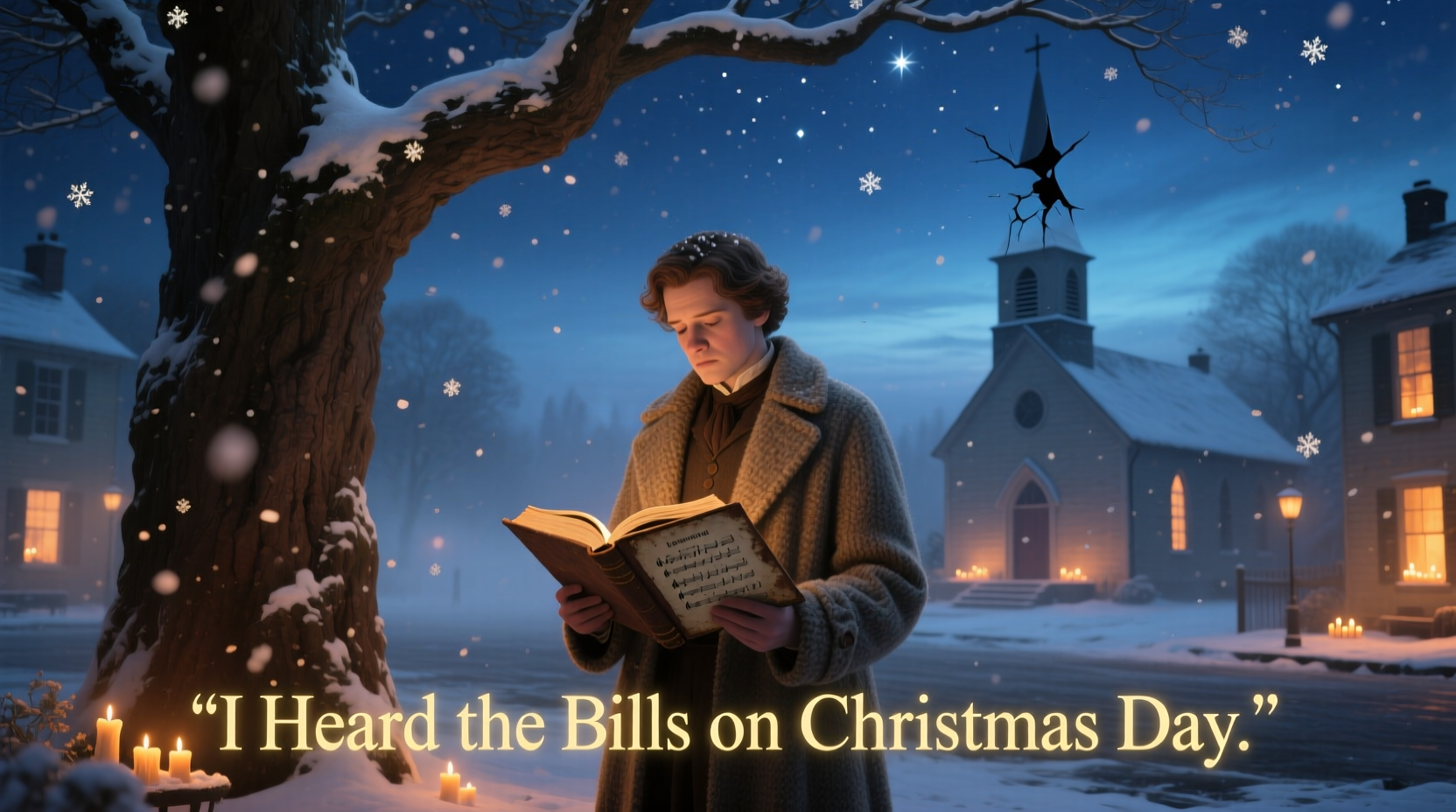
Longfellow wrote \"Christmas Bells\" at a time of personal and national crisis. His wife had died in a tragic accident, and his son was severely wounded fighting in the Civil War. The poem reflects his internal struggle between despair and faith. Despite hearing the joyful pealing of Christmas bells proclaiming \"peace on earth,\" he questions how such peace could exist amid war and suffering. Yet, the poem—and later the song—ends with a reaffirmation of hope: “God is not dead, nor doth He sleep; / The Wrong shall fail, the Right prevail.”
This duality makes the song uniquely powerful. It doesn’t shy away from darkness but ultimately chooses light. As such, the most compelling musical versions are those that honor both the sorrow and the triumph embedded in the lyrics.
“Great art doesn’t ignore pain—it walks through it and emerges changed. That’s what makes certain versions of this song unforgettable.” — Dr. Rebecca Lang, Music Historian & Ethnomusicology Professor, Boston University
Key Elements of a Powerful Rendition
Not all recordings of \"I Heard the Bells on Christmas Day\" carry the same emotional weight. The best ones balance melody, vocal delivery, instrumentation, and pacing to reflect the arc of the poem—from grief to grace. Here are the core qualities to listen for:
- Dynamic range: The performance should start somber and gradually build toward a hopeful climax.
- Vocal sincerity: A genuine, unembellished voice often conveys the emotion better than technical perfection.
- Instrumentation: Minimal arrangements (like piano or strings) can heighten intimacy, while full orchestral or choral backing amplifies the triumphant finale.
- Pacing: Rushing through the verses diminishes impact. The best versions allow silence and space between lines.
Top 5 Notable Versions Compared
Below is a comparison of five widely acclaimed recordings, evaluated across critical dimensions to help you identify which might resonate most with you.
| Artist | Year | Style | Emotional Tone | Best For |
|---|---|---|---|---|
| Johnny Cash | 1971 | Folk/Gospel | Solemn, reflective | Those seeking raw honesty and spiritual depth |
| Kathy Mattea | 2002 | Acoustic/Country | Tender, intimate | Quiet moments of personal reflection |
| Bing Crosby | 1956 | Traditional Pop | Warm, nostalgic | Families and traditional holiday listeners |
| Mannheim Steamroller | 2008 | New Age/Orchestral | Epic, cinematic | Dramatic settings or background music |
| Sixpence None the Richer | 2008 | Indie Pop/Choral | Hopeful, ethereal | Younger audiences and modern worship settings |
Why Johnny Cash Stands Out
Many consider Johnny Cash’s 1971 recording the definitive version. His deep, weathered voice carries the weight of someone who has lived through hardship. There’s no theatricality—just presence. Backed by sparse acoustic guitar and subtle choir harmonies, Cash allows the lyrics to breathe. When he reaches the final stanza—\"And in despair I bowed my head; 'There is no peace on earth,' I said\"—his voice cracks slightly, making the eventual resolution even more powerful.
Cash didn’t just sing the song; he embodied it. His own struggles with addiction, loss, and redemption mirror Longfellow’s journey, giving the performance an authenticity few others match.
A Real Moment: How One Listener Found Healing
In 2015, Sarah Thompson, a military chaplain from Colorado, played Johnny Cash’s version during a service for veterans struggling with PTSD. One attendee, a Marine named James Reed, later shared that hearing the line “Then pealed the bells more loud and deep: ‘God is not dead, nor doth He sleep’” brought him to tears. “I hadn’t felt hope in months,” he said. “But in that moment, I remembered I wasn’t alone.”
This illustrates the song’s enduring power—not as mere entertainment, but as a vessel for emotional and spiritual healing. The right version, played at the right time, can be transformative.
How to Choose Your Best Version: A Step-by-Step Guide
With so many interpretations, here’s a practical process to help you find the one that fits your heart and context:
- Identify your purpose: Are you listening for personal comfort, family tradition, church service, or background ambiance?
- Sample multiple artists: Listen to at least three different versions back-to-back without distractions.
- Notice your emotional response: Which one makes you pause? Which gives you chills or brings tears?
- Consider the setting: A children’s program may need a gentler tone, while a memorial service might call for something deeper.
- Test it aloud: Play it during a quiet evening at home. Does it enhance the atmosphere or feel out of place?
- Make a shortlist: Narrow it down to two options and live with them for a few days before deciding.
Common Mistakes When Selecting a Version
Even well-intentioned listeners can misjudge a rendition. Avoid these pitfalls:
- Choosing based on popularity alone: Just because a version is trending doesn’t mean it’s the most meaningful.
- Overlooking lyrical clarity: Some arrangements bury the words under heavy instrumentation.
- Ignoring the ending: The final verse is the emotional payoff. If the build-up feels rushed or flat, the impact is lost.
- Playing it too frequently: Even the best version can lose its power through overexposure.
Frequently Asked Questions
Is \"I Heard the Bells on Christmas Day\" a religious song?
Yes, though its themes of peace and hope are universal. The lyrics reference Christian theology, particularly the belief in divine justice and redemption, making it popular in both religious and secular contexts during the holidays.
What’s the original melody used for the song?
The most common tune is \"Waltham,\" composed by John Baptiste Calkin in 1874. Some modern artists use original compositions, but \"Waltham\" remains the standard in hymnals and choral performances.
Can the song be used in non-religious settings?
Absolutely. Its message of overcoming despair and believing in peace transcends religious boundaries. It’s been used in peace vigils, memorial services, and community events worldwide.
Your Playlist Checklist
Before finalizing your favorite version, use this checklist to ensure it meets both emotional and practical standards:
- ✅ Lyrics are clearly audible
- ✅ Emotional arc matches the poem’s journey
- ✅ Instrumentation supports rather than overwhelms
- ✅ Final verse delivers a strong, hopeful resolution
- ✅ Performs well in your intended setting (home, church, car, etc.)
- ✅ Resonates personally—you feel something when you hear it
Conclusion: Let the Bells Speak to You
The \"best\" version of \"I Heard the Bells on Christmas Day\" isn’t the one with the most streams or the fanciest production—it’s the one that stirs your soul. Whether it’s Johnny Cash’s gravelly confession, Kathy Mattea’s gentle lullaby, or Sixpence None the Richer’s shimmering harmonies, the right rendition will meet you where you are. In a season often dominated by cheer, this song reminds us that peace isn’t the absence of pain, but the courage to believe in light anyway.




 浙公网安备
33010002000092号
浙公网安备
33010002000092号 浙B2-20120091-4
Comments
No comments yet. Why don't you start the discussion?