
If you open your dishwasher after a cycle only to find a pool of murky water at the bottom, you're not alone. A dishwasher that doesn't drain properly disrupts kitchen efficiency and can lead to unpleasant odors, unclean dishes, and even mold growth. While this issue may seem complex, most causes are simple to diagnose and resolve—often without calling a technician.
Understanding why water accumulates and how to address the root cause can save time, money, and frustration. This guide walks through the common reasons for poor drainage, practical fixes, and preventative steps to keep your appliance running smoothly.
Common Causes of Dishwasher Drainage Problems
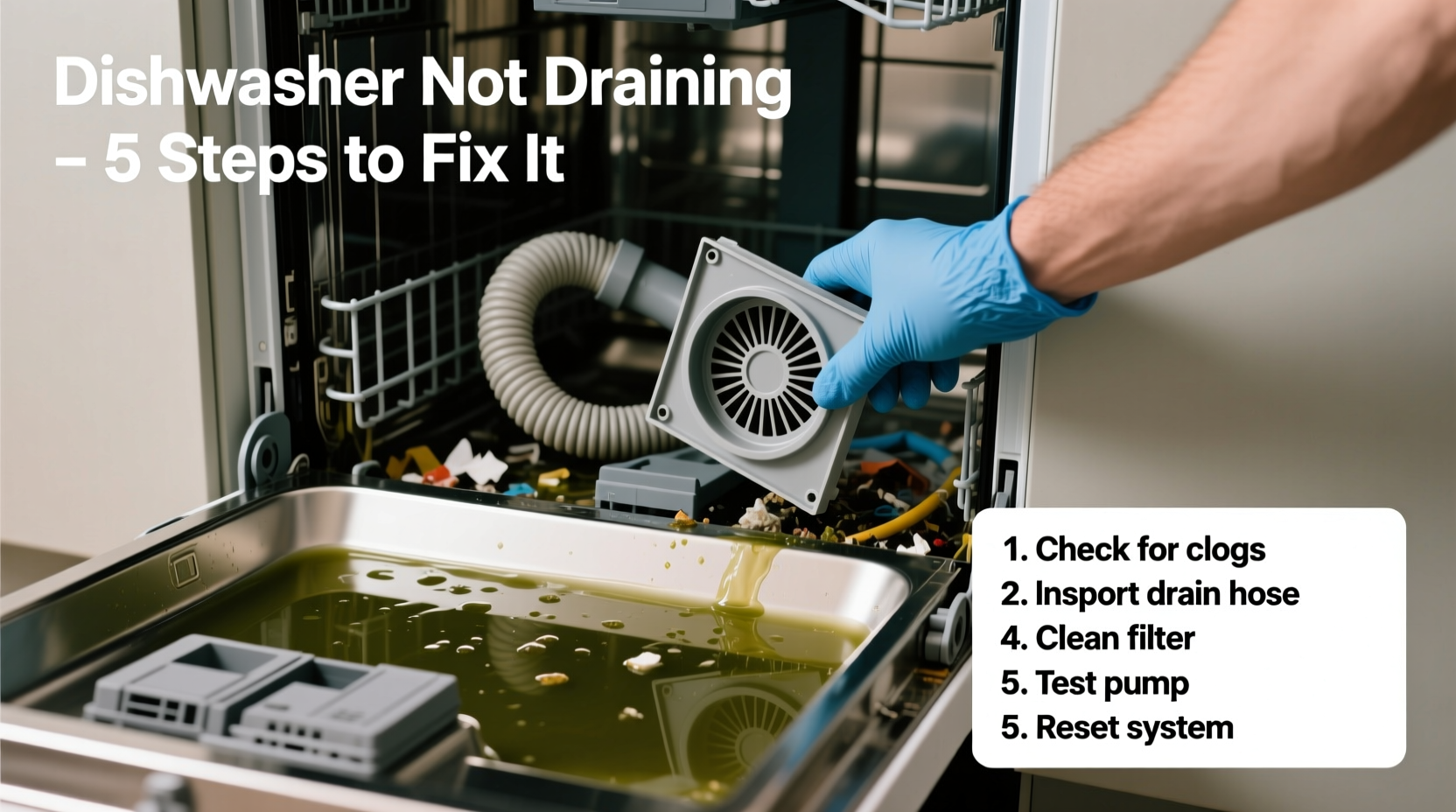
Water pooling in the dishwasher typically points to a blockage or mechanical failure in the drainage system. The most frequent culprits include:
- Food debris buildup in the filter or drain basket
- Clogged drain hose due to kinks or grease accumulation
- Air gap obstruction (if your model has one)
- Faulty garbage disposal connection blocking flow
- Malfunctioning drain pump or impeller damage
- Incorrect installation, such as improper loop in the drain line
The dishwasher relies on a pump to force water out through a hose connected to either a garbage disposal or a standpipe. Any disruption in this path stops proper drainage. Identifying where the blockage or failure occurs is the first step toward resolution.
Step-by-Step Guide to Fix a Dishwasher That Won’t Drain
Follow this systematic approach to troubleshoot and resolve drainage issues efficiently.
- Empty the dishwasher and remove standing water using a cup or sponge into a bucket.
- Inspect and clean the filter assembly located at the bottom of the tub. Remove large food particles and rinse under running water.
- Check the drain basket (center or rear of the tub) for clogs. Use a soft brush to dislodge stuck debris.
- Examine the drain hose for kinks or blockages. Disconnect it from the pump and blow air through to test flow.
- Clear the air gap (usually on the sink near the faucet). Unscrew the cap and remove gunk with a pipe cleaner.
- Run the garbage disposal if your dishwasher connects to it. A clogged disposal prevents water from exiting.
- Test the drain pump by manually spinning the impeller. If it’s stuck or broken, replacement may be necessary.
- Ensure proper hose loop: The drain line should rise up to the underside of the countertop before descending to prevent backflow.
After completing these checks, run a short cycle to verify drainage. If water still remains, further diagnostics may be needed.
Do’s and Don’ts When Dealing With Drainage Issues
| Do’s | Don’ts |
|---|---|
| Clean the filter monthly | Ignore persistent foul odors |
| Scrape dishes before loading | Use excessive detergent (can create foam that hampers draining) |
| Inspect the air gap regularly | Force the door closed if water backs up (indicates deeper issue) |
| Ensure the drain hose has a high loop | Run the dishwasher with known clogs |
| Check disposal alignment quarterly | Use chemical drain cleaners inside the dishwasher |
Real Example: How One Homeowner Fixed Their Dishwasher
Sarah from Portland noticed her dishwasher was leaving behind half an inch of greasy water after every cycle. She tried cleaning the filter but saw no improvement. Following online advice, she checked the air gap and found it completely clogged with hardened food residue. After disassembling and flushing it with hot water, she ran a test cycle—and the water drained completely.
“I had no idea that little chrome cap on my sink did anything,” Sarah said. “Now I clean it every few months, and my dishwasher runs like new.”
This case illustrates how a minor, often overlooked component can cause major performance issues. Regular maintenance of all parts—not just the interior—is essential.
Expert Insight on Preventative Maintenance
“Most dishwasher drainage problems stem from neglect, not mechanical failure. A 10-minute monthly inspection of filters and hoses prevents 90% of service calls.” — Mark Reynolds, Appliance Repair Technician with 18 years of field experience
Experts emphasize that modern dishwashers are built to last, but they require basic care. The filter system, in particular, needs consistent attention because manufacturers assume users will maintain it. Ignoring this leads to backups, inefficient cleaning, and premature wear on the pump.
Troubleshooting Checklist
- ✅ Remove standing water manually
- ✅ Clean the filter and drain basket
- ✅ Check for visible kinks in the drain hose
- ✅ Clear the air gap (if present)
- ✅ Run garbage disposal before starting dishwasher
- ✅ Verify high loop in drain line under sink
- ✅ Listen for pump humming during drain cycle
- ✅ Test with a short rinse cycle after repairs
Work through each item methodically. Many issues are resolved at the first few steps. If none work, suspect a failed drain pump or control board issue requiring professional help.
Frequently Asked Questions
Why does my dishwasher leave water even though it seems to run fine?
Small amounts of water (less than 1/2 inch) are normal to prevent seals from drying out. However, larger pools indicate a drainage problem—usually a clog in the filter, hose, or air gap. Also check if the garbage disposal is clogged when connected.
Can I use a wet/dry vacuum to clear the drain hose?
Yes. Attach the vacuum hose securely to the dishwasher end of the drain line and run it briefly to pull out debris. Do this only after disconnecting power and removing the hose from the pump. Avoid using household vacuums—they aren’t designed for water and can be damaged.
How do I know if the drain pump is bad?
If the dishwasher fills and washes normally but makes no draining sound—or produces a humming noise without water removal—the pump may be faulty. Manually spin the impeller inside the pump housing; if it doesn’t turn freely or shows cracks, replacement is needed.
Conclusion: Take Action Before It Gets Worse
A dishwasher that won’t drain doesn’t have to mean costly repairs or replacement. In most cases, the solution lies in simple maintenance: clearing clogs, checking connections, and ensuring proper setup. By understanding how the drainage system works and performing regular inspections, you can avoid recurring issues and extend the life of your appliance.
Start today by pulling out the filter and giving it a thorough cleaning. Then examine the air gap and hose routing. These small actions can restore full function and save you hundreds in service fees. Don’t let stagnant water ruin your routine—take control of your dishwasher’s health now.




 浙公网安备
33010002000092号
浙公网安备
33010002000092号 浙B2-20120091-4
Comments
No comments yet. Why don't you start the discussion?