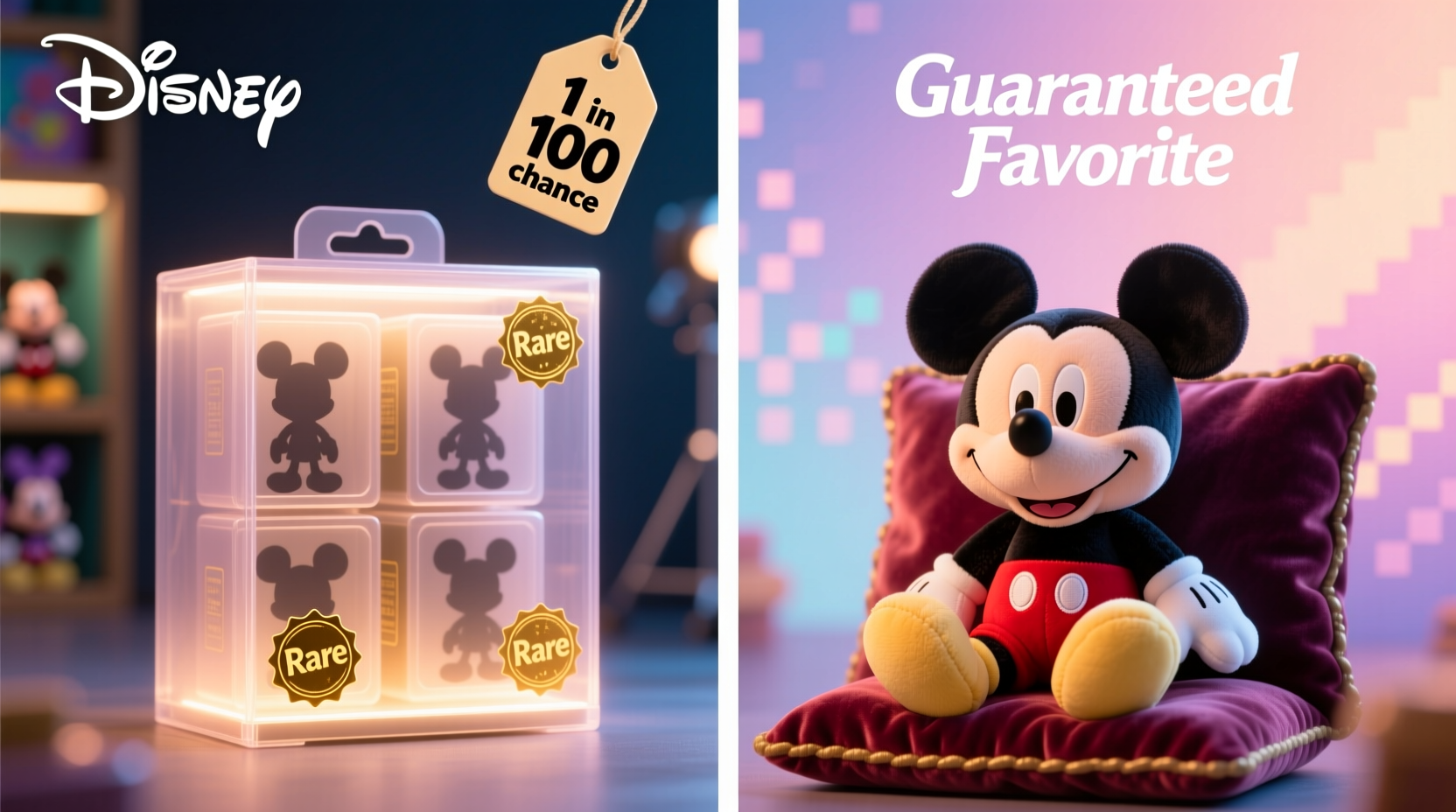
For Disney collectors and fans of whimsical merchandise, the choice between blind boxes and mystery plush toys isn’t just about preference—it’s a calculated decision involving chance, cost, and emotional payoff. Blind boxes offer the thrill of surprise with the potential for ultra-rare figures, while mystery plushes often promise larger, huggable versions of beloved characters—sometimes with better odds of landing a favorite. But which option truly gives you the best shot at satisfaction? Is it smarter to chase rarity or secure a guaranteed favorite?
This article examines the mechanics, psychology, and real-world outcomes behind Disney blind boxes and mystery plush collections. From production ratios to resale markets, we’ll explore what each format offers and help you decide where your next purchase should land.
The Mechanics Behind the Mystery
Both blind boxes and mystery plushes operate on the same core principle: uncertainty. You pay for a product without knowing exactly what you’ll receive. However, their execution differs significantly.
Blind boxes typically contain small vinyl figures, keychains, or mini collectibles. Each series includes a full roster of characters—usually 10 to 12—with one or two designated as “secret” or “chase” variants. These rare figures can be recolors, poses, or entirely unique designs not listed on packaging. The appeal lies in the hunt; opening multiple boxes increases the chance of hitting that elusive prize.
Mystery plushes, by contrast, are usually soft, stuffed animals ranging from 6 to 10 inches tall. They follow similar distribution logic but tend to feature broader character pools—sometimes spanning decades of Disney animation. While some plush lines include rare variants, many emphasize fan-favorite characters rather than extreme scarcity.
Comparing Odds: What Are Your Chances?
Odds are everything when choosing between formats. A typical Disney blind box series follows a tiered distribution model:
| Tier | Type | Estimated Odds |
|---|---|---|
| Common | Regular character (e.g., Mickey, Minnie) | 1 in 6 |
| Uncommon | Variants or lesser-known characters | 1 in 12 |
| Rare | Special edition or themed version | 1 in 24 |
| Chase/Secret | Ultrarare unlisted figure | 1 in 72 to 1 in 144 |
In contrast, Disney mystery plush lines often have simpler odds. For example, the popular \"Disney Dreamies\" or \"Mini Plush Surprise\" series may list a 1:16 chance for rare variants, with no hidden secrets. More importantly, they frequently guarantee that every box contains a recognizable character—no duplicates of background NPCs or obscure sidekicks.
“With plushes, you’re trading raw rarity for emotional resonance. You might not get a chase, but you’re far more likely to get someone you actually love.” — Lena Torres, Toy Collector & YouTube Reviewer (PlushPulse Reviews)
Value Analysis: Rare Find vs. Guaranteed Favorite
The true cost of collecting isn’t just monetary—it’s emotional investment and long-term enjoyment. Let’s break down both options:
- Blind Boxes: High risk, high reward. A single chase figure can resell for $50–$150, especially if it features a cult-favorite character like Oogie Boogie or Zurg. But achieving that win often requires buying entire cases (12–24 boxes), pushing total spending past $100+.
- Mystery Plushes: Lower ceiling for resale value, but higher floor for personal satisfaction. Most plushes sell for $8–$15 new, and even rarer ones rarely exceed $30. However, because they’re larger and cuter, they’re more likely to be displayed, gifted, or kept long-term.
A case study illustrates this well: Sarah, a Disney fan from Austin, bought six blind boxes chasing a glow-in-the-dark Jack Skellington. She pulled three commons and three uncommons—none were rare. Frustrated, she switched to mystery plushes and within four boxes got a vintage-style Daisy Duck and a flocked Winnie the Pooh. Though neither had resale heat, she said, “I actually wanted to hug them. That felt like winning.”
When Rarity Wins
If your goal is exclusivity or investment, blind boxes still dominate. Limited-run chases, especially those tied to anniversaries or parks exclusives, appreciate over time. Some collectors treat blind box cases like lottery tickets—buying them only when restocks hit or when community data suggests a flush (a case yielding multiple rares).
When Favorites Matter More
For casual fans, gift-givers, or display-focused collectors, mystery plushes deliver consistent joy. Their larger size makes them shelf-ready, and brands like Jakks Pacific and Build-A-Bear often use nostalgic color palettes or retro styling that appeal across generations.
Smart Collecting Strategies: A Step-by-Step Guide
Whether you lean toward boxes or plushes, these steps will maximize your chances of walking away happy:
- Define Your Goal: Are you collecting to resell, complete a set, or enjoy the experience? Your answer determines the best format.
- Research Pull Rates: Check collector forums like Reddit’s r/BlindBags or Facebook groups for crowd-sourced odds. Some brands quietly adjust rarity between production runs.
- Buy Cases, Not Singles: If going for rarity, purchasing a full case improves statistical odds and sometimes comes with retailer-exclusive bonuses.
- Trade Strategically: Join trade networks. Many collectors happily swap duplicates for missing pieces—especially plushes featuring unpopular characters.
- Set a Budget Limit: Decide how much you’re willing to spend before opening any box. Stick to it to avoid “just one more try” syndrome.
Checklist: Before You Buy Any Disney Mystery Product
- ✅ Know the full character list and rarity tiers
- ✅ Confirm whether there are unlisted chase figures
- ✅ Check recent eBay or Mercari sales for resale benchmarks
- ✅ Decide if display size matters (plush wins here)
- ✅ Consider gifting potential—plushes make better presents
- ✅ Set a hard stop on spending per series
Frequently Asked Questions
Are Disney blind boxes worth it for resale?
Sometimes. Only specific chases from limited series hold or increase value. Most common figures remain near retail price. Research before treating them as investments.
Can I tell what’s inside a mystery plush before opening it?
Not reliably. Some collectors use weight, shape, or sound tests, but results vary. Blindness is part of the design.
Do stores rotate stock so I can cherry-pick boxes?
Unlikely. Most retailers now seal mystery items to prevent theft and tampering. Case breaks online offer more transparency but come with shipping costs.
Conclusion: Choose Based on What You Value Most
The debate between Disney blind boxes and mystery plushes isn’t about which is objectively better—it’s about alignment with your goals. If you thrive on surprise and the prestige of owning something scarce, blind boxes deliver unmatched excitement. But if you want a tangible connection to the characters you love, something warm and display-worthy, mystery plushes offer deeper, quieter rewards.
Many seasoned collectors now blend both: using blind boxes for completionist challenges and plushes for emotional keepsakes. The smartest strategy isn’t picking one over the other—it’s understanding what each offers and choosing intentionally.




 浙公网安备
33010002000092号
浙公网安备
33010002000092号 浙B2-20120091-4
Comments
No comments yet. Why don't you start the discussion?