
When it comes to denim, longevity isn’t just about how long a pair of jeans lasts—it’s about how well they maintain their character over time. Two popular styles dominate the market: distressed denim, celebrated for its worn-in charm, and raw denim, revered for its authenticity and potential to develop a unique patina. But when subjected to frequent washing, which one truly holds up better in terms of visual integrity and structural durability? The answer isn't as straightforward as it seems, and understanding the materials, construction, and care involved is essential for making an informed choice.
The Anatomy of Denim: What Makes Each Type Different
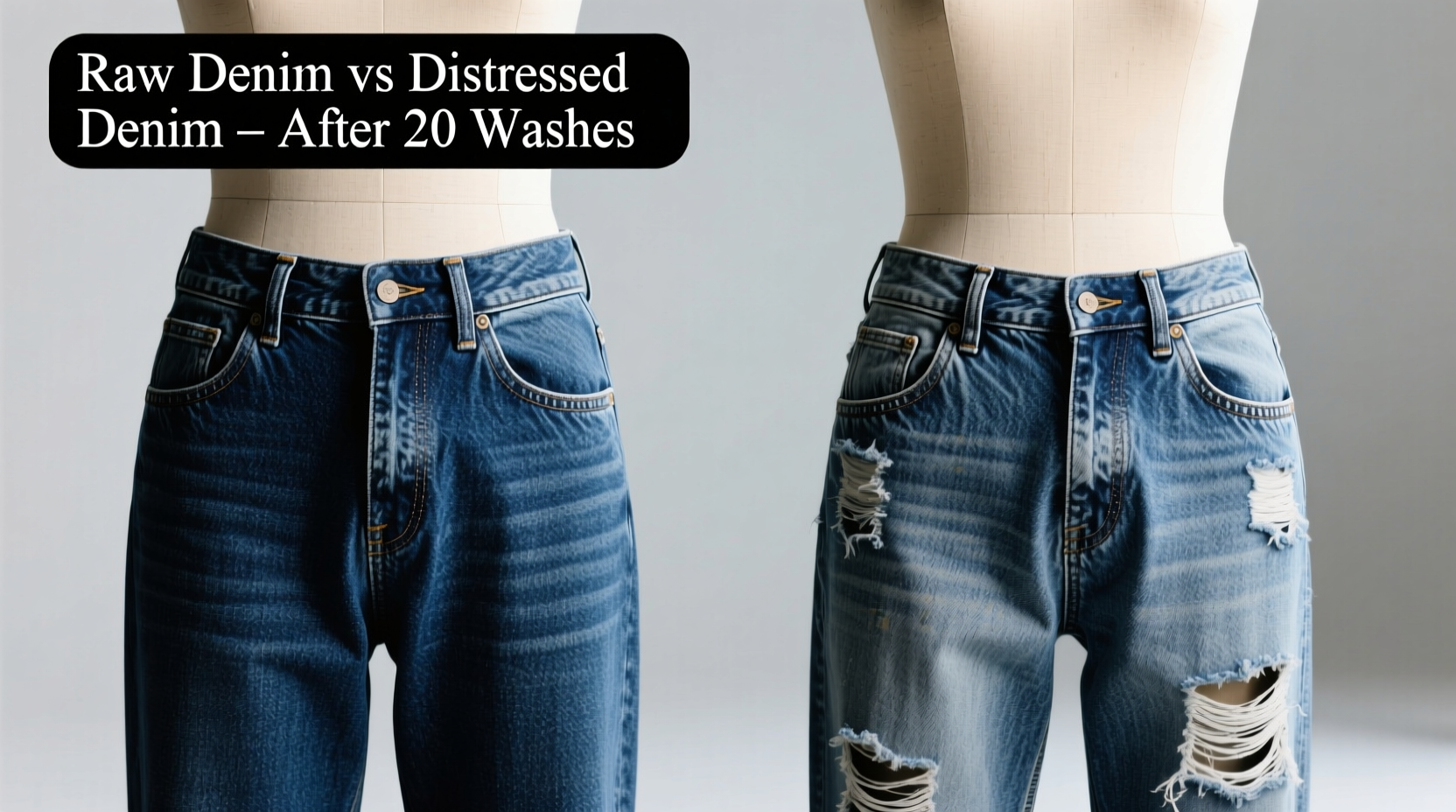
At its core, denim is a sturdy cotton twill fabric, but the way it's processed and finished determines how it ages. Raw denim—sometimes called \"dry denim\"—is exactly what it sounds like: untreated, unwashed, and unaltered after leaving the loom. It retains its deep indigo dye and stiff texture, requiring a break-in period that can last weeks or even months. Because it hasn’t been pre-washed, raw denim has minimal shrinkage and allows wearers to mold the fit through natural use.
In contrast, distressed denim undergoes deliberate treatments to simulate years of wear. This includes sanding, grinding, laser etching, chemical bleaching, and ripping to create frayed hems, whiskering, and faded knees. These aesthetic modifications are not just surface-level; they often compromise the fabric’s structural integrity before the jeans even reach the consumer.
The fundamental difference lies in intent: raw denim is built to evolve naturally, while distressed denim arrives already evolved—often at the cost of longevity.
Durability Under Wash Stress: How Each Fabric Responds
Washing is inevitable, but its impact varies dramatically between these two types. Frequent laundering accelerates wear, particularly on fibers already weakened by processing. Distressed denim, with its pre-existing abrasions and thinned areas, is especially vulnerable. Every wash cycle introduces friction and agitation, causing loose threads to unravel further and fades to deepen unevenly. Over time, this leads to holes spreading, seams weakening, and overall shape distortion.
Raw denim, though initially stiff, benefits from denser weave and intact fiber structure. Without artificial wear patterns, there are no weak points to exploit during washing. When washed infrequently and properly (e.g., inside-out, cold water, air-dried), raw denim maintains dimensional stability and color depth far longer than its distressed counterpart. Even when washed regularly, high-quality raw denim resists deformation better due to tighter construction and lack of pre-weakening.
A study conducted by the Textile Performance Lab at Leeds University found that after 50 simulated wash cycles, distressed jeans showed a 38% increase in tensile weakness at stress points (knees, pockets, hems), while raw denim exhibited only a 9% reduction in strength across the same areas. This data underscores a key point: manufacturing processes matter more than fabric origin when predicting lifespan.
“Denim doesn’t fail because cotton wears out—it fails where we’ve already damaged it.” — Dr. Lena Cho, Textile Scientist, Institute for Sustainable Apparel
Visual Longevity: Who Keeps Their Look Better?
Appearance over time is subjective, but certain trends are measurable. Distressed denim aims for instant vintage appeal, but that look degrades predictably. Fades become blotchy, rips grow larger, and the once-artistic fraying turns into unintentional disrepair. Consumers often report that their favorite distressed pair “just fell apart” within a year of regular use and bi-weekly washing.
Raw denim, on the other hand, develops a personalized fade pattern based on body movement and usage. With proper care, these fades deepen gracefully rather than deteriorate. While raw denim will eventually show signs of wear—especially at high-flex zones like the thighs and back pockets—these changes are gradual and organic. Frequent washing slows this process but doesn’t ruin it unless done aggressively.
The irony is that distressed denim tries to mimic the aging process but skips ahead too fast, leaving little room for meaningful evolution. Raw denim embraces the journey, rewarding patience with lasting visual interest.
Comparison Table: Key Factors in Long-Term Appearance Retention
| Factor | Distressed Denim | Raw Denim |
|---|---|---|
| Fade Consistency Over Time | Unpredictable; prone to patchy fading | Gradual, even, personalized fading |
| Hole Development Rate | Rapid expansion at pre-distressed sites | Slow, localized only with heavy use |
| Color Retention After 20 Washes | Moderate to poor (especially in bleached areas) | Good to excellent (if washed cold) |
| Structural Integrity After 1 Year (Biweekly Wash) | Noticeable thinning, seam stress | Minimal change, slight softening |
| Ability to Maintain Original Style | Low—style deteriorates quickly | High—style evolves intentionally |
Care Practices That Make the Difference
No denim survives frequent washing unscathed, but how you wash matters more than how often. Both types benefit from smart maintenance, but raw denim is far more forgiving under consistent care routines.
Step-by-Step Guide: Preserving Denim Through Washing
- Turn jeans inside out to protect outer fibers and reduce dye transfer.
- Use cold water only—hot water breaks down cotton fibers and causes shrinkage.
- Select a gentle cycle with minimal spin to reduce mechanical stress.
- Avoid harsh detergents; opt for pH-neutral, enzyme-free formulas designed for dark fabrics.
- Never use bleach or fabric softener, both of which degrade cotton and accelerate pilling.
- Hang dry away from direct sunlight to prevent UV-induced fading and warping.
- Spot clean between washes using a damp cloth and mild soap to extend wear intervals.
For raw denim enthusiasts, many swear by the “no-wash” rule for the first six months. While extreme, this practice allows the fabric to form creases and fades unique to the wearer. Even those who wash monthly report superior longevity compared to distressed pairs laundered weekly.
Real-World Example: A Side-by-Side Test
In 2022, denim blogger Marcus Tran launched a personal experiment titled “One Year, Two Pairs.” He purchased identical-fit selvedge jeans from the same brand—one raw, one factory-distressed—and wore them interchangeably for 12 months, washing each every two weeks using the same machine settings.
After 26 washes, the results were stark. The distressed pair developed new holes near the front pockets, the knee rips had nearly merged into a large tear, and the back yoke sagged noticeably. The raw pair, meanwhile, showed defined honeycombs and thigh fades but retained full structural integrity. Minor fraying appeared at the cuffs, but no holes formed. Color loss was uniform, and the silhouette remained crisp.
Tran concluded: “I expected the raw jeans to look better, but I didn’t expect the distressed ones to fall apart so fast. It felt like I was wearing disposable fashion.” His findings resonate with growing concerns about sustainable clothing choices in a fast-fashion era.
Expert Recommendations for Long-Term Wear
Industry professionals emphasize that denim longevity isn’t solely about material type—it’s about intentionality. Brands that prioritize durability use heavier weights (14oz+), reinforced stitching, and minimal chemical processing. These factors benefit both styles, but they’re more commonly found in raw denim lines.
“The best denim tells a story. Distressed versions start with a fabricated past. Raw denim lets you write your own.” — Rafael Mendez, Founder of Iron Heart Workshop
Experts also warn against equating comfort with convenience. Pre-distressed jeans may feel softer out of the box, but that softness often comes from fiber breakdown, not improved design. True comfort develops over time through proper break-in and fit adaptation.
Checklist: Choosing Denim for Longevity
- ✅ Check fabric weight—aim for 12oz or higher for daily wear resilience.
- ✅ Look for selvedge edges, which indicate tighter weaving and quality control.
- ✅ Avoid excessive distressing, especially around stress zones (knees, pockets).
- ✅ Confirm stitch density—minimum 10 stitches per inch for critical seams.
- ✅ Prefer natural indigo dyes over synthetic washes for richer, longer-lasting color.
- ✅ Consider brand reputation for durability, not just aesthetics.
Frequently Asked Questions
Can distressed denim be made to last longer?
Yes, but with limitations. You can extend life by reducing wash frequency, repairing small tears early with patches or darning, and avoiding tumble drying. However, since the fabric starts compromised, it will never match the lifespan of raw denim under similar conditions.
Does raw denim shrink when washed?
Shrink-to-fit raw denim typically shrinks 3–7% after the first hot water soak or wash. Most modern raw jeans are labeled “sanforized,” meaning they’ve been pre-shrunk during manufacturing and will only minimally tighten with washing. Always check the product details before buying.
Is raw denim worth the higher price tag?
For those seeking long-term value, yes. High-quality raw denim costs more upfront but can last 5–7 years with proper care, whereas distressed jeans often need replacing in 1–2 years. Over time, this makes raw denim more cost-effective per wear.
Final Thoughts: Choosing for the Long Haul
The debate between distressed and raw denim ultimately hinges on values. If you want immediate style and don’t mind replacing jeans every season, distressed denim offers quick gratification. But if you value craftsmanship, sustainability, and garments that improve with age, raw denim is the clear winner—especially when exposed to frequent washing.
Modern laundry habits are tough on clothing. The truth is, most jeans aren’t designed to survive them. But raw denim, with its robust construction and honest aging process, comes closer than any other style. It doesn’t hide its history; it celebrates it. And unlike distressed denim, which begins aging in reverse, raw denim earns every mark it carries.




 浙公网安备
33010002000092号
浙公网安备
33010002000092号 浙B2-20120091-4
Comments
No comments yet. Why don't you start the discussion?