
Ending a marriage is one of the most significant decisions a person can make. Whether due to irreconcilable differences, betrayal, or growing apart, many couples reach a point where continuing the relationship no longer serves their well-being. When that happens, two legal paths emerge: divorce and annulment. While both dissolve a marriage, they differ fundamentally in process, outcome, and implication. Understanding these differences is essential to making an informed decision that aligns with your personal, emotional, and legal needs.
What Is Divorce?
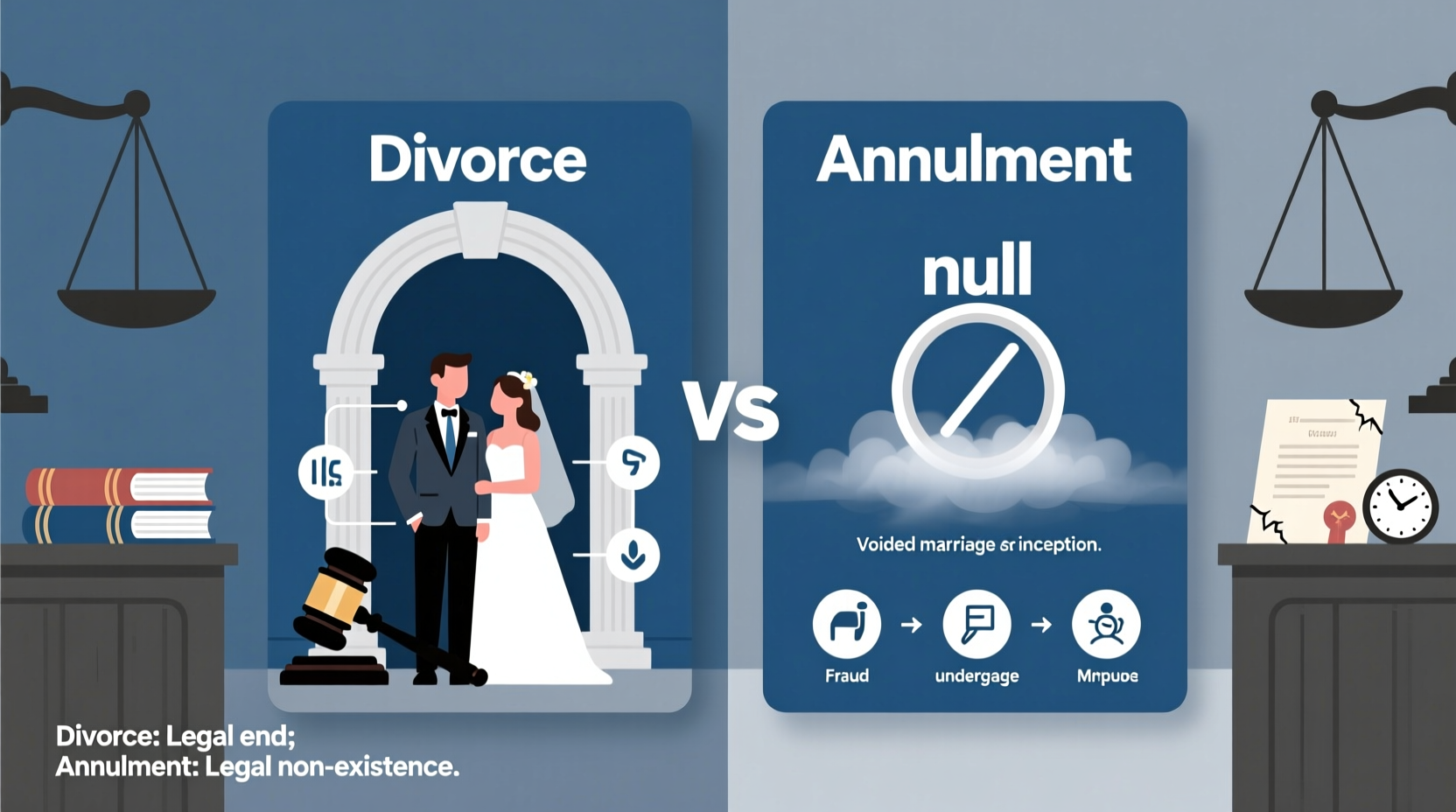
Divorce is the legal termination of a valid marriage. It recognizes that a marriage existed, was legally binding, and has now come to an end. The court oversees the division of assets, spousal support (alimony), child custody, and other related matters. Divorce is the most common method of ending a marriage in the United States and many other countries.
A divorce does not question the legitimacy of the marriage itself. Instead, it acknowledges that despite being valid at the time of union, the relationship has deteriorated beyond repair. Most states allow for “no-fault” divorce, meaning neither party must prove wrongdoing—only that the marriage is irretrievably broken.
What Is Annulment?
An annulment, by contrast, declares that a marriage was never legally valid from the beginning. It’s as if the marriage never existed. This legal remedy is granted only under specific circumstances defined by state or religious law, such as fraud, bigamy, coercion, lack of consent, or close familial relation.
Because annulments are rare and require strong evidence, courts apply strict criteria. Unlike divorce, annulment doesn’t assume a valid marriage simply ended—it asserts the marriage was flawed at inception.
Religious institutions, particularly the Catholic Church, also offer annulments based on doctrinal grounds. However, a religious annulment does not replace a civil one; both may be required depending on personal goals.
Key Differences Between Divorce and Annulment
| Aspect | Divorce | Annulment |
|---|---|---|
| Legal Status of Marriage | Recognizes the marriage was valid | Declares the marriage was never valid |
| Grounds Required | Irreconcilable differences, adultery, abandonment | Fraud, incest, bigamy, impotence, coercion |
| Time Limit | No deadline to file (after waiting period) | Often must be filed within 1–4 years, depending on state |
| Property Division | Equitable distribution or community property rules apply | Generally treated as unmarried parties; no automatic rights |
| Spousal Support | Potentially awarded based on income and duration | Rarely awarded unless exceptional circumstances |
| Social/Emotional Impact | Seen as ending a real relationship | May carry less stigma in certain communities |
When Is Annulment the Better Option?
Annulment may be preferable when there is clear evidence that the marriage should not have been legally recognized. For example:
- You discovered your spouse was already married at the time of your ceremony.
- You were misled about a critical fact—such as intent to remain celibate, inability to have children, or hidden criminal history—that directly influenced your decision to marry.
- You were pressured or forced into the marriage under duress.
- One party lacked mental capacity to consent due to intoxication, illness, or disability.
“Annulments are not shortcuts to avoid divorce. They serve a narrow legal purpose: correcting marriages that were invalid from day one.” — Laura Simmons, Family Law Attorney with 18 years of experience
In such cases, seeking an annulment can provide psychological closure by legally erasing a union that felt fraudulent or coerced. It may also simplify financial settlements, especially in short-term marriages where shared assets are minimal.
Step-by-Step Guide to Choosing the Right Path
- Assess the validity of your marriage. Ask yourself: Was there deception, illegality, or incapacity at the time of the wedding? If yes, annulment might be possible.
- Review your state’s laws. Grounds for annulment vary significantly. Some states do not recognize annulment except on limited grounds like incest or bigamy.
- Gather documentation. For annulment, collect evidence such as text messages, emails, witness statements, or medical records that support claims of fraud or coercion.
- Consult a qualified attorney. A family law specialist can evaluate whether your case meets statutory requirements for annulment.
- Decide based on practical outcomes. Consider how each option affects property, taxes, health insurance, inheritance rights, and future relationships.
Real-Life Example: A Case of Hidden Bigamy
Sarah married Mark in a small courthouse ceremony after a year-long relationship. Six months later, she discovered he had never divorced his first wife, who lived in another state. Shocked and betrayed, Sarah consulted a lawyer. Because bigamy invalidates a marriage in most jurisdictions, she pursued an annulment rather than a divorce.
The court granted the annulment within four months. Since the marriage was declared void, there was no claim to long-term alimony, though Sarah did receive compensation for joint expenses she had covered. Emotionally, the annulment helped her feel that the relationship hadn’t legally bound her, offering a sense of relief and justice.
Common Myths About Annulment
- Myth: You can get an annulment just because the marriage was short.
Truth: Duration alone isn’t grounds—validity is key. - Myth: Annulments are easier than divorces.
Truth: They often require more proof and scrutiny. - Myth: Religious annulments cancel civil marriages.
Truth: Only a court can legally nullify a marriage.
Checklist: Questions to Ask Yourself
- Do I have evidence that my spouse lied about something fundamental to our marriage?
- Was I physically or emotionally coerced into saying “I do”?
- Did we marry under false pretenses (e.g., immigration, money)?
- Is preserving the legal record of this marriage problematic for personal or professional reasons?
- Have we been married long enough that equitable distribution of assets would be fair in a divorce?
- Am I seeking emotional validation that the marriage “didn’t count”?
If several answers point toward invalidity, explore annulment. If you're focused on fairness, closure, and moving forward, divorce may be more appropriate.
FAQ
Can I remarry after an annulment?
Yes. Once a civil annulment is finalized, you are legally free to remarry. In religious contexts, such as the Catholic Church, a separate ecclesiastical annulment may be required before remarriage in the church.
Does annulment erase all legal ties?
Mostly, yes. But child custody and support obligations still apply. Children born during a marriage later annulled retain full legal rights to both parents.
How long do I have to file for annulment?
It depends on the ground. For fraud, it’s typically 1–4 years from discovery. For incest or bigamy, deadlines may be longer. Consult local statutes or an attorney promptly.
Conclusion: Making the Choice That Serves Your Future
Choosing between divorce and annulment isn’t just a legal decision—it’s deeply personal. Divorce offers a structured way to end a legitimate but failed marriage, ensuring fair treatment of assets and responsibilities. Annulment provides a rare but powerful remedy when a marriage was built on falsehoods or illegality, allowing individuals to reclaim their autonomy without the label of “divorced.”
There is no universal “better” option. The right choice depends on your unique circumstances, values, and goals. What matters most is clarity, honesty, and access to sound legal advice. Take the time to reflect, gather facts, and speak with professionals who understand both the letter of the law and the human heart.




 浙公网安备
33010002000092号
浙公网安备
33010002000092号 浙B2-20120091-4
Comments
No comments yet. Why don't you start the discussion?