
Custom t-shirts have become a staple for personal expression, brand promotion, and event merchandise. Whether you're designing a shirt for a family reunion, launching a small clothing line, or promoting your business, one decision looms large: should you make it yourself or pay for professional screen printing? While DIY kits are more accessible than ever, the gap in quality can be significant. But is that difference actually worth the higher price tag?
The answer depends on your goals, volume, timeline, and how long you expect the shirts to last. Let’s examine the real differences in materials, process, durability, and overall value—so you can decide where to invest your time and money.
Understanding the Basics: How Each Method Works
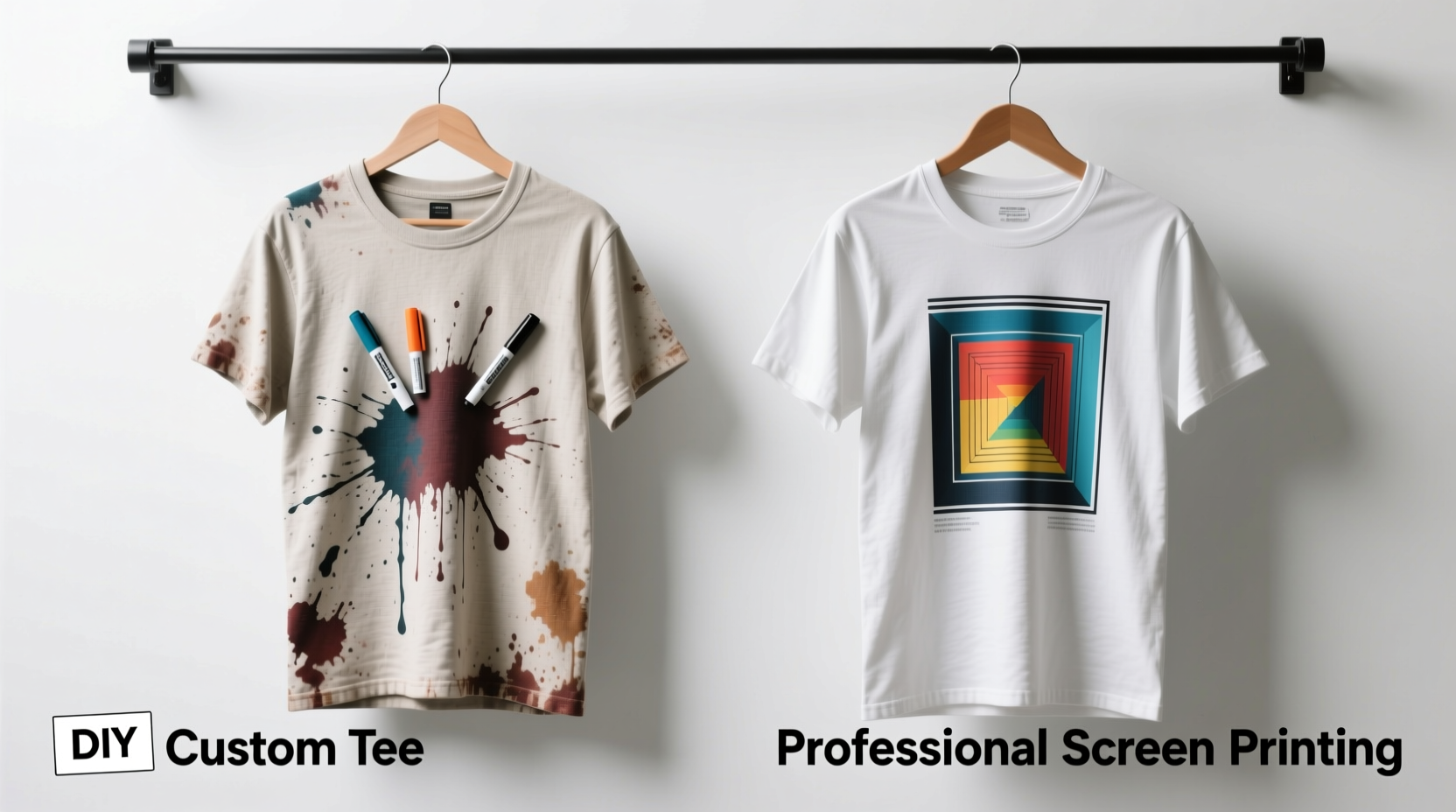
Before comparing outcomes, it's important to understand how each method produces a printed tee.
DIY Custom Tee Methods typically involve heat transfer paper, iron-on vinyl, or fabric paint applied at home using basic tools like an iron, cutting machine (like a Cricut), or stencil brushes. These approaches are low-cost upfront and ideal for one-off designs or small batches.
Professional Screen Printing, on the other hand, uses a mesh stencil (a \"screen\") to apply layers of ink directly onto fabric. Each color requires a separate screen, making setup time-intensive but highly efficient for bulk orders. The result is a durable, breathable print that becomes part of the fabric rather than sitting on top of it.
Quality Comparison: Durability, Feel, and Appearance
The most noticeable differences emerge after just a few washes. A side-by-side test reveals key distinctions:
| Factor | DIY (Heat Transfer/Vinyl) | Professional Screen Printing |
|---|---|---|
| Durability After 10 Washes | Fading, cracking, peeling common | Minimal fading; ink remains bonded |
| Texture/Feel | Stiff, plasticky surface | Soft, integrated into fabric |
| Color Vibrancy | Bright initially, fades quickly | Consistently vibrant over time |
| Detail Precision | Limited by cutting precision; no gradients | High detail, halftones, fine lines possible |
| Breathability | Reduced due to plastic layer | Full breathability maintained |
While DIY methods can produce visually appealing results right out of the package, they rarely stand up to regular wear and washing. Vinyl overlays create a barrier on the fabric, which not only feels unnatural but also traps moisture and accelerates fabric breakdown underneath.
“Home-printed transfers might look great on day one, but by week six, they’re often peeling at the collar or cracking across the chest.” — Marcus Lin, Print Production Manager at Urban Thread Co.
Cost Analysis: Upfront vs. Long-Term Value
At first glance, DIY seems unbeatable on cost. A basic heat press kit starts around $50, and transfer paper costs less than $1 per sheet. Compare that to professional screen printing, which may charge $8–$15 per shirt for small runs—and the DIY option looks like a clear winner.
But consider long-term value. If 20% of your DIY shirts crack within three months, customers or recipients will perceive lower quality. For businesses, this damages branding. For personal use, it means replacing shirts sooner.
Additionally, professional printers buy blank shirts, inks, and screens in bulk, reducing per-unit cost significantly at scale. They also optimize ink usage and minimize waste—something difficult to replicate at home.
Break-Even Point Example
- DIY (10 shirts): $50 equipment + $10 materials = $60 total ($6/shirt)
- Professional (10 shirts): $120 total ($12/shirt)
- Professional (50 shirts): $350 total ($7/shirt)
Notice how the professional cost per unit drops below the effective DIY cost when factoring in time, reprints, and material inefficiency. At 50 units, screen printing becomes both cheaper and higher quality.
When DIY Makes Sense (And When It Doesn’t)
DIY isn't obsolete—it serves specific needs well. Knowing when to use it prevents wasted effort and disappointment.
✅ Best Uses for DIY Custom Tees
- One-time event shirts (e.g., bachelor party, birthday)
- Testing design ideas before mass production
- Small gifts with sentimental value over longevity
- Kids’ crafts or classroom projects
❌ When to Choose Professional Printing
- Selling shirts commercially
- Ordering 10+ identical shirts
- Need photorealistic or multi-color designs
- Shirts will be washed frequently (e.g., workwear, sports teams)
Mini Case Study: Launching a Small Clothing Brand
Jamal started a streetwear label with five original designs. Excited and budget-conscious, he used a Cricut machine and iron-on vinyl to make his first 30 shirts. Sales were strong at first, but within two months, customers began sending photos of cracked prints and asking for refunds.
He switched to a local screen printer for his next batch, increasing his cost per shirt from $6.50 to $9.75. Despite the higher initial expense, return rates dropped to zero, customer reviews improved dramatically, and repeat purchases increased by 40%. Within six months, the investment in quality paid for itself.
“I thought I was saving money,” Jamal said. “But I was actually spending more on replacements and losing trust. The professional print looked better, felt better, and sold better.”
Step-by-Step Guide: Choosing the Right Option for Your Project
- Define your purpose: Is this for personal use, gifting, or resale?
- Estimate quantity: Fewer than 10? DIY may suffice. More than 10? Get a screen printing quote.
- Evaluate design complexity: Simple text or logo? Vinyl works. Gradients or detailed art? Screen printing required.
- Consider wash frequency: Will the shirt be worn weekly? Invest in durability.
- Request samples: Many printers offer sample prints for $10–$20. Test against your DIY version.
- Calculate lifetime cost: Factor in replacement, returns, and brand perception—not just upfront price.
FAQ
Can I mix DIY and professional printing?
Absolutely. Many designers use DIY for prototypes and limited-edition runs, then switch to screen printing once demand grows. Some even combine techniques—using screen printing for the main design and vinyl accents for small details.
Do all screen printers deliver high quality?
No. Quality varies widely. Look for shops that use water-based inks (softer feel), automatic presses (consistent alignment), and flash curing (durable bonds). Ask for garment tags or care instructions—they’re a sign of professionalism.
Is DTG (Direct-to-Garment) printing a good middle ground?
Yes. DTG uses inkjet technology to print directly onto fabric, ideal for complex, full-color designs in small batches. While pricier than screen printing for large runs, it avoids setup fees and handles photographic detail better than vinyl or transfers.
Conclusion: Quality Isn’t Just About Looks—It’s About Longevity
The choice between DIY custom tees and professional screen printing isn’t just about budget—it’s about intent. If you want a shirt that lasts, feels comfortable, and reflects pride in your design, professional printing delivers a tangible upgrade. The smoother texture, lasting color, and structural integrity justify the added cost, especially when shirts are worn regularly or represent a brand.
That said, DIY has its place. It lowers the barrier to entry, encourages creativity, and works perfectly for short-term needs. But don’t mistake affordability for value. A shirt that cracks after three washes isn’t a bargain—it’s a compromise.




 浙公网安备
33010002000092号
浙公网安备
33010002000092号 浙B2-20120091-4
Comments
No comments yet. Why don't you start the discussion?