
As the holiday season approaches, many families look forward to creating traditions that bring joy—and learning—into their homes. One of the most beloved is the advent calendar, a daily countdown that builds anticipation for Christmas. For parents of toddlers, this tradition doubles as an opportunity to teach patience, counting, and fine motor skills. But when it comes to choosing between a DIY felt advent calendar and a wooden pocket version, durability under constant little hands becomes a critical factor.
Toddlers are enthusiastic participants. They pull, tug, chew on corners, and sometimes treat delicate materials like confetti. That’s why material choice matters. While both felt and wood calendars offer charm and customization, they differ significantly in resilience, safety, maintenance, and longevity. Understanding these differences helps ensure your holiday investment lasts beyond a single season.
Durability Under Daily Use: Fabric vs Solid Wood
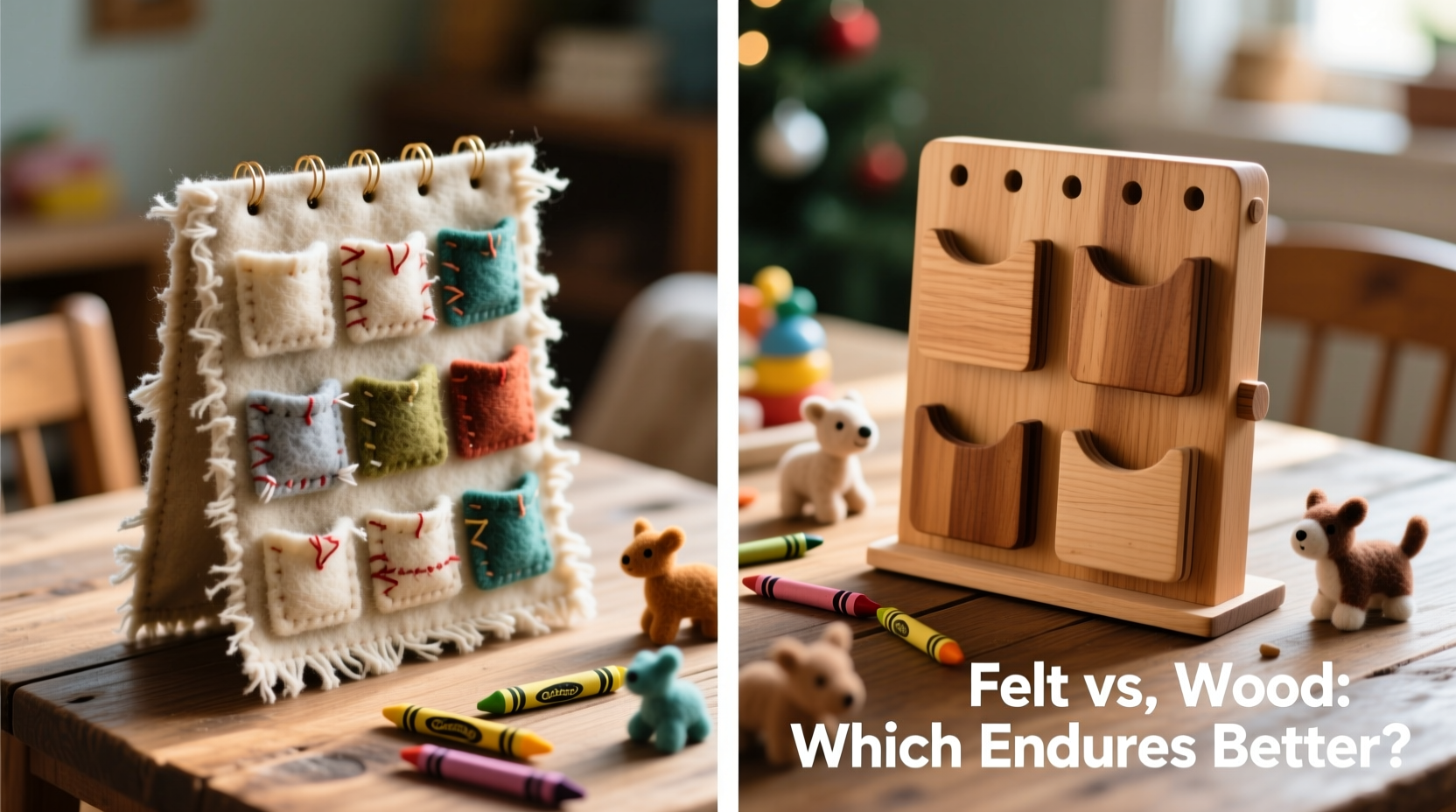
Felt advent calendars are often handmade, crafted from soft fabric with sewn pockets or Velcro flaps. They’re lightweight, portable, and customizable with colorful designs. However, their appeal can be short-lived when placed in the hands of a determined two-year-old. Felt frays easily. Stitching loosens after repeated tugging. Velcro strips wear out quickly, losing their grip within weeks. Once the adhesive backing fails or threads snap, repairs become frequent and often impractical.
In contrast, wooden pocket advent calendars are built for endurance. Typically constructed from sustainably sourced birch, pine, or rubberwood, these models feature small drawers or open-front cubbies designed to hold chocolates, notes, or tiny toys. The solid construction resists tearing, crushing, and general wear. Even if a toddler yanks a drawer repeatedly, the joints (especially in well-made versions) remain intact. Unlike fabric, wood doesn’t fray, fade from sunlight, or absorb spills.
The real test comes over multiple seasons. A felt calendar may survive one year with careful supervision—but by year two, patches may be peeling, colors faded, and pockets missing. Wooden versions, properly cared for, can last decades, becoming family heirlooms passed down through generations.
Safety Considerations for Toddlers
Safety is non-negotiable when selecting any item for young children. Felt calendars, while soft, pose several hidden risks. Loose fabric pieces can detach and become choking hazards. Small embellishments—buttons, beads, or glued-on decorations—are especially vulnerable to being pulled off. Handmade versions using hot glue may have weak bonds that fail under minimal pressure.
Wooden calendars, when responsibly manufactured, meet strict safety standards. Reputable brands use non-toxic finishes, rounded edges, and secure joinery. Drawers are sized to prevent finger pinching, and surfaces are sanded smooth. Still, not all wooden products are equal. Cheaply made versions with splinters, sharp corners, or chemical-laden stains should be avoided.
“Wooden toys and decor, when finished with child-safe sealants, offer a safer long-term option than textiles with loose components.” — Dr. Lena Patel, Pediatric Environmental Health Specialist
For parents committed to non-toxic, low-allergen environments, unfinished or naturally oiled wood is ideal. It avoids synthetic varnishes and allows for reconditioning over time. Felt, particularly polyester-based, can trap dust and allergens, making it less suitable for sensitive households.
Comparison Table: Felt vs Wooden Advent Calendars
| Feature | DIY Felt Calendar | Wooden Pocket Calendar |
|---|---|---|
| Durability | Low – prone to fraying, seam failure | High – resistant to impact and wear |
| Safety | Moderate – risk of loose parts, choking hazards | High – when made with safe finishes and design |
| Maintenance | Frequent – spot cleaning, repairs needed | Minimal – occasional dusting |
| Customization | High – easy to personalize with fabric art | Moderate – limited to paint, stickers, labels |
| Lifespan | 1–2 years (average) | 5+ years, often decades |
| Cost (Initial) | Low – $10–$30 in materials | Higher – $40–$120 |
Real Example: The Miller Family’s Two-Year Test
The Millers, a family in Portland, Oregon, decided to compare both types firsthand. In 2022, they created a vibrant DIY felt calendar with animal-themed pockets, each decorated with embroidered faces and Velcro flaps. Their then-20-month-old daughter loved opening the pockets but quickly learned to rip them open entirely. By December 15th, three pockets had detached, and stuffing from a sewn reindeer was scattered across the floor.
For 2023, they invested in a handcrafted wooden pocket calendar with numbered drawers painted in cheerful pastels. This time, their now-3-year-old still pulled vigorously, but the drawers remained intact. After the season, they lightly sanded one edge where a crayon had been rubbed in and applied a coat of food-safe mineral oil. The calendar was stored flat in a closet and remains in excellent condition.
“We thought the felt was more personal,” said Sarah Miller. “But the wood has become part of our ritual. It feels sturdier, safer, and honestly, more special.”
Maintenance and Long-Term Care Tips
Caring for either calendar extends its usability, but the effort required differs greatly.
Felt calendars benefit from gentle spot cleaning with a damp cloth and mild detergent. Avoid soaking, as water can distort shapes and weaken adhesives. Store flat or rolled—not folded—to prevent creasing. Inspect monthly for loose threads or weakened Velcro. Even with care, expect annual touch-ups.
Wooden calendars require far less attention. Dust with a dry or slightly damp cloth. Every 1–2 years, refresh the surface with a natural wood conditioner like beeswax or walnut oil. Avoid placing near radiators or humidifiers to prevent warping. Store upright or flat in a dry area. With minimal effort, the finish stays rich and the structure sound.
Step-by-Step: Choosing the Right Calendar for Your Home
- Evaluate your child’s behavior. Does your toddler handle objects gently or with full-force enthusiasm? High-energy handlers favor wood.
- Assess your crafting time. Making a durable felt calendar takes hours of precise sewing. If you lack time or skill, wood may be a smarter buy.
- Set a budget with long-term value in mind. A $50 wooden calendar used for 10 years costs $5 per season—less than most store-bought paper versions.
- Check safety certifications. Look for FSC-certified wood and finishes labeled non-toxic or toy-safe (ASTM D-4236 compliant).
- Consider storage space. Wooden calendars are bulkier. Ensure you have room to keep it protected between seasons.
- Think about legacy. Will this be something future grandchildren might use? Wood supports intergenerational use.
FAQ: Common Questions Answered
Can I make a felt calendar that lasts longer?
Yes, but with limitations. Use heavyweight wool-blend felt, reinforced stitching, and industrial-strength Velcro. Line the back with interfacing for stability. However, even upgraded materials won’t match the lifespan of solid wood under daily toddler use.
Are wooden calendars too heavy or dangerous for small kids?
Most are designed with toddlers in mind. Average weight ranges from 3 to 6 pounds—stable enough not to tip, light enough for supervised handling. Always place on a secure surface, never on an edge. Rounded corners and smooth finishes eliminate common injury risks.
What if I want the charm of handmade but need durability?
Hybrid solutions exist. Some parents create decorative fabric overlays that attach to a wooden base with magnets or ties. This combines personalization with structural strength. You get the aesthetic of felt without sacrificing resilience.
Conclusion: Building Traditions That Last
The choice between a DIY felt advent calendar and a wooden pocket version isn't just about aesthetics—it's about sustainability, safety, and shared experience. While felt calendars offer creative expression and immediate gratification, they often fall short when subjected to the joyful chaos of toddlerhood. Wooden calendars, though initially more expensive, prove superior in durability, safety, and emotional resonance over time.
Traditions gain meaning through repetition. A calendar that survives year after year becomes more than a decoration; it becomes a vessel for memory. You’ll recognize the familiar creak of a drawer, the worn smoothness of a number, and the way your child’s eyes light up knowing they’re interacting with something that belonged to older siblings or even parents once did.
If you're preparing for a lifetime of holiday moments, not just one season, choose materials that reflect that intention. Invest in quality. Prioritize safety. And build something that doesn’t just count down the days—but carries them forward.




 浙公网安备
33010002000092号
浙公网安备
33010002000092号 浙B2-20120091-4
Comments
No comments yet. Why don't you start the discussion?