
Crafting your own jewelry offers a rewarding blend of creativity and personal expression. A robot necklace, in particular, combines whimsy with modern design—perfect for tech enthusiasts, steampunk fans, or anyone who enjoys quirky accessories. This guide walks you through the entire process of making a one-of-a-kind robot pendant from scratch. Using accessible materials and simple techniques, you’ll create a wearable piece that reflects your personality and craftsmanship.
Why Make a Personalized Robot Necklace?
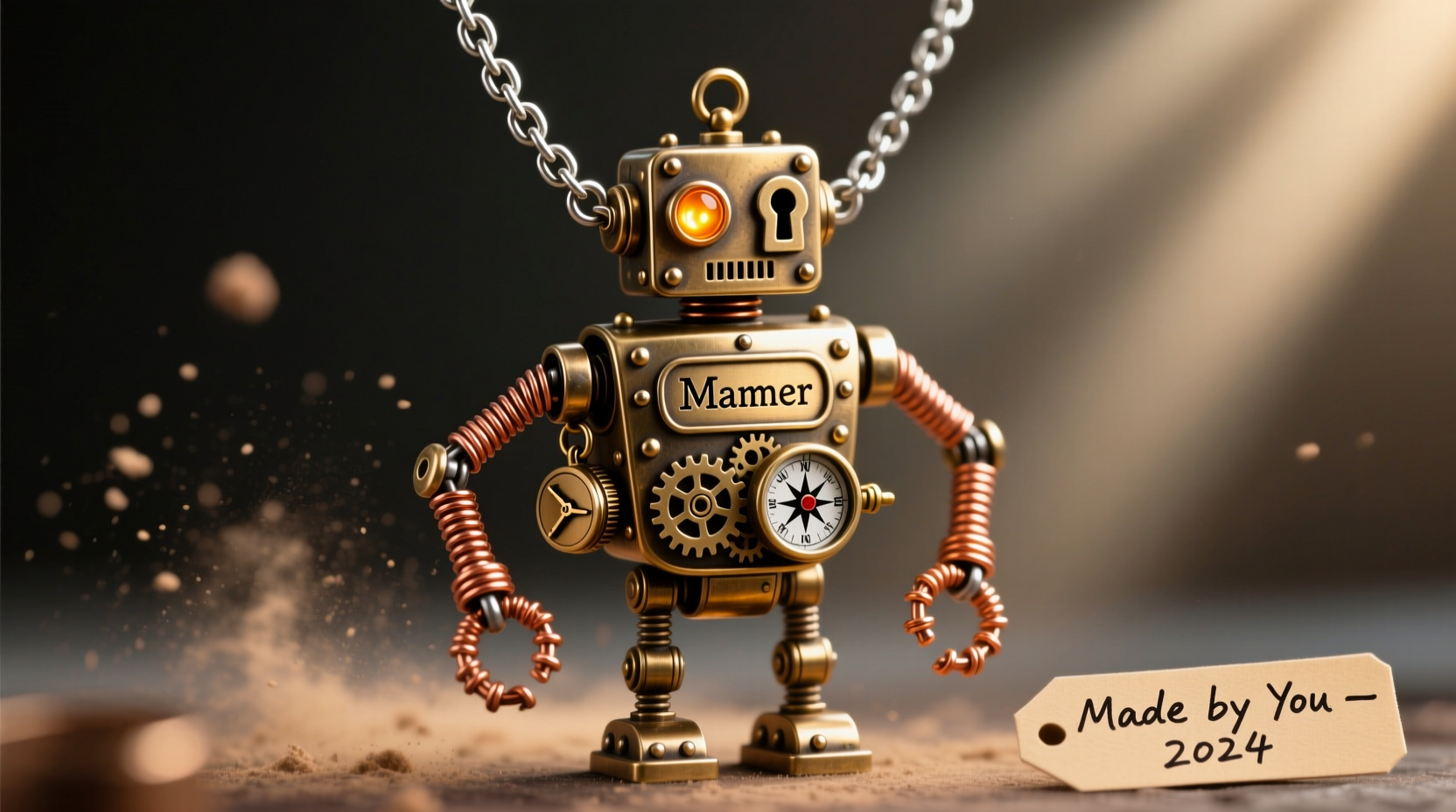
Store-bought accessories often lack individuality. Creating your own robot necklace allows full control over shape, color, texture, and symbolism. Whether it’s inspired by retro sci-fi, minimalist robotics, or abstract geometry, the final product becomes more meaningful because it’s made by hand. Plus, handmade gifts carry emotional value that mass-produced items can’t replicate.
“Handcrafted jewelry connects the maker and wearer through intention and detail. A robot charm isn’t just metal and wire—it’s a story shaped into form.” — Lila Chen, Artisan Jewelry Designer
Gathering Your Materials and Tools
Before starting, assemble everything you'll need. Most supplies are affordable and available at craft stores or online. Choose components based on your preferred style: industrial, playful, or futuristic.
Essential Materials
- Base pendant material (polymer clay, wood slice, recycled circuit board, or lightweight metal)
- Finding (necklace bail or loop) to attach the pendant to chain
- Jewelry chain (stainless steel, copper, or silver-tone, 16–20 inches)
- Square or round beads (for arms, legs, eyes)
- Small gears, washers, or electronic scraps (optional for mechanical look)
- Strong adhesive (E6000 or two-part epoxy)
- Acrylic paints and fine brushes
- Clear sealant (glossy or matte varnish)
Basic Tools
- Needle-nose pliers
- Wire cutters
- Awl or pin tool (for drilling holes in clay or wood)
- Sandpaper (fine grit)
- Ruler and pencil
- Oven (if using polymer clay)
Step-by-Step Construction Process
Follow this timeline to build your robot necklace from concept to completion. Each phase builds upon the last, ensuring structural integrity and visual appeal.
- Design Your Robot: Sketch a rough blueprint. Decide on number of limbs, facial features, and overall silhouette. Keep proportions balanced for aesthetic harmony.
- Create the Body Core: Shape your base material. For polymer clay, roll into a rectangle or oval, then bake according to package instructions. If using wood, sand edges smooth.
- Add Dimensional Parts: Attach arms, legs, and head using small beads or sculpted clay pieces. Use epoxy to secure non-clay components like metal gears.
- Incorporate Mechanical Details: Glue tiny screws, springs, or watch parts to simulate joints or panels. Arrange asymmetrically for dynamic effect.
- Drill Holes for Hanging: Once fully dry or cured, use an awl or micro drill to create a top hole for the bail. Do this before painting if working with fragile materials.
- Paint and Decorate: Apply base coat first (gray, silver, or black works well). Add highlights—rust stains, neon accents, or chrome effects—with dry brushing technique.
- Seal the Surface: Coat with clear varnish to protect paint and add durability. Allow 24 hours to cure completely.
- Attach the Bail and Chain: Secure a metal loop (bail) with strong glue. After drying, thread your chosen chain through and fasten clasps.
Customization Ideas for Unique Personality
A truly personalized robot tells a story. Consider these themes to elevate your design beyond generic shapes:
- The Retro Bot: Use vintage-style dials, antennae, and rivets. Paint in sepia tones with brass accents.
- The Space Explorer: Incorporate glow-in-the-dark paint, star-shaped beads, and a helmeted head.
- The Emotional Machine: Give your robot heart-shaped bolts, colorful wires as “nerves,” or a speech bubble charm saying “Beep Boop.”
- The Minimalist Android: Focus on clean lines, geometric forms, and monochrome palette—ideal for everyday wear.
| Design Style | Best Materials | Recommended Colors |
|---|---|---|
| Steampunk | Gears, brass findings, leather cord | Bronze, copper, deep brown |
| Cute Kawaii | Polymer clay, pastel beads | Pink, mint, baby blue |
| Industrial Tech | Recycled circuit boards, screws | Gunmetal gray, electric blue |
| Futuristic Minimalist | Resin, stainless steel | White, black, chrome |
Mini Case Study: Sarah’s Commemorative Robot Pendant
Sarah, a software developer, wanted a necklace symbolizing her journey from coding beginner to AI engineer. She crafted a robot using fragments of her first Arduino board, embedding a tiny resistor shaped like a heart near its chest. The body was molded from gray polymer clay, painted with binary code patterns along the sides. After sealing and attaching a sleek silver chain, she wore it to her promotion ceremony. Colleagues were intrigued, and several asked how they could make their own versions. Her creation became both a conversation starter and a personal milestone marker.
Common Pitfalls and How to Avoid Them
Even experienced crafters encounter challenges. Knowing what to watch for ensures better results.
- Weak Adhesion: Not all glues work on mixed materials. Epoxy is best for metal-to-clay bonds. Let cure overnight.
- Overcrowding: Too many parts can make the robot look cluttered. Stick to 3–5 key decorative elements.
- Chain Breakage: Use a sturdy chain rated for daily wear. Avoid thin chains with heavy pendants.
- Color Bleeding: Seal porous bases (like wood or raw clay) before painting to prevent uneven absorption.
Checklist: Build Your Robot Necklace Successfully
Use this checklist before and during your project to stay organized and efficient.
- ☐ Sketch robot design with labeled parts
- ☐ Collect all materials and tools
- ☐ Prepare workspace with protective covering
- ☐ Shape and cure base body properly
- ☐ Test arrangement of embellishments
- ☐ Secure components with appropriate adhesive
- ☐ Paint in layers, allowing drying time between coats
- ☐ Apply protective sealant and let cure fully
- ☐ Attach bail and chain securely
- ☐ Inspect for sharp edges or loose parts
Frequently Asked Questions
Can I make this without using glue?
While most designs rely on strong adhesives, you can use wire wrapping instead. Thin gauge wire (24–26) can be twisted around beads and structural parts to hold them in place without glue. This method also adds an artisanal, hand-forged look.
Is polymer clay durable enough for daily wear?
Baked polymer clay is surprisingly resilient when sealed properly. However, avoid dropping it on hard surfaces. For maximum longevity, reserve the necklace for occasional wear or reinforce vulnerable areas with resin coating.
How do I personalize it with initials or dates?
You can stamp letters directly into soft clay before baking. Alternatively, use tiny alphabet beads or paint initials in a corner with a fine liner brush. For engraved precision, consider adding a mini metal tag beside the pendant.
Final Thoughts and Call to Action
Creating a personalized robot necklace blends imagination with craftsmanship, turning simple materials into wearable art. Every bolt, brushstroke, and bead choice reflects your vision. Whether worn proudly or gifted to someone special, this handmade piece carries a sense of identity and innovation that off-the-shelf jewelry rarely achieves.




 浙公网安备
33010002000092号
浙公网安备
33010002000092号 浙B2-20120091-4
Comments
No comments yet. Why don't you start the discussion?