
When DJI released the Phantom 4 in 2016, it sent shockwaves through the consumer drone market. With intelligent flight modes, obstacle sensing, and refined stabilization, it promised a leap forward from the already impressive Phantom 3 series. But years later, with used Phantom 3 models available at steep discounts, many pilots are asking: Is upgrading to the Phantom 4 truly necessary? Or does the Phantom 3 still hold its crown as the best value for aerial photographers and hobbyists?
This isn't just about specs on paper—it's about real-world usability, reliability, and whether new features translate into meaningful improvements. Let’s break down the key differences, evaluate actual performance, and determine which drone offers the smarter investment today.
Design and Build: Evolution, Not Revolution
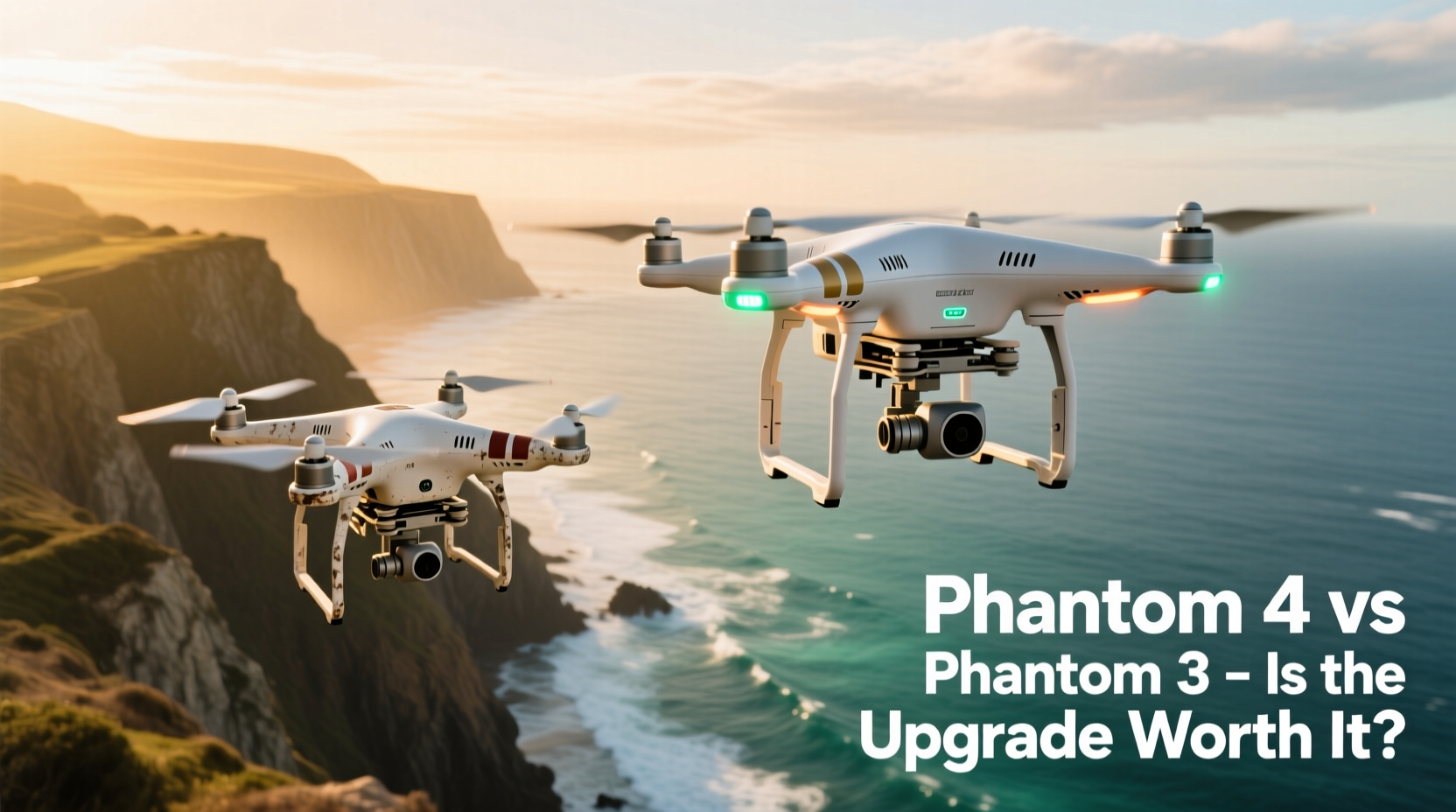
The Phantom 4 retains the familiar quadcopter silhouette of the Phantom 3 but introduces subtle yet significant refinements. The most noticeable change is the streamlined body design, which reduces drag and improves aerodynamics. DJI also upgraded the propeller attachment system to Quick-Release Propellers, making swaps faster and reducing the risk of imbalance during installation.
Both drones feature sturdy plastic airframes, but the Phantom 4 benefits from improved internal component layout and better heat dissipation. While neither model is built for rugged environments, the Phantom 4’s engineering reflects lessons learned from earlier iterations—resulting in slightly better durability and reduced vibration transmission to the camera.
Flight Performance and Intelligence
The Phantom 4’s biggest leap lies in flight intelligence. It introduced Obstacle Sensing using dual forward-facing vision sensors capable of detecting objects up to 30 feet ahead. This allows the drone to autonomously slow down or stop when approaching obstacles—a game-changer for beginners and pros flying in complex environments.
In contrast, the Phantom 3 relies entirely on pilot input. No obstacle avoidance, no automated responses. That means more attention is required during flight, especially in tight spaces or windy conditions. The Phantom 4 also added ActiveTrack, enabling the drone to automatically follow moving subjects by recognizing and locking onto them via software algorithms.
Speed and agility have also improved. The Phantom 4 reaches a top speed of 45 mph (72 km/h) in Sport Mode—nearly 50% faster than the Phantom 3’s 35 mph limit. Acceleration is snappier, and wind resistance is noticeably better thanks to stronger motors and refined flight control algorithms.
“Adding obstacle detection wasn’t just a gimmick—it fundamentally changed how safely we could operate near trees, buildings, and crowds.” — Mark Tran, Aerial Cinematographer & Drone Safety Instructor
Camera and Video Quality: Subtle Gains
On paper, the camera upgrades between the Phantom 3 Professional/Advanced and Phantom 4 are modest. Both capture 4K video at 30fps using a 1/2.3” CMOS sensor. However, the Phantom 4’s camera includes electronic image stabilization (EIS), which works in tandem with the mechanical gimbal to reduce shake and produce smoother footage, especially during rapid movements.
Photo capabilities remain strong on both platforms: 12MP stills with DNG RAW support. But the Phantom 4 improves autofocus performance with a dedicated focus ring and tap-to-focus functionality in the app. This makes capturing sharp images of dynamic scenes significantly easier.
Low-light performance is comparable, though the Phantom 4 handles noise slightly better due to updated image processing. For most users, the visual difference between the two cameras in daylight is negligible—but in post-production workflows requiring stabilization or cropping, the Phantom 4’s cleaner output provides more flexibility.
Detailed Feature Comparison
| Feature | DJI Phantom 3 Professional | DJI Phantom 4 |
|---|---|---|
| Video Resolution | 4K @ 30fps | 4K @ 30fps |
| Still Camera | 12MP, fixed focus | 12MP, auto & manual focus |
| Stabilization | Mechanical 3-axis gimbal | Mechanical + Electronic (EIS) |
| Obstacle Avoidance | No | Forward-facing dual vision sensors |
| Top Speed | 35 mph (56 km/h) | 45 mph (72 km/h) in Sport Mode |
| Battery Life | Approx. 23 minutes | Approx. 28 minutes |
| Intelligent Flight Modes | None | ActiveTrack, TapFly, Smart Return Home |
| Transmission Range | 2 km (unobstructed) | 3.1 miles / 5 km (with Lightbridge) |
| Weight | 1280 g | 1380 g |
Real-World Example: Urban Mapping Project
Jessica Lin, a freelance surveyor based in Portland, used her Phantom 3 Advanced for two years before upgrading to a used Phantom 4. Her work involves low-altitude flights around industrial sites and rooftops where GPS signals fluctuate and obstacles abound.
“With the Phantom 3, I lost one drone to a wall collision during a fast maneuver,” she recalls. “It wasn’t my best moment, but it was avoidable. Since switching to the Phantom 4, I’ve flown dozens of missions in tighter areas without incident. The obstacle sensing gives me confidence to focus on framing and data collection instead of constantly worrying about proximity.”
She notes that while the camera didn’t drastically improve her orthomosaic outputs, the increased flight time and reliability made her fieldwork more efficient. “An extra five minutes per battery adds up when you’re covering large sites.”
Is the Upgrade Worth It? A Practical Checklist
Before deciding whether to upgrade or stick with the Phantom 3, consider these factors:
- Are you flying in cluttered environments? If yes, Phantom 4’s obstacle sensing is invaluable.
- Do you need subject tracking? ActiveTrack simplifies solo operations and dynamic shots.
- How important is flight time? The ~5-minute gain matters in professional use.
- What’s your budget? Used Phantom 3 Pros go for $400–$600; Phantom 4 units range $800–$1,200.
- Are you editing heavily? EIS and sharper autofocus help in post.
Frequently Asked Questions
Can the Phantom 3 keep up with modern editing standards?
Absolutely. 4K footage from the Phantom 3 Professional holds up well in timelines, especially for web content. Color grading and stabilization tools in modern software like DaVinci Resolve can compensate for minor shortcomings. Unless you're doing high-end cinema work, the footage remains viable.
Is the Phantom 4 still supported by DJI?
DJI officially ended active development for the Phantom 4 series in favor of the Mavic line. However, firmware updates are occasionally released, and customer support remains available. Parts and batteries are still accessible, though third-party options may be needed long-term.
Should I buy a Phantom 3 in 2024?
Only if you're on a tight budget or want a secondary training drone. Newer Mavic models outperform both in nearly every category. But if you find a well-maintained Phantom 3 Pro under $500 and don’t need smart features, it can still serve as a capable entry-level tool.
Final Verdict: The King Has Changed, But the Crown Was Shared
The Phantom 3 was revolutionary in its time—an accessible gateway to professional-grade aerial imaging. For years, it set the benchmark. But technology waits for no drone. The Phantom 4, despite being nearly a decade old itself, introduced automation and safety features that redefined expectations.
If you already own a Phantom 3 and fly casually in open areas, the upgrade may not be urgent. The core experience—smooth flight, solid camera, reliable controls—remains intact. But if you're pushing creative boundaries, working commercially, or flying in challenging conditions, the Phantom 4 delivers tangible benefits that justify the cost.
That said, calling either model “king” today requires context. The true successors to the Phantom legacy now reside in DJI’s Mavic series. Yet for those holding onto older hardware or seeking affordable used gear, understanding the Phantom 4 vs 3 divide helps make informed choices—not based on hype, but on real utility.




 浙公网安备
33010002000092号
浙公网安备
33010002000092号 浙B2-20120091-4
Comments
No comments yet. Why don't you start the discussion?