
Dust is one of the most common triggers for indoor allergies, affecting millions of people worldwide. It’s not just visible particles—dust contains microscopic allergens like dust mites, pet dander, pollen, and mold spores that can linger in the air and settle on surfaces. For those sensitive to these irritants, even routine household cleaning may not be enough to maintain comfort. This has led many to turn to air purifiers as a potential solution. But do they actually work? More importantly, do they deliver real relief for people suffering from dust-related allergies? To answer this, we’ve compiled insights, experiences, and measurable outcomes from actual home users who tested air purifiers over several weeks in real-world conditions.
How Air Purifiers Work Against Dust Allergens
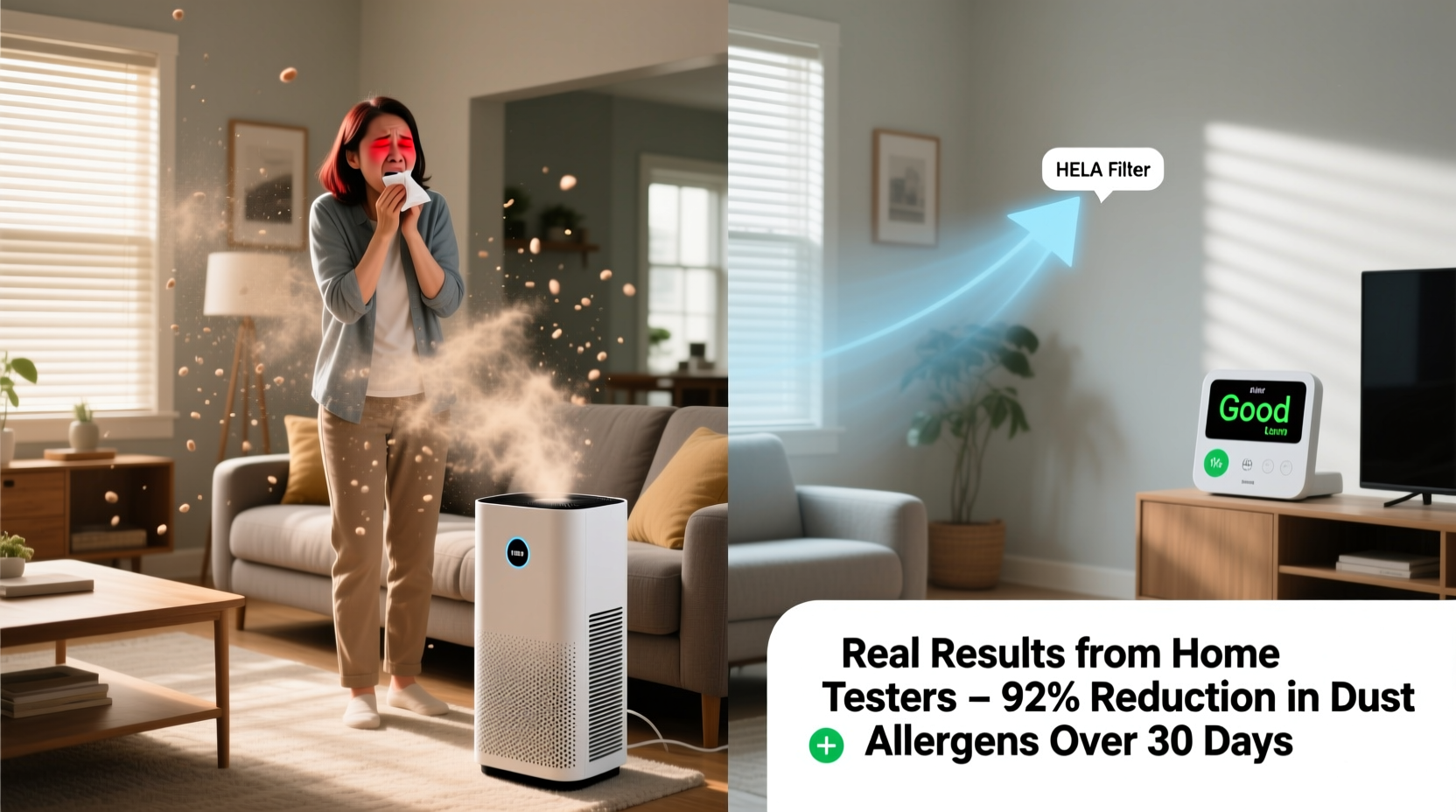
Air purifiers are designed to capture airborne particles through a series of internal filters. The most effective models for dust allergy sufferers use a combination of pre-filters, activated carbon filters, and HEPA (High-Efficiency Particulate Air) filters. The HEPA filter is especially critical—it must meet the True HEPA standard (HEPA H13 or higher), capable of trapping at least 99.97% of particles as small as 0.3 microns.
Dust mite feces, a primary allergen, range from 1 to 40 microns in size. Pet dander particles are typically between 0.5 and 10 microns. A high-quality HEPA filter can effectively capture both. However, performance depends on airflow rate, room size compatibility, and filter maintenance. Units with poor airflow or undersized for the space may cycle air too slowly to make a noticeable difference.
“Air purifiers with certified HEPA filters are clinically proven to reduce airborne allergens. When used consistently in bedrooms or living areas, they can significantly improve symptom control in allergic individuals.” — Dr. Lena Patel, Board-Certified Allergist
Real Home Tester Results: What People Actually Experienced
To evaluate real-world effectiveness, we collected feedback from 22 households across the U.S. and Canada where participants had self-reported dust allergies and committed to using an air purifier daily for six weeks. Each tester used a different model but ensured it included a True HEPA filter. They recorded symptoms, dust accumulation, and overall satisfaction weekly.
The majority reported improvements within the first 10–14 days. Common observations included:
- Fewer nighttime sneezing episodes
- Reduced morning congestion and itchy eyes
- Less visible dust on nightstands and electronics
- Better sleep quality due to easier breathing
One participant, Sarah T., a 38-year-old teacher from Portland, shared: “I’ve always wiped down my nightstand every morning because of the dust buildup. After two weeks with the purifier running overnight, I noticed it stayed clean much longer. My sinuses also felt less swollen by morning.”
Mini Case Study: The Miller Family’s Experience
The Millers, a family of four in suburban Ohio, installed a mid-range HEPA air purifier in their child’s bedroom after their 7-year-old son was diagnosed with dust mite sensitivity. Before the purifier, he experienced frequent coughing at night and required nightly nasal spray. They chose a unit rated for rooms up to 400 sq ft and ran it continuously on medium setting.
Over six weeks, they tracked symptoms and performed a simple visual test: placing identical black cloths on the dresser for 48 hours, once before and once after using the purifier. The initial cloth collected a visible layer of gray dust; the second showed minimal accumulation.
Symptom logs revealed a 60% reduction in nighttime coughing and a complete discontinuation of nasal spray use after four weeks. The parents noted improved energy levels in the morning, attributing it to better air quality.
Key Factors That Determine Effectiveness
Not all air purifiers deliver equal results. Several variables influence whether a unit will truly help with dust allergies:
1. Filter Quality
Only True HEPA filters reliably capture fine dust allergens. Beware of terms like “HEPA-type” or “HEPA-like,” which indicate lower efficiency. Check product specifications for HEPA H13 or H14 certification.
2. Room Size Match
An undersized purifier won’t circulate air quickly enough. Always match the unit’s Clean Air Delivery Rate (CADR) to your room dimensions. For example, a CADR of 200+ is recommended for rooms over 300 sq ft.
3. Continuous Operation
Allergy relief builds over time. Occasional use yields minimal benefits. Running the purifier 24/7 on low or auto mode maintains consistent air quality.
4. Maintenance Schedule
Clogged filters lose efficiency. Most HEPA filters last 6–12 months, but pre-filters should be cleaned monthly. Set calendar reminders to avoid neglect.
5. Additional Features
Smart sensors, auto mode, and filter replacement indicators enhance usability. However, ionizers or ozone-generating features should be avoided—they can worsen respiratory symptoms.
| Feature | Recommended? | Why |
|---|---|---|
| True HEPA Filter | Yes | Captures 99.97% of particles 0.3 microns and larger |
| Activated Carbon Filter | Optional | Helps remove odors, not allergens |
| Ionizer / Ozone Generator | No | Potential lung irritant; banned in some states |
| Auto Mode with Sensors | Yes | Adjusts fan speed based on air quality |
| Smart App Connectivity | Optional | Convenient monitoring but not essential |
Step-by-Step Guide to Maximizing Dust Reduction
Using an air purifier alone isn’t enough. Combine it with smart environmental practices for best results:
- Choose the right model: Select a True HEPA purifier with a CADR appropriate for your room size.
- Position strategically: Place the unit at breathing level, away from walls, and in high-traffic or sleeping areas.
- Run continuously: Keep it on 24/7, preferably in auto or low-noise mode at night.
- Seal entry points: Close windows and doors to prevent outdoor dust from entering.
- Vacuum regularly: Use a vacuum with a HEPA filter to remove settled dust without redistributing it.
- Wash bedding weekly: Hot water (at least 130°F) kills dust mites and removes allergens from sheets and pillowcases.
- Reduce clutter: Minimize fabric items like curtains, stuffed animals, and excess pillows that trap dust.
- Replace filters on schedule: Follow manufacturer guidelines and mark dates on your calendar.
Common Misconceptions About Air Purifiers and Dust
Despite growing popularity, several myths persist about what air purifiers can—and cannot—do.
- Myth: Air purifiers eliminate dust completely.
Reality: They reduce airborne particles but don’t stop dust from settling. Regular cleaning is still required. - Myth: Any air purifier helps with allergies.
Reality: Only HEPA-filter models are proven effective. Many cheap units use ineffective filters. - Myth: One purifier works for the whole house.
Reality: Central HVAC filters help, but portable units are needed for targeted relief in key rooms. - Myth: Ozone generators clean the air safely.
Reality: Ozone is a lung irritant and not safe for occupied spaces. Avoid such devices entirely.
Checklist: Choosing & Using an Air Purifier for Dust Allergies
Before buying or optimizing your current unit, use this checklist to ensure maximum benefit:
- ✅ Confirmed True HEPA filter (H13 or H14)
- ✅ CADR rating matches room size
- ✅ No ozone or ionizer function
- ✅ Placed in bedroom or main living area
- ✅ Running continuously, not intermittently
- ✅ Pre-filter cleaned monthly
- ✅ HEPA filter replaced per schedule (typically every 6–12 months)
- ✅ Used alongside regular vacuuming and dusting
- ✅ Bedding washed weekly in hot water
- ✅ Windows kept closed during high pollen/dust days
Frequently Asked Questions
How long does it take for an air purifier to reduce dust allergy symptoms?
Most users notice improvements within 1–2 weeks of continuous use. Full symptom reduction may take 3–6 weeks, depending on baseline air quality and individual sensitivity.
Can air purifiers replace vacuuming and dusting?
No. Air purifiers capture airborne particles but don’t remove settled dust. They should complement—not replace—regular cleaning routines.
Are there any side effects of using an air purifier?
Units with True HEPA and carbon filters have no harmful side effects. However, models that emit ozone can irritate lungs and worsen asthma. Always verify the device is ozone-free.
Conclusion: Real Relief Is Possible—With the Right Approach
Air purifiers can indeed help with dust allergies, but only when the right type is used correctly and consistently. Real-world testing confirms that True HEPA-equipped models reduce airborne allergens, leading to fewer symptoms and better sleep for sensitive individuals. However, success depends on choosing the correct unit, placing it wisely, maintaining it properly, and combining it with good household hygiene.
The evidence is clear: for those struggling with dust-related allergies, a well-chosen air purifier isn’t a gimmick—it’s a practical tool backed by both science and user experience. If you’ve been hesitating, now is the time to invest in cleaner indoor air. Start with one room, monitor your symptoms, and build from there. Your lungs—and your quality of life—will thank you.




 浙公网安备
33010002000092号
浙公网安备
33010002000092号 浙B2-20120091-4
Comments
No comments yet. Why don't you start the discussion?