
For cat owners, managing litter box odor is a constant balancing act between convenience, hygiene, and household comfort. As self-cleaning litter boxes have grown in popularity, many pet parents wonder: do they actually reduce odor more effectively than traditional manual boxes? The answer isn’t as simple as “yes” or “no,” but when used correctly, automatic litter boxes can significantly minimize unpleasant smells—often more consistently than their manual counterparts. This article dives into the mechanics of odor control, compares performance across litter types and cleaning routines, and offers practical guidance for choosing and maintaining a system that keeps your home smelling fresh.
How Odor Forms in Cat Litter Boxes
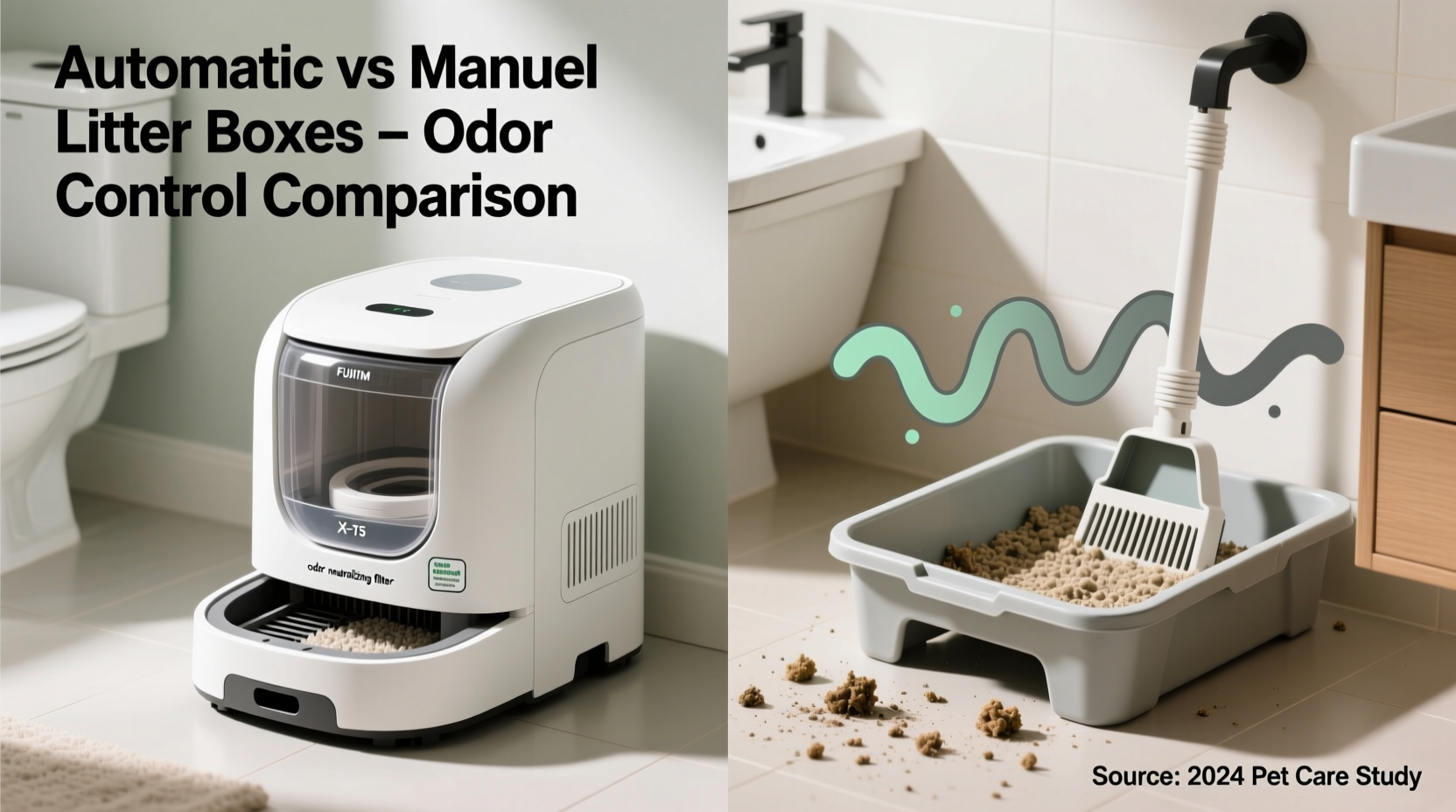
Understanding the source of litter box odor is essential to evaluating whether automatic systems offer real advantages. Cat waste produces two primary contributors to smell: ammonia from urine breakdown and sulfur compounds from feces. When urine sits in litter, bacteria begin decomposing urea into ammonia gas—a pungent, sharp odor that quickly permeates rooms. Feces release volatile organic compounds (VOCs), especially when exposed to air over time.
In manual litter boxes, these odors intensify based on usage frequency and cleaning habits. Even diligent scooping once or twice daily leaves waste sitting for hours, allowing gases to accumulate. Clumping litter helps by isolating solids and forming sealed clumps around urine, but it’s not foolproof. Over time, saturated litter loses absorbency, and residual moisture deep in the box continues to emit odors.
Automatic litter boxes aim to interrupt this cycle earlier and more consistently.
The Role of Automation in Odor Control
Self-cleaning litter boxes are designed to remove waste shortly after a cat uses the box—typically within 7 to 15 minutes. This rapid response reduces the window during which bacteria can break down waste and release odorous gases. Most models use sensors to detect when the cat has exited, then activate a raking mechanism that sifts through the litter, separating solid waste and depositing it into a sealed compartment.
This sealed waste drawer is a key factor in odor reduction. High-end models feature carbon filters built into the lid or ventilation system, which actively neutralize airborne particles before they escape. Some even include deodorizing sprays or antimicrobial liners that further suppress bacterial growth.
Because waste is removed quickly and isolated in a closed container, the concentration of odor-causing compounds in the main litter area remains low. In contrast, even freshly scooped manual boxes still contain trace residues and lingering moisture, which continue to off-gas throughout the day.
Comparing Automatic vs. Manual: A Practical Breakdown
While automation offers clear theoretical benefits, real-world performance depends on several factors: litter type, maintenance routine, number of cats, and model quality. Below is a comparison of key variables affecting odor control.
| Factor | Automatic Litter Box | Manual Litter Box |
|---|---|---|
| Waste Removal Frequency | Automated, typically within 15 minutes | Depends on owner; often 1–2 times per day |
| Odor Containment | Sealed waste drawer with optional carbon filter | No containment; waste remains exposed until scooping |
| Litter Disturbance | High (raking mechanism stirs litter) | Low to moderate (hand scooping causes less agitation) |
| Maintenance Effort | Lower daily effort, higher initial cost | Higher daily effort, lower upfront cost |
| Long-Term Litter Freshness | Better due to consistent waste removal | Varies widely based on scooping frequency |
The data shows that automatic systems excel in consistency and containment. However, they aren’t immune to odor issues. Poorly maintained units, low-quality filters, or incompatible litter can negate their advantages. Additionally, some cats kick litter out during use, and automatic rakes can scatter fine particles, potentially spreading tracked waste that dries and emits odor elsewhere.
Expert Insight: What Veterinarians and Behaviorists Say
“From a hygiene standpoint, automatic litter boxes reduce odor because they limit bacterial proliferation by removing waste faster. But they’re only effective if owners maintain them properly. A dirty auto-box can become a larger odor problem than a well-scooped manual one.” — Dr. Lena Patel, DVM, Feline Wellness Specialist
Dr. Patel emphasizes that technology doesn’t replace responsibility. The promise of “set it and forget it” is misleading. Filters need replacing, drawers must be cleaned, and litter levels monitored. Neglecting these tasks leads to clogs, malfunctions, and eventually, worse smells than a traditional box.
Additionally, some experts caution that not all cats adapt well to automatic systems. The noise of the rake or sudden movement can stress sensitive cats, leading to avoidance or inappropriate elimination—ironically increasing odor problems elsewhere in the home.
Real-World Example: A Two-Cat Household Test
Sarah Thompson, a pet owner in Portland, OR, switched from a manual to an automatic litter box after adopting a second cat. With two cats using the same box, she found that scooping twice daily was no longer enough—the bathroom began to smell within hours.
She invested in a mid-range automatic model with a carbon filter and sealed waste compartment. Within days, she noticed a dramatic improvement. “The difference was immediate. Before, I’d come home to a strong ammonia smell. Now, unless I open the waste drawer, you can’t tell there’s a litter box in the room.”
However, she learned the hard way that maintenance matters. After three weeks without changing the filter or wiping down the drawer seal, the unit started emitting a sour, damp odor. Once she resumed weekly cleaning and replaced the filter, the problem disappeared.
Sarah’s experience illustrates both the potential and the limitations of automatic systems: they deliver superior odor control when paired with disciplined upkeep.
Step-by-Step Guide to Maximizing Odor Reduction
To get the most out of any litter box—automatic or manual—follow this routine to minimize odor at every stage.
- Choose high-clumping, odor-control litter: Opt for formulas with activated charcoal, baking soda, or plant-based crystals. Avoid lightweight litters that scatter easily.
- Place the box in a ventilated area: Avoid enclosed closets or corners with poor airflow. A nearby fan or air purifier helps disperse particles.
- For automatic boxes: Run a test cycle after each cleaning: Ensure the rake moves smoothly and fully deposits waste into the drawer.
- Clean the waste drawer weekly: Remove the liner (if used), wash with mild soap, and dry completely to prevent mold and bacterial buildup.
- Replace carbon filters monthly: Even if they look clean, their absorption capacity diminishes over time.
- Deep-clean the entire unit monthly: Empty all litter, wipe interior surfaces with pet-safe disinfectant, and inspect for stuck debris.
- Monitor your cat’s behavior: If your cat scratches excessively or avoids the box, it may indicate discomfort with the noise or texture, leading to incomplete use and odor accumulation.
Checklist: Is Your Litter System Optimized for Odor Control?
- ☑ Waste is removed within 15–30 minutes of use (automated or manually scooped)
- ☑ Litter box is cleaned and litter changed regularly (full change every 2–4 weeks)
- ☑ Carbon filter is present and replaced monthly (for automatic models)
- ☑ Waste drawer or scoop container is washed weekly
- ☑ Box is placed in a well-ventilated area, away from humidity
- ☑ Litter type is compatible with your system and known for odor suppression
- ☑ No signs of mechanical issues (stuck rake, error lights, unusual noises)
Frequently Asked Questions
Do all automatic litter boxes eliminate odor completely?
No litter box—automatic or manual—can eliminate odor entirely. However, high-quality automatic models with sealed compartments and active filtration can reduce noticeable smells by up to 70–80% compared to un-scooped manual boxes. Complete elimination is unrealistic, but significant reduction is achievable with proper use.
Can I use regular litter in an automatic litter box?
It depends on the model. Most manufacturers recommend specific clumping litters of a certain granule size. Using lightweight or non-clumping litter can cause tracking, clogging, or failed waste separation. Always check your unit’s guidelines to ensure compatibility and optimal performance.
Are automatic litter boxes worth it for odor control alone?
If you value convenience and consistent cleanliness, yes. For households with multiple cats, busy schedules, or sensitivity to smells, the investment often pays off in improved air quality and reduced daily chores. However, they require ongoing maintenance to remain effective—so they’re not a true “hands-free” solution.
Conclusion: Balancing Technology and Routine for a Fresher Home
Automatic litter boxes do reduce odor more effectively than manual ones—but only when chosen wisely and maintained diligently. Their advantage lies in speed, consistency, and containment: removing waste quickly and sealing it away limits the time odor-causing reactions can occur. Yet, they are not magic solutions. A neglected automatic box can become a reservoir of trapped smells, while a well-maintained manual box with frequent scooping and quality litter can perform nearly as well.
The real takeaway is this: odor control depends less on the type of box and more on the habits surrounding it. Whether you opt for automation or stick with tradition, prioritize prompt waste removal, use odor-suppressing litter, and commit to regular deep cleaning. By combining smart technology with consistent care, you can create a cleaner, fresher environment for both you and your cat.




 浙公网安备
33010002000092号
浙公网安备
33010002000092号 浙B2-20120091-4
Comments
No comments yet. Why don't you start the discussion?