
In the growing movement toward sustainable living, bamboo toothbrushes have become a popular alternative to plastic versions. Marketed as eco-friendly and biodegradable, they promise a greener way to maintain oral hygiene. But do these claims hold up when tested in real-world conditions—specifically, in a typical home compost pile? The answer isn’t as straightforward as many brands suggest.
Bamboo is indeed a fast-growing, renewable resource that decomposes naturally under the right conditions. However, turning a bamboo toothbrush into nutrient-rich compost at home depends on more than just the handle material. Factors like bristle composition, treatment processes, and composting environment all play crucial roles. This article examines the science behind bamboo biodegradation, evaluates common misconceptions, and provides actionable guidance for responsible disposal.
The Anatomy of a Bamboo Toothbrush
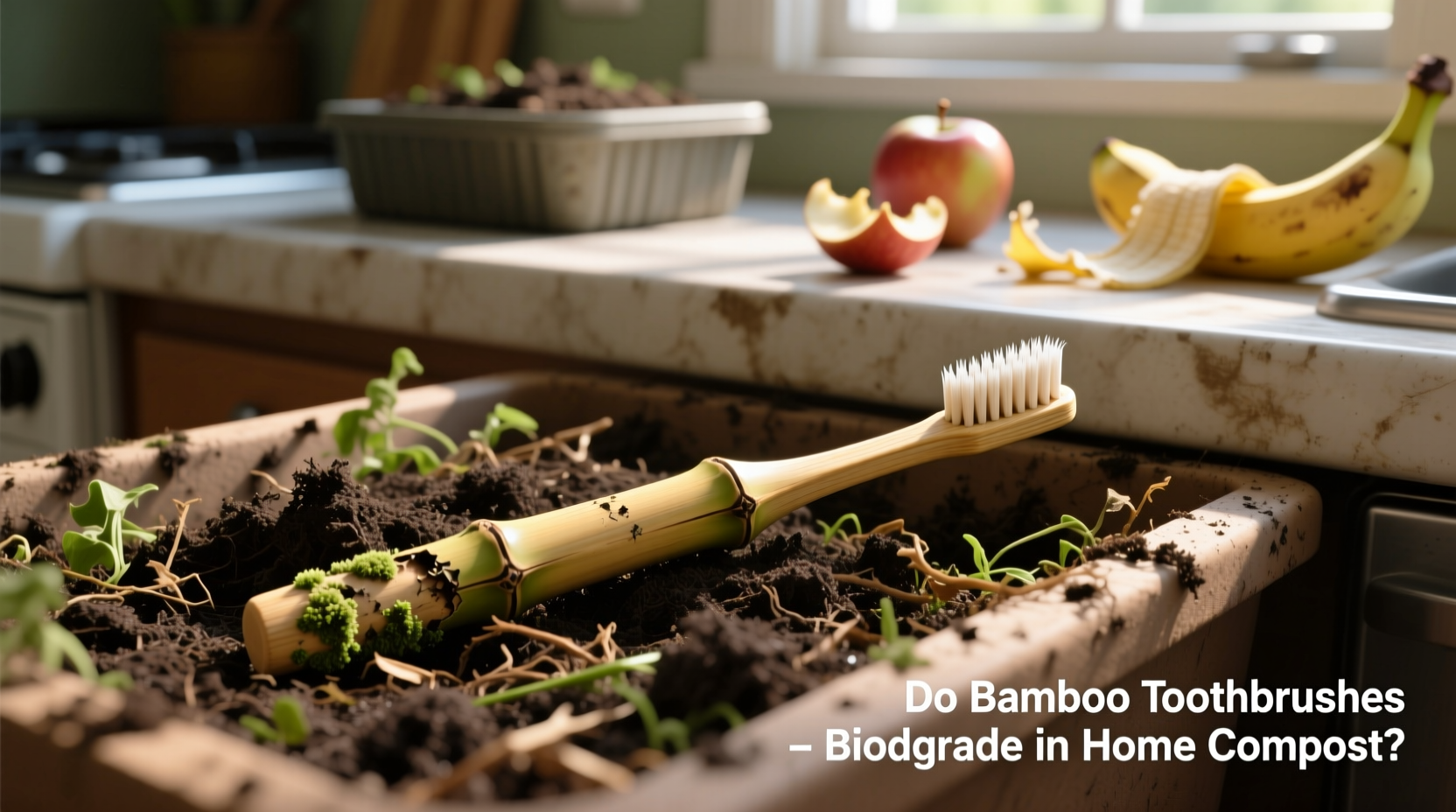
To understand whether bamboo toothbrushes biodegrade in home compost, it’s essential to break down their components:
- Handle: Typically made from Moso bamboo, which is naturally antimicrobial and fast-decomposing when untreated.
- Bristles: Often nylon-based (usually type 6 or 612), though some brands use plant-based alternatives like castor bean oil-derived bristles.
- Adhesives: Glue used to secure bristles may contain synthetic resins that resist decomposition.
- Coatings: Some handles are treated with natural waxes or lacquers to improve durability, which can slow breakdown.
The presence of non-biodegradable elements—especially conventional nylon bristles—means that most \"bamboo\" toothbrushes aren't fully compostable unless modified or disassembled before disposal.
What Does “Biodegradable” Really Mean?
The term \"biodegradable\" is often misused in green marketing. A product labeled as such may eventually break down, but the timeframe and environmental conditions required are rarely specified.
According to the U.S. Federal Trade Commission (FTC), a product can only be called biodegradable if it \"will decompose into natural substances within a reasonably short period of time after customary disposal.\"
For home composting, \"reasonably short\" typically means within 3–6 months under active management. Industrial composting facilities achieve higher temperatures (55–65°C) and controlled aeration, accelerating decomposition. Home compost piles, however, usually operate at lower temperatures (20–40°C), significantly slowing microbial activity.
“Not all biodegradable materials are suitable for backyard composting. Temperature, moisture, and microbial diversity determine success.” — Dr. Lena Patel, Environmental Microbiologist, University of Vermont
Do Bamboo Handles Break Down in Home Compost?
Yes—but with caveats.
Untreated bamboo shavings can degrade within 4–8 weeks in an ideal compost environment. However, whole toothbrush handles take much longer due to density and surface area limitations. In a study conducted by the Sustainable Materials Research Group (2022), intact bamboo toothbrush handles showed minimal decomposition after six months in home compost systems.
Key factors influencing breakdown speed include:
- Size and shape: Whole handles decompose slowly; cutting them into smaller pieces increases surface exposure.
- Maintenance of compost pile: Regular turning, proper moisture (like a wrung-out sponge), and balanced carbon-to-nitrogen ratio accelerate decay.
- Treatment level: Varnished or wax-coated handles resist moisture absorption, delaying microbial colonization.
Even under optimal home composting conditions, expect full decomposition of a bamboo handle to take between 6 months and 2 years—far longer than many consumers assume.
Step-by-Step Guide to Composting Your Bamboo Toothbrush
If you're committed to composting your bamboo toothbrush at home, follow this realistic process to maximize effectiveness and minimize contamination:
- Remove the bristles: Use pliers or tweezers to pull out each bristle cluster. Do not leave nylon bristles in your compost—they persist in soil and contribute to microplastic pollution.
- Dispose of bristles properly: If made of nylon, place them in general waste or recycle through specialized programs (e.g., Terracycle).
- Cut the handle: Chop the bamboo handle into small segments (1–2 cm) using scissors or wire cutters. This dramatically increases decomposition rate.
- Add to active compost bin: Place fragments in the center of a well-maintained compost pile where heat and microbes are most concentrated.
- Monitor progress: Turn the pile weekly and check for softening, discoloration, or fragmentation over several months.
- Screen before use: After 6+ months, sift compost to remove any undecomposed pieces before applying to garden beds.
Comparison: Home vs. Industrial Composting
| Factor | Home Composting | Industrial Composting |
|---|---|---|
| Temperature Range | 20–40°C | 55–70°C |
| Decomposition Time (Bamboo Handle) | 6 months – 2 years | 3–6 months |
| Nylon Bristle Tolerance | None – contaminant | Limited – still problematic |
| Oxygen & Aeration Control | Manual turning, variable | Automated, consistent |
| Accessibility | Widely available | Limited to certain regions |
| Ease of Participation | High (for homeowners) | Low (requires drop-off) |
This comparison highlights why industrial composting achieves faster results but remains inaccessible to most households. It also underscores the importance of bristle removal regardless of composting method.
Real-World Example: Sarah’s Zero-Waste Journey
Sarah, a sustainability educator from Portland, Oregon, switched to bamboo toothbrushes five years ago as part of her zero-waste lifestyle. She assumed they would simply rot away in her backyard bin. After nearly two years, she noticed several intact toothbrush handles buried deep in her compost—some still recognizable with bristle holes and brand engravings.
She consulted a local master composter and learned that without pre-processing, dense bamboo resists breakdown even in healthy compost. Since then, Sarah has adopted a new routine: every few months, she removes bristles from accumulated brushes using needle-nose pliers, cuts the handles into slivers, and adds them to the hot core of her tumbler composter. Within four months, the fragments fully integrate into rich humus used in her vegetable garden.
Her experience reflects a broader gap between consumer expectations and composting reality—one that better education could help close.
Checklist: How to Responsibly Dispose of a Bamboo Toothbrush
Follow this checklist to ensure your eco-friendly choice doesn’t end up harming the environment:
- ✅ Identify bristle material: Check packaging for \"nylon,\" \"PA6,\" or \"bio-based\" indicators.
- ✅ Remove bristles before composting: Use tools to extract them completely.
- ✅ Recycle bristles if possible: Look for mail-in recycling programs or local drop-offs.
- ✅ Cut the handle into small pieces: Increases surface area for microbial action.
- ✅ Add to active compost: Avoid cold piles or passive bins with low turnover.
- ✅ Monitor decomposition: Don’t assume invisibility equals degradation.
- ✅ Consider municipal composting: Some cities accept clean bamboo in green waste (check local rules).
Frequently Asked Questions
Can I throw my bamboo toothbrush directly into my backyard compost?
No, not without modification. Whole toothbrushes with nylon bristles will not fully biodegrade and risk contaminating your compost with microplastics. You must remove the bristles and chop the handle first.
Are there fully compostable bamboo toothbrushes?
A few brands offer models with plant-based bristles (e.g., from castor oil or pig hair) and no synthetic coatings. These come closer to being truly compostable, but even then, cutting the handle speeds up the process. Brands like Brush with Bamboo and EcoRoots offer verified compostable options.
What should I do if I don’t have a compost system?
If composting isn’t feasible, consider sending your used toothbrush to a specialized recycler like Terracycle, which runs oral care waste programs. Alternatively, store the brush safely until community composting becomes available. Never toss it loose in nature—this contributes to litter, even if parts are biodegradable.
Expert Insight: The Limits of Green Claims
While bamboo toothbrushes represent a step forward, experts caution against viewing them as a complete solution.
“The shift to bamboo reduces single-use plastic, but only if disposal is managed correctly. Otherwise, we’re swapping one persistent waste stream for another.” — Dr. Marcus Lin, Waste Systems Analyst, Circular Economy Institute
He emphasizes that true sustainability requires closed-loop thinking: design, use, and end-of-life must align. Many bamboo toothbrushes fail this test because bristles and adhesives aren’t designed for disassembly or safe return to soil.
Conclusion: Taking Responsibility Beyond the Purchase
Bamboo toothbrushes can biodegrade in home compost—but only under specific conditions and with deliberate effort. Simply tossing the entire brush into a backyard bin defeats the purpose, leaving behind plastic bristles and partially degraded wood that offers little benefit to soil health.
The real value of switching to bamboo lies not just in buying differently, but in rethinking how we manage waste. True environmental impact comes from what happens after brushing: removing bristles, preparing materials, and integrating them responsibly into biological cycles.
Every sustainable product demands informed stewardship. When you choose a bamboo toothbrush, you’re not just reducing plastic—you’re committing to a longer chain of care that ends only when the last fiber returns to the earth.




 浙公网安备
33010002000092号
浙公网安备
33010002000092号 浙B2-20120091-4
Comments
No comments yet. Why don't you start the discussion?