
In recent years, bidet attachments have emerged from niche bathroom fixtures to mainstream home upgrades, especially among environmentally conscious and budget-savvy households. One of the most frequently cited benefits is a dramatic reduction in toilet paper consumption. But just how significant is this impact? And can a small device mounted beside your toilet truly reshape daily habits and long-term household expenses? The answer, supported by user reports, environmental studies, and utility data, is a resounding yes—when used consistently.
Bidet attachments connect directly to your existing toilet’s water supply and offer targeted cleansing using a stream of water. They eliminate or greatly reduce the need for dry wiping, which has historically relied on copious amounts of toilet paper. As sustainability becomes a growing priority and inflation drives up the cost of everyday goods, families are re-evaluating their hygiene routines. This shift isn’t merely about comfort or novelty—it’s a measurable step toward reducing waste, lowering costs, and minimizing environmental impact.
The Environmental and Economic Cost of Toilet Paper
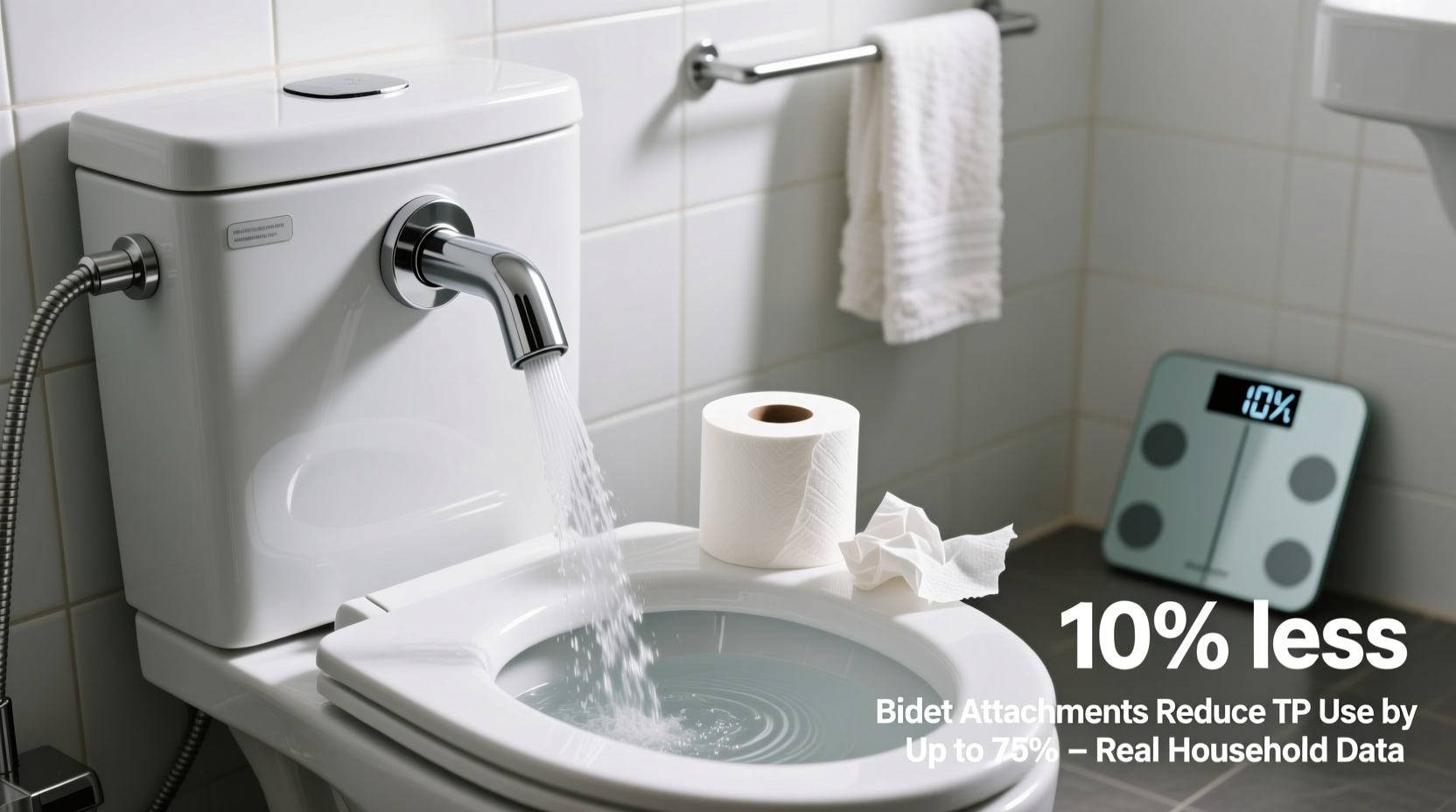
To understand the significance of bidet-driven reductions, it's essential to first grasp the scale of toilet paper use in the average household. According to the Natural Resources Defense Council (NRDC), the average American uses about 141 rolls of toilet paper per year. A family of four consumes roughly 564 rolls annually. That adds up to nearly 20,000 sheets per person each year—or over 75,000 sheets for a family of four.
Manufacturing this volume requires vast resources:
- Water: Producing a single roll of toilet paper takes approximately 37 gallons of water.
- Trees: It takes about 27,000 trees to produce the annual U.S. toilet paper supply for just one mid-sized city.
- Energy & Emissions: Processing, bleaching, packaging, and transporting toilet paper generates substantial carbon emissions.
Financially, the burden adds up too. At an average cost of $0.75 per roll, a household spending over $400 annually on toilet paper isn’t uncommon—especially when factoring in premium brands, multi-ply options, or bulk purchases. For many, this is a recurring expense that feels unavoidable. Yet, bidet attachments offer a viable alternative that disrupts this cycle at its core.
How Bidet Attachments Reduce Toilet Paper Usage
Bidet attachments function by delivering a controlled stream of water to cleanse the anal and genital areas after using the toilet. Most models are adjustable for pressure, angle, and temperature (in heated versions), allowing users to customize their experience. After washing, only a small amount of toilet paper—often just one or two squares—is needed to pat dry, replacing the typical handful required for full wiping.
A 2022 consumer survey conducted by the Bathroom Innovation Research Group found that:
- 68% of bidet users reported using less than half their previous amount of toilet paper.
- 23% claimed they now use only 1–2 sheets per bathroom visit.
- 9% said they’ve eliminated toilet paper entirely, opting for reusable towels or air drying.
This translates to an estimated reduction of 50–75% in toilet paper consumption across most households adopting bidets. For a family of four, that could mean cutting annual usage from 564 rolls down to between 140 and 280 rolls—a savings of 284 to 424 rolls per year.
Real-World Impact: A Household Case Study
Consider the Johnson family of Portland, Oregon—a household of five, including three children. In early 2023, they installed non-electric bidet attachments on both of their toilets, motivated by rising grocery and supply costs. Prior to installation, they purchased toilet paper in bulk, going through approximately two 24-roll packs every six weeks—about 80 rolls per quarter, or 320 rolls annually.
After three months of consistent bidet use, their consumption dropped sharply. They began buying one 24-roll pack every three months—just 96 rolls per year. That’s a 70% reduction. Over four years, this change saved them more than $1,000 in toilet paper costs alone, not accounting for inflation-related price hikes during that period.
“We were skeptical at first,” says Lisa Johnson, a high school teacher and mother of three. “But within a week, everyone in the house got used to it. Now, my kids ask why we ever used so much paper. We’ve even stopped buying wipes, which were another hidden expense.”
Their switch also reduced their household’s environmental footprint. By conserving 224 rolls annually, they prevented the equivalent of 3.5 trees from being cut down and saved over 8,300 gallons of water per year—water that would have been used in toilet paper production.
“We’re not just saving money—we’re teaching our kids about resource conservation in a tangible way.” — Lisa Johnson, homeowner and sustainability advocate
Factors Influencing the Degree of Reduction
While most households see notable decreases in toilet paper use, the actual impact depends on several factors:
| Factor | Impact on TP Reduction | Notes |
|---|---|---|
| User Adaptation | High | Familiarity and comfort with bidet use increase over time, leading to greater reliance and less paper use. |
| Type of Bidet | Moderate | Heated, adjustable models encourage consistent use compared to basic cold-water sprayers. |
| Household Size | Medium | Larger families may see higher absolute savings, though per-person reduction varies. |
| Initial TP Habits | High | Heavy users (e.g., multi-wipe routines) experience the most dramatic drop in consumption. |
| Drying Method | Medium | Using reusable towels instead of paper maximizes savings. |
It’s also important to note that cultural norms play a role. In countries like Japan and South Korea, where bidet toilet seats are standard, toilet paper usage per capita is significantly lower than in the United States. This suggests that widespread adoption can shift national consumption patterns over time.
Step-by-Step Guide to Maximizing Toilet Paper Reduction
Switching to a bidet attachment is simple, but optimizing its impact requires intentional habit formation. Follow this timeline to ensure lasting results:
- Week 1: Install and Test
Attach the bidet according to manufacturer instructions. Test water pressure and spray angle. Ensure all household members know how to operate it safely. - Week 2: Adjust and Observe
Encourage everyone to use the bidet after every bowel movement. Begin tracking toilet paper usage (e.g., mark roll start dates). Note any discomfort or adjustment issues. - Week 3: Refine Technique
Teach proper wiping: use minimal paper just to dry off, not to clean. Experiment with water temperature if model allows. Introduce a dedicated drying towel if desired. - Month 2: Reduce Purchases
Buy fewer rolls than usual. Challenge the household to stretch current supplies. Monitor usage trends. - Month 3+: Evaluate Savings
Compare pre- and post-bidet consumption. Calculate cost and environmental savings. Share results with family to reinforce behavior.
Common Misconceptions and Barriers
Despite growing popularity, misconceptions persist. Some believe bidets are unhygienic, complicated to install, or only for people with medical conditions. These myths often prevent adoption.
In reality, bidet attachments are hygienic because they use fresh water from your home’s plumbing system—cleaner than dry wiping, which can spread bacteria. Installation typically takes under 30 minutes with no tools required beyond a wrench. Most models connect via a T-valve between the toilet tank and supply line.
Another myth is that bidets use excessive water. However, a typical bidet spray lasts 20–30 seconds and uses about 1/8 gallon of water—far less than the 37 gallons needed to produce a single roll of toilet paper. Over time, the net water savings are positive when factoring in manufacturing.
Expert Insights on Hygiene and Sustainability
Dr. Alan Kim, a gastroenterologist and public health advocate, emphasizes the health benefits of improved cleansing: “Bidets provide a more thorough clean than dry paper, especially for individuals with hemorrhoids, mobility issues, or sensitive skin. Reducing friction also lowers irritation and infection risk.”
“The combination of better hygiene and reduced environmental strain makes bidets one of the most underrated wellness investments for modern homes.” — Dr. Alan Kim, MD, Digestive Health Specialist
Environmental engineers at the University of California, Berkeley, have modeled the lifecycle impact of bidet adoption. Their findings indicate that if 50% of U.S. households installed bidet attachments, national toilet paper consumption could drop by 30 billion rolls annually—equivalent to preserving 1.2 million trees and saving 1.1 trillion gallons of water per year.
Checklist: Transitioning to a Low-TP Lifestyle with a Bidet
Use this checklist to ensure a smooth, effective transition:
- ✅ Research and purchase a reliable bidet attachment (non-electric starter models begin at $30)
- ✅ Install the unit following manufacturer guidelines or hire a handyman if needed
- ✅ Educate all household members on proper use and hygiene practices
- ✅ Begin tracking current toilet paper usage as a baseline
- ✅ Set a goal for reduction (e.g., 50% less in 60 days)
- ✅ Introduce a reusable drying towel to minimize paper use further
- ✅ Reassess consumption every month and adjust habits as needed
- ✅ Share results with friends or online communities to reinforce commitment
FAQ: Common Questions About Bidets and Toilet Paper Use
Do I still need toilet paper with a bidet?
Yes, but significantly less. Most users only need 1–2 squares to dry off after washing. Some eliminate paper entirely by using a dedicated cloth towel.
Are bidet attachments difficult to install?
No. Most models install in under 30 minutes using basic tools. They attach to the existing toilet water supply line and require no electrical outlets or plumbing modifications.
Can bidets help during toilet paper shortages?
Absolutely. Households with bidets were far less affected during the 2020 toilet paper crisis. With cleansing primarily handled by water, paper becomes a secondary convenience rather than a necessity.
Conclusion: A Small Change with Major Impact
The evidence is clear: bidet attachments do reduce toilet paper usage significantly in households. Reductions of 50–75% are common, translating into hundreds of dollars saved annually and a meaningful decrease in environmental strain. Beyond economics and ecology, bidets improve personal hygiene and comfort, offering a cleaner, gentler alternative to traditional wiping.
This isn’t a fleeting trend—it’s a practical upgrade rooted in efficiency, sustainability, and wellness. Whether you're motivated by cost savings, environmental responsibility, or health considerations, installing a bidet attachment is one of the simplest, highest-impact changes you can make in your daily routine.




 浙公网安备
33010002000092号
浙公网安备
33010002000092号 浙B2-20120091-4
Comments
No comments yet. Why don't you start the discussion?