
In an era where sustainability and household efficiency are increasingly valued, many homeowners are re-evaluating everyday habits — including how they manage personal hygiene after using the bathroom. One growing trend is the adoption of bidets, once considered a luxury in Western countries but now gaining traction for their practicality, cleanliness, and potential to cut costs. The central question: can installing a bidet actually reduce your reliance on toilet paper enough to deliver meaningful financial savings over time?
The short answer is yes — but the full picture involves more than just swapping rolls for sprays. It includes upfront investment, long-term usage patterns, environmental considerations, and behavioral changes. This article breaks down the real math behind bidet savings, examines user experiences, and provides actionable insights to help you determine whether a bidet is a smart financial move for your household.
How Bidets Work and Their Impact on Toilet Paper Use
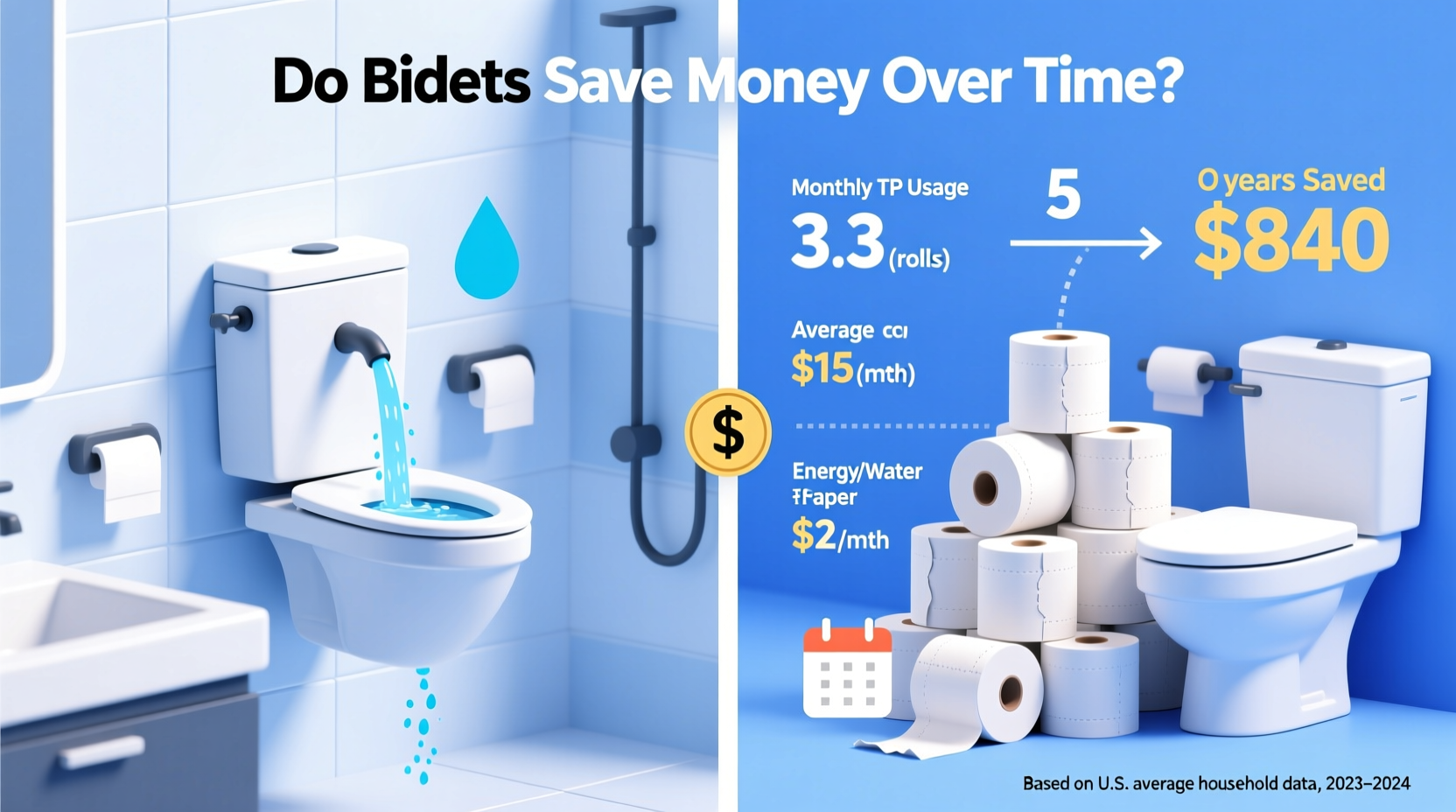
Bidets come in various forms — standalone units, attachable nozzles, seat replacements, or even handheld sprayers — all designed to clean the genital and anal areas with a stream of water. By replacing or significantly reducing the need for dry wiping, bidets minimize toilet paper consumption. Most users report cutting their TP use by 75% to 90%, depending on personal preference and bidet model features like adjustable pressure, warm water, and air drying.
Instead of relying solely on abrasive paper, which may not fully clean crevices, bidets offer a gentler, more hygienic alternative. Over time, this shift reduces both the frequency of toilet paper purchases and the volume flushed or thrown away.
Cost Breakdown: Bidet vs. Ongoing Toilet Paper Expenses
To assess whether a bidet pays for itself, we must compare two types of costs: the initial purchase and installation (if applicable), and the recurring expense of toilet paper.
A basic electronic bidet seat typically ranges from $200 to $400, while non-electric models start at around $30. Installation is usually DIY-friendly and takes under an hour. In contrast, the average American household spends between $80 and $150 annually on toilet paper, depending on usage, brand preferences, and number of occupants.
Let’s assume a family of four uses 100 rolls per year at an average cost of $1.20 per roll — totaling $120 annually. If a bidet reduces their usage by 80%, that’s a saving of $96 per year. A $250 bidet would pay for itself in about 2.6 years. After that, every additional year brings pure savings.
Break-Even Timeline Example
| Item | Cost |
|---|---|
| Average Annual Toilet Paper Cost (Family of 4) | $120 |
| Estimated Reduction with Bidet | 80% |
| Annual Savings | $96 |
| Mid-Range Bidet Seat Cost | $250 |
| Break-Even Point | ~2.6 years |
| Savings Over 5 Years | $230 |
| Savings Over 10 Years | $710 |
This calculation doesn’t include secondary benefits like reduced plumbing issues from excessive paper use, lower septic tank maintenance, or decreased environmental footprint — all of which add indirect value.
“Households that switch to bidets often underestimate how quickly the savings accumulate. Once you eliminate bulk-pack shopping and subscription deliveries, the cash flow improvement becomes noticeable within a year.” — Dr. Lena Torres, Sustainable Living Researcher at Green Home Institute
Real-World Case Study: The Miller Family's Year With a Bidet
The Millers, a family of five in Portland, Oregon, installed a $275 non-electric bidet seat in their main bathroom in January 2023. Prior to the switch, they purchased a 30-roll pack of premium toilet paper every six weeks, spending approximately $140 per year.
After three months of adjustment, they found they were using only one or two squares per visit — primarily for drying — cutting their usage by roughly 85%. They now buy one 24-roll pack annually for guest use and emergencies, spending just $28 per year on toilet paper.
With annual savings of $112, their bidet paid for itself in under 2.5 years. Additionally, they noticed fewer clogged toilets — previously a quarterly issue — which saved them two plumber visits worth $160 in avoided service fees.
“We thought it was mainly about being eco-friendly,” said Sarah Miller. “But seeing our bathroom supply budget shrink was a real surprise. We’ve redirected that money toward other home upgrades.”
Factors That Influence Long-Term Savings
Not all households will experience identical savings. Several variables affect how much you stand to gain financially from installing a bidet:
- Household size: Larger families use more toilet paper, so the percentage savings translate into higher dollar amounts.
- Paper quality: Premium, multi-ply, or scented toilet paper costs more per roll, increasing potential savings when replaced.
- Bidet model: Higher-end models with heated seats, dryers, and remote controls cost more upfront but may encourage consistent use due to comfort.
- Usage habits: Some users adopt a hybrid approach, using minimal paper after washing. Others go completely paper-free with a built-in dryer.
- Water and electricity costs: While minimal, these should be factored in — especially for electric bidets using warm water and air-dry functions.
According to utility data from the U.S. Environmental Protection Agency, the added water usage from a bidet is negligible — less than one extra gallon per day for a family of four. At average water rates, that adds about $10–$15 annually. Electric bidets consume roughly the same energy as a low-wattage lamp, adding another $5–$10 to yearly electricity bills.
Even accounting for these minor increases, net savings remain substantial.
Step-by-Step Guide to Calculating Your Personal Bidet ROI
If you're considering a bidet, follow this timeline to estimate your return on investment:
- Track current toilet paper spending: Review receipts or subscription records to calculate your annual cost.
- Determine household usage: Count how many rolls you go through monthly and multiply by 12.
- Select a bidet model: Choose based on budget and desired features (e.g., cold water only vs. heated).
- Estimate reduction rate: Assume 75%–90% reduction unless you plan limited use.
- Calculate annual savings: Multiply current TP cost by estimated reduction percentage.
- Divide bidet cost by annual savings: This gives your break-even point in years.
- Factor in durability: Most bidets last 5–10 years; if savings continue beyond payback, you’re earning back multiple times your investment.
Environmental and Health Benefits Beyond Cost
While financial savings are compelling, bidets offer additional advantages that enhance their overall value proposition.
Environmental Impact: The average person uses 141 rolls of toilet paper per year, contributing to deforestation and high water consumption during manufacturing. Replacing most of that with a few extra gallons of tap water dramatically lowers ecological strain. According to the Natural Resources Defense Council, switching to bidets could save millions of trees annually if widely adopted.
Health Advantages: Dermatologists and gastroenterologists often recommend bidets for individuals with hemorrhoids, irritable bowel syndrome, mobility limitations, or sensitive skin. Water cleaning is less irritating than dry wiping and can improve hygiene for postpartum recovery, menstruation, and elderly care.
Septic System Relief: Excessive toilet paper contributes to sludge buildup in septic tanks. Reducing inflow extends tank life and reduces pumping frequency — another hidden cost saving.
Common Misconceptions About Bidets and Savings
Despite growing popularity, several myths persist:
- Misconception: Bidets use too much water.
Reality: A typical bidet spray uses 1/8 to 1/2 gallon per use — far less than the 37 gallons required to produce a single roll of toilet paper. - Misconception: Installing a bidet is complicated and expensive.
Reality: Most models connect directly to existing toilet plumbing with basic tools. No professional plumber needed. - Misconception: You still need lots of toilet paper anyway.
Reality: Many users transition to using just one or two sheets for drying. Some eliminate paper entirely with warm-air dryers.
FAQ
Do bidets really eliminate the need for toilet paper?
Most users don’t eliminate toilet paper entirely but reduce usage drastically. Many keep a small amount for drying or guest convenience. High-end models with integrated warm-air dryers allow for near-total elimination of paper.
Are bidets hygienic?
Yes, and often more so than dry wiping. Water effectively removes residue without abrasion. Modern bidets feature self-cleaning nozzles and antimicrobial surfaces to maintain sanitation.
Can a bidet damage my plumbing?
No. Bidets operate at standard residential water pressure and connect via a T-valve to your toilet’s supply line. They do not increase water pressure or strain pipes.
Action Plan: How to Start Saving with a Bidet
Ready to evaluate if a bidet makes financial sense for your home? Follow this checklist:
- ✅ Audit your last six months of toilet paper purchases.
- ✅ Calculate annual spending and rolls used.
- ✅ Research bidet models in your price range (start with $30–$150 options).
- ✅ Estimate your potential savings using an 80% reduction baseline.
- ✅ Consider health, comfort, and environmental factors alongside cost.
- ✅ Install and track usage for three months to measure actual paper reduction.
- ✅ Reassess savings and adjust habits to maximize efficiency.
Conclusion
The evidence is clear: bidets reduce toilet paper usage enough to generate real, measurable savings over time. While the initial cost may give pause, most households recoup their investment in under three years — and continue saving for half a decade or more afterward. Beyond dollars and cents, bidets promote better hygiene, reduce environmental harm, and improve comfort for people of all ages and health conditions.
Whether you choose a simple nozzle attachment or a feature-rich smart seat, the switch represents a small change with compounding benefits. In a world where every dollar counts and sustainability matters, adopting a bidet isn’t just a modern convenience — it’s a financially sound decision backed by data, experience, and growing consumer satisfaction.




 浙公网安备
33010002000092号
浙公网安备
33010002000092号 浙B2-20120091-4
Comments
No comments yet. Why don't you start the discussion?