
As the holiday season approaches, one of the most debated topics among homeowners, decorators, and even professional installers is efficiency: how can you decorate your home with lights faster without sacrificing visual impact? Among the many options available, Christmas light nets have gained popularity as a quick-fix solution for covering shrubs, hedges, and even small trees. But do they actually save time when compared to manually stringing traditional light strands? The answer depends on several factors—including project scale, surface type, desired effect, and long-term flexibility.
This article dives deep into the practical realities of using light nets versus hand-stringing, backed by real-world examples, expert insight, and side-by-side comparisons. Whether you're preparing for your first holiday display or optimizing a large-scale installation, understanding the trade-offs will help you make smarter, faster decorating decisions.
The Basics: What Are Christmas Light Nets?
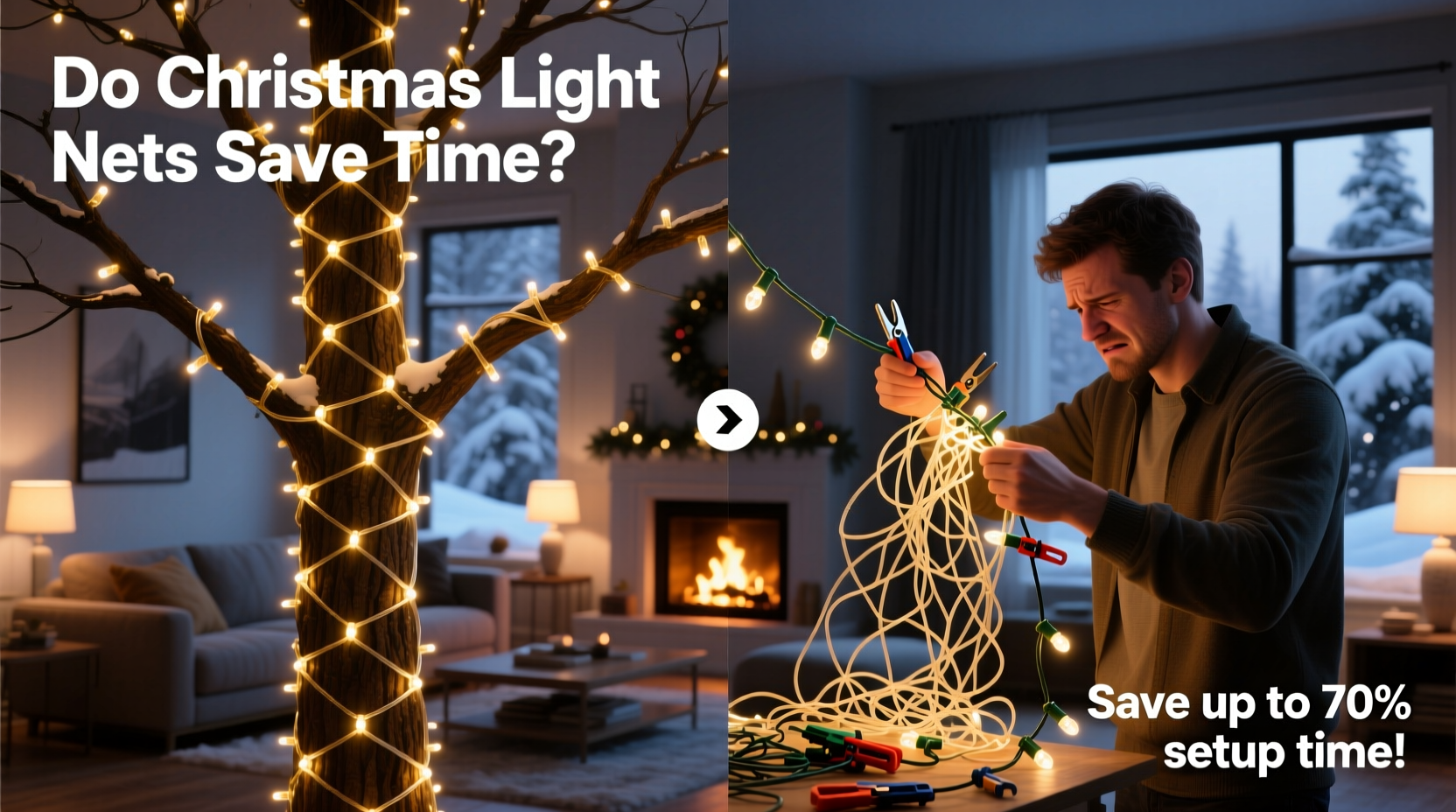
Christmas light nets—also known as net lights or curtain lights—are pre-wired grids of LED bulbs attached to a mesh backing. They come in standard sizes (commonly 5x10 feet or 6x12 feet) and are designed to be draped over bushes, shrubs, or fences like a blanket. Most models feature evenly spaced bulbs (typically 2 inches apart), creating a uniform \"glow-in-the-dark foliage\" effect.
Unlike traditional string lights, which require wrapping, looping, and securing around branches or structures, light nets are installed in one motion. You unfold them, position them over the target area, and secure the corners with clips or zip ties. Some newer versions even include built-in stakes or hook-and-loop fasteners for easier placement.
They’re particularly popular for evergreen shrubs, foundation plantings, and low hedges where consistent coverage matters more than intricate detailing. However, their rigid grid structure limits adaptability on irregular shapes or tall vertical surfaces.
Time-Saving Advantages of Light Nets
When it comes to speed, light nets outperform manual stringing in specific scenarios. The primary advantage lies in **installation speed**. For example:
- A typical 5x10-foot net with 50–100 bulbs can be installed in under 10 minutes once positioned.
- No need to weave through branches or manage tangled cords during setup.
- Pre-spaced bulbs eliminate guesswork about spacing consistency.
- Fewer connection points mean less time spent plugging multiple strands together.
In contrast, manually wrapping a medium-sized shrub (about 4 feet wide and 3 feet high) with individual light strings can take anywhere from 20 to 45 minutes, depending on density preferences and branch complexity. Each wrap must be carefully spaced to avoid dark spots, and users often end up using three or four 25-light strands per bush, increasing both setup and troubleshooting time.
Additionally, light nets reduce tangle-related frustration. Traditional string lights are notorious for knotting in storage, requiring untangling before use. Since nets lie flat and are secured at intervals, they’re less prone to internal snarls—though they can still get caught on twigs if not handled carefully.
“Net lights are ideal for contractors doing bulk residential installations. We’ve cut average yard lighting time by nearly 60% using nets on foundation shrubs.” — Mark Delaney, Holiday Lighting Installer & Founder of BrightYard Pro
Where Manual Stringing Still Wins
Despite their speed benefits, light nets aren’t universally superior. There are clear situations where manually stringing lights remains the better—and sometimes only—option.
Complex Shapes: Trees with thick trunks, irregular branching, or multi-tiered canopies don’t conform well to a flat grid. Attempting to fit a net over such structures results in loose sagging, visible mesh, or uneven illumination.
Tall Surfaces: Installing lights on two- or three-story homes typically involves outlining windows, eaves, and rooflines—tasks that require flexible string lights. Nets simply can't bend vertically or follow architectural lines.
Customization Needs: If you want creative effects like spiraling around tree trunks, highlighting specific branches, or creating patterns (e.g., snowflakes or stars), manual control is essential. Nets offer uniformity but lack artistic flexibility.
Storage and Reusability: While convenient, nets can be bulky and awkward to store. Their rigid shape doesn’t coil neatly like string lights, and repeated folding may damage internal wiring. Over time, this reduces lifespan and increases replacement costs.
Moreover, repairs are harder with nets. If one bulb fails in a string light, you might lose a section—but with some net designs, a single broken bulb or severed wire can disable an entire quadrant. Diagnosing and fixing these issues takes more effort than replacing a single strand.
Side-by-Side Comparison: Nets vs. Manual Stringing
| Factor | Light Nets | Manual Stringing |
|---|---|---|
| Installation Time (per shrub) | 5–10 minutes | 20–45 minutes |
| Coverage Consistency | High – even spacing | Variable – depends on skill |
| Flexibility for Design | Low – fixed grid | High – fully customizable |
| Tangle Resistance | Moderate – flat design helps | Low – frequent tangling |
| Durability Over Time | Medium – folding stress risks | High – coiled storage preserves wires |
| Ideal Use Case | Uniform shrubs, hedges, fences | Trees, buildings, custom displays |
Real-World Example: A Suburban Home Makeover
Sarah Thompson, a homeowner in Portland, Oregon, decided to upgrade her holiday lighting for the 2023 season. Her front yard features six boxwood shrubs along the walkway and two large spruce trees near the driveway. In past years, she spent nearly three hours installing mini string lights—one strand at a time—around each shrub, often needing her husband’s help to hold branches open.
This year, she invested in two 6x12-foot green-net LED sets (covering three shrubs each). She also kept her traditional C7 strings for wrapping the tree trunks and outlining the roofline.
The result? She completed the shrub lighting in 15 minutes total—down from 90 minutes the previous year. The net lights provided a denser, more vibrant glow than her hand-strung version, and cleanup was simpler due to fewer anchor points. However, she noted that trimming one net to fit a slightly larger shrub damaged a few bulbs, and storing the large sheets required a dedicated plastic bin instead of her old shoebox-style organizer.
Sarah concluded: “For the hedges, nets were a game-changer. But I wouldn’t give up string lights entirely—they’re still essential for anything that isn’t flat.”
Step-by-Step: How to Maximize Time Savings with Light Nets
To truly benefit from the time-saving potential of light nets, follow this optimized process:
- Measure Your Shrubs: Use a tape measure to determine width and height. Choose nets that match or slightly exceed dimensions.
- Inspect Before Installation: Lay the net flat on grass or pavement. Check for dead bulbs or frayed wires. Replace or repair early.
- Position Strategically: Drape the net over the shrub while holding opposite corners. Adjust until coverage is even and no major gaps appear.
- Secure Corners First: Use plastic-coated wire ties or garden clips to anchor the four corners. Avoid metal staples that can cut wires.
- Tuck and Conceal: Gently push excess mesh into inner branches to hide the backing and create a floating-light effect.
- Test Immediately: Plug in the net before finalizing placement. Fix any flickering or dark sections right away.
- Label for Next Year: Attach a waterproof tag indicating which shrub the net fits. This prevents mismatching during future setups.
Checklist: Choosing Between Nets and Strings
Use this checklist to decide which method suits your project best:
- ✅ Are your shrubs low, dense, and uniformly shaped? → Nets likely ideal
- ✅ Do you prioritize speed over customization? → Nets recommended
- ✅ Are you decorating tall trees or architectural features? → Stick with strings
- ✅ Do you want full creative control over light placement? → Strings preferred
- ✅ Is storage space limited? → Strings are more compact
- ✅ Are you installing lights alone? → Nets are easier solo
- ✅ Do you plan to reuse lights for multiple years? → Consider durability differences
Frequently Asked Questions
Can I connect multiple light nets together?
Yes, many modern net lights are UL-listed for end-to-end connection, allowing you to daisy-chain several units from a single outlet. However, always check the manufacturer’s limit—most recommend no more than 3–4 connected sets to avoid circuit overload. Use a power strip with surge protection for added safety.
Are light nets safe for all types of plants?
Generally, yes. The lightweight mesh won’t damage healthy shrubs. However, avoid placing nets on delicate or newly planted foliage that could be weighed down. Also, remove nets after the season to prevent trapping moisture against leaves, which can promote mold or mildew.
Can I cut a light net to fit a smaller bush?
Technically possible, but not advisable. Cutting the mesh may sever internal wiring loops, causing partial or complete failure. Instead, look for smaller-sized nets (some brands offer 3x5 or 4x8 options) or fold excess material into the center of the shrub where it's less visible.
Final Verdict: Yes—But With Conditions
Do Christmas light nets save time compared to manual stringing? In most cases involving flat, shrub-level applications, the answer is a clear yes. They reduce installation time by 50–75%, deliver consistent brightness, and simplify repeat setups. For homeowners managing multiple bushes or short on weekend hours, nets are a smart investment.
However, they are not a complete replacement for traditional string lights. Their limitations in shape adaptability, repair difficulty, and storage footprint mean that a hybrid approach often works best. Use nets where speed and uniformity matter most—foundation plantings, low hedges, railings—and reserve string lights for trees, vertical accents, and creative displays.
The key to maximizing time savings isn’t choosing one method over the other, but knowing when to deploy each tool effectively. Like a carpenter selecting between a hammer and screwdriver, the skilled decorator matches the technique to the task.




 浙公网安备
33010002000092号
浙公网安备
33010002000092号 浙B2-20120091-4
Comments
No comments yet. Why don't you start the discussion?