
As holiday decorating trends evolve, homeowners are increasingly turning to modern alternatives to traditional Christmas lights. Among the most popular innovations are Christmas projection lights—devices that cast festive patterns onto homes using powerful LEDs and rotating lenses. These compact projectors promise dazzling displays with minimal effort. But can they truly replace the classic charm and brilliance of string lights draped across rooftops, gutters, and trees?
The answer isn’t a simple yes or no. While projection lights offer undeniable convenience and creative flexibility, they serve a different purpose than physical string lighting. Understanding their strengths, limitations, and ideal use cases is key to making an informed decision for your holiday display.
Brightness and Visibility: How Do They Compare?
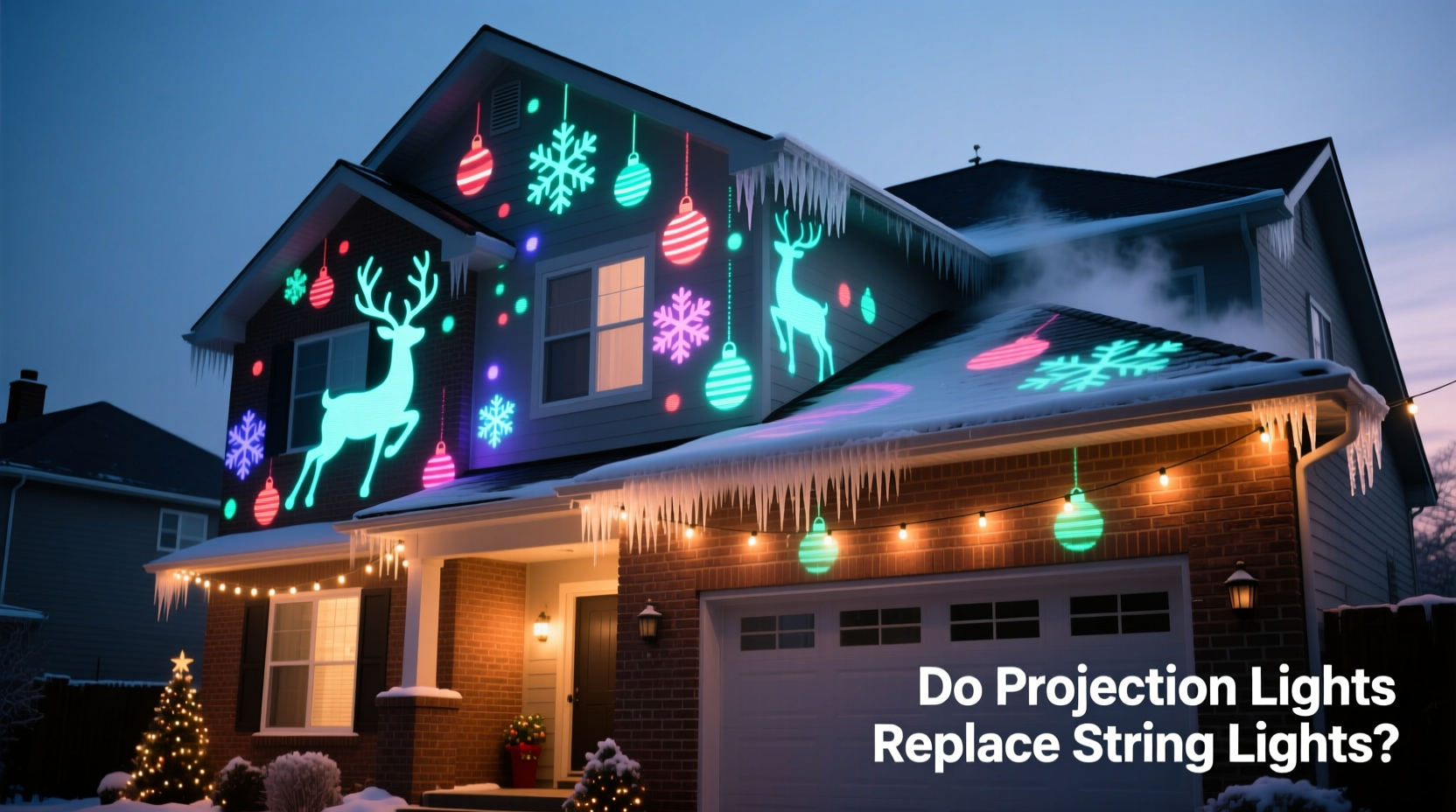
One of the first considerations when choosing between projection lights and string lights is visibility—especially at night and from a distance. String lights have long been the gold standard for creating bright, eye-catching exteriors. High-density LED strings can produce thousands of individual points of light, offering consistent illumination across large surfaces.
In contrast, projection lights rely on focused beams projected through patterned lenses. Their brightness depends on several factors: lumen output, distance from the surface, ambient light levels, and wall color. A high-lumen projector (typically 1,500–3,000 lumens) can create vivid images visible from the street, but the effect diminishes on dark or textured walls. Light-colored, smooth surfaces reflect best, while brick or stucco may scatter the image, reducing clarity.
Moreover, projections tend to lose intensity over distance. A projector placed 20 feet from a house will deliver a softer, more diffused image than one positioned closer. In neighborhoods with strict HOA rules or limited electrical outlets, this reach can be an advantage—but not if the goal is maximum sparkle.
Installation and Setup: Effort vs. Impact
Where projection lights truly shine is in ease of installation. Setting up traditional string lights often involves hours of labor: untangling cords, securing clips, running extension cords, and ensuring even spacing. It’s a process that frequently requires ladders, multiple people, and careful planning to avoid tripping hazards or fire risks.
Projection lights, by comparison, take minutes to set up. Most models simply plug into an outdoor outlet, swivel into position, and turn on. Some advanced versions include remote controls, timer settings, and even app-based adjustments for angle and pattern rotation. There’s no climbing, no drilling, and no risk of damaging shingles or paint.
However, this simplicity comes with trade-offs. Projections are inherently two-dimensional. They cannot wrap around corners, outline windows, or drape across porches the way physical lights can. If your aesthetic leans toward architectural highlighting or immersive depth, string lights remain unmatched.
Additionally, projector placement is critical. Obstacles like shrubs, fences, or parked cars can block or distort the image. Wind may shift lightweight units unless properly anchored. And unlike string lights, which can be customized section by section, a single projector affects an entire wall uniformly.
“Projection lighting is a game-changer for renters or those with mobility challenges, but it doesn’t replicate the tactile warmth of real lights.” — Daniel Reeves, Holiday Lighting Designer & Founder of Luminary Displays Co.
Cost and Long-Term Value Analysis
At first glance, projection lights appear more affordable. A single high-quality projector ranges from $40 to $120 and can cover a significant portion of a home’s façade. In contrast, outfitting a medium-sized house with premium LED string lights—including multiple strands, timers, and surge protectors—can easily exceed $200.
But cost-effectiveness depends on longevity and versatility. Quality string lights, when properly stored and maintained, can last 5–10 years or more. Many modern sets are designed for year-round use (e.g., seasonal themes or permanent patio lighting), increasing their value over time.
Projection lights, while durable, face technological obsolescence faster. Lenses can scratch, motors may fail after repeated seasonal use, and newer models quickly outpace older ones in brightness and features. Also, most projectors only serve a holiday function, limiting their utility to about six weeks per year.
Consider this breakdown of average costs over five years:
| Option | Initial Cost | Replacement Frequency | Total 5-Year Cost | Seasonal Use Only? |
|---|---|---|---|---|
| LED String Lights (full-house setup) | $220 | Every 7–10 years | $220 | Yes |
| Single Projection Light | $80 | Every 3–4 years | $160 | Yes |
| Mixed Approach (2 projectors + partial string lights) | $180 | Mixed | $200 | Yes |
This data suggests that while projectors start cheaper, long-term ownership costs even out—especially when durability and replacement needs are factored in.
Can You Combine Both? The Hybrid Decorating Strategy
Many decorators now opt for a hybrid approach: using projection lights to fill large wall areas with snowflakes, reindeer, or nativity scenes, while reserving string lights for outlining roofs, wrapping trees, and illuminating entryways. This method leverages the strengths of both technologies.
For example, a homeowner might use two projectors to animate the front and side walls with falling snow and Santa motifs, then install warm-white LED icicle lights along the eaves and porch railings. The result is a layered, dynamic display that feels both modern and traditional.
Hybrid setups also allow for greater energy efficiency. Since projectors consume roughly 15–30 watts each and LED strings use 4–10 watts per 25-light section, combining them strategically keeps power usage low while maximizing visual appeal.
Step-by-Step: Creating a Balanced Holiday Display
- Assess your home’s architecture. Identify flat wall spaces ideal for projections and linear features (gutters, columns) suited for string lights.
- Determine outlet access. Plan projector locations near grounded outdoor outlets; route extension cords safely for string lights.
- Select complementary themes. Match projection patterns (e.g., sleigh rides) with string light colors (cool white or multicolor) for cohesion.
- Test projector placement at dusk. Adjust height and angle to avoid distortion and ensure full coverage.
- Install string lights last. Begin at the outlet and work outward, using gutter clips or adhesive mounts for a clean look.
- Add timers or smart plugs. Schedule both systems to turn on at sunset and off at bedtime for safety and convenience.
Real-World Example: A Suburban Home Transformation
Take the case of the Martinez family in Columbus, Ohio. For years, they struggled with hanging string lights due to icy roofs and a lack of ladder access. In 2022, they invested in two Christmas projection lights—one displaying dancing elves, the other a glowing nativity scene. The setup took under 15 minutes, and the display drew consistent compliments from neighbors.
But by 2023, they noticed something: while the projections were fun, the house still felt “flat” compared to homes with dimensional lighting. So they added a single strand of LED icicle lights along the front porch roofline and wrapped their entryway tree. The combination instantly elevated the display, adding depth and texture without sacrificing ease of setup.
“We kept the projectors because they’re so easy,” said Maria Martinez. “But adding just a little bit of real light made everything feel cozier, like a real Christmas home instead of a movie screen.”
When Projection Lights Fall Short
Despite their advantages, projection lights aren’t suitable for every situation. Here are key scenarios where string lights remain essential:
- Dark or textured exteriors: Brick, stone, or heavily shaded homes absorb rather than reflect light, weakening projection clarity.
- Multi-angle visibility: Projections are directional. Homes viewed from multiple streets may require several projectors, increasing cost and complexity.
- Indoor ambiance: Projectors are designed for outdoor walls. They don’t work well through windows or for indoor tree lighting.
- Personalization: You can’t customize individual bulbs or create unique shapes like stars or hearts with most projectors.
Furthermore, some communities and historic districts regulate outdoor lighting, including projections. Always check local ordinances before installing any system.
Frequently Asked Questions
Can I use Christmas projection lights indoors?
While possible, most outdoor projection lights are too bright and hot for safe indoor use. They’re designed for open-air ventilation and wide dispersion. Indoor-specific projectors exist but are less common and typically smaller in scale.
Do projection lights work in the rain or snow?
Most models are weather-resistant (IP44 or higher), meaning they can withstand light rain and snow. However, prolonged exposure to moisture, especially if the unit is tilted incorrectly, can lead to water ingress. Always place them under slight overhangs or use protective covers if available.
Are projection lights energy efficient?
Yes. Most consume between 15 and 30 watts—comparable to a small LED bulb. Running one for 6 hours nightly over 45 days uses roughly 2–3 kWh, costing less than $0.50 in electricity (based on U.S. averages).
Checklist: Choosing the Right Lighting for Your Home
- ✅ Measure wall space and identify flat, light-colored surfaces for projections
- ✅ Check outdoor outlet locations and plan cord routes
- ✅ Decide on theme: animated scenes (projector-friendly) vs. classic sparkle (string lights)
- ✅ Consider safety: avoid trip hazards, ladder work, or overloaded circuits
- ✅ Test projector visibility from the street at night
- ✅ Store all components properly after the season for reuse
- ✅ Evaluate whether a hybrid setup offers the best balance
Conclusion: Complement, Not Replace
Christmas projection lights are a remarkable innovation that has made holiday decorating more accessible than ever. They reduce physical strain, save time, and deliver playful, animated effects that string lights can’t replicate. But they don’t eliminate the need for traditional lighting—they complement it.
For many homeowners, the future of Christmas decoration isn’t an either/or choice. It’s a thoughtful blend of technology and tradition. Projections bring motion and surprise; string lights provide warmth, dimension, and timeless charm. Used together, they create displays that are not only impressive but emotionally resonant.
Rather than asking whether projection lights can replace string lights, consider how they can enhance your existing approach. Start small: add a projector to one wall while keeping your favorite lighted wreath or rooftop outline. See how the combination feels. You might find that the magic of Christmas isn’t in the tools you use—but in the way they come together to create joy.




 浙公网安备
33010002000092号
浙公网安备
33010002000092号 浙B2-20120091-4
Comments
No comments yet. Why don't you start the discussion?